
Specifying a Fireplace Wall requires navigating the risks of material off-gassing and aesthetic inconsistency that plague synthetic imitations. While faux panels offer lower upfront costs, their lack of thermal mass and tendency to warp under heat leads to diminished property appraisals and expensive structural reworks.
We benchmark installation success against the 100% natural stone standard, utilizing CNC diamond-blade precision and Z-Shape interlocking technology to ensure a seamless finish. This technical breakdown evaluates material density and ASTM-standard durability to secure high-performance assets for large-scale architectural projects.
Why is Natural Stone the Gold Standard for Modern Fireplace Surrounds?
Natural stone provides a high-performance thermal mass and permanent asset value, combining slow heat radiation with a 100% natural aesthetic that maximizes property appraisal.
Authentic Aesthetic Depth and Real Estate Value
Natural stone isn’t just a design choice; it is a structural investment. While porcelain or faux panels try to mimic the look, they lack the organic depth and high-end feel of real mineral slabs. For developers and dealers, the financial logic is simple: real stone moves property faster.
- Market Appraisal: Appraisers categorize natural stone as a premium architectural upgrade, directly increasing home resale value compared to tile or wood.
- Visual Consistency: We source from the same quarry vein per order to maintain 95% hue uniformity, preventing the “patchy” look of lower-quality bulk supplies.
- UV Stability: Minerals from the Big 10 Inventory, such as Alaska Gray or Midnight Slate, maintain their color integrity for decades without fading or aging.
- Custom Focal Points: Natural cleft and split-face finishes ensure every installation is unique, something synthetic imitations cannot achieve.
High-Density Thermal Mass and Non-Combustible Safety
From a technical standpoint, natural stone outperforms almost every other surround material. Dense stones like quartzite and slate act as a thermal battery, absorbing energy during the fire and radiating it into the room long after the flames die out.
- Thermal Retention: High-density minerals absorb heat and release it slowly, making the room more energy-efficient than hollow brick or drywall surrounds.
- ASTM-Standard Durability: Our stone meets strict freeze-thaw resistance standards, ensuring the material handles rapid temperature shifts without cracking or delamination.
- Inherent Safety: 100% natural stone is non-combustible and meets all strict safety codes for wall clearances without the risk of warping or off-gassing toxic fumes.
- Material Thickness: With standard options up to 2.5cm and premium rough cuts at 3.5cm, our stone provides the mass required to insulate exterior surfaces effectively.
Choosing natural stone ensures the fireplace remains the safest and most efficient feature in the home. It combines the raw strength of quarried minerals with the precision of CNC diamond-blade edges for a professional, seamless architectural finish.
Selecting the Right Stone: Heat Resistance and Thermal Mass Requirements.
Granite and soapstone provide maximum thermal mass for wood-burning units, while 100% natural quartzite and slate panels offer stability for high-heat wall surrounds without chemical off-gassing.
Heat Absorption and Thermal Mass Across Different Stone Types
Thermal mass determines how a fireplace stores and releases energy. Dense igneous rocks like granite and soapstone excel here, acting as thermal batteries that soak up heat and radiate it back into the room long after the flames die down. This makes them the primary choice for wood-burning fireboxes where temperatures fluctuate significantly.
Material density dictates long-term durability. Stones formed under extreme geological pressure possess interlocking crystal structures. This physical makeup minimizes localized thermal stress, preventing the spider-web cracking often seen in lower-density materials or ceramic substitutes during rapid heating cycles.
- الجرانيت & Soapstone: Best for direct heat exposure and maximum heat retention.
- Natural Slate: Reliable heat resistance with a layered composition that handles thermal expansion well.
- رخام & Limestone: Ideal for gas or electric fireplaces where ambient temperatures remain consistent and lower.
Thermal Resilience of 100% Natural Quartzite and Slate Panels
Top Source Stone utilizes 100% natural minerals for our stacked stone panels, ensuring they remain stable under radiant heat. Unlike “faux” stone or cast-concrete products, these panels contain zero chemical binders or resins. This eliminates the risk of melting, warping, or toxic off-gassing when the fireplace is active.
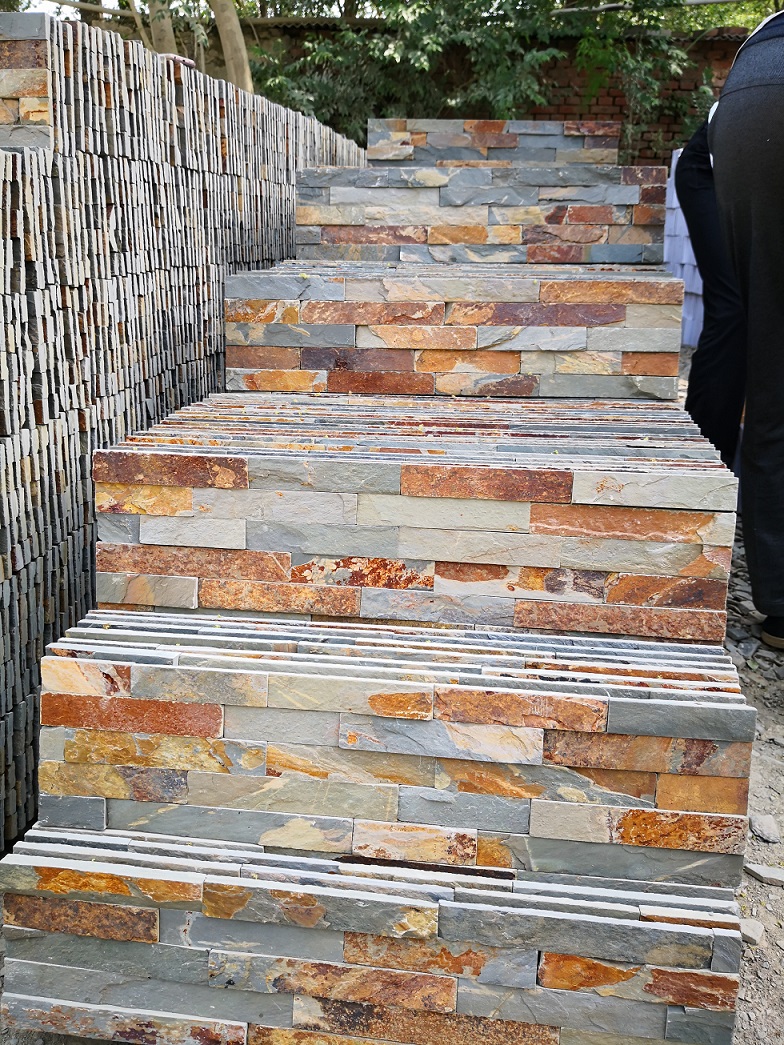
Thickness directly impacts how heat distributes across a wall surface. We maintain a range from 1cm to 3.5cm for our panels, providing enough bulk to dissipate heat evenly and protect the underlying substrate. This structural integrity is critical for modern floor-to-ceiling installations that cover large surface areas.
- Inventory Focus: High-density models like Alaska Gray and Glacier White (Quartzite) offer superior mineral stability.
- Freeze-Thaw Standards: ASTM-level durability ensures the stone handles extreme temperature swings without delamination.
- Precision Engineering: CNC diamond-blade edges on our Z-Shape and S-Shape panels ensure tight “male-female” connections, preventing heat from concentrating in gaps.
- Zero Off-Gassing: Pure slate and quartzite are non-combustible and inert, making them safer for indoor air quality.
High-Margin Stacked Stone for Professional Projects
Can You Successfully Install Stacked Stone Over an Existing Brick Fireplace?
Stone veneer installs directly over sound brick. Unpainted surfaces take thin-set well, while painted brick requires wire lath and a scratch coat to ensure a permanent bond.
Substrate Preparation and Adhesion Protocols
Proper bonding depends entirely on the condition of the underlying brick. Before applying any adhesive, we verify the substrate’s porosity and structural integrity to prevent delamination over time.
- Surface Cleaning: Scrub the brick with a wire brush and a mild vinegar solution to strip away soot, dust, and loose mortar.
- Porosity Test: Spray water onto the brick; if it beads rather than soaking in, the brick is sealed and requires wire lath and a scratch coat for mechanical bonding.
- Scratch Coat Application: Apply a layer of Type S mortar to create a level, high-friction surface that allows stone panels to grip the wall effectively.
- Curing Time: Let the prepared substrate cure for 24 to 48 hours before you begin the stone installation.
Seamless Interlocking Systems and Corner Integration
Modern stone systems eliminate the “DIY look” by using engineered shapes that mask the transition from the old brick to the new stone surface. This is critical for high-end residential or commercial projects.
- Interlocking Panels: Use أعلى مصدر الحجر Z-Shape or S-Shape panels to camouflage vertical joints and completely hide the underlying brick.
- Precision Edges: CNC diamond-blade edges ensure tight, gap-free fits, which removes the need for traditional grouting and speeds up on-site labor.
- Professional Corners: Install matching L-Corners at the firebox opening to provide a clean, 90-degree wrap-around texture without exposed raw edges.
- Thickness Management: Stick to natural stone panels within the 1cm to 2.5cm range to ensure the new profile respects fireplace clearances and existing mantle depths.

Modern Design Trends: Achieving the Floor-to-Ceiling Stone Accent Look
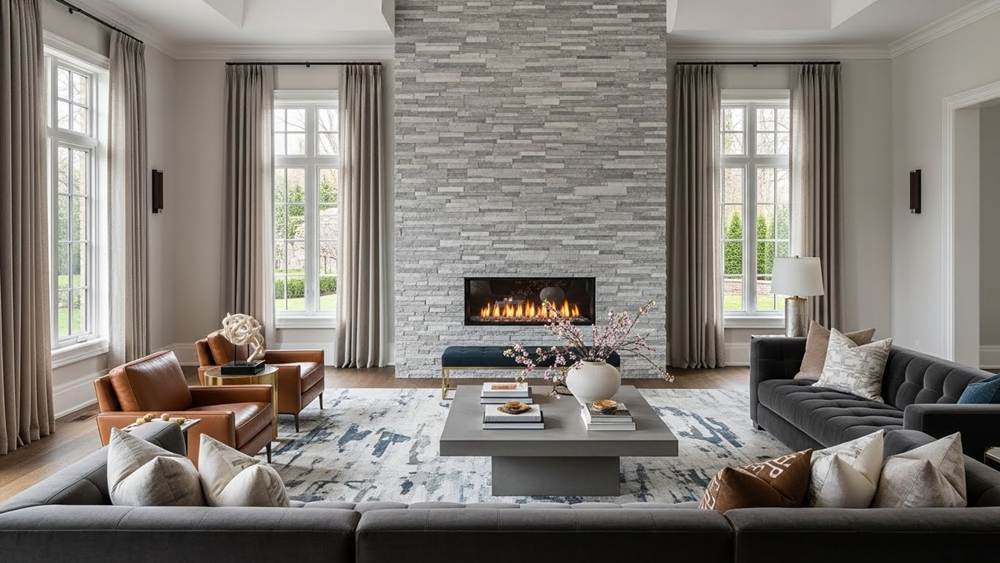
Floor-to-ceiling stone walls anchor 2026 designs by replacing small surrounds with expansive natural textures, adding architectural weight and organic warmth through vertical continuity.
Vertical Continuity and Visual Weight in 2026 Interior Spaces
Interior design for 2026 focuses on the “gathering spot” concept, where the fireplace serves as the room’s primary architectural anchor. Moving away from traditional small surrounds, designers now treat the entire vertical plane as a unified feature. This approach maximizes dramatic impact and adds significant visual weight to contemporary spaces.
The use of natural split-face textures adds a layer of sophistication to minimalist environments. By extending the material from the floor to the ceiling, the stone creates a sense of permanence that alternative materials like drywall or paint cannot replicate. Designers leverage the material’s physical depth to create dynamic environments.
- Shadow Play: Strategic lighting highlights the natural clefts and shadows of the stone.
- Depth Variations: We manufacture panels with thickness ranging from 1cm to 3.5cm to provide high-relief texture.
- Organic Warmth: Natural color variations in slate and quartzite prevent large-scale walls from feeling cold or sterile.
Seamless Transitions with Precision Z-Shape Interlocking Technology
Achieving a massive stone wall requires engineering that hides the “puzzle piece” nature of the installation. If the vertical joints are visible, the architectural illusion breaks. We address this through precision manufacturing that eliminates “stepped” gaps and ensures modular pieces fit tightly across large surfaces.
Consistency is the most critical factor for B2B distributors and installers. A patchy or mismatched wall on a high-visibility project leads to costly reworks. We control this by sourcing from the same quarry vein for every order, ensuring the natural hue remains uniform across the entire shipment.
- CNC Precision: Diamond-blade edges provide clean lines for a professional, consistent fit.
- Interlocking Design: Z-shape and S-shape panels camouflage vertical joints and hide the substrate.
- Pre-fabricated Corners: Matching 90-degree L-corners ensure color synchronization at transitions without on-site miter cutting.
- Hue Uniformity: We maintain 95% color consistency within a single batch to prevent patchy installations.

Essential Safety Codes for Non-Combustible Wall Surrounds and Clearances
Local IRC codes mandate specific gaps between wood framing and fireboxes. Using 100% natural stone reduces mantel clearances but doesn’t eliminate structural framing requirements.
| Requirement Type | Standard Clearance | Exception Criteria |
|---|---|---|
| Wood Studs (Side/Front) | 2 Inches | Mandatory for structural integrity |
| Wood Framing (Back) | 4 Inches | Applies to masonry fireplaces |
| Combustible Wall Finish | No Direct Contact | Allowed if masonry is ≥12 inches thick |
| Mantel/Trim Clearance | 6 Inches | Reduced with non-combustible stone facing |
Minimum Clearances and Framing Standards for Non-Combustible Facing
Builders and architects must distinguish between decorative facing and structural framing. While natural stone provides a heat-resistant surface, the wood skeleton behind the wall remains vulnerable to pyrolysis if you ignore code-mandated air gaps.
- Side Clearance: Maintain a minimum 2-inch gap between wood studs or beams and the front/side faces of the firebox.
- Rear Clearance: Ensure a 4-inch gap from the back faces of masonry fireplaces to any combustible structural elements.
- The 12-Inch Rule: Gypsum board or wood siding may contact the masonry only if the firebox wall is at least 12 inches thick.
- UL 127 Compliance: Verify factory-built units against UL 127 standards; many “zero-clearance” models allow for tighter framing integration.
- Code Updates: Review local 2026 safety guidelines and the International Residential Code (IRC) before finalizing structural plans.

Safety Compliance for 100% Natural Stone and L-Corner Systems
Top Source Stone materials provide a technical advantage for high-heat applications. We use 100% natural minerals—Quartzite and Slate—which offer higher thermal mass and better heat radiation than hollow brick or resin-based faux stone.
- Inherent Resistance: Use Quartzite or Slate series for superior heat stability compared to artificial alternatives.
- Continuous Protection: Install our matching L-Corners at 90-degree transitions to create a solid non-combustible barrier, shielding internal wood framing.
- CNC Precision: Our CNC diamond-blade cutting ensures tight-fitting joints, eliminating the gaps where radiant heat could penetrate to the substrate.
- Adhesive Stability: Apply high-strength, heat-stable epoxy or polymer-modified mortars to prevent stone delamination during rapid temperature cycles.
- Thickness Variables: Select stone thickness (ranging from 1cm to 3.5cm) based on the fireplace unit’s specific insulation and thermal requirements.
أسئلة مكررة
Can I install natural stacked stone directly over an existing brick fireplace?
Yes, you can install natural stone panels over brick without removing the original masonry. Clean the brick of all loose debris and dust first. Apply a polymer-modified thinset or a scratch coat to create a strong mechanical bond between the old brick and the new stone panels. This approach saves significant labor costs for your clients compared to a full tear-out.
Is natural stone safe for high-heat fireplace surrounds?
Natural stone is inherently non-combustible and fire-resistant. Materials like quartzite and slate handle thermal expansion much more effectively than wood or faux stone. As long as the panels do not come into direct contact with open flames, they provide a safe, durable solution for fireplace surrounds that won’t warp or discolor over time.
What is the best adhesive for vertical stone veneer installations?
Professional installers use polymer-modified mortars such as Laticrete MVIS or Ardex X 77. These specific adhesives offer high sag resistance and the bond strength needed to support stone panels weighing between 8 and 13 lbs per square foot. Avoid using standard Type S mortar for these vertical applications, as it lacks the necessary flexibility for thermal movement.
How do I mount a flat-screen TV onto a stacked stone wall?
Anchor the TV bracket directly into the wall studs behind the stone for a secure mount. For new installations, attach the bracket to the cement board before laying the stone. For retrofit projects, use a masonry drill bit to create pilot holes through the stone or mortar joints to reach the studs. This ensures the weight of the TV is supported by the framing, not just the stone veneer.
How should I clean soot and ash buildup off my stone fireplace?
Use a mixture of warm water and pH-neutral dish soap with a soft-bristled brush for routine cleaning. For heavy soot accumulation, use a diluted Trisodium Phosphate (TSP) solution. Never use bleach, acidic cleaners, or wire brushes, as these can permanently discolor or scratch the natural stone surface. Always rinse with clean water after scrubbing to prevent residue buildup.
Final Thoughts
Relying on “faux” panels or middleman-sourced stone risks project delays and client dissatisfaction due to thermal warping and patchy color shifts. Our direct-quarry sourcing guarantees 95% hue uniformity and zero chemical off-gassing, ensuring your installations meet strict safety codes and luxury aesthetic standards. Choosing 100% natural quartzite and slate from Top Source Stone protects your professional reputation and maximizes the long-term appraisal value of the property.
Verify our CNC diamond-blade precision and material density by requesting a sample kit of our Big 10 Inventory. We support dealers with a 300-square-meter trial order that allows for mix-and-match colors to test local market demand without excessive upfront overhead. Contact our team today to review high-definition pre-shipment photos and secure your factory-direct quote.
