

Verified Freeze-Thaw Resistance serves as the primary defense against the structural delamination that triggers expensive exterior warranty claims in northern regions. Porous manufactured alternatives trap moisture that expands by 9% when frozen, causing surface spalling and material fatigue that destroys project margins.
This analysis benchmarks high-density natural quartzite and slate against ASTM C666 standards to guarantee long-term stability. By sourcing minerals with water absorption rates below 2.5%, we help dealers supply climate-certified solutions that outperform the structural weaknesses of cement-based imitations.
What is the Freeze-Thaw Cycle and How Does It Affect Stone?
Trapped moisture expands by 9% when frozen, creating immense internal pressure. High-density natural stones like Quartzite and Slate resist these cycles, preventing the structural cracks and spalling common in porous materials.
The Mechanics of Frost Wedging and Material Fatigue
When water enters the pores of a stone and temperatures drop, it undergoes a physical phase change. This expansion acts as a literal wedge, forcing the stone’s internal fibers apart. Over time, these repeated cycles cause cumulative fatigue that compromises the material’s structural load-bearing capacity.
- Expansion Force: Water increases by 9% in volume during freezing, generating several thousand pounds of pressure per square inch inside stone capillaries.
- Strength Loss: Research shows repeated cycles can reduce uniaxial compressive strength by up to 37.96% in porous materials.
- Accelerated Decay: Micro-cracking from initial cycles increases porosity, allowing more water to saturate the stone in subsequent seasons.
- Sedimentary Vulnerability: Stones like sandstone are highly susceptible to delamination as water penetrates along their layered bedding planes.
ASTM-Standard Resistance in High-Density Natural Panels
أعلى مصدر الحجر focuses on high-density minerals to ensure exterior longevity in severe-weather markets. By sourcing 100% natural Quartzite and Slate, we provide a material that naturally rejects water infiltration, outperforming cement-based manufactured veneers.
- Low Absorption: We utilize low-porosity Quartzite and Slate to minimize the moisture intake that leads to frost damage.
- Climate Certification: Our panels meet ASTM standards for freeze-thaw durability, making them suitable for the Northern US and Canadian climates.
- Spalling Prevention: The dense crystalline structure of our natural stone prevents the surface scaling and “pitting” seen in concrete-based faux stone.
- Chemical Stability: هؤلاء panels maintain their structural integrity even in environments with high salinity or frequent de-icing salt exposure.

Why Porous Manufactured Stone Suffers from Water Spalling
Porous stone absorbs water that expands 9% when frozen. This internal pressure creates micro-cracks and surface flaking, leading to structural delamination and progressive material failure.
Hydraulic Pressure and Volume Expansion in Capillary Networks
Water enters manufactured stone through surface pores and remains trapped in the internal capillary network. When temperatures drop below freezing, the liquid water transforms into ice and expands in volume. Since the stone lacks the tensile strength to accommodate this expansion, the ice creates thousands of pounds of pressure per square inch against the pore walls.
- Ice Wedging: Expansion forces act as mechanical wedges that widen existing micro-cracks during every freeze cycle.
- Thermal Shading: North-facing surfaces and shaded areas retain moisture for longer periods, significantly increasing the frequency of damaging cycles compared to sunny elevations.
- Chemical Fatigue: De-icing chemicals lower the freezing point of surface water, which inadvertently raises osmotic pressure and accelerates the breakdown of the stone’s internal bond.
ASTM-Standard Freeze-Thaw Resistance of Natural Quartzite and Slate
Top Source Stone provides 100% natural Quartzite and Slate, materials characterized by high-density mineral structures. Unlike concrete-based faux stone, these natural minerals have extremely low water absorption rates. This inherent density prevents the internal reservoir effect that leads to spalling and surface crumbling in northern climates.
- Certified Durability: Our natural stone inventory meets ASTM-standard freeze-thaw resistance, ensuring structural stability for 2026 exterior projects in the USA and Canada.
- Quarry Vein Consistency: We source panels from the same quarry vein per order to maintain uniform density, which eliminates patchy areas of vulnerability across a large-scale wall.
- Inherent UV Stability: Real stone maintains its structural integrity and color deep into the mineral, avoiding the fading and delamination risks found in cement-based imitations.
Premium Stacked Stone for Architectural Excellence
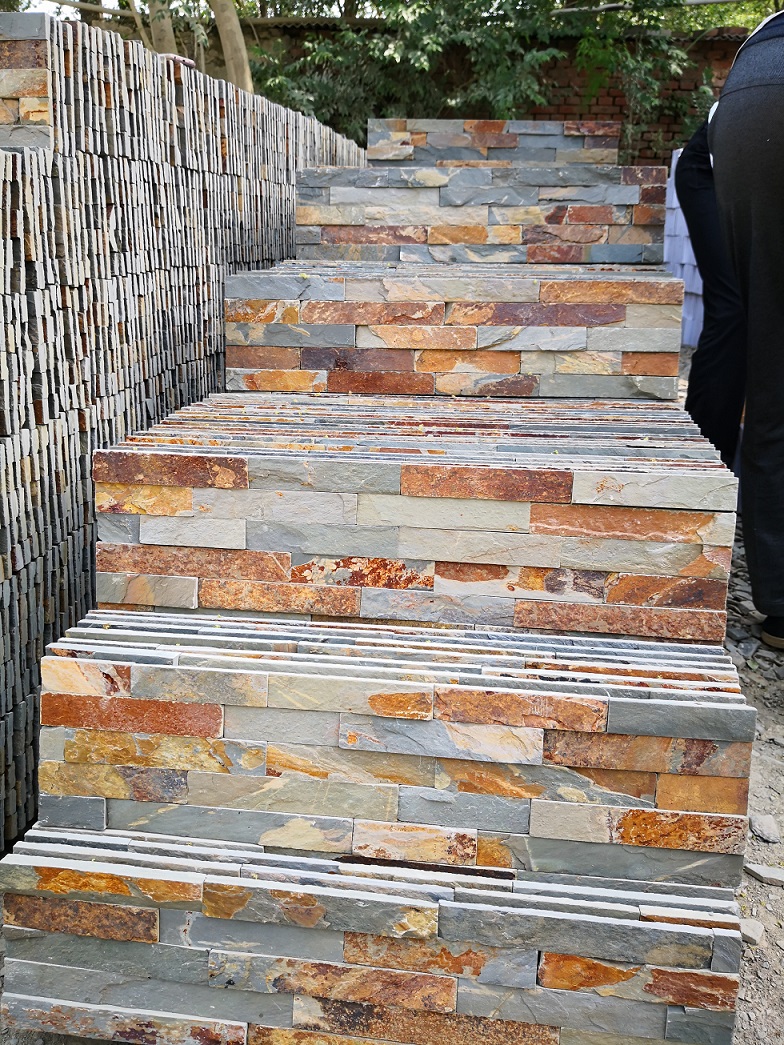
Does Natural Stone Crack in Sub-Zero Temperatures?
Water expands 9% when freezing, creating internal pressure that cracks porous materials. High-density quartzite and slate prevent structural failure by effectively minimizing water absorption.
Mechanisms of Frost Damage and Water Absorption
Physics dictates that water increases in volume by approximately 9% as it turns to ice. When this happens inside stone pores, the resulting internal pressure acts like thousands of tiny wedges pushing the material apart from within. Porous stones absorb more moisture, which directly leads to higher internal stress during sub-zero temperature shifts.
This damage often manifests as spalling or surface flaking after repeated cycles. Most structural degradation accelerates between 50 and 125 freeze-thaw cycles, as micro-cracking accumulates and weakens the stone’s integrity. Stones with high absorption rates fail faster because they allow moisture to penetrate deeper into the substrate before it expands.
ASTM-Rated Freeze-Thaw Resistance for Northern Climates
Top Source Stone utilizes 100% natural quartzite and slate to meet strict ASTM-standard freeze-thaw durability. These materials feature dense mineral structures that naturally limit water penetration. This makes our Big 10 Inventory specifically suited for the extreme winters found across the US and Canada.
- Material Density: High-quartz and feldspar content in quartzite outperforms porous sedimentary stones like standard limestone.
- Testing Protocol: Laboratory simulations verify resistance through hundreds of cycles to ensure no delamination or strength reduction occurs.
- Environmental Resilience: Our natural minerals maintain integrity in high-salinity regions where de-icing salts typically accelerate stone decay.
Selecting low-porosity stones ensures that exterior walls remain structurally sound for decades. We engineer our stacked stone panels with CNC diamond-blade precision to provide a tight fit, further reducing the areas where water can collect and freeze. This professional-grade sourcing provides a durable alternative to cement-based manufactured stones that often absorb 13% to 29% more water.
Comparing ASTM C666 Standards for Real vs. Faux Stone
ASTM C666 requires materials to survive 300 rapid freeze-thaw cycles. Natural minerals like quartzite and slate outperform cement-based faux stone by resisting water infiltration and internal structural spalling.
| Performance Metric | Natural Quartzite/Slate | Manufactured (Faux) Stone |
|---|---|---|
| Water Absorption Rate | 0.2% – 2.5% (Very Low) | 13% – 29% (Highly Porous) |
| Structural Binder | Inherent Crystalline Mineral | Portland Cement & Resins |
| ASTM C666 300-Cycle Success | Maintains Mineral Integrity | Frequent Scaling and Delamination |
| UV Stability | Permanent (No Fading) | Vulnerable to Color Degradation |
Technical Requirements of the 300-Cycle Freeze-Thaw Test
The ASTM C666 standard serves as the primary benchmark for stone durability in northern markets. It subjects materials to 300 rapid cycles of freezing and thawing to simulate decades of environmental stress. For projects in the United States and Canada, surviving this test without structural failure is a non-negotiable requirement for exterior cladding.
Water behavior drives the failure mechanism in these tests. When moisture penetrates a material and freezes, it expands by approximately 9% in volume. This expansion generates internal pressures of several thousand pounds per square inch. Natural minerals handle this stress differently than man-made alternatives:
- Absorption Disparity: Manufactured stone typically absorbs 13% to 29% water, while high-density natural quartzite stays well below 2.5%.
- Binder Failure: Faux stone relies on cement binders. Repetitive expansion cycles break these chemical bonds, leading to “surface scaling” or flaking.
- Mineral Consistency: 100% natural stone maintains its crystalline structure, whereas the pigments in manufactured stone often degrade as the cement matrix weakens.
Freeze-Thaw Resistance in Natural Quartzite and Slate Panels
At Top Source Stone, we solve the durability issues associated with 2026 climate extremes by controlling the material science at the quarry level. By using 100% natural minerals like quartzite and slate, we provide a product that is inherently UV stable and resistant to salt spray and high humidity.
Engineering choices directly impact how these panels perform once installed on a north-facing wall. We apply specific manufacturing protocols to ensure long-term stability:
- Same-Batch Quarry Consistency: We source stone from the same quarry vein per order. This ensures uniform density and prevents patchy water absorption rates across a large installation.
- CNC Diamond-Blade Precision: Our Z-shape and S-shape panels utilize precision-cut interlocking edges. This tight “male-female” connection reduces water pooling at the joints, which is where most freeze-thaw damage begins.
- High-Density Minerals: Quartzite and slate provide a naturally tight grain structure. These materials act as a barrier against moisture, preventing the “wedging” effect that destroys porous limestone or cement-based veneers.
By focusing on the inherent properties of igneous and metamorphic rocks, we eliminate the risks of spalling and structural breakdown. This makes natural stacked stone the only reliable choice for exterior projects in regions with aggressive winter cycles.

Best Exterior Stone Practices for Northern Climates
Pair low-porosity stones like quartzite or slate with permeable sub-bases and ASTM-tested engineering to manage the 9% volume expansion of freezing water in northern climates.
In regions prone to heavy freeze-thaw cycles, material selection is the difference between a lifetime installation and seasonal failure. When water penetrates stone and freezes, it expands by 9% in volume, generating internal pressures of several thousand PSI. This force acts as a mechanical wedge, progressively degrading the stone’s structural integrity from the inside out.
Prioritizing Material Density and Moisture Management
Durability in cold climates depends primarily on the stone’s porosity and how the installation handles water runoff. High-density stones resist the initial penetration of moisture, preventing the internal pressure buildup that leads to spalling and delamination.
- Material Selection: Prioritize igneous or metamorphic stones such as granite, quartzite, and slate due to their dense crystalline structures and minimal water absorption rates.
- Sedimentary Risks: Avoid standard sandstone or soft limestone. These materials allow water to penetrate bedding planes, which causes flaking and layered failure during winter.
- Sub-Base Engineering: Implement well-drained sub-bases using permeable open-graded aggregates like ASTM #57 stone to prevent water from pooling behind the stone veneer.
- Thermal Movement: Design edge restraints and permeable jointing systems that accommodate significant thermal expansion and contraction during seasonal shifts.
ASTM-Standard Engineering and Precision Interlocking Systems
Technical precision during manufacturing protects exterior walls from thermal stress. By eliminating gaps where water can collect, the installation remains shielded from the moisture-driven cycle of deterioration.
- Tested Durability: Use Top Source Stone Freeze-Thaw Resistant panels, specifically engineered to meet ASTM standards for extreme US and Canadian climates.
- CNC Precision: Deploy CNC diamond-blade edges to ensure tight, male-female interlocking. This minimizes gaps where moisture can accumulate and freeze.
- Joint Camouflage: Apply Z-Shape or S-Shape interlocking technology to hide vertical joints, providing a seamless architectural finish that protects the underlying substrate.
- Transition Integrity: Install matching pre-fabricated L-Corners to ensure texture synchronization and structural strength at 90-degree wall transitions.
أسئلة مكررة
What causes stone veneer to crack during 2026 winter cycles?
Cracking happens when moisture gets into the stone or the substrate, freezes, and expands. This internal pressure creates stress that leads to surface spalling or adhesion failure. Improper drainage, missing water-resistant barriers (WRB), and the lack of weep systems often make these issues worse in cold climates.
Is all natural stone naturally resistant to freezing temperatures?
No. Frost resistance depends on the porosity and water absorption rate of the specific stone. Dense materials like quartzite and granite resist freeze-thaw damage effectively. More porous stones like certain sandstones or limestones might require professional sealing and specific installation techniques to prevent winter degradation.
How does the water absorption of manufactured stone compare to natural stacked stone?
Manufactured stone usually has a higher water absorption rate, often ranging from 13% to 29% because of its cement-based composition. High-quality natural stone typically maintains a much lower absorption rate, often between 0.2% and 12%. This significantly reduces the risk of internal ice expansion and structural damage.
What installation practices prevent stone spalling on exterior walls?
We recommend using a robust water-resistant barrier (WRB) and a weep drainage system to guide moisture away from the wall. Using Type S mortar and applying penetrating silane or siloxane-based sealants before the first freeze provides a critical layer of protection against moisture infiltration and surface flaking.
Which natural stones perform best for exterior walls in heavy snow environments?
Quartzite, bluestone, and granite are the most reliable choices for snowy regions. These stones feature tight mineral structures and high density, which allow them to withstand heavy snow contact and repeated freeze-thaw cycles without losing structural integrity or fading under UV exposure.
Final Thoughts
Low-cost manufactured veneers invite structural failure and expensive warranty claims as soon as the first freeze-thaw cycle begins. Top Source Stone utilizes high-density Quartzite and Slate to maintain a sub-2.5% absorption rate, easily surpassing the 300-cycle ASTM C666 durability requirements. Choosing direct-quarry natural stone ensures your inventory withstands the harshest North American winters while protecting your long-term profit margins.
Stop risking your reputation on porous imitations that flake and delaminate under thermal stress. We recommend requesting a physical sample kit to verify our mineral density and test the CNC diamond-blade interlocking precision firsthand. Contact our export team today to discuss bulk pricing and secure your territory allocation from our “Big 10” regional inventory.
