
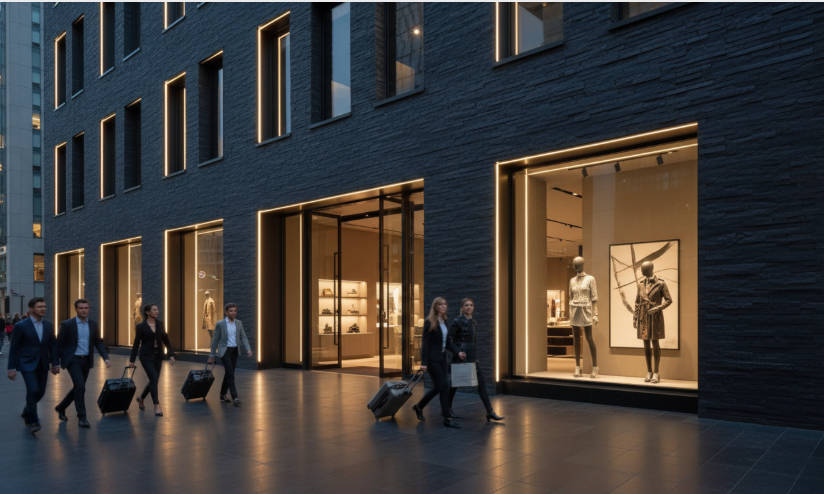
Heavy commercial use subjects building exteriors to constant physical impact that can rapidly deplete maintenance budgets if materials fail prematurely. High-traffic entryways and facades face a daily barrage of luggage carts, cleaning equipment, and pedestrian contact that tests the structural integrity of the cladding. Choosing a surface that cannot withstand these conditions results in visible surface degradation, creating both aesthetic failures and long-term financial liabilities for property owners.
This guide breaks down the performance metrics of natural stone compared to manufactured alternatives in demanding public environments. We look at the specific physics of impact resistance, the cause of structural chipping in faux products, and the actual cost differences between initial installations and recurring repair cycles. By following this technical evaluation of material durability, developers can select facade solutions that maintain their integrity under the heaviest operational loads.
Durability Requirements for High-Traffic Commercial Entries
Commercial entryways require surfacing materials that combine high-density mineral composition with precision-engineered interlocking systems to survive constant mechanical impact and environmental exposure.
Natural stone panels provide a rugged exterior that withstands physical contact in busy commercial zones where equipment or heavy foot traffic is common. Unlike concrete-based faux alternatives, real quarried stone maintains its structural integrity without the risk of surface delamination. We prioritize high-density materials like quartzite and slate because their mineral cohesiveness prevents the “gray chipping” effect often seen in manufactured products when the thin color layer is breached.
| Performance Metric | Top Source Natural Stone | Manufactured Faux Stone |
|---|---|---|
| UV Stability | Inherent (No fading) | Pigment-based (Fades over time) |
| Impact Failure | Consistent color through stone | Reveals gray concrete core |
| Service Life | 50+ Years | 20–30 Years |
Advanced Bonding for Public Safety
High-traffic entries require secure material attachment to prevent stone displacement over time. We use high-strength epoxy resin specifically formulated for natural stone to ensure a permanent bond between the stone pieces and the backing. The interlocking Z-panel design distributes weight evenly across the substrate, while precision CNC diamond-blade cutting ensures tight joints. These tight tolerances prevent moisture from penetrating the panel and compromising the adhesive layer in freeze-thaw climates.
UV Stability and Color Retention
Commercial facades facing constant sunlight exposure must resist fading to maintain property value. Natural stone contains no artificial pigments that break down under ultraviolet light. Whether you install Midnight Black Slate or Arctic Golden Quartzite, the colors remain consistent across decades of exposure. This eliminates the need for periodic repainting or the surface touch-ups required by painted cement products.
- Same-batch quarry consistency ensures 95% hue uniformity across large-scale commercial walls.
- Natural mineral resistance to high salinity makes these panels suitable for coastal or high-humidity regions.
- The rough series provides deep textures that naturally mask minor scuffs or abrasions from daily maintenance equipment.
Weight Considerations and Structural Footprints
Modern entryways often prioritize materials that do not require extensive foundation changes. Our natural stone panels weigh between 8 and 12 pounds per square foot, allowing for installation on most structurally sound walls, including cement board or masonry. This lightweight profile eliminates the need for expensive wall ties or reinforced footings, which speeds up the construction timeline for retail and hospitality projects. Contractors can apply these panels directly to existing structures, reducing labor costs while achieving a premium architectural finish.
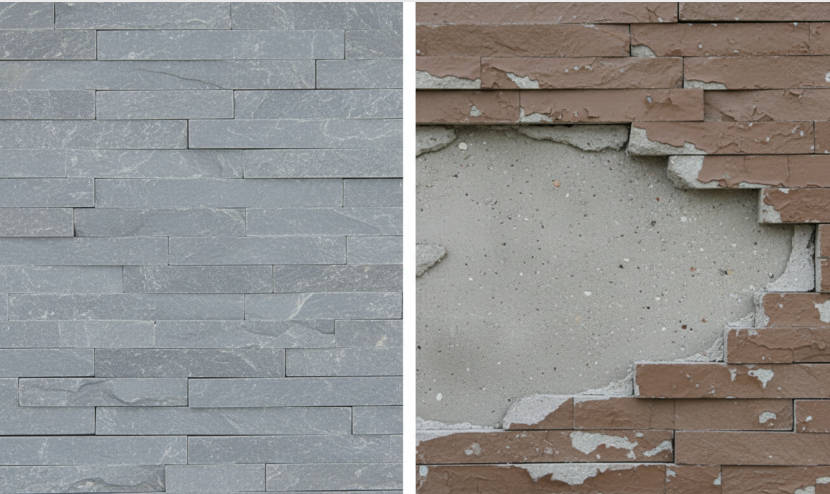
Why Faux Stone Shows “Gray Chipping” in Public Spaces
The “gray chipping” phenomenon occurs because manufactured stone relies on a topical pigment layer that inevitably fails under the mechanical stress of commercial environments, exposing a raw concrete core.
Material Composition of Concrete-Based Veneers
Manufactured stone veneer is essentially a lightweight concrete product. Manufacturers mix portland cement with expanded shale or clay aggregates to mimic the weight and feel of real stone. While this process allows for high production volumes, it creates a material where the structural core is distinct from the visual surface. In high-traffic zones, this lack of mineral consistency becomes a primary point of failure.
- Concrete serves as the structural foundation for almost all artificial stone products.
- The internal aggregate mix lacks the complex color profiles found on the visible exterior.
- Factory production focuses on surface aesthetics rather than through-body mineral uniformity.
Surface-Depth Pigmentation vs. Through-Body Color
The visual appeal of faux stone depends on a thin layer of iron oxide pigments applied during the molding process. This coloration is topical; it does not penetrate the material. In contrast, natural stone panels from Top Source Stone maintain their mineral composition and color from the face through to the core. This “through-body” consistency ensures that even under heavy wear, the material remains visually cohesive.
- Surface pigments are localized and do not extend into the structural depth of the veneer.
- Natural stone retains its authentic texture and hue regardless of surface degradation.
- Damage to faux stone exposes dull gray concrete, creating an immediate and obvious visual defect.
Mechanical Impact in High-Volume Commercial Zones
Modern commercial entries face constant physical abuse from service trolleys, heavy luggage, and industrial cleaning equipment. In these high-volume environments, wall surfaces are subject to frequent high-velocity hits. While natural materials like 100% natural quartzite or slate can absorb these impacts or hide minor chips within their natural veins, manufactured veneers show every strike as a permanent scar.
- Public environments subject entryways to constant physical abrasion and accidental impacts.
- A single strike from a cleaning cart can strip the thin pigmented layer from a manufactured panel.
- Exposed concrete cores create a damaged aesthetic that necessitates frequent, costly patching to maintain property value.
Elevate Projects with Factory-Direct Stacked Stone

Impact Resistance: Natural Stone vs. Accidental Trolley Hits
High-density natural stone panels provide a structural buffer against trolley impacts, utilizing full-body mineral consistency to eliminate the unsightly gray chipping common in manufactured alternatives.
Material Density and Structural Integrity
The physical density of quartzite and slate panels serves as the primary defense against the localized pressure generated by trolley impacts in modern commercial environments. High-density minerals absorb energy from blunt force more effectively than porous, man-made composites. This structural cohesion prevents the deep cracking often observed when heavy carts strike the corners of wall installations in high-traffic retail corridors.
| Performance Metric | Natural Stacked Stone (Top Source) | Manufactured Faux Stone |
|---|---|---|
| Material Composition | 100% Solid Quartzite/Slate | Pigmented Concrete/Cement Core |
| Surface Damage Result | Minor Nick (Color Stays Consistent) | Gray Chipping (Cement Core Exposed) |
| Structural Weight (Rough) | Approx. 55kg/m² (High Inertia) | Approx. 25-35kg/m² (Lower Impact Resistance) |
| Edge Tolerance | CNC Diamond-Blade Precision Fit | Molded Edges (Prone to Spalling) |
Impact Patterns and Surface Resilience
Natural stone avoids the surface degradation patterns found in faux products because the mineral color is consistent throughout the entire panel thickness. When a metal trolley edge strikes a natural ledge stone, any resulting abrasion remains virtually invisible. In contrast, manufactured stones rely on a thin surface pigment; once this layer is breached, the gray or white concrete base is exposed, creating a visible “chipped” appearance that necessitates immediate repair.
- The Rough Series panels naturally mask small abrasions due to their varied, split-face textures.
- Real stone does not suffer from delamination where the decorative finish peels away from the substrate.
- Solid stone panels maintain their aesthetic value under the repetitive stress of high-traffic retail loading zones.
Adhesive Strength and Stone Retention
Collisions with heavy equipment test the bonding integrity between individual stone pieces and the panel substrate. We utilize proprietary high-strength epoxy resins combined with controlled manufacturing pressures to ensure every stone remains attached during sharp jolts. This engineering approach prevents stones from dislodging, a common failure point in lower-quality veneers where simple mortar or weak glues are used.
- Precision-cut interlocking systems (Z-Shape and S-Shape) provide mechanical stability that keeps the facade intact.
- CNC diamond-blade edges ensure stones fit tightly, reducing the leverage impact forces can exert on individual pieces.
- Reinforced interlocking designs camouflage joints while serving as a secondary retention mechanism.
Comparison with Faux Stone Performance
Testing across public spaces reveals significant differences in material response to daily wear. Faux stone products often exhibit a “denting” effect because the molded concrete is softer than quarried minerals. Over a decade-long lifecycle, natural stone panels require significantly fewer repairs, which reduces the long-term maintenance burden for facility managers in high-use commercial properties. While manufactured stones offer predictable initial budgeting, their susceptibility to impact damage often leads to higher total costs when factoring in periodic repairs and patch matching.
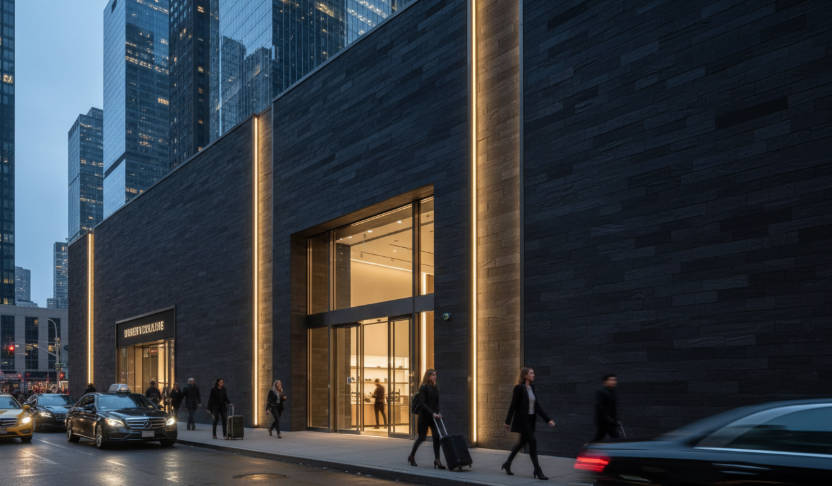
Maintenance Budgets: Real Stone vs. Periodic Faux Repair
Commercial facility managers must evaluate the higher annual upkeep of natural stone against the finite lifecycle and “gray chipping” risks associated with manufactured composites.
Annual Upkeep and Total Cost of Ownership
Budgeting for 2026 requires a clear understanding of the price gap between real and manufactured stone maintenance. High-traffic commercial entries using natural stone incur annual maintenance costs of $3 to $5 per square foot. These figures cover professional cleaning and the specialized labor required to inspect large-scale installations. While faux stone panels significantly reduce yearly expenses to approximately $0.50 to $1 per square foot, the lower price point often masks the eventual cost of total material failure. Facility managers often favor faux materials for predictable short-term budgeting, yet the long-term asset value remains significantly higher for natural alternatives.
| Financial Metric | الحجر الطبيعي المكدس | Manufactured Stone (Faux) |
|---|---|---|
| Annual Maintenance Cost | $3.00 – $5.00 / sq.ft. | $0.50 – $1.00 / sq.ft. |
| Sealing Requirement | Every 2–5 Years | Not Required (Initially) |
| Structural Lifespan | 50+ Years (Permanent Asset) | 20 – 30 Years (Composite Life) |
Sealing Protocols and Surface Protection
Natural ledger panels require specific chemical treatments to maintain their weather-resistant properties. Real stone necessitates professional sealing every two to five years to prevent deep staining and moisture penetration, especially in environments with high salinity or humidity. Standard cleaning for natural surfaces involves pH-neutral stone cleaners rather than abrasive acidic solutions that can etch the mineral surface. Natural stone surfaces resist UV-related fading, whereas faux products may require specialized coatings to prevent pigment degradation over time. By utilizing 100% natural minerals from a direct quarry source, projects avoid the artificial fading common in concrete-based alternatives.
Lifecycle Investment and Replacement Cycles
Long-term facility planning identifies natural stone as a permanent asset compared to the finite lifespan of composites. Premium properties leverage the durability of real stone to minimize the disruption caused by total material replacement. The following lifecycle factors distinguish the two categories:
- Natural stone provides a 50+ year lifespan, effectively serving as a permanent structural finish for luxury retail facades.
- Manufactured stone alternatives typically reach the end of their functional lifecycle within 20 to 30 years.
- Natural mineral density resists surface erosion and micro-abrasions better than lower-rated cementitious materials.
Repair Costs and Structural Integrity
The cost of fixing localized damage varies significantly based on material composition and availability. Repairing natural stone damage patches costs between $50 and $200 per incident due to specialized labor requirements. The interlocking Z-shape system in natural ledger panels allows for more seamless individual piece replacement compared to poured concrete slabs. Faux stone repairs often involve color-matching challenges because the underlying concrete core lacks the consistent pigment of real stone. When a faux panel chips, the gray aggregate beneath the surface is exposed, making the damage visible from a distance, while natural stone maintains a uniform hue throughout its entire depth.
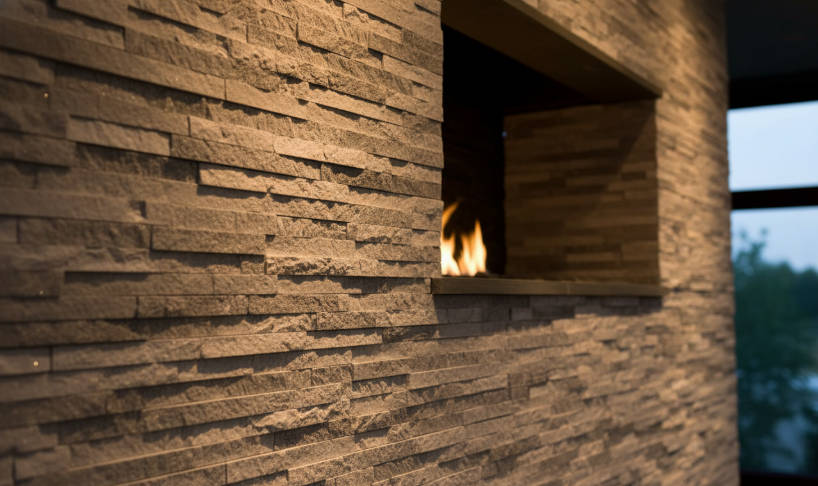
Case Study: Luxury Retail Facades and Material Selection
Authentic material selection in 2026 luxury retail serves as a primary narrative tool to communicate brand heritage while ensuring long-term asset value through natural durability.
Material Selection for Modern Flagship Stores
Luxury flagship projects in 2026 prioritize material authenticity. Designers select natural stone textures to communicate brand legacy and exclusivity. Using our Flat Series allows for the clean, minimalist lines required in contemporary high-end branding. These surfaces provide the tactile quality that high-end consumers expect from a physical retail location.
- Natural marble and quartzite panels provide unique, non-repeating patterns that immediately increase the asset value of commercial properties.
- Real quarried stone avoids the visual degradation and repetitive patterns seen in lower-quality manufactured alternatives.
- Direct quarry sourcing ensures same-batch consistency, preventing patchy appearances across large-scale flagship walls.
Visual Storytelling through Dimensional Textures
Dynamic facades use shadow play and varying stone depths to attract high-intent foot traffic. Strategic lighting emphasizes the sculptural nature of the stone, creating a facade that changes throughout the day. This approach transforms a simple wall into a narrative device that conveys craftsmanship and brand exclusivity.
- The Pencil Series creates a linear, flowing texture suitable for sophisticated reception areas and storefronts.
- Rough Series panels provide dramatic shadows, emphasizing a rugged yet refined architectural character under intense retail lighting.
- Natural stone surfaces maintain their color integrity under intense UV exposure, so the facade stays vibrant for decades without fading.
Installation Performance in Rapid Retail Rollouts
Retail brands must meet tight construction schedules without sacrificing craftsmanship. Efficient interlocking systems allow for rapid deployment across multiple locations while maintaining a high-end finish. Our engineering focus minimizes the need for specialized labor on-site, allowing for faster store openings.
- The Z-shaped interlocking system utilizes CNC diamond-blade precision to eliminate visible grout lines, matching the precision of high-end interiors.
- Lightweight panels (8-13 lbs/sqft) install on existing structures without requiring expensive structural footings or heavy wall reinforcements.
- Pre-fabricated L-shaped corner pieces reduce on-site labor hours and ensure clean transitions at wall edges and columns.
Conclusion
High-traffic commercial entries require materials that handle heavy impact and environmental stress without the visible chipping common in manufactured stone. Natural stacked stone provides a durable, low-maintenance solution that protects both the building’s aesthetic and the long-term maintenance budget. Sourcing directly from a quarry ensures batch consistency and structural integrity for large-scale retail and hospitality projects.
Architects and wholesalers can review our Big 10 inventory for ready-to-ship commercial models or request a technical catalog for upcoming project specifications. Contact أعلى مصدر الحجر to discuss volume requirements and batch-consistency guarantees for your next facade development.
أسئلة مكررة
What is the best stone for commercial facades?
Granite is widely considered the best stone for commercial facades due to its exceptional density, low porosity, and resistance to environmental pollutants and acid rain. For high-rise applications, granite offers the structural integrity required for large-scale cladding. Limestone and Travertine are also popular for mid-rise projects where a classic, matte aesthetic is desired, though they require more frequent sealing than granite.
Does manufactured stone chip easily?
Manufactured stone is more susceptible to chipping than natural stone because it is composed of a lightweight concrete mix with surface-level pigments. Unlike natural stone, which retains its color throughout the entire slab, a chip in manufactured stone will often reveal the grey or beige concrete core underneath. However, high-grade architectural veneers used in commercial settings are reinforced to minimize this risk.
How to repair commercial stone walls?
Minor chips and cracks in commercial stone are repaired using color-matched UV-stable epoxy or polyester resins that are polished to match the surrounding finish. For significant damage, a “Dutchman” repair is performed, where a damaged section is cut out and a matching piece of new stone is precisely inset. Regular maintenance also includes repointing mortar joints to prevent moisture infiltration.
Is natural stone too expensive for large projects?
While natural stone has a higher upfront material cost compared to EIFS or metal panels, its life-cycle cost is significantly lower. Its durability allows for a 50-to-100-year lifespan with minimal replacement needs. Modern thin-stone cladding and rainscreen systems have significantly reduced the weight and installation costs, making natural stone a financially viable and premium option for large-scale commercial developments.
Durability of stone in high-traffic areas?
Stone is one of the most durable materials available for high-traffic zones. To maintain its longevity, industry standards recommend two-layer entry protection strategies: exterior scraper systems combined with interior absorbent mats. This setup removes abrasive debris and moisture that could otherwise wear down stone finishes. Harder stones like granite and quartzite are specifically chosen for these areas to resist impact and heavy footfall.
