
For B2B buyers in retail and e-commerce, inconsistent packaging specs can lead to pallet overhang, failed drop tests, and costly compliance issues. When GMA standard pallets require strict 48″ x 40″ footprints and ISTA protocols demand drop heights based on product weight, ignoring these limits can mean rejected shipments or damaged goods before they reach shelves.
This article outlines how to create standardized SKUs for retail packaging, covering corrugated board selection from 3-ply to 5-ply with edge crush values above 44 lb/in, pallet stacking rules topping at 72 inches, barcode placement with a 6.3 mm quiet zone, and eco-friendly alternatives to Styrofoam. You’ll see where technical specs, durability tests, and clear labeling intersect to improve shelf fit, transport efficiency, and regulatory compliance in both brick-and-mortar and online fulfillment.
Core Requirements for Retail Packaging: Aesthetics, Information, and Durability
Retail packaging must combine attractive design with clear product information and robust durability to withstand transport and environmental stresses while complying with labeling laws and consumer safety standards.
| Standard/Test | Purpose | Key Requirements |
|---|---|---|
| ISTA-6 | Simulates parcel and handling stresses for FFP compliance | Drop, vibration, compression, temperature variation |
| ISTA 1A / ISTA 3E | Long-haul and warehouse handling validation | >500 miles shipping, forklift/pallet handling, 90% humidity |
| IS 9845:1998 (BIS) | Food contact material safety | Limits migration of harmful substances from plastics |
| FPLA / FDA / USDA Labeling | Consumer information and safety compliance | Identity, net quantity (metric/U.S.), maker info, allergens, nutritional facts, tamper-evident seals |
Balancing Aesthetics and Information Requirements
Visual appeal enhances brand recognition, incorporating color schemes, balanced layouts, and product sizing that fits retail displays like shelving or pegboards. This aspect of design fosters consumer interest and competitive differentiation.
Packaging must also meet strict labeling standards under the Fair Packaging and Labeling Act (FPLA) and the Food and Drug Administration (FDA). Labels carry product identity, net quantity in both metric and U.S. customary units, manufacturer or distributor details, tamper-evident seals, allergen disclosures, and full nutritional panels.
Typography guidelines prescribe minimum font sizes and clear readability for declarations like net quantity, pricing, and manufacturing or expiry dates, ensuring quick consumer comprehension and adherence to retail audit requirements.
Durability Standards and Material Performance in Retail Packaging
Durability validation involves passing International Safe Transit Association (ISTA) protocols such as ISTA-6, ISTA 1A, and ISTA 3E. These simulate real-world shipping conditions including drops, vibrations, compression forces, humidity exposure up to 90%, and handling by forklifts or pallet jacks.
Barrier protection via heat or induction sealing controls moisture, oxygen, and light penetration, helping preserve product integrity over extended shelf life. Such measures are critical for food and sensitive electronics where humidity or oxidation can cause rapid deterioration.
Materials must comply with FDA, USDA, and Indian BIS IS 9845:1998 standards to prevent harmful substance migration into products. These regulations support both durability and safety, ensuring consumer health is not compromised during storage or use.
Packaging solutions that pass these tests can be optimized for weight and recyclability to lower transport costs and environmental impact, while maintaining resilience against mechanical and climatic stress during distribution.
Corrugated Board Selection (3-Ply vs. 5-Ply) and Load Analysis
Selecting between 3-ply and 5-ply corrugated boards involves considering edge crush test values, bending stiffness, and buckling resistance to ensure packaging strength and durability under dynamic retail conditions.
Fundamentals of 3-Ply and 5-Ply Corrugated Boards
A 3-ply corrugated board is composed of two liner sheets enclosing a single fluted medium, while the 5-ply variant integrates two fluted mediums supported by three liners, resulting in greater total thickness. This structural difference directly influences the board’s ability to withstand mechanical stress.
The 5-ply configuration achieves higher edge crush test (ECT) values, providing improved compressive strength, which is essential for stacking stability in retail packaging scenarios. The multiple layers enhance bending stiffness (D11), making the board more resistant to deformation under vertical loads.
Core thickness and flute type selection significantly affect the performance, making tailored board configurations necessary for different product categories. For example, heavier or irregularly shaped items benefit from the reinforcement capabilities of 5-ply material.
Load Analysis and Performance Metrics
ECT remains the primary measure for compressive strength, with typical values ranging from 11 to over 11 kN/m depending on ply number and grammage between 220 and 290 g/m². These values are obtained under controlled conditions, factoring in temperature and humidity stability.
Critical buckling load (Pcr) analysis is often performed using finite element models, applying fixed out-of-plane constraints and distributed edge loads. This method predicts failure modes within an acceptable accuracy margin of 6–7%, suitable for performance validation.
Dynamic load simulations address vibration and drop events. These use orthotropic Hill plasticity models combined with S4 shell elements to capture transport resilience, revealing that the added stiffness of a 5-ply board significantly reduces the risk of material failure during transit.
Static load evaluations demonstrate that 5-ply boards can maintain structural integrity under sustained loads, such as 0.647 kN/m over 48 hours, while mitigating creep and sagging observed in biaxial compression tests. For panels with high slenderness or perforations, eigenvalue buckling analysis yields more reliable predictions than simplified formulas.
Research Summary
Testing at nominal grammages of 220–160–290 g/m² in C-flute configurations yields dynamic compressive strengths around 11.8 kN/m at steady-state conditions (73°F, 50% RH). Safe load thresholds for 48-hour storage at 5% failure probability are determined via log-time failure assessment methods.
Ultimate load capacity calculations integrate ECT with critical load values derived from FEM eigenvalue buckling analysis. Multi-ply boards provide reinforced buckling resistance due to increased bending stiffness, ensuring better load distribution across panels, especially under eccentric or irregular loading conditions.
Dynamic modeling with Hill orthotropic parameters in finite element tools highlights the importance of ply number in high-motion retail environments. The higher durability of 5-ply boards is validated both through simulation and empirical data, supporting their use in packaging requiring greater impact and vibration tolerance.
Packaging Size Standardization: Fitting Retail Shelves and Pallet Stacking
Standardizing packaging sizes ensures compatibility with common pallet footprints like the 48″ x 40″ GMA standard, limits pallet heights to 60–72 inches for stability, and follows retailer rules to avoid overhang and excess weight, thereby improving shelf fit, transport safety, and stacking efficiency.
| Standard/Specification | Key Dimensions | Limits/Capacity |
|---|---|---|
| GMA Standard Pallet | 48″ x 40″, 5/8″ wood thickness | Up to 4,600 lbs load (Grade A) |
| Stackable Pallet Height | 60–72 inches | Height for stability during transit |
| Non-stackable Pallet Height | 48–60 inches | Lower limit to avoid tipping/collapse |
| Meijer Spec | Max 60″ incl. load, 2″ gap min | Max pallet 1,250 kg, layer 250 kg |
| OSHA Idle Stack Rule | Max 15 ft high or 400 sq ft area | 18″ sprinkler clearance, uniform sizes |
| Walmart WFS Double Stack | Total height up to 108″ | Corner boards, stretch wrap mandatory |
| Snap-on Preferred Heights | Full <48″, Half <24″, Quarter <12″ | Max 1,000 lbs load unless approved |
| ISO/EUR Pallet Standards | ISO 6, EUR-2/3: 1200 x 1000 mm | Glass pallet: 56″ x 44″ |
Overview of Packaging Size Standardization
Standardizing packaging dimensions aligns products with commonly used pallet footprints like the GMA 48″ x 40″, which is prevalent across North America. This ensures compatibility with existing warehouse racking systems, truck beds, and shipping containers, improving efficiency during loading and unloading.
Retailer-specific rules add further constraints. Meijer, for example, requires no overhang beyond the pallet footprint and mandates a 2-inch minimum clearance for safe handling. Uniform package sizes make it possible to optimize shelf layouts and improve worker safety during stocking.
Consistent packaging reduces wasted space in containers and on transport vehicles, enabling better utilization of available cubic volume. It also supports standardized stacking heights — generally capped between 60 and 72 inches for goods that can be stacked — to maintain load stability.
For products that are fragile or non-stackable, the allowable height is reduced to between 48 and 60 inches. This precaution minimizes risks of tipping or crushing during transit and storage.
Technical Standards and Retailer Specifications for Pallet Stacking
The GMA 48″ x 40″ pallet is a Grade A, 4-way entry type with a 5/8″ thick wood deck, capable of supporting loads up to 4,600 lbs. These characteristics make it a reliable base across diverse industries.
Retail chains impose maximum limits to maintain safety in their supply chains. Meijer caps pallet heights at 60 inches inclusive of merchandise, sets the maximum overall weight to 1,250 kg, and limits each layer to 250 kg.
Regulatory standards also play a role. OSHA restricts idle pallet stacking heights to 15 feet, enforces an 18-inch clearance from sprinklers, and requires uniform sizing to reduce hazard potential in case of collapse.
Some retailers, like Walmart WFS, permit double stacking to a combined total of 108 inches, but require reinforcing corner boards and stretch wrapping to secure the load. This enables space savings while maintaining stability.
Certain manufacturers also set their own preferred maximum dimensions. Snap-on, for instance, defines full pallets as under 48 inches tall, half pallets under 24 inches, and quarter pallets under 12 inches, with a maximum load of 1,000 lbs unless a heavier load is specially approved.
Globally, ISO 6 size and EUR-2/3 pallets at 1200 x 1000 mm are common, while in specific sectors, such as the glass industry, pallets sized at 56″ x 44″ are preferred. Proper Ti-Hi calculations — aligning products per layer and layer count per height — are critical to balancing product dimensions with pallet footprints for safe, efficient transport.
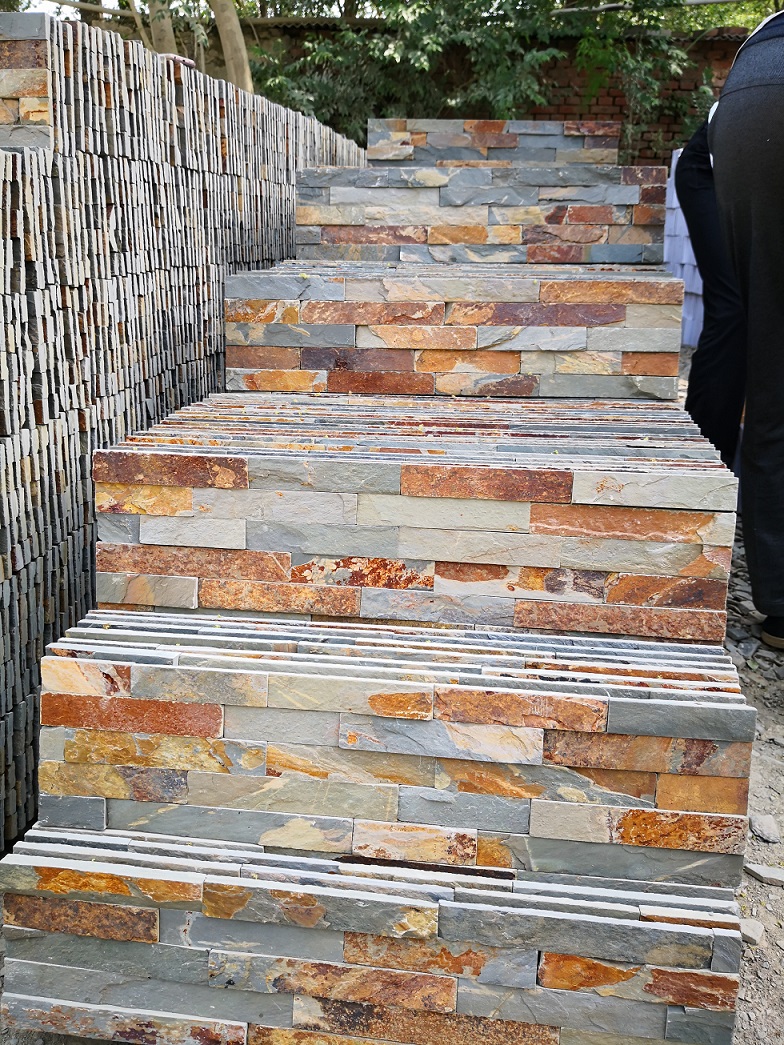
Premium Stacked Stone Ledger Panels for Every Architectural Vision
Label Design: Clear SKUs, Barcodes, and Installation Instructions
Retail packaging labels must balance machine readability with human legibility, using specified barcode dimensions, print quality standards, and label placements to ensure seamless scanning and easy identification.
Key Principles for SKU and Barcode Label Design
Barcode design in retail packaging follows strict dimensional and quality specifications to ensure reliable performance across automated and handheld scanning environments. The X-dimension, which defines the narrowest bar width, must be maintained between 0.33 mm and 0.43 mm, providing optimal compatibility with standard retail scanners. Height is equally critical, with bars measuring between 10.5 mm and 13 mm depending on label type, allowing the scanner to capture the full code without misreading.
A quiet zone of at least 6.3 mm is required at each end of the barcode to prevent adjacent graphics from interfering with scanning. Print quality targets ANSI grade B for SKU labels and grade C for master carton labels, minimizing first-pass scan failures. Alongside machine readability, human legibility is maintained through a minimum SKU text size of 0.25 inch in character height (approximately 20-point font), ensuring critical identification details are easily visible to staff.
Label Placement and Technical Specifications for Installation Instructions
SKU labels must be positioned consistently on the primary packaging containing each part. Common placements include the end panel or, if space is constrained, the lower right corner of the top panel. This positioning ensures labels remain visible without manipulating the package during inbound handling. Master carton labels are typically placed on the top right corner of the shipment’s end face, remaining visible through stretch wrap for rapid identification in palletized loads.
Label material specifications call for pressure-sensitive paper, die-cut on rolls or sheets, with small SKU labels often measuring 4 inches by 1 7/8 inches. Barcode symbologies adhere to GS1-128 and GS1 DataMatrix standards, supporting interoperability across retail, food, and pharmaceutical supply chains. Installation instructions on the principal display panel must use text at least 0.25 inch high, arranged in blocks of three lines to maintain clarity and comply with consumer packaging regulations.
Drop Test: How to Pass the ISTA 1A Standard
ISTA 1A requires ambient preconditioning, fixed displacement vibration, and drop tests from weight-dependent heights, ensuring no damage to products or packaging.
Overview of ISTA 1A Drop Test
The ISTA 1A drop test protocol applies to individually packaged products weighing 150 lb (68 kg) or less, prepared as they would be for shipping. It is designed to assess basic handling integrity rather than simulate an entire transit environment.
The standard test sequence includes three stages: ambient preconditioning to stabilize temperature and humidity effects, fixed displacement vibration with a 1 in (25 mm) peak-to-peak motion at the package’s resonant frequency, and one selected shock test such as a free-fall drop.
Drop testing simulates the shocks a package might experience in everyday handling. Heights are determined by product weight, and orientations target vulnerable structural points such as corners, edges, and faces. For unknown vulnerability, face-3 corner drops are common.
Test Specifications and Criteria for Passing
Drop height in ISTA 1A follows a decreasing scale as product weight increases, based on ISTA reference charts. For fragile products, specific orientations are emphasized to challenge the weakest points in packaging design.
Common equipment for this test includes drop testers such as the SF-DP1200, SF-DP600, and SF-DP200, all compliant with ASTM D5276. These machines provide accurate free-fall performance from the required test height while allowing controlled orientation setups.
To achieve a passing rating, the product and its packaging must show no damage or functional impairment after completing the full test sequence, including preconditioning and vibration. This strict threshold validates packaging design for single-shipment integrity while avoiding damage during typical retail and distribution handling.
Eco-Friendly Packaging: Alternatives to Styrofoam (Pulp Liner, etc.)
Eco-friendly packaging alternatives like molded pulp, bagasse, PLA, mycelium foam, mineral-filled polypropylene, and cornstarch foam offer biodegradable, compostable, or lower-plastic options with comparable protective qualities to Styrofoam.
Overview of Eco-Friendly Alternatives to Styrofoam
Molded pulp is produced from recycled paper materials such as paperboard, newsprint, and corrugated cardboard. It is fully biodegradable and compostable, offering shock resistance similar to foam, which makes it suitable for protective pads, angled supports, and replacing pallets for large products.
Bagasse comes from sugarcane byproducts and is compostable under SB 54 standards. Its manufacturing process consumes less energy compared to many synthetic alternatives, supporting international efforts to reduce plastic usage.
PLA is derived from renewable resources like corn or sugarcane. It has a smaller carbon footprint than polystyrene, complies with compostability standards, and is often chosen for cold food or beverage containers because it’s plant-based and PFAS-free.
Mycelium foam is grown from mushroom roots combined with agricultural waste. It’s completely compostable, non-toxic, and manufactured using low-energy molds. It suits packaging for lightweight products or visually distinctive branding but is less suited for mass industrial production.
Cornstarch foam is made from starch sources like corn, wheat, or potatoes. This material biodegrades naturally, dissolves in water without leaving harmful residues, and is common for loose-fill or cushioning applications.
Technical Characteristics and Applications of Alternatives
Molded pulp materials match foam in shock resistance and work well for mid-traffic retail packaging that requires robust cushioning and shape retention. Their downside can include higher tooling costs for complex custom shapes and surface dust from rough textures.
Bagasse and PLA are both grease-resistant, making them popular for food service. They meet California’s SB 54 compostability requirements, and PLA typically carries a 50% lower carbon footprint than polystyrene, appealing to companies focused on emission reduction.
Mycelium foam’s unique structure benefits fragile product shipping, particularly in targeted e-commerce or boutique retail. Its scalability for heavy industrial sectors remains limited.
Mineral-filled polypropylene offers performance flexibility for hot and cold applications, using 50% less plastic content. It tolerates temperatures from 37°F to 240°F, is microwave-safe, and helps bridge gaps where full compostability is not required.
Cornstarch foam disintegrates in soil and water, serving as an eco-conscious choice for loose-fill and cushioning. It provides environmental safety without sacrificing basic protective function.
Across these options, molded pulp and plant-fiber materials dominate as direct Styrofoam replacements where full biodegradability and compostability are priorities. Mycelium and starch-based foams fill niche roles with specialty advantages, while mineral-filled polypropylene balances sustainability gains with high performance, particularly in mixed-use food and product packaging sectors.
Final Thoughts
Creating standardized SKUs for retail and e-commerce depends on balancing visual appeal, regulatory compliance, and structural resilience. From choosing the right corrugated board ply to meeting pallet size standards, each decision contributes to packaging that travels efficiently, protects products, and meets both retail and e-commerce requirements.
As packaging evolves, integrating sustainable materials, precision labeling, and rigorous testing ensures brands can reduce waste, improve transport efficiency, and maintain product integrity from manufacturer to customer. An adaptable, standards-based approach minimizes costs, supports environmental goals, and enhances consumer trust in the shopping experience.
أسئلة مكررة
How should retail packaging be designed to maximize breakage reduction?
Retail packaging should follow the ECR Shrinkage Road Map, a six-step process to identify supply chain vulnerabilities. It uses barrier protection materials, tamper-evident seals, modular sizing for shelves, and handling labels to reduce damage. Validation includes drop, compression, and vibration testing.
Which corrugated box structure is best suited for a 20kg stacked stone panel?
A double-wall corrugated fiberboard box, such as CB-flute, with 350-500 lb/in² burst strength and at least 44 lb/in edge crush test, typically designed as Regular Slotted Container or Full Overlap style, is recommended for 20 kg stacked stone panels.
What information must be included on the packaging to sell on major e-commerce platforms?
Packaging needs the manufacturer’s name, registered trade name, contact details, product identifiers, and safety warnings in consumer languages. From 2027, QR codes linking to environmental info are required. Empty space should not exceed 40-50% depending on parcel type.
Does packaging design impact the container loading rate?
Yes. Optimizing packaging size and stackability can increase product per pallet by 5-21.9% and improve container fill rates, sometimes achieving up to 14.3% more units per pallet and reducing pallets needed by 12-17%, enhancing overall transport efficiency.
How does the manufacturer ensure packaging materials are eco-friendly and recyclable?
Manufacturers comply with regulations like the EU PPWR, requiring all packaging to be recyclable by 2030 with recycled content mandates starting 2026. US states have similar laws mandating recyclable or compostable packaging and recycled content minimums.
Which inner lining materials are more cost-effective than polystyrene foam?
No inner lining materials are currently cheaper than EPS foam, which costs $700-1,120 per ton. Alternatives like polypropylene, EPE foam, and polyurethane foam are more expensive based on raw material costs.
SEO
Title: Corrugated Boxes & Retail Packaging Design: Creating Standardized SKUs for Retail and E-commerce
Description: Retail packaging standards guide B2B buyers to optimize pallet stacking, labeling, and eco-friendly materials for compliance and efficiency.
URL: retail-packaging-standards-compliance-b2b
Keywords: Retail packaging standards
