
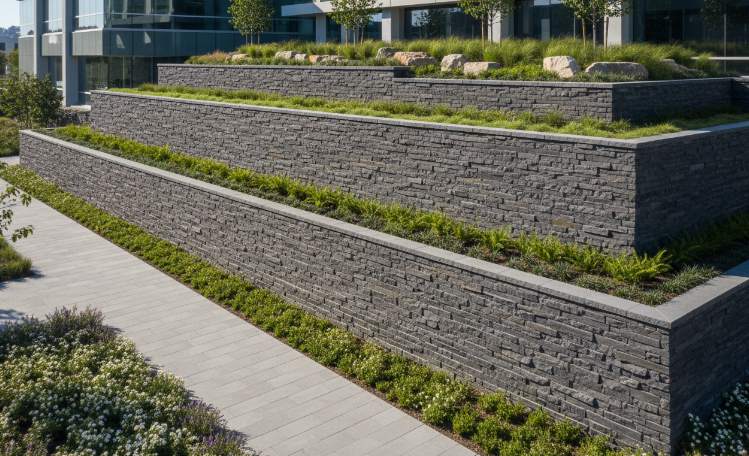
Inaccurate estimates of retaining wall cost often lead to structural instability or eroded project margins. Aligning substrate prep for CMU blocks with the 153% ROI of natural stone veneer protects the bottom line for landscape architects and developers.
This budget analysis benchmarks natural panels against the 8-12 lbs per square foot weight standard. We evaluate how CNC diamond-blade precision and interlocking Z-shape systems reduce specialized masonry labor by camouflaging joints and eliminating the need for over-designed structural footings.
Why does retaining wall stone veneer cost more than standard panels?
Natural stone veneer costs $15–$30 per square foot due to intensive extraction and specialized labor, yet 100% natural minerals offer superior durability and 153% ROI.
Material extraction and specialized masonry labor
Extracting genuine stone from quarry layers and precision-cutting it to specifications under 2 inches thick requires significantly more resources than mass-producing manufactured panels in a factory. This process ensures you get real quartzite or slate rather than molded concrete.
Professional installation also demands a higher skill set. Masons must apply wire lath and scratch coats to support the weight of natural minerals, which increases the labor premium. Logistics for these heavy materials further drive up the landed cost for B2B distributors.
- Labor Premium: $2 to $4 per square foot for specialized masonry techniques.
- Material Thickness: Strictly maintained under 2 inches (50mm) for veneer applications.
- Investment Return: 153% average ROI for exterior stone siding upgrades.
CNC precision and interlocking design for architectural finishes
We use CNC diamond-blade edges to ensure tight tolerances and clean lines. This engineering allows for a seamless architectural finish that camouflages the substrate and eliminates the “stepped” look common in lower-quality panels.
The interlocking systems use a specific male-female connection to hide vertical joints. Because we source from the same quarry vein per order, the wall maintains a natural flow without the patchy appearance of synthetic alternatives.
- Hue Uniformity: 95% consistency within a single production batch.
- Panel Shapes: Z-Shape and S-Shape interlocking systems for seamless joints.
- UV Stability: 100% natural stone prevents fading or delamination over time.
- Corner Solutions: Pre-fabricated matching L-Corners for professional 90-degree transitions.

Substrate preparation: Budgeting for CMU blocks vs. Concrete
CMU blocks cost $10-$20/sqft, while poured concrete averages $15-$30. Blocks are manual-labor intensive and require steel; concrete needs expensive formwork but offers superior load-bearing capacity.
Initial Material and Labor Costs for Wall Bases
Choosing between a Concrete Masonry Unit (CMU) and poured concrete dictates your project’s baseline margin. While block walls look cheaper on a simple material quote, the labor hours required for stacking and mortaring often balance the scales against high-volume concrete pouring.
- CMU Block Materials: $10 to $20 per square foot for 2026 project estimates.
- Poured Concrete Walls: $15 to $30 per square foot due to technical labor and formwork.
- Reinforcement Steel: Rebar and lintels typically add $3.50 per pound to the substrate budget.
- Hourly Labor Rates: Skilled masonry crews currently range from $40 to $120 per hour.
Block walls allow smaller crews to work without heavy machinery, which helps on tight residential sites. But poured concrete wins on speed for large-scale commercial sections, provided you account for the rental costs of specialized equipment and forms.
Leveraging 8-12 lbs Panels to Reduce Structural Loads
We engineer أعلى مصدر الحجر panels to eliminate the need for over-designed structural footings. By keeping the weight low, you can install 100% natural stone directly onto standard CMU without the expensive structural upgrades required for full-bed stone.
- Panel Weight: 8 to 12 lbs per square foot (approx. 30-40kg/m²).
- Core Materials: 100% natural quartzite and slate for high UV stability.
- Interlocking Design: Precision-cut Z-shapes camouflage substrate joints and eliminate “stepped” gaps.
- Weather Resistance: Freeze-thaw resistant minerals that prevent delamination in extreme climates.
The CNC diamond-blade precision of these panels ensures modular pieces fit tightly. This removes the need for a premium finish on the underlying concrete or block, as the interlocking system effectively conceals the installation substrate and all vertical joints.
Premium Factory-Direct Stacked Stone Ledger Panels

Drainage systems and moisture barrier expenses
In 2026, drainage and waterproofing add $5 to $10 per square foot. These systems prevent structural failure and white salt deposits from ruining the stone surface.
Investment in drainage pipes and weep hole spacing
Mechanical water diversion protects the wall’s foundation from hydrostatic pressure. Contractors price these essential tools based on site accessibility and the total area requiring protection.
- Perforated Drainage Pipe: $50 to $80 per square foot
- Weep Hole Drilling: $60 to $75 per square foot
- Gravel Backfill: $6 to $25 per cubic yard
Drilling weep holes every 6 to 10 feet along the base remains the industry standard for effective pressure relief. This ensures water flows through the gravel rather than against the stone.
Moisture barrier costs for high humidity stone protection
Protective layers keep natural stone panels like slate or quartzite looking clean. They stop moisture from pushing minerals to the surface and causing efflorescence.
- Moisture Barrier: $220 to $500 per section
- Waterproofing Membrane: $2 to $10 per square foot
- Stone Quality: High salinity and humidity resistance
Top Source Stone panels withstand salt and humidity exceptionally well. So, we recommend using external flashing in high-moisture areas to maintain professional architectural standards.
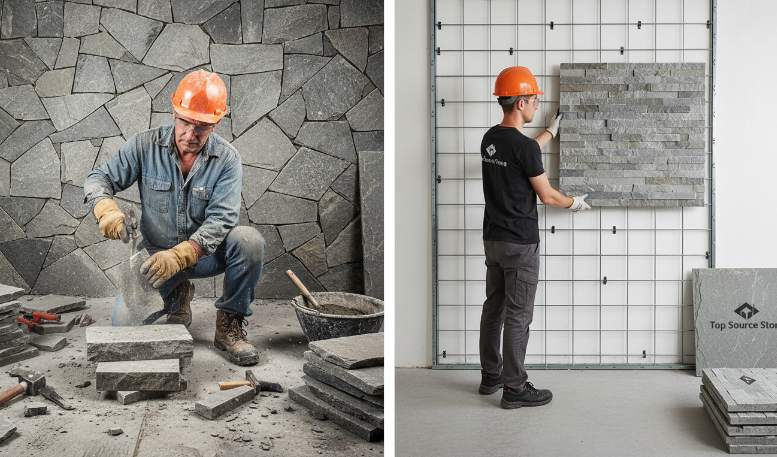
Labor premiums for exterior landscape masonry in 2026
Skilled masonry labor ranges from $40 to $120 hourly. Professional stone wall installations command $36.35 to $49.05 per square foot, reflecting high material complexity and specialized expertise.
Market rates and pricing variables for professional masonry
Professional masonry pricing depends heavily on the expertise required for specific installations. Natural stone work involves higher premiums than brick or block because masons must manually shape and sort irregular pieces to ensure structural stability.
- Standard Masonry Labor: $40 to $100 per hour
- Specialized stone wall rates: $36.35 to $49.05 per square foot
- Complex repairs: $120 per hour for foundations or stone patios
- Equipment and logistics: 5% surcharge for rentals and 5% for transportation
Permits and compliance requirements add fixed costs ranging from $100 to $250. These market rates represent the standard for skilled craftsmen as of January 2026, though site accessibility and soil conditions can push estimates higher.
Minimizing labor costs with precision-cut interlocking panels and L-corners
Top Source Stone engineers products to eliminate the inefficiencies of traditional masonry. CNC diamond-blade edges ensure a consistent fit, which stops masons from wasting hours on manual stone trimming and on-site adjustments.
- CNC Precision Edges: Eliminates manual stone trimming for clean architectural lines
- Interlocking Systems: Z-Shape and S-Shape male-female connections camouflage joints rapidly
- Pre-fabricated L-Corners: Removes the need for complex miter cuts at 90-degree transitions
- Standardized weight: 8-12 lbs/sq.ft allows for faster handling than full-thickness stone
Providing a Project-Ready Full Solution means our dealers can guarantee shorter timelines to their clients. These technical specifications convert complex masonry into an efficient, modular process that protects project margins and reduces total labor invoices.
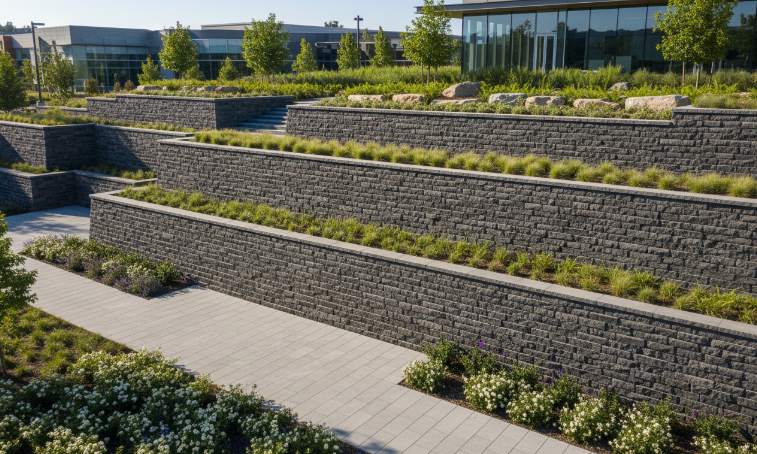
Total cost of a 100 sqft retaining wall project
A 100 sqft retaining wall costs $2,000 to $6,500. Labor and materials drive this, though direct sourcing and modular panels provide significant cost reductions for professional dealers.
| Project Component | Estimated Cost (100 sqft) |
|---|---|
| Professional Masonry Labor | $1,000 – $3,000 |
| Natural Stone Materials | $1,000 – $8,500 |
| Concrete or Block Alternatives | $1,500 – $5,500 |
| Drainage & Site Preparation | $500 – $1,000 |
Expense breakdown by material and labor
Labor rates for professional masonry in 2026 stay between $1,000 and $3,000 per 100 square feet. Natural stone materials fluctuate between $1,000 and $8,500 based on rarity and finish. While concrete and block alternatives offer mid-range pricing, site complexity often dictates the final bill.
- Natural Stone: $10 to $85 per square foot depending on geological rarity.
- Concrete Blocks: $15 to $55 per square foot for mid-range durability.
- Waterproofing: $2 to $10 per square foot for essential moisture barriers.
- Drainage Piping: $50 to $80 per square foot of piping for seepage solutions.
Proper site preparation and drainage systems add necessary but variable costs to the project baseline. Investing in these components upfront prevents hydrostatic pressure from causing wall failure, which can collapse a structure regardless of the material quality.
Cost benefits of direct quarry sourcing and interlocking panels
Top Source Stone operates as a direct quarry source factory to eliminate middleman markups. This B2B model ensures dealers and wholesalers receive maximum cost-efficiency by controlling the supply chain from the mountain to the crate.
- Interlocking Z-Shape: Uses a male-female connection to camouflage joints and slash installation hours.
- CNC Diamond-Blade Precision: Ensures modular pieces fit tightly, preventing expensive material waste.
- Matching L-Corners: Pre-fabricated 90-degree corners remove the need for manual miter cuts on-site.
- Same-Batch Consistency: Sourcing from the same quarry vein prevents patchy, mismatched wall aesthetics.
Precision engineering reduces the reliance on highly specialized masonry skills for alignment. By using modular, project-ready solutions, contractors can complete a 100 sqft installation faster, effectively lowering the labor premium typically associated with natural stone.
أسئلة مكررة
What is the average installation cost for a stone retaining wall in 2026?
Dry-stack stone walls average $30 per square foot. Typical 50-foot projects range from $2,000 to $10,000. Prices fluctuate based on the stone type. Premium materials like slate reach $85 per square foot depending on local availability and labor rates.
Why is natural stone veneer more budget-friendly than solid stone blocks?
Stone veneer reduces total project costs by roughly 50%. Its lightweight nature eliminates the need for reinforced structural footings. Installation is faster and cheaper—often costing as little as $2 per square foot—while solid stone requires heavy equipment and intensive masonry labor.
How does water pressure impact the lifespan of a stone wall?
Saturated soil generates hydrostatic pressure, the primary cause of wall failure, bulging, or collapse. Installing effective drainage systems like French drains and weep holes prevents water from weakening the foundation. This keeps the structure stable for decades.
Which stone types provide the best stability for garden walls?
Angular stones lock together securely, making them superior to rounded options. Granite offers the best long-term durability. Limestone panels with sawn beds simplify the stacking process. Selecting materials with high UV stability ensures the wall maintains its color without fading over time.
How should I calculate the total budget for a 2026 stone project?
Multiply the wall’s length by its height to determine the total square footage. Apply a national average of $33 per square foot for a baseline estimate. You must also factor in site-specific expenses such as terrain accessibility, drainage requirements, and transport costs from a direct quarry factory.
Final Thoughts
Investing in 100% natural quartzite or slate ensures a 153% ROI that synthetic imitations cannot match over time. While cheaper materials invite UV fading and structural risk, our CNC-cut interlocking systems protect your project margins by slashing specialized masonry hours. Choosing direct quarry sourcing eliminates middleman markups and guarantees color consistency across every crate in your inventory.
Stop overpaying for inefficient installation and fragmented supply chains. We recommend requesting a sample kit or starting a 300-square-meter trial order to verify our precision fitment and hue uniformity firsthand. Contact our team today to secure high-demand stock from our “Big 10” collection and streamline your next landscape project.
SEO
Title: Retaining Wall Stone Veneer Cost: Budgeting for Structural Landscapes
Description: Retaining Wall Stone Veneer Cost analysis for B2B. Features 8-12 lbs panels and 153% ROI. Direct factory wholesale, 300sqm MOQ.
URL: retaining-wall-stone-veneer-cost
Keywords: retaining-wall-stone-veneer-cost
