

Accurate stone veneer terminology prevents the structural specification errors that inflate commercial project budgets. Confusing lightweight thin veneer with heavy full bed stone results in unnecessary concrete footings, adding 35 lbs per square foot of dead weight that destroys labor efficiency and dealer margins.
We benchmark these products against CNC diamond-blade specs and the 8-12 lbs per square foot weight standard. This distinction helps wholesalers secure same-batch consistency and direct quarry pricing while avoiding the high labor costs of traditional masonry.
Decoding Industry Jargon: Are You Using the Correct Stone Terms?
Precise stone terminology prevents specification errors. Distinguish decorative veneer from exterior cladding and use Z-shape interlocking to match structural requirements and installation methods.
Clarifying Core Veneer and Cladding Classifications
Standardizing architectural terms is the first step toward order accuracy. In the B2B stone trade, misidentifying a product’s function often leads to structural misalignment or failed inspections. Veneer remains the umbrella term for any non-load-bearing decorative layer, but the application environment dictates the specific sub-category.
- Veneer: A decorative facing material that carries no structural load and is applied over a structural backing.
- Cladding: Exterior stone veneer used specifically to finish and protect outer wall construction.
- Dry Stack: An installation appearance mimicking mortarless masonry, often contrasted with coursed veneer which uses consistent horizontal heights.
- Riven Finish: Stone split along natural layers to create organic ridges and dips for a traditional, textured look.
Defining Factory-Grade Specs for Interlocking Panel Systems
أعلى مصدر الحجر focuses on technical modularity rather than generic descriptions. Precision at the factory level determines how well these panels perform on a commercial site. We emphasize mechanical fit to reduce site labor and ensure a high-end architectural finish.
- Z-Shape and S-Shape: Modular interlocking designs utilizing a “male-female” connection system to camouflage vertical joints.
- CNC Diamond-Blade Edges: Precision-cut manufacturing that ensures a tight modular fit and eliminates visible “stepped” gaps.
- Matching L-Corners: Pre-fabricated 90-degree components that maintain color and texture synchronization at wall transitions.
- Seamless Technology: Engineering that uses precision-cut interlocking structures to completely conceal the underlying substrate.

What Specifically Defines a “Ledger Panel” in Modern Construction?
A modular cladding system pre-assembled into 6″ × 24″ interlocking sections. These natural stone panels bypass structural footers while providing a seamless, hand-stacked aesthetic for facades and fireplaces.
Structural Composition of Pre-Assembled Stone Modules
Ledger panels replace traditional stone masonry with modular efficiency. Each unit consists of 100% natural stone strips—including slate, quartzite, or marble—bonded into a single component. This engineering removes the need for a mason to select and fit individual stones on-site, significantly cutting labor costs.
- Dimensions: Standard 6″ × 24″ (150x600mm) or 6″ × 22″ (150x550mm) formats for modular stacking.
- Weight Profile: Lightweight engineering at 30-40kg/m² (8-12 lbs/sq.ft) allows direct application to wall surfaces.
- Foundation Requirements: Eliminates the need for structural wall footings or shelf angles required by 3-5 inch thick full-bed stone.
- Thickness Variance: Standard profiles range from 1cm to 2.5cm, while premium rough-stacked options reach up to 3.5cm.

CNC Precision and the Interlocking Z-Shape System
Manufacturing standards for modern ledger panels rely on mechanical precision to achieve a professional finish. High-performance panels utilize specific geometries to hide the installation substrate. We apply CNC diamond-blade cutting to maintain tight tolerances, ensuring panels fit together without visible gaps or “stepped” seams.
- Interlocking Geometry: Z-shape and S-shape models utilize a male-female connection system to camouflage vertical joints.
- Same-Batch Consistency: Sourcing from the same quarry vein ensures 95% hue uniformity across large-scale installations.
- Edge Precision: CNC-cut edges provide a professional finish that mimics traditional hand-assembled dry-stack masonry.
- Corner Solutions: Matching pre-fabricated L-corners provide texture and color synchronization at wall transitions and 90-degree turns.
Boost Profitability with Premium Stacked Stone Panels
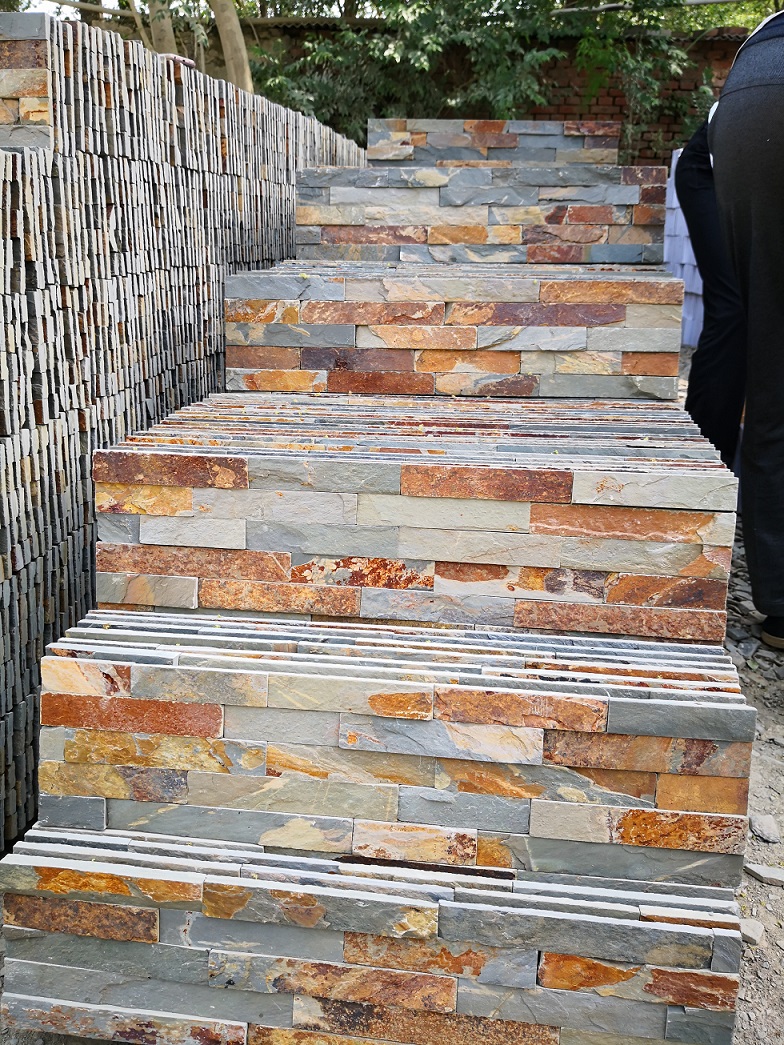
Thin Veneer vs. Full Bed Stone: Understanding Weight and Application
Thin veneer (1”) installs directly to walls at 8-12 lbs/sq.ft, while full bed stone (3-5”) requires structural footings to support its 45 lbs/sq.ft load.
| Feature | Thin Stone Veneer | Full Bed Stone |
|---|---|---|
| سماكة | 1cm to 2.5cm (Standard) | 3 to 5 Inches |
| Weight | 8 to 12 lbs/sq.ft | 35 to 45 lbs/sq.ft |
| Structural Support | Direct Adhesion (No footing) | Concrete Ledge/Footing Required |
| Installation Speed | High (Pre-cut panels) | Low (Piece-by-piece masonry) |
Comparing Material Thickness and Structural Weight Loads
Thickness dictates every engineering decision on a job site. Thin stone veneer typically averages 1 inch, which keeps the material light enough for interior feature walls or upper-story retrofits where structural reinforcement isn’t an option. Because it sits at a fraction of the weight of traditional masonry, architects use it to achieve a high-end look without recalculating the building’s load-bearing capacity.
Full bed stone demands a thickness of 3 to 5 inches. This depth creates bold shadow lines and provides massive impact resistance, but it pushes the weight to 35-45 lbs/sq.ft. Engineering standards for 2026 projects prioritize thin veneer for decorative work to slash reinforcement costs, though full bed stone remains the standard for permanent monument work or exterior facades where extreme durability is the primary goal.
Eliminating Foundation Footings with Precision-Cut Panels
Top Source Stone manufactures standardized 6 x 24 panels that weigh between 30-40kg/m² (8-12 lbs/sq.ft). This specific weight profile removes the need for expensive concrete footings or wall ledges. Since the stone is precision-cut between 1cm and 2.5cm, workers install the units directly onto cement board or masonry using mortar, bypassing the complex structural prep required for heavy blocks.
B2B distributors and wholesalers see the biggest impact in logistics and labor efficiency. Choosing thin-cut panels over bulky alternatives reduces shipping costs and speeds up site installation. We provide matching L-corners for every series, ensuring wall transitions maintain the appearance of full-depth structural stone without adding the associated weight.
- Standard Panel Sizes: 6″ × 24″ (150x600mm) or 6″ × 22″ (150x550mm).
- Weight Strategy: 17.5 Tons max per 20GP container for USA port standards.
- Material Integrity: 100% natural slate, quartzite, or granite with CNC diamond-blade edges.
- B2B Utility: Pre-fabricated 90-degree corners available for all “Big 10” inventory colors.
By switching to thin veneer panels, dealers protect their margins and their clients’ budgets. The removal of the “brick ledge” requirement alone can save a project thousands in foundation labor, making natural stone accessible for lightweight framing and renovation projects.
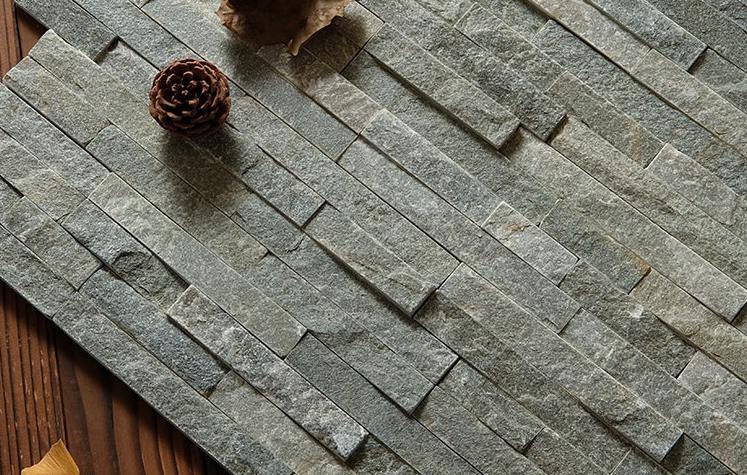
The Architectural Origin and Evolution of the Term “حجر مكدس”
Stacked stone evolved from Neolithic dry-stone survival into a documented Medieval trade, now perfected through CNC-engineered ledger panels that replicate ancient masonry with modern interlocking precision.
From Neolithic Dry Stone to Medieval Documentation
Dry stone construction began as a practical survival method around 3800 BC. In County Mayo, Ireland, Neolithic societies stacked stones without mortar to create walls and shelters that remain standing today. While these early efforts were purely functional, civilizations like the Inca in Peru eventually refined the practice into sophisticated ashlar masonry, using polished, regular shapes to create freestanding walls and terraces.
The term “حجر مكدس Element” became a formal architectural category during the Medieval era. This period marked a transition from unnamed labor to a documented design category within professional masonry guilds. Builders in this era utilized large slabs for massive structures but systematically piled smaller, flat-faced stones for mid-sized dwellings, establishing the linear aesthetic we recognize today.
Evolution of Craftsmanship into CNC Precision Engineering
Modern engineering has replaced traditional weight-bearing stacking with lightweight ledger panels. We no longer rely on the physical weight of individual boulders; instead, we utilize advanced manufacturing to achieve the ancient aesthetic without the structural mass of full-bed stone.
- Joint Camouflage: أعلى مصدر الحجر utilizes Z-Shape and S-Shape interlocking systems with a “male-female” connection to eliminate visible vertical joints and “stepped” gaps.
- Cutting Precision: CNC diamond-blade edges ensure consistent lines and a tight fit, replicating the precision of historical master masons in a modular format.
- Quarry Consistency: We source from the same quarry vein per order to maintain 95% hue uniformity, preventing the patchy appearance common in mixed-batch materials.
- Standard Specs: Panels typically measure 6″ × 24″ with a thickness of 1cm to 2.5cm, weighing approximately 8-12 lbs/sq.ft for efficient interior and exterior application.
This evolution allows architects to specify textures once reserved for monuments for use in contemporary feature walls and fireplaces. By using pre-fabricated matching L-corners, developers ensure texture and color synchronization at every transition, maintaining the illusion of solid, structural stone walls with modern efficiency.

Why Must B2B Buyers Master These Terminology Differences to Save Costs?
Precise terminology prevents over-engineering structural supports and simplifies customs. Understanding the weight-to-labor ratio of thin veneer versus full bed stone directly protects project margins.
Differentiating Thin Veneer from Full Bed Stone to Reduce Structural Expenses
B2B buyers often confuse thin stone veneer with full bed stone, leading to massive over-expenditure on structural reinforcement. Thin stone panels weigh between 8 and 12 lbs/sq.ft, allowing for direct application to wall surfaces with mortar. This weight profile eliminates the need for expensive brick ledges or heavy concrete footings required by traditional 35-45 lbs/sq.ft full bed masonry.
Specifying natural stone over manufactured composites avoids the long-term cost of replacement. While manufactured stone often chips or fades under UV exposure, Top Source Stone provides 100% natural minerals with inherent UV stability and high salinity resistance. Choosing the correct material early in the procurement phase cuts total labor expenditures by reducing installation complexity.
- Weight (Thin): 8-12 lbs/sq.ft (Top Source Stone Standard).
- Weight (Full Bed): 35-45 lbs/sq.ft.
- Structural Requirement: Thin veneer requires no brick ledges or specialized footings.
- Material Integrity: 100% natural minerals prevent UV fading and surface chipping common in concrete-based “faux” stones.
Leveraging Precise HS Codes and Same-Batch Consistency for Import Efficiency
Import logistics eat into margins when buyers use generic product descriptions. Using precise HS codes speeds up customs clearance and secures favorable tax rates. Direct quarry sourcing also removes middleman markups, ensuring that procurement budgets go toward material quality rather than trading fees.
We source all materials for a single order from the same quarry vein. This same-batch consistency maintains a 95% hue uniformity, which prevents the patchy appearance common with mixed-source shipments and eliminates expensive on-site sorting. Pre-fabricated L-corners further reduce labor costs by providing professional 90-degree transitions, minimizing material breakage and on-site cutting time.
- HS Code (Slate): 6803.00.90
- HS Code (Quartzite): 6802.93.11
- Hue Uniformity: 95% within a single batch via same-vein sourcing.
- Corners: Project-ready L-corners synchronize texture and color at wall transitions.
- Sourcing: Direct quarry source pricing eliminates middleman inflation.
أسئلة مكررة
What is the primary difference between stacked stone and ledger panels?
Stacked stone refers to the architectural style of layering thin stone strips. Ledger panels are the modern B2B solution—modular 6″ × 24″ units designed for rapid installation. While many use the terms interchangeably, ledger panels specifically utilize interlocking systems to create the traditional stacked look without requiring individual stone masonry labor.
Do natural stone ledger panels require structural footings or wall reinforcement?
No. These panels weigh between 8 and 12 lbs per square foot, categorizing them as thin veneers. You can install them directly onto structurally sound surfaces like cement board or masonry. They do not require the heavy foundation ledges or structural wall reinforcements necessary for full-bed stone installations.
How do installers prevent visible vertical joints in large wall applications?
Eliminating visible seams requires interlocking Z-shape or S-shape panels. These designs use a male-female connection system that camouflages vertical joints. We use CNC diamond-blade edges to ensure these modular pieces fit tightly, hiding the substrate and maintaining a continuous architectural flow across the entire surface.
Is natural stone veneer superior to manufactured faux stone for exterior facades?
Yes. Natural materials like quartzite and slate provide permanent UV stability, so the color never fades. Manufactured concrete products rely on iron-oxide pigments that degrade over time. Natural stone also offers higher density and superior freeze-thaw resistance, making it the more durable choice for high-exposure environments.
How should outside corners be managed during a professional installation?
Use pre-fabricated matching L-corners rather than attempting on-site miter cuts. We engineer these 90-degree pieces from the same quarry batch as the flat panels to ensure perfect color and texture synchronization. This creates a professional wrap-around appearance that mimics the look of full-thickness structural stone.
Final Thoughts
Generic ledger panels often hide hidden costs in high rejection rates and excessive site labor. Our 95% hue uniformity and CNC-cut Z-shape systems ensure your projects bypass expensive on-site sorting and visible vertical seams. Choosing 100% natural stone from a direct quarry source protects your long-term reputation from the fading and chipping issues common in manufactured imitations.
Stop over-engineering foundations and start maximizing container volume with precision-cut thin veneer. We recommend requesting a sample of our “Big 10” inventory to verify our 8-12 lbs/sq.ft weight profile and mechanical fitment firsthand. Connect with our export team today to discuss trial order pricing or private labeling options for your regional brand.
