
In the premium stacked stone market, the ability to offer exclusive colors and textures isn’t just an aesthetic decision—it’s a revenue driver. Specialty texture segments alone are worth around USD 500 million annually, and complex textures can command up to USD 6 per square foot in installed cost. For B2B buyers, these figures translate into clear competitive gains, as unique finishes hold higher margins and are far tougher for competitors to duplicate.
This article walks through how to secure custom color and texture rights, partner effectively with factories, and navigate the technical and financial aspects of production—from R&D parameters and Delta E tolerances to MOQ thresholds and mold ownership terms—so you can bring distinctive stone products to market with both operational control and long-term exclusivity.
The Value of Customization: Building Market Uniqueness
Custom and specialty textures in the architectural coatings segment command higher average selling prices due to their distinctive aesthetics and brandable finishes. Market data shows they represent a premium, higher-growth niche capable of generating hundreds of millions in annual incremental revenue, while controlled manufacturing processes and compliance with regulations create defensible advantages that smaller competitors struggle to replicate.
| Key Metric | Value / Forecast | Notizen |
|---|---|---|
| Global texture paint market size (2024–2025) | USD 1.26–19.8 billion | Forecasts up to USD 46.4B (CAGR ~9.1%) by 2035 and USD 20.7B (CAGR 4.6%) by 2034 |
| Specialty textures segment growth | ~USD 500 million annually | Depth, dimension, unique sensory finishes; projected over next 5 years |
| Installed cost – complex textures | Up to USD 6/ft² | Compared with simpler coatings; higher skill/tool requirement |
High-Value Market Segmentation
Market analyses divide specialty texture paints from commodity products due to their creative and sensory qualities. These attributes not only justify higher average selling prices but also establish them in a category with stronger growth trajectories and more stable margins. The differentiation is especially valuable in B2B contexts, where premium SKUs can meaningfully boost revenue streams.
Operational Engineering Factors
Reports on textured paint manufacturing facilities stress the necessity of precise process design, suitable equipment choices, and strict adherence to regulatory frameworks. EPA air-quality mandates, combined with local VOC limits, influence formulation complexity and production cost. These barriers make duplication difficult for undercapitalized competitors, giving skilled producers the opportunity to secure lasting market positions.
Cost Dynamics at Project Level
Complex faux and artisanal textures can demand up to USD 6 per square foot in installation spending, a reflection of both labor intensity and tooling precision. Local or bulk sourcing of finish materials can offset these figures by 10–20%, improving margins without reducing visual quality or compliance. Integrating cost-efficient sourcing with scalable customization allows firms to manage per‑unit costs while maintaining premium market status.
Strategic Advantage Through Customization
By developing replicable custom texture processes, investing in compliant formulations, and optimizing supply chains, manufacturers can transform customization from a perceived expense into a profitability driver. The blend of market appeal and operational control becomes a structural advantage that supports both revenue growth and defensible market uniqueness.
R&D Process for Exclusive Colors and Stone Blends
R&D focuses on selecting specific mineral aggregates, resin or ceramic binders, and pigments, controlling particle sizes and mixing processes, and applying precise thermal or curing cycles to achieve exclusive colors and consistent stone textures.
| Key Material / Process | Purpose / Function | Outcome |
|---|---|---|
| Unsaturated polyester resins with pigment pastes and functional fillers | Formulate custom colors and veining while supporting high filler loading | Achieved exclusive colors with mechanical and aesthetic consistency |
| High filler content of graded mineral aggregates | Define texture, color, and strength properties of stone product | Stable texture and controlled mechanical performance |
| Controlled sinterisation and curing cycles | Lock pigment dispersion, minimize shade differences | Color uniformity and repeatability across batches |
Fundamentals of Exclusive Color and Stone Blend Development
Exclusive color formulation in engineered stones often relies on unsaturated polyester resins, such as orthophthalic and isophthalic UPR grades, combined with pigment pastes and functional fillers. This combination supports high aggregate loading beyond 85–90% by weight without compromising the dispersion of pigments.
Mineral aggregates, including quartz, silica sand, granite, and marble, are selected and graded with precision. Aggregate grading directly affects the target texture, shade, and mechanical performance. Particle size distribution is carefully defined to enhance both appearance and structural integrity.
The classification and acceptable limits for color and texture variation are often referenced from the Dimension Stone Design Manual. This sets the industry baseline for evaluating and qualifying custom blends in professional applications.
Technical and Process Controls in Manufacturing Exclusive Stone Products
Sintered stone production is characterized by high-temperature sinterisation above 2192°F (≈1200°C), with melting peaks near 2912°F (≈1600°C). These thermal conditions help fuse pigments into the mineral matrix, reducing slab-to-slab shade differences.
Resin-based engineered stones demand precise resin systems optimized for pigment wetting and tolerance to high aggregate loads. Controlled mixing routines, vibro-compression, and curing are deployed to preserve pigment uniformity and texture across the product.
Manufacturing often follows proprietary recipes that define raw materials, particle sizes, and thermal or curing cycles for consistent results. Testing pigment dispersion and durability through polishing and curing stages ensures color stability without defects or shifts during service life.
Industry examples, such as Lapitec’s Biorite® base body, demonstrate how single-location production control and tight raw material selection are used to maintain both health-related design limits and strict surface uniformity criteria.
Minimum Custom Order Quantity (MOQ) and Cost Modeling
Minimum order quantity (MOQ) is set to balance production costs and supplier efficiency, often rising with customization levels to cover setup, materials, and labor expenses.
Understanding MOQ: Definition and Influencing Factors
MOQ represents the smallest batch size suppliers accept to start production. It is a threshold that ensures operational and financial viability for manufacturers, especially when producing bespoke designs.
Setup costs, tooling work, and material procurement often push MOQs higher, especially when products require rare colors, textures, or specialized finishes that need dedicated production steps.
High customization levels increase MOQ because certain materials, such as unique paints or coatings, are supplied in large containers with limited shelf life. Full batch usage becomes essential to avoid waste.
MOQ thresholds vary widely. Factors like product complexity, supplier workflow, and operational capacity determine acceptable batch sizes, with differences spanning from small artisanal runs to mass manufacturing volumes.
Cost Modeling and Practical MOQ Examples
Core cost drivers include tooling expenses, labor intensity, raw material sourcing, and economies of scale. Suppliers structure MOQs to balance their profitability with buyer feasibility, ensuring sustainable production schedules.
Examples from the field show MOQs ranging from 75 units or $700 in value for wholesale orders, up to 5,000 units for goods requiring extensive customization or specialized fabrication processes.
There is no standardized MOQ across industries, as thresholds depend heavily on batch size efficiencies and break-even calculations. A small electronics manufacturer might set 500-unit MOQs, while a custom furniture maker could require significantly more.
Early design adjustments—such as simplifying materials or reducing production complexity—can help secure lower MOQs in long-term supplier relationships by easing resource requirements and setup processes.
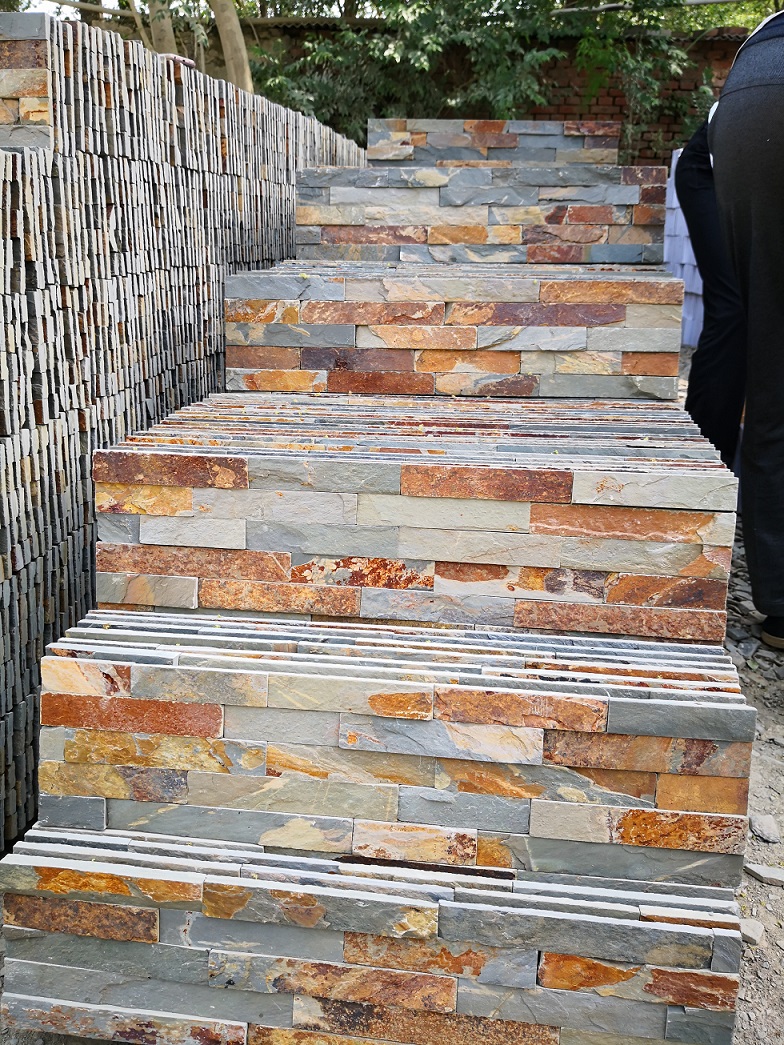
Premium Stacked Stone Ledger Panels for Every Architectural Vision
Verification: Controlling Color Variation from Samples to Bulk Orders
Color variation is controlled by measuring differences in the CIE L*a*b* color space with instrumental methods to keep Delta E (ΔE) within 1.0 or less, ensuring that color changes remain visually imperceptible from samples to bulk orders.
Fundamentals of Color Variation Measurement
Delta E (ΔE) values at or below 1.0 represent the industry benchmark for an acceptable color difference, effectively preventing visible shifts between production runs. This tight tolerance ensures product appearance remains consistent from small samples to bulk batches.
The CIE L*a*b* color space defines colors using three coordinates — L* for lightness, a* for red-green balance, and b* for yellow-blue balance — with each axis typically limited to a 1.0 deviation in controlled manufacturing. These numeric constraints are central to instrumental evaluation and control chart tracking.
A ΔE threshold near 0.5 is barely perceptible to human vision under standard conditions. In precise applications such as brand-critical packaging or high-end automotive parts, this tighter limit helps avoid noticeable mismatches between adjoining components.
Standards from bodies like ASTM and the AAMA 611 specification outline consistent measurement procedures, acceptable tolerances, and the dual use of instrumental readings and visual checks. These standards guide quality assessment across industries from plastics to metallic finishes.
Practical Controls and Process Parameters for Bulk Consistency
Manufacturers maintain color fidelity by referencing control samples that capture permissible variation ranges — both lighter and darker — and by utilizing calibrated colorimeters to test incoming raw materials before production begins. This pre-check minimizes the risk of deviations downstream.
Consistent production settings such as temperature regulation, injection speed control, stable air pressure, and balanced shear forces are critical. Any fluctuation across these parameters can lead to subtle yet detectable color shifts, especially in injection-molded products.
Processes include thorough raw material drying, rigorous masterbatch inspection, and routine spot testing against customer-approved color boards. These checkpoints ensure that final bulk output matches the intended sample reference precisely.
Visual inspections by trained personnel complement instrumental verification. Measurements in the CIE tristimulus XYZ system allow for objective ΔE calculations under standardized lighting, providing a reliable cross-check to ensure color differences remain within specification.
Clear communication of color standards using digital formats like PANTONE across suppliers helps synchronize outputs across different facilities and production lots, protecting color consistency in global manufacturing operations.
Custom Mold Costs, Ownership, and Maintenance Agreements
Custom mold costs vary widely, typically ranging from a few thousand to over fifty thousand dollars based on complexity and production volume. Ownership usually transfers to the customer, with maintenance agreements varying by project to ensure mold longevity.
Factors Affecting Custom Mold Costs
Simple single-cavity molds generally cost between $3,000 and $6,000. These are suitable for lower production volumes and less complex part geometries.
Multi-cavity or complex molds can exceed $25,000, and in some cases reach $50,000 or more. The higher price is driven by the additional machining time and precision tooling required for intricate designs.
Aluminum molds work well for mid-volume runs of approximately 1,000 to 5,000 parts, with costs typically falling between $2,000 and $5,000. They offer a balance between durability and affordability.
High-strength steel molds intended for production volumes over 10,000 units often cost between $20,000 and $100,000. These molds are engineered to withstand significant wear during repeated high-pressure cycles.
Complex geometry and increased cavity counts raise machining time and the precision requirements during tooling, which substantially increases the total mold cost.
Ownership and Maintenance Agreements
Ownership of a custom mold typically transfers to the customer once tooling is complete, since the mold is built specifically for their product.
In some contracts, manufacturers retain operational control of the mold or charge separate fees for maintenance during active production runs.
Maintenance consists of scheduled upkeep to prevent wear, particularly in steel molds exposed to high pressures. This extends the mold’s usable life and maintains part quality.
There are no universal rules for ownership transfer or upkeep; terms are set according to each project’s requirements and negotiated clauses.
Maintenance fees often include a scrap percentage allowance, commonly between 3% and 5%, and may be linked with specific warranty coverage.
Designer Collaboration: From Concept Sketch to 3D Model
Designer collaboration involves translating concept sketches into detailed 3D models using standard color spaces, precise measurement tools, and integrated software platforms to ensure accurate appearance from design intent through to manufacturing.
Conceptual Foundations and Design Intent
Designers begin by defining color intent in device-independent color spaces such as CIELAB and CIELCH, which allow precise communication of hues, chroma, and lightness without being affected by specific device profiles. This ensures that the original visual intent can be replicated across various production environments.
Color tolerances are managed through standardized ΔE values calculated using the CIEDE2000 formula, which more closely aligns with human perception of color differences. Many workflows set maximum deviations of ΔE*ab ≤ 2–3 for general applications, while critical brand elements may demand tighter thresholds of ΔE00 ≤ 1–1.5 to avoid noticeable variation.
Texture specifications translate tactile and visual qualities into measurable parameters, including gloss levels in gloss units (GU) using 20°, 60°, and 85° geometries per ISO 2813, and roughness measurements such as Ra and Rz in micrometers according to ISO 4287/4288. These numerical values provide manufacturers and quality teams with clear, objective targets.
Technical Workflow and Collaboration Tools
Integrated platforms like Autodesk Fusion 360 and Autodesk Alias support efficient transitions from early sketches to Class‑A surface models and manufacturing-ready CAD, reducing the need for downstream reinterpretation. These systems maintain continuity between design styling and engineering data.
For accurate color and texture visualization in the digital environment, Pantone color libraries are embedded directly in the design software, while Adobe Substance 3D materials provide realistic PBR (physically based rendering) textures with maps for albedo, normal, roughness, and metallic channels. This enables evaluation of the intended appearance under simulated lighting before prototype creation.
Objective measurement of production samples is performed using spectrophotometers aligned with ISO 13655 specifications, utilizing either d/8° integrating sphere or 45°/0° geometries. Glossmeters per ISO 2813 complement this by quantifying surface sheen, enabling both color and texture fidelity checks against design specifications.
Collaboration platforms such as Autodesk BIM 360 or ACC Design Collaboration manage model sharing, version tracking, and controlled package workflows. These structures maintain traceable records of appearance decisions and allow teams to comment, adjust, and iterate with structured timelines.
Rapid feedback cycles, often within 24 hours, are common to keep iterations on schedule. Research indicates that integrated collaborative environments can improve workflow efficiency by up to 76%, underscoring the value of tight communication loops and synchronized tooling for reducing risk in design-to-production workflows.
Final Thoughts
Securing exclusive colors, textures, and production collaboration in custom stacked stone manufacturing comes down to a mix of creative specification, disciplined process control, and clear agreements with suppliers. From defining pigment tolerances to setting MOQ structures that safeguard production efficiency, each decision shapes the final product’s uniqueness and market positioning.
When manufacturers align R&D, operational engineering, and designer workflows under defined quality benchmarks, customization shifts from a niche offering into a sustainable value engine. This integration not only supports distinctive product lines but also protects design integrity, helping businesses build lasting competitive advantages in premium architectural finishes.
Häufig gestellte Fragen
What is the minimum order quantity for a custom stacked stone color?
The minimum order quantity for a custom stacked stone color typically starts at roughly one pallet (about 80–120 sq ft) when based on existing molds, scaling up to about a half-container load (around 300–600 sq ft) for fully bespoke colors and textures. An industry standard range is approximately 100–500 sq ft, with lower MOQs using existing molds and higher MOQs for new molds or special raw materials.
How can color deviation in natural stone be effectively controlled during production?
Color deviation is managed by quarrying from pre-identified pits aligned with a reference sample, enforcing visual acceptance under standardized daylight viewing about 2 meters away, and applying lot-by-lot sampling and rejection criteria based on ISO/EN/ASTM standards. EN 1341:2012 requires a reference sample to define acceptable ranges for color and texture, while ISO 2859-1:2012 sampling with an AQL of about 4% sets limits for visible nonconformities.
What is the typical price premium for customized products versus standard stock?
Customized products generally carry a price premium of 20–50% above standard stock. More complex or lower volume customizations can reach 50–100% or more, with luxury or high-complexity mass-customization sometimes exceeding 100% above base price.
Who retains the final intellectual property of the mold after its development?
Intellectual property ownership is usually defined by the tooling or supply contract. If the contract is silent, IP typically remains with the mold designer or creator based on general IP law. Many programs assign mold IP ownership to the customer or OEM once the mold is paid for, granting them exclusive rights without royalties.
How does the factory guarantee the custom pattern will not be leaked to other clients?
Factories protect custom patterns mainly through legally binding Non-Disclosure Agreements, contract terms specifying IP ownership and penalties, limited sharing of design details, and technical measures like controlled document access and watermarking.
Which stone types are easier to color match or customize?
Engineered quartz is easiest to color match and customize due to precise manufacturing control. Among natural stones, slate is easier to match than quartzite because it has more uniform tones and lower contrast variation, while quartzite’s bold veining and mineral impurities complicate precise color matching.
SEO
Title: Custom Stacked Stone Production: How to Secure Exclusive Colors, Textures, and Factory Collaboration
Description: Custom stacked stone manufacturing balances exclusive colors, textures, and operational control for premium architectural products.
URL: custom-stacked-stone-exclusive-colors-textures
Keywords: custom stacked stone
