
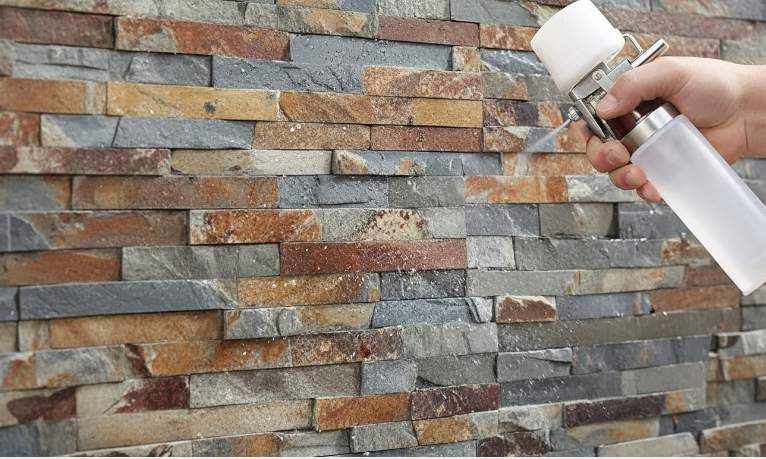
Rigid Efflorescence Control QC is the only way to prevent the mineral salt migration that leads to costly warranty claims and project handover delays. When white, powdery stains appear on a new facade, they signal a failure in moisture management that can compromise a firm’s reputation and result in expensive, repeated remediation efforts. For developers and masonry contractors, these surface deposits represent more than an aesthetic flaw; they indicate chemical instabilities in the substrate or mortar that can lead to long-term material degradation.
This guide establishes a technical standard for eliminating these stains by focusing on factory-level washing, alkaline testing of substrates, and the application of back-sealing barriers. We examine the specific protocols required to neutralize salts before they reach the stone surface and provide a maintenance framework for lasting facade integrity. By treating these steps as a mandatory operating procedure, construction teams can ensure clean masonry finishes and avoid the cycle of reactive cleaning.
What is Efflorescence and Why is it a Quality Control Issue?
Efflorescence acts as a visible diagnostic signal that moisture is moving unchecked through a building’s envelope, threatening both the aesthetic finish and the structural bond of natural stone facades.
The Mechanics of Soluble Salt Migration
Efflorescence occurs when water penetrates porous materials, dissolves internal mineral salts, and transports them to the exterior surface through capillary action. This process wicks moisture through natural stone panels, concrete substrates, and mortar beds over significant distances. Once the moisture reaches the stone face and evaporates, it leaves behind white, crystalline salt deposits. While the stone itself—such as the quartzite and slate found in Top Source Stone’s Big 10 inventory—is chemically stable, the migration of salts from the installation environment can quickly mar the intended architectural finish.
- Capillary action pulls moisture through the stone’s micro-pores, especially in high-humidity or coastal regions.
- Evaporation at the surface concentrates minerals, creating unsightly white streaks or chalky patches.
- Interlocking panels remain vulnerable if the substrate is saturated during the construction phase.
Efflorescence as a Diagnostic Warning Sign
In modern construction, visible salt deposits serve as a critical indicator of subsurface moisture problems. Chalky residue typically signals that waterproofing systems, air barriers, or drainage paths are failing within the wall assembly. In 2026 project management, extensive deposits often point to insufficient drainage planes or excessively high alkaline content in the substrate. Identifying these patterns during initial quality control checks allows contractors to address water management issues before they lead to permanent structural degradation.
Risks to Aesthetic and Structural Integrity
The impact of untreated efflorescence extends beyond cosmetic staining. Persistent moisture movement creates osmotic pressure within the stone’s pores. In climates subject to freeze-thaw cycles, this trapped moisture expands and contracts, causing the stone surface to flake or “spall.” This degradation masks the premium textures and colors of materials like Alaska Gray or Carbon Black slate, and if left unchecked, the salt buildup can compromise the bond between the stone veneer and the secondary waterproofing barrier.
- Spalling and delamination occur when salt crystals grow within the stone’s surface layer.
- White mineral masking ruins the 95% hue uniformity guaranteed by high-end quarry sourcing.
- Secondary waterproofing layers can fail under the constant chemical stress of migrating alkaline solutions.
Quality Control Prevention Standards
Mitigating salt migration requires strict material selection and installation protocols from the outset. B2B suppliers and contractors now prioritize high-quality Type N mortars and salt-free water sources to minimize the introduction of migrating minerals. Standardized quality control involve testing the alkaline content of concrete substrates and installing polyethylene capillary breaks to prevent ground-level moisture from rising into the stone facade. By using CNC diamond-blade precision edges for a tight interlock, installers can also reduce the volume of grout and mortar exposed to the elements, further lowering the risk of efflorescence.
How Our Factory-Washing Process Removes Migrating Salts?
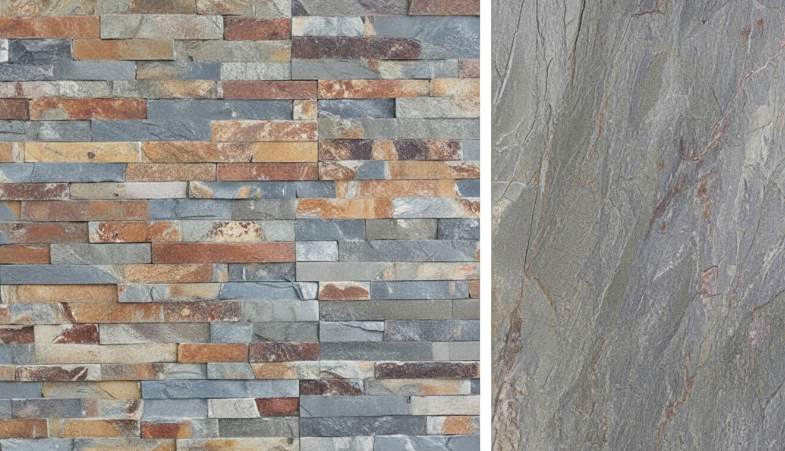
We utilize a closed-loop, thermal-extraction washing system to strip soluble minerals at the source, preventing efflorescence before the stone reaches the job site.
Efflorescence occurs when water-soluble salts migrate to the stone surface and crystallize upon evaporation. To stop this, we implement a three-stage industrial purification protocol. Our 2026 manufacturing line uses temperature-controlled water cycles to maximize the solubility of migrating salts. By heating the water, we extract minerals trapped deep within the pores of slate and quartzite—minerals that cold-water washing typically misses.
This process does more than just clean the surface; it neutralizes the stone’s pH level. Maintaining a neutral surface prevents the chemical reactions between the stone and alkaline mortars that often trigger white salt deposits during installation. We monitor water mineral content continuously to ensure every batch meets our internal purity standards.
High-Efficiency Dewatering and Hydro-Cyclone Separation
Mechanical separation plays a vital role in removing the fine particulates and salt-heavy water that contribute to staining. We use advanced hydro-cyclones to isolate contaminated water during the initial rinse. This prevents salt-laden dust from re-settling on the ledger panels as they move through the production line.
| Processing Metric | Standard Industry Methods | Top-Quellstein (2026) |
|---|---|---|
| Salt Removal Efficiency | Approx. 60% | 85% – 92% Purification |
| Extraction Method | Cold Water Rinse | Thermal Solubility Cycles |
| Drying Technique | Static Air Drying | High-Speed Centrifugation |
After the purification cycles, industrial centrifuges spin the stone panels at high speeds. Rapid moisture extraction is necessary because it forces water out before salts have the opportunity to migrate back to the surface during the drying phase. Precision dewatering sieves then verify that only mineral-free stone proceeds to the final packaging stage.
Automated Salt-Leaching Optimization
We calibrate our leaching duration based on the specific density and porosity of the material batch. Since a quartzite panel from our Alaska Gray series has different absorption rates than a Midnight Slate panel, our automated systems adjust the water-to-stone ratios accordingly. This ensures maximum impurity reduction without wasting water.
- Closed-loop filtration systems recycle water while stripping out dissolved solids to ensure a fresh, low-alkaline wash for every crate.
- Custom leaching schedules account for the higher mineral content found in specific quarry veins.
- Automated monitoring achieves over 85% efficiency in salt removal, significantly higher than the 60% standard found in basic stone processing.
By the time we pack our 5-ply reinforced export cartons, the stone is chemically stable and free of the primary triggers for efflorescence. This factory-level intervention saves installers hours of remediation work and protects the long-term aesthetic of the architectural facade.
Premium Factory-Direct Stacked Stone Ledger Panels

Testing Your Mortar and Substrate for Alkaline Content
Systematic alkalinity and moisture testing eliminates the chemical variables that lead to adhesive delamination and recurring salt migration in architectural stone facades.
Standardized pH Measurement for Installation Surfaces
High alkalinity in concrete substrates and mortar beds directly compromises the long-term bond of modern adhesives. When pH levels exceed acceptable limits, the caustic environment degrades the high-strength epoxy resins often required for 2026-spec stone panel systems. We recommend using digital pH meters or narrow-range indicator strips to verify that the substrate remains within a pH range of 7 to 10. This range ensures the chemical stability of the interface between the substrate and the stone veneer.
Testing must occur at multiple locations across the installation site. Concrete mix variations and localized curing inconsistencies often create “hot spots” of high alkalinity. By identifying these zones early, installers can apply neutralizing washes or specific primers to stabilize the surface before the stone panels arrive from the factory.
In-Situ Relative Humidity and Moisture Testing
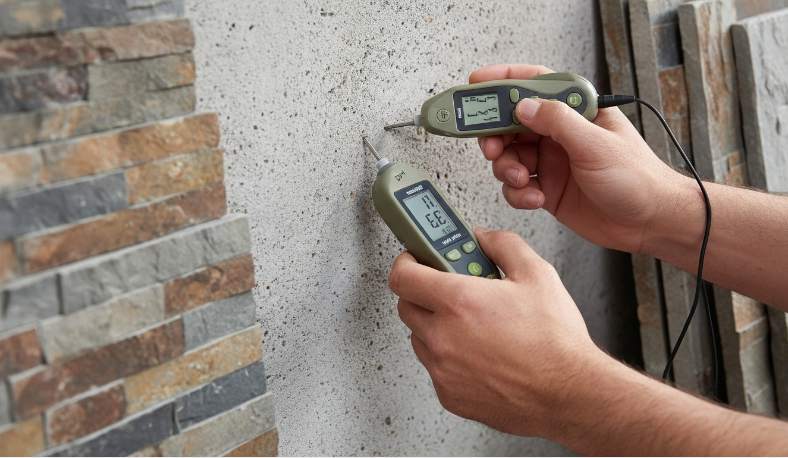
Surface-level moisture checks provide an incomplete picture of the substrate’s readiness. Modern quality control protocols prioritize internal moisture assessment using in-situ probes to measure relative humidity (RH) within the slab. Following ASTM F2170 standards provides a reliable indicator of long-term moisture stability, which is the primary driver of efflorescence.
| Testing Parameter | Reference Standard | B2B Quality Threshold |
|---|---|---|
| Substrate Alkalinity | ASTM D4262 | pH 7.0 – 10.0 |
| Internal Relative Humidity | ASTM F2170 | < 85% RH |
| Vapor Emission Rate | ASTM F1869 | < 3 lbs / 1,000 sq.ft. |
| Mortar Salt Content | ASTM C1260 | < 0.10% Expansion |
Evaluating Mortar Compatibility and Salt Potential
The choice of mortar can either protect or compromise a factory-washed stone panel. Local mortar mixes often contain high concentrations of soluble salts that migrate into the stone as water evaporates. To prevent this, professionals must verify the use of low-alkali cements and appropriate mortar types based on the project’s structural requirements.
- Specify Type N or Type S mortars with low-alkali Portland cement to minimize the available salt pool for efflorescence.
- Analyze the chemical re-alkalization properties of older substrates during renovation to ensure new mortar layers achieve a permanent mechanical bond.
- Utilize polymer-fortified thin-set mortars where possible, as these formulations reduce porosity and limit water movement through the bond coat.
Confirming that the moisture vapor emission rates (MVER) stay within manufacturer specifications prevents the “vapor drive” that pushes salts to the facade surface. Integrating these testing steps into the site preparation phase ensures that Top Source Stone’s factory-purified panels remain free of white crystalline deposits long after the project’s completion.
The Role of Back-Sealing in Preventing Moisture-Related Stains
Back-sealing serves as the primary technical defense against capillary moisture migration, effectively decoupling the natural stone face from alkaline-rich substrates to stop permanent mineral staining.
Mitigating Hydrostatic Pressure Through Rear Barrier Protection
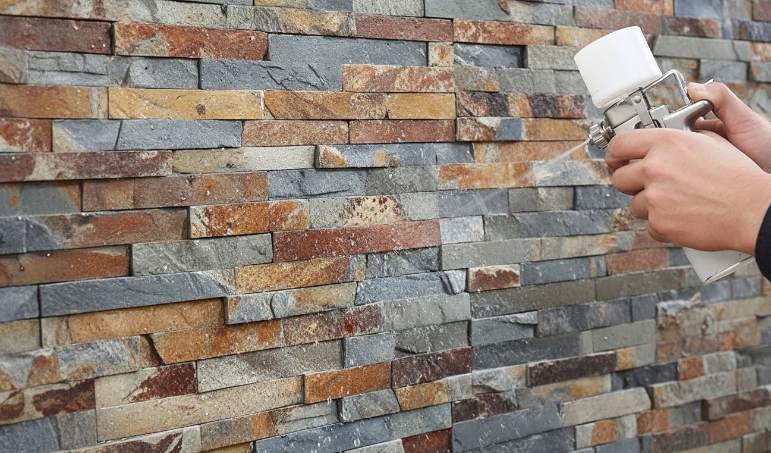
Modern 2026 building envelope designs prioritize back-sealing to disrupt the capillary action that naturally draws moisture into the pores of natural stone. When installers apply a breathable sealer to the rear of gestapelter Stein panels, they create a secondary defense layer. This barrier prevents the migration of alkaline salts from the wet mortar or concrete substrate into the stone face, where they would otherwise crystallize as unsightly white powder.
We recommend high-performance silane-siloxane blends for this application. These reactive treatments offer deep penetration into the stone’s molecular structure without forming a film that could trap liquid water. By treating the back of each panel before installation, contractors ensure that the natural stone remains isolated from the chemical reactions occurring within the setting bed, particularly in high-moisture environments like the US Gulf Coast or Southeast Asia.
Permeability Standards for High-Performance Building Envelopes
Effective moisture control requires a precise balance between water resistance and vapor permeability. Current 2026 building codes suggest that water-resistive barriers (WRB) maintain a permeability rating between 10 and 20 perms. This range allows the building to “breathe,” ensuring that any incidental moisture trapped behind the stone veneer evaporates rather than causing structural delamination or mold growth.
| Barrier Component | Technical Mechanism | Performance Outcome |
|---|---|---|
| Rear Silane Sealant | Molecular penetration | Blocks salt wicking from mortar |
| WRB Membrane | 10–20 Perm breathability | Prevents vapor trapping |
| Liquid-Applied Flash | Seamless joint transition | Eliminates localized staining |
Liquid-applied membranes provide a superior solution for complex transitions around corners and structural penetrations. These materials create a seamless shield that reduces the risk of localized staining often seen at structural joints. By integrating these barriers, building owners protect the long-term visual clarity of light-colored materials like Glacier White or Alaska Gray quartzite.
Protecting Epoxy Bond Integrity in Humid Environments
Moisture-related stains often serve as early warning signs of a breakdown in the bond between the natural stone and the panel substrate. Our factory-applied high-strength epoxy adhesives perform significantly better when protected from the constant “wicking” effect of untreated concrete or masonry backup walls. Back-sealing the panels ensures that the adhesive remains dry and structurally sound even in regions with high ambient humidity.
- Use high-quality stone sealers to create a hydrophobic barrier against external rain and snow.
- Integrate back-sealing with proper flashing systems to shed water away from the stone surface.
- Select low-alkali cements for the installation substrate to reduce the total salt volume available for migration.
Proper installation requires more than just high-quality stone; it demands a managed moisture strategy. When installers combine factory-washed stone with back-sealing and integrated drainage, they ensure that premium natural materials like marble and quartzite maintain their aesthetic value for decades without the threat of mineral staining or salt crystallization.
Long-Term QC: Maintenance Schedules for Stain-Free Facades
Preventive maintenance protocols reduce long-term service costs by 10-15% and stop moisture-related staining before mineral salts reach the stone surface.
Annual Visual Inspection Protocols
Maintenance teams must execute standardized visual checks twice a year to identify early signs of stone movement or moisture penetration. We focus on the bond integrity of individual stones within the interlocking panel system to ensure no delamination occurs. Identifying hairline cracks in the substrate or mortar joints early prevents water from wicking into the wall system through capillary action.
- Inspect the bond integrity of individual stones within the interlocking panel system.
- Check for hairline cracks in the mortar or substrate that might allow water ingress.
- Document any changes in stone color that could indicate localized moisture retention.
Scheduled Cleaning Based on Environmental Exposure
Professional cleaning cycles depend heavily on the building’s proximity to high-pollution zones or high-humidity areas. For routine maintenance, we use soft-bristled brushes and water to remove dust and organic debris. If stubborn stains appear, we apply pH-neutral natural stone cleaners to avoid etching the stone face or stripping the existing protective layers. High-pressure washing systems are prohibited because they force water behind the panels, which can degrade the epoxy adhesive and trigger secondary efflorescence.
- Use soft-bristled brushes and water for routine removal of dust and organic debris.
- Apply pH-neutral natural stone cleaners for stubborn stains to avoid damaging the stone face.
- Avoid high-pressure washing systems which can force water behind the panel and degrade the epoxy adhesive.
Periodic Sealer Maintenance and Re-application
Applying a high-quality, breathable penetrating sealer ensures the surface resists staining and maintains the natural color depth of the slate or quartzite. We test the sealer’s effectiveness annually by observing how water beads on the stone surface. If the water stops beading and begins to soak into the stone, we re-apply the sealer to maintain the moisture-resistant barrier. This cycle typically occurs every 3 to 5 years depending on the environmental load.
- Test the existing sealer’s effectiveness annually by observing water bead performance on the stone surface.
- Re-apply breathable, penetrating sealers every 3 to 5 years to maintain a moisture-resistant barrier.
- Verify that sealants used are compatible with the specific stone type, such as quartzite or limestone.
Moisture Control and Drainage Systems Audit
Regular audits of flashing and drainage channels stop water from getting trapped behind the panels. We clear debris from weep holes and drainage tracks to ensure water exits the facade system freely. Maintaining the integrity of flashing at windows, doors, and rooflines prevents behind-stone saturation. We also recommend optimizing landscape irrigation to prevent constant water spray from hitting the lower sections of the stone wall, which is a common cause of mineral buildup.
- Clear debris from weep holes and drainage tracks to ensure water exits the facade system freely.
- Check the integrity of flashing at windows, doors, and rooflines to prevent behind-stone saturation.
- Optimize landscape irrigation to prevent constant water spray onto the lower sections of the stone wall.
Abschluss
Controlling white stains involves a strict combination of factory-washing, moisture-barrier applications, and proper mortar testing. These technical steps eliminate salt migration at the source and keep the stone facade looking clean for decades. Following these protocols protects the structural integrity and aesthetic value of every professional installation.
Review your current sourcing standards to confirm they meet these specific moisture-resistance requirements. You can also request a technical catalog or sample crates to see how our factory-direct stone panels perform in high-humidity environments.
Häufig gestellte Fragen
Why is there white powder on my natural stone?
The white, chalky powder is a phenomenon known as efflorescence. It occurs when water penetrates the stone or the mortar backing, dissolving mineral salts. As the moisture migrates to the surface and evaporates, it leaves behind these crystalline salt deposits. This is often an indicator of underlying moisture management issues, such as poor drainage or lack of a proper waterproof barrier.
How do you prevent efflorescence on stacked stone?
Prevention focuses on moisture control and material selection. Key strategies include installing capillary breaks like polyethylene sheeting between the soil and stone to prevent “wicking,” ensuring positive drainage falls so water cannot pool, and using high-quality, low-alkali mortar. Additionally, applying a breathable, hydrophobic penetrating sealer can significantly reduce water intrusion into the stone’s pores.
Is natural stone more prone to white stains than faux stone?
Actually, concrete-based products like faux or manufactured stone are often more susceptible to efflorescence than many natural stones. Concrete products can contain two to seven times more soluble salts than fired clay or dense natural stone. However, because natural stone is often highly porous, it can still exhibit significant staining if the installation environment allows for excessive water movement and salt migration from the substrate.
Does sealing stone prevent efflorescence?
Yes, hydrophobic sealants are effective at preventing water from entering the stone, which stops the salt-carrying cycle. It is critical to use a “breathable” penetrating sealer rather than a film-forming topical sealer. A breathable sealer allows water vapor to escape while blocking liquid water; otherwise, salts can crystallize beneath the surface (subflorescence), potentially causing the stone to spall or flake over time.
How to remove white residue from stone veneer?
For light deposits, start by using a stiff nylon brush and clean water to scrub the area. If the residue persists, a mild solution of white vinegar and water or a specialized, pH-balanced efflorescence remover can be used. Always pre-wet the stone before applying any cleaning agent and rinse thoroughly afterward. Avoid wire brushes or harsh acids like muriatic acid, which can damage the stone surface and change its color.
