

Fireplace Refacing requires more than aesthetic appeal; it demands material consistency to avoid the patchy, disjointed appearance that ruins high-end remodels. Using low-grade materials often leads to visible vertical seams and toxic off-gassing, which devalues the property and increases callback risks for contractors.
Our solution utilizes CNC diamond-blade precision and same-batch quarry sourcing to guarantee 95% hue uniformity across every panel. By integrating interlocking Z-shape technology and pre-fabricated L-corners, we eliminate installation gaps and slash labor costs while providing the thermal efficiency of 100% natural stone.
Why Choose Natural Stone for Your Fireplace Reface?
Natural stone provides superior thermal mass, radiating heat long after the fire dies. Unlike synthetic panels, it offers permanent UV stability and significant architectural value without off-gassing.
Thermal Efficiency and Structural Durability
Natural stones like quartzite and slate function as high-performance thermal batteries. They absorb intense heat from the firebox and radiate it back into the living space for hours after the flames subside. This physical property significantly improves the heating efficiency of the room compared to wood or thin tile surrounds.
The structural integrity of 100% natural stone is critical in high-heat environments. While manufactured products may warp or release VOCs when exposed to fireplace temperatures, authentic stone remains inert. It provides a dense, scratch-resistant surface that requires virtually zero repair or maintenance over its lifespan.
- Heat Resistance: Prevents cracking or delamination when exposed to direct hearth temperatures.
- Thermal Mass: Retains and slowly releases heat to maintain room comfort levels.
- Zero Off-Gassing: Contains no resins or plastics, ensuring no toxic fumes are released during use.
- Material Stability: High density protects against impact and surface scratches in high-traffic living areas.
Quarry-Direct Consistency and UV Stability
Color consistency is a major challenge for large-scale fireplace walls. Top-Quellstein manages this by sourcing material from the same quarry vein for each order. This ensures the stone maintain color integrity across the entire project, preventing the patchy look associated with lower-grade, multi-source materials.
Natural stone minerals are inherently UV stable. In rooms with floor-to-ceiling windows, natural stone will not fade or discolor over decades of sunlight exposure. This permanence makes the fireplace a structural asset rather than a temporary decorative fix, directly impacting the property’s long-term resale value.
- 95% Hue Uniformity: Same-batch sourcing from Top Source Stone prevents disjointed color shifts on the facade.
- Permanent Color: Natural minerals resist UV degradation, ensuring the stone never yellows or pales.
- Authentic Texture: Split-face and natural cleft finishes provide organic depth that concrete-based imitations fail to replicate.
- Asset Appreciation: Real stone increases the actual appraised value of the home as a permanent architectural feature.

Can You Install Stacked Stone Over an Existing Fireplace?
You can install natural stacked stone over brick, concrete, or cement board. Success requires matching the preparation—like wire lath or specific substrates—to your existing surface and heat source.
Refacing a fireplace with real stone transforms the room without the cost of a full demolition. Most masonry structures are strong enough to support the additional weight, but you must ensure the bond is permanent and heat-safe. Different surfaces require different handling to prevent the stone from pulling away over time.
Evaluating Substrate Readiness and Surface Preparation
The primary challenge in fireplace refacing is the bond. Raw brick is porous and takes mortar well, but common household finishes like paint or soot act as bond-breakers. Before mixing your mortar, identify the substrate to determine if you need mechanical reinforcement.
- Masonry Cleaning: Scrub existing brick or concrete to remove all soot and oils before applying Type S mortar.
- Mechanical Grip: Install wire lath over painted or smooth surfaces to give the Heat Resistant stone veneer a physical structure to grab.
- Heat Requirements: Use cement board substrates for wood-burning fireplaces; standard drywall cannot handle the high-combustibility risks.
- Layout Strategy: Stagger all joints during installation to avoid vertical alignment and ensure a natural, organic look.
Achieving Professional Results with Interlocking Z-Shape Technology
Traditional straight-edge stone panels often leave visible “stepped” gaps that scream DIY. We solve this through precision engineering at the factory level. By using modular interlocking systems, installers can achieve a seamless architectural finish even on complex fireplace surrounds.
- Seamless Joints: Top Source Stone Z-Shape or S-Shape Interlocking Stacked Stone Panels use a male-female connection to hide all vertical seams.
- CNC Precision: Diamond-blade edges ensure every modular piece fits tightly for a professional, gap-free transition.
- Corner Solutions: Pre-fabricated L-Corners manage 90-degree turns instantly, eliminating the need for slow, difficult miter cuts.
- Material Integrity: Our 100% natural quartzite and slate offer inherent UV stability and superior heat resistance compared to faux alternatives.
Using these engineered panels reduces labor time for contractors and dealers while providing the high-end aesthetic of hand-laid stone. Because we source directly from the quarry, we maintain color consistency across the entire fireplace face, preventing the patchy appearance common with mixed-batch retail products.
Premium Stacked Stone for Architectural Excellence
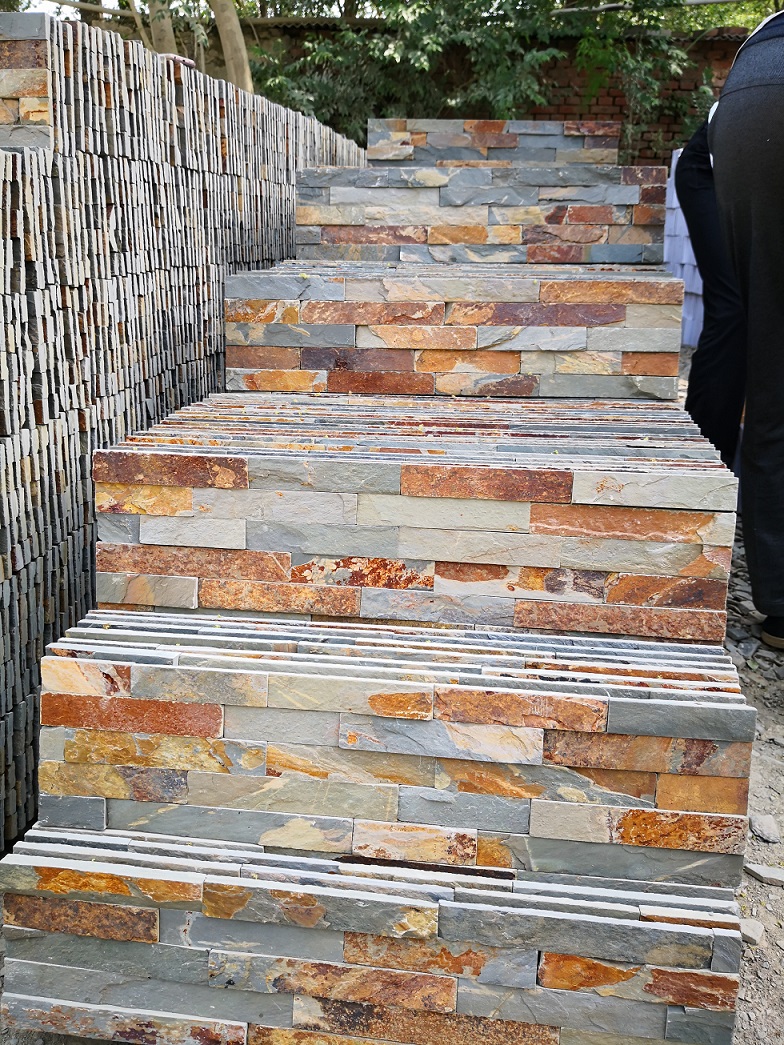
Selecting the Best Stone Style: Modern vs. Rustic
Modern designs prioritize clean lines and monochromatic tones, while rustic styles utilize heavy textures and organic shadows to create a traditional, warm fireplace atmosphere.
Aesthetic Differences Between Modern and Rustic Stone
Modern fireplace designs focus on minimalism. They often feature monochromatic palettes and smooth surfaces that turn the hearth into a refined focal point. Designers typically select materials with sharp contrasts or subtle veining to achieve this look.
Rustic aesthetics lean into lived-in warmth. These projects highlight the natural irregularities of the stone, using rough-cut textures and earthy tones to ground a room. This style is standard for farmhouses or traditional homes where the goal is a cozy, organic feel.
Transitional styles bridge these two worlds. You can pair a highly textured stone with a sleek, linear gas insert to balance rugged character with contemporary hardware. This approach remains a top choice for 2026 interior projects.
- Modern Materials: Glacier White Quartzite, Carbon Black Slate, and Midnight Slate.
- Rustic Materials: California Gold Slate, Golden Honey Quartzite, and Copper Canyon.
- Finish Types: Honed or polished for modern; natural cleft or split-face for rustic.
Selecting Flat or Rough Series for Design Continuity
The depth of the stone profile determines the visual weight of the fireplace. Choosing the right series ensures the stone complements the surrounding architecture rather than overwhelming it. We categorize these based on thickness and texture intensity.
The Flat Series works best for contemporary interior walls. It offers a subtle 0.75-inch thickness that keeps the installation streamlined. This series is ideal for smaller rooms where a heavy, protruding stone might feel too aggressive.
The Rough Series provides dramatic shadows. With a thickness reaching up to 1.75 inches (3.5cm), these panels create a rugged, three-dimensional look. Large-scale hearths benefit from this series because it mimics the appearance of traditional full-bed masonry.
- Flat Series Thickness: 1cm to 2.5cm (approx. 0.75″).
- Rough Series Thickness: Up to 3.5cm (approx. 1.75″).
- Joint Camouflage: Interlocking Z-Shape panels utilize a male-female connection to hide vertical seams.
- Precision: CNC diamond-blade edges ensure tight fits between modular pieces for both series.
Maintaining continuity across the wall requires matching corners. We provide pre-fabricated L-Corners for every model, ensuring the texture and color remain synchronized as the stone wraps around the fireplace breast.
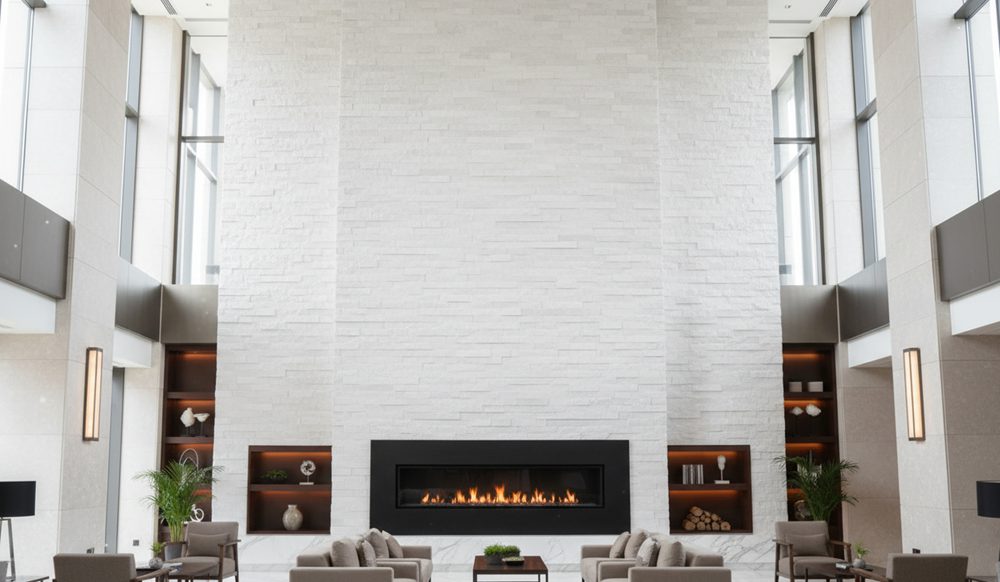
Step-by-Step Refacing Process for Homeowners
Successful refacing requires a heat-resistant cement board substrate, interlocking panels with CNC precision edges, and matching L-corners for seamless transitions.
| Refacing Phase | Technical Requirement |
|---|---|
| Substrate | 1/2-inch non-combustible cement board |
| Panel Design | Z-Shape or S-Shape interlocking system |
| Precision | CNC diamond-blade cut edges |
| Transitions | Pre-fabricated 90-degree L-corners |
| Protection | pH-neutral natural stone sealer |
Surface Preparation and Substrate Reinforcement
The foundation determines the longevity of the Wholesale Natural Stone Cladding. We begin by stripping existing mantels and decorative trim to expose the original masonry or wood framing. This clear access allows for an accurate assessment of the structural integrity.
Old, loose mortar must be chiseled away. We use a stiff-bristled brush to scrub the surface, removing soot and dust that would otherwise prevent the thinset from bonding. A 1/2-inch cement board is then mechanically fastened over the structure to create a flat, non-combustible surface. For installations directly onto existing brick, we apply a concrete bonding agent to ensure the stone adheres permanently.
Panel Installation with CNC Precision Interlocking
Adhesion requires precision. We mix thinset mortar in small batches to prevent the material from “skinning over,” which maintains maximum grip during the application. Our installation utilizes Z-shape or S-shape panels that feature a specific male-female connection system.
- CNC Precision: Diamond-blade edges ensure each modular piece fits tightly, eliminating visible vertical “stepped” gaps for a seamless architectural look.
- L-Corner Integration: We use pre-fabricated 90-degree L-corners at every wall transition to maintain color and texture synchronization.
- Interlocking Mechanics: The Z-shape design camouflages the installation substrate and provides a professional finish even in complex layouts.
- Surface Protection: After the mortar cures, we apply a pH-neutral natural stone sealer to defend against soot staining and simplify routine cleaning.
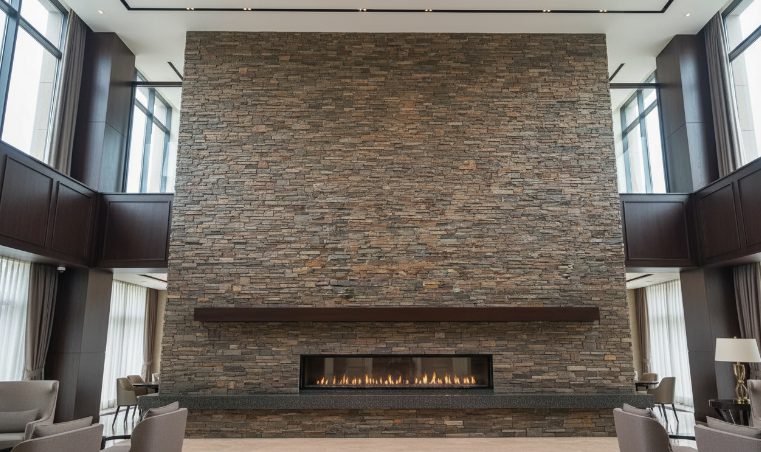
How Much Does a Fireplace Reface Cost in 2026?
Refacing averages $1,100, significantly lower than the $2,000+ required for full replacement, with material selection and labor efficiency driving the final project ROI.
For most residential and commercial renovations in 2026, refacing serves as the primary alternative to expensive structural overhauls. By keeping the firebox intact and focusing on the cladding, costs stay between $600 and $4,500. This approach bypasses the $7,000 price tag often associated with full demolition while delivering an identical visual result.
Average Expenses for Materials and Professional Labor
Material selection dictates the baseline budget. While basic tile remains a high-volume choice for budget-conscious projects, premium veneers and custom masonry require a higher upfront investment but offer better durability and heat retention.
- Basic Tile: $1–$40 per square foot.
- Wood Paneling: $2.50–$40 per square foot.
- Natural Stone Veneer: $5–$25 per square foot (depending on texture).
- Glass & Mosaic: $25–$50 per square foot.
- Mantel Installation: $1,000–$5,000 for custom or prefabricated units.
- Hearth Additions: $3–$200 per square foot.
Labor accounts for a heavy portion of the total spend. If the project requires removing existing brick or substrate, expect to add $250 to $750 for demolition and surface preparation. Professional masonry rates fluctuate based on the complexity of the material, with glass and heavy natural stone requiring the most specialized handling.
Direct Quarry Sourcing and Lightweight Panel Efficiency
For dealers and contractors, the real cost-saving happens during the sourcing and installation phases. Top Source Stone utilizes a Direct Quarry Source model to eliminate middleman markups, ensuring that B2B buyers maintain healthy margins even on large-scale refacing contracts.
Technical specifications also play a vital role in reducing on-site overhead. By engineering panels to specific weight and fit standards, we remove the common roadblocks found in traditional masonry.
- Lightweight Engineering: Panels weigh 8–12 lbs/sq.ft, eliminating the need for expensive structural footings or wall reinforcements.
- Interlocking Systems: Z-Shape and S-Shape designs use a “male-female” connection to camouflage joints and slash labor hours.
- CNC Precision: Diamond-blade edges ensure tight fits, which minimizes material waste and cutting time during the build.
- Integrated L-Corners: Pre-fabricated 90-degree corners eliminate the labor-intensive process of hand-mitering edges.
These efficiencies allow contractors to finish projects faster while providing clients with 100% natural stone. By sourcing directly from the factory, dealers avoid the “patchy” look of mixed batches, as we pull materials from the same quarry vein to ensure 95% hue uniformity across the entire order.
Häufig gestellte Fragen
Can I install stacked stone directly over an existing fireplace?
You can install natural stone panels over existing tile or brick with proper surface preparation. For tile, you must remove the old material and attach wire lath with a mortar scratch coat. Brick surfaces require a thorough cleaning and a scratch coat to ensure the stone panels bond securely. Using Z-shape interlocking panels from a direct quarry source ensures a seamless finish that camouflages vertical joints across these masonry substrates.
How long does the stone refacing process take in 2026?
Most professional fireplace refacing projects take between two and five days. While the physical installation of Z-shape panels is fast due to CNC diamond-blade precision edges, the timeline includes essential steps like surface preparation, scratch coat curing, and the final setting of the natural stone units. This efficiency allows dealers and contractors to maintain high project turnover.
Which natural stone provides the best heat resistance?
Quartzite and Granite are the top choices for high-heat environments like wood-burning fireplaces. These 100% natural materials, such as Arctic Golden Quartzite, offer superior thermal stability and UV resistance. Unlike manufactured faux stone which may fade or crack, real stone maintains structural integrity and radiates heat long after the fire dies down.
Do I need to remove my mantel for the stone installation?
Removing the mantel is recommended for a professional finish. It allows installers to prepare the entire substrate and ensures the stone panels wrap seamlessly behind the mantel. Once the stone work is complete, you can reinstall the original mantel or upgrade to a new design to match the updated stone texture.
Is refacing more budget-friendly than a complete fireplace replacement?
Refacing is significantly more cost-effective because it preserves the existing firebox and chimney structure. By sourcing panels directly from a quarry factory like Top Source Stone, wholesalers and dealers eliminate middleman costs while avoiding the high labor expenses associated with full structural demolition and reconstruction.
