
Mounting TV on stone surfaces requires a direct mechanical bridge to the structural wall frame to prevent the catastrophic failure of both the display and the decorative veneer. Because natural stone panels are decorative rather than load-bearing, improper anchoring creates leverage that can pull the veneer away from the substrate, resulting in expensive property damage and liability.
Safe installation depends on using diamond-tipped bits and fasteners long enough to bypass Top Source Stone panels—which range from 1cm to 3.5cm in thickness—to grip the underlying studs. This analysis details precision drilling and shimming techniques required to maintain structural integrity across uneven, split-face quartzite and slate textures.
Can a Stacked Stone Wall Support a Large TV?
Natural gestapelter Stein supports large TVs when anchored directly into wall studs. The weight must transfer to the internal structural frame using hardware that bridges the decorative veneer gap.
Standard natural stone veneer is a decorative finish, not a load-bearing element for heavy electronics. Successful installation depends on the mechanical connection between the TV bracket and the underlying support system. Whether the substrate is wood framing, metal studs, or solid masonry, the hardware must bypass the stone to grip the structural core.
Mechanical Bonding to Wall Studs and Substrate
Load distribution requires the TV mount to sit as close to the substrate as possible. While retrofitting is common, installing the bracket before the stone panels provides the most stable foundation for high-value displays. The goal is to eliminate any leverage that could pull the stone away from the wall.
- Substrate Attachment: Install the TV mount onto the cement board or plywood substrate before applying Top-Quellstein panels for a flush, secure fit.
- Hardware Depth: Use lag bolts that pass through the stone and penetrate at least 1.5 inches into wooden or metal wall studs.
- Drilling Precision: Drill pilot holes into the solid face of the natural stone; avoid mortar joints, which lack the structural density to hold anchors.
- Tool Selection: Use a hammer drill with high-quality SDS masonry bits or diamond-tipped bits to create clean entries without fracturing the surrounding slate or quartzite.
Accounting for Stone Thickness and Surface Texture
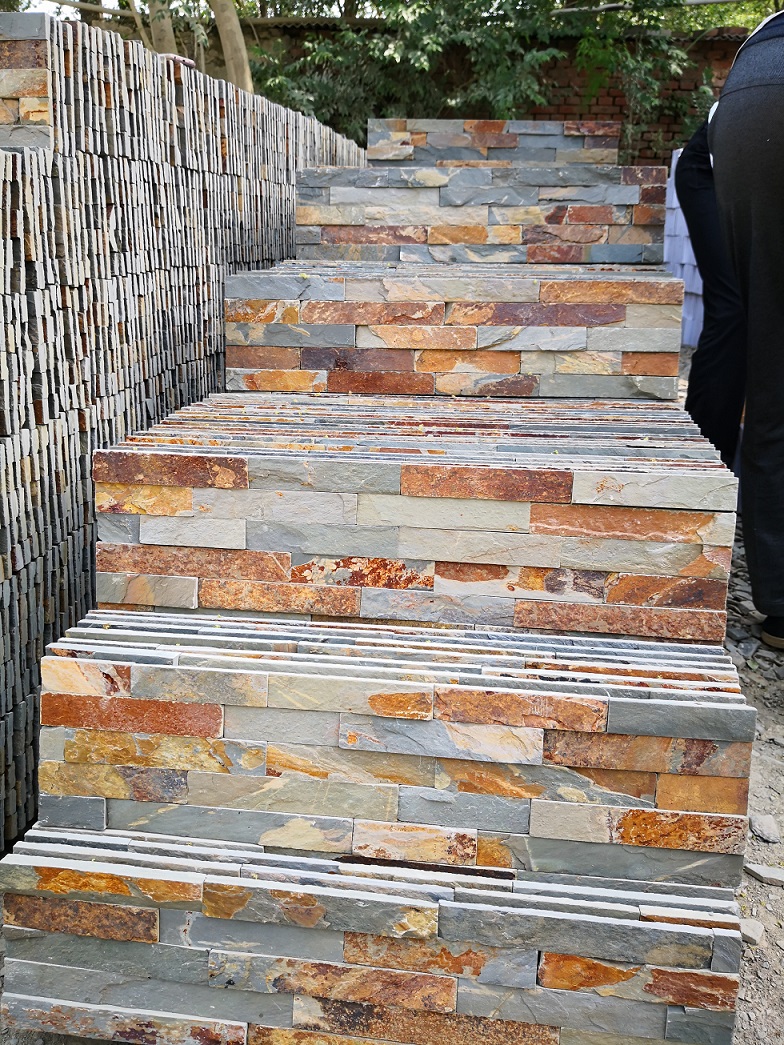
Natural split-face stone features inherent height variations that create an uneven mounting surface. Installers must account for both the depth of the stone and the irregular “peaks and valleys” of the natural cleft finish to prevent the mounting bracket from bending or vibrating.
- Bolt Length: Select lag bolts based on the specific panel series; Top-Quellstein standard panels are 1cm to 2.5cm thick, while rough-cut premium options reach up to 3.5cm.
- Leveling Aids: Apply spacers or metal shims behind the bracket to create a flat contact point against the textured quartzite or slate surface.
- Interlocking Integration: Use the precision-cut edges of Z-shape or S-shape panels to maintain a seamless aesthetic around the mounting area, camouflaging the bracket’s footprint.
- Load Verification: Confirm the wall structure can handle the combined weight of the TV and the 30-55kg/m² load of the natural stone veneer panels.

Best Tools for Drilling Through Natural Quartzite and Slate
Penetrate dense quartzite and slate using diamond-tipped bits and standard rotary drills. Avoid hammer settings to prevent fractures, and maintain constant water lubrication to protect the stone’s thermal stability.
Diamond-Tipped Bits and Rotary Control
Standard masonry bits lack the hardness required to penetrate 100% natural minerals like quartzite and slate without damaging the material. High-density stone requires specialized diamond-tipped bits that grind through the surface rather than chipping it. Using a hammer drill setting on natural panels creates microscopic fractures that compromise the structural integrity of the wall. Stick to standard rotary or screwdriver settings to maintain control and ensure the installation remains secure.
- Diamond-Tipped Bits: Use high-grade bits to penetrate dense natural minerals without causing surface chips.
- Rotary Only: Disable hammer functions to prevent structural fractures in the stone veneer.
- Professional Grade: Select bits that align with CNC diamond-blade precision for clean, professional edges.

Water Lubrication and Thermal Management
Heat is the primary cause of cracking during the drilling process. Natural stone expands when subjected to high friction temperatures, which can lead to localized failure. Keeping the bit and the stone cool preserves the UV-stable composition of the material and prevents discoloration or cracking. A simple water dam allows for continuous lubrication, ensuring the diamond bit stays sharp and effective for the duration of the project.
- Modeling Clay Dam: Build a water reservoir around the drill site to keep the bit submerged and lubricated.
- 10-Second Bursts: Limit drilling intervals to short bursts to manage thermal buildup and protect the stone finish.
- Drilling Guides: Employ a jig to prevent the bit from walking on the textured surface, ensuring a seamless fit for anchors.
Premium Stacked Stone for Architectural Excellence
Hidden Cable Management: Wiring Before the Stone Goes Up
Install recessed conduits and adjustable electrical boxes into wall framing before stone application to ensure a flush finish and invisible wiring for future hardware upgrades.
Effective cable management depends on infrastructure installed before the first stone panel touches the wall. Retrofitting wires through natural stone is costly and risks surface damage. Clean aesthetics require routing power and data paths directly behind the substrate.
Routing Concealed Conduits Within the Wall Frame
Building the wire path into the framing provides a permanent service channel. This prevents the need for surface-mounted plastic raceways that ruin the texture of a natural stone feature wall.
- Flexible Conduits: Run 1-inch or 2-inch flexible PVC pipes between studs to allow for easy cable swaps or fiber optic upgrades later.
- Exit Alignment: Secure conduit exits at the precise height of the intended TV mount and the low-level power source.
- Substrate Sealing: Pre-cut all holes in the cement board for cable exits and seal them before the stone bonding process begins.
- Signal Testing: Validate cable functionality with a signal tester before covering the access points with the first layer of stone panels.
Depth Management for Electrical Boxes with Stacked Stone Panels
Natural stone thickness varies significantly compared to flat drywall. Standard electrical boxes often end up “buried” too deep within the wall if not adjusted for the stone’s profile.
- Adjustable Extenders: Use electrical box extenders to account for Top Source Stone panel thicknesses ranging from 1cm to 3.5cm.
- Flush Faceplates: Position junction boxes so the final faceplates sit tight against the finished stone surface rather than recessed within the wall cavity.
- Joint Integration: Align electrical outlets with the Z-shape interlocking joints to minimize difficult CNC-style cuts in the center of a panel.
- Corner Transitions: Use matching L-corners to manage wiring transitions where the wall planes shift or wrap around structural columns.
Coordinating these depths during the framing stage ensures the stone installation proceeds without stopping for electrical corrections. This creates a professional, high-end finish where technology integrates into the architecture rather than sitting on top of it.

Selecting the Right Wall Mount for Uneven Stone Surfaces
Full-motion mounts handle surface irregularities best by clearing protrusions, while tilting mounts require shims. Always anchor into studs using bolts long enough to clear the 1cm-3.5cm stone veneer.
| Mount Type | Best Use Case | Surface Prep Required |
|---|---|---|
| Full-Motion (Articulating) | Rough or jagged gestapelter Stein | Minimal (Spacers/Shims) |
| Tilting Mount | Flat ledgestone or Z-shape panels | Significant leveling/grinding |
Full-Motion and Tilting Mount Adaptability
Articulating mounts provide the necessary clearance to keep the TV chassis away from natural stone protrusions. These mounts allow for multi-directional movement, which helps installers compensate for angles created by uneven rock faces. This flexibility ensures the screen remains level even if the mounting plate sits on a slight incline.
Tilting mounts offer a lower profile but create installation friction on natural cleft surfaces. Because the bracket sits close to the wall, any high points in the stone can prevent the mount from sitting flush. Installers often have to grind down specific stones or use heavy-duty shims to create a flat mounting plane.
- Weight Capacity: Hardware must account for the high leverage forces applied when an articulating arm is fully extended.
- Articulating Extension: Provides 15 to 25 inches of clearance for easy cable management and maintenance.
- Aesthetic Choice: Tilting mounts provide a more integrated look for modern, linear ledgestone walls.
Hardware Compatibility with Variable Panel Thickness
Natural stone panels from Top Source Stone vary in thickness from 1cm to 3.5cm. Standard lag bolts included with most TV mounts are usually too short to penetrate the stone, the substrate, and the wall studs. Professionals must source longer fasteners to ensure the mount does not pull away from the wall under load.
Precision matters when selecting fasteners for different stone types. Our CNC-precision Z-shape panels create tighter seams, making it easier to locate a flat spot for the mounting plate. For rougher, hand-cut stone, heavy-duty toggle anchors can serve as a secondary safety measure when direct stud alignment is difficult.
- Bolt Length: 4-inch to 5-inch lag bolts are standard for clearing 3.5cm thick premium stone panels.
- Fastener Coating: Use stainless steel or coated bolts to prevent corrosion near gas or wood-burning fireplaces.
- Panel Type: Z-shape and S-shape interlocking panels offer a more predictable surface for mounting than traditional loose-set stone.

Dealing with Heat: Protecting Your TV from Fireplace Warmth
Combine vertical clearance with heat shields to protect electronics. Natural stone creates a non-combustible barrier that stays structurally sound under extreme thermal cycles.
Heat Redirection and Clearance Standards
Heat is the primary enemy of internal TV components. Sensitive circuits and LED panels degrade quickly when exposed to consistent thermal stress. Proper installation requires a strategy that manages how hot air moves once it leaves the fireplace opening.
- Vertical Clearance: Maintain a strict distance between the firebox and the bottom of the TV to prevent direct heat soak.
- Radiant Barriers: Use a mantel or dedicated heat shield to reflect up to 90% of radiant energy away from the device.
- Airflow Requirements: Select TV mounts that create a gap for air circulation behind the screen to dissipate rising warmth.
Fireplace Safety with Non-Combustible Natural Stone
Material selection determines how much heat the wall absorbs and retains. While faux materials may warp or fade under heat, natural stone provides a dense, non-combustible substrate that acts as a heat sink, protecting the underlying wall structure while maintaining its appearance.
Top Source Stone panels utilize 100% natural minerals like quartzite and slate. These materials offer superior UV stability and heat resistance, ensuring the fireplace surround remains structurally sound throughout thousands of usage cycles. The Z-shape interlocking design provides a tight, modular fit that eliminates visible gaps, effectively shielding the substrate from direct thermal exposure.
- Mineral Composition: 100% natural stone (Quartzite, Slate, Granite).
- Thermal Stability: Inherent resistance to cracking and delamination in high-heat zones.
- Interlocking Engineering: CNC diamond-blade edges ensure a precise “male-female” connection to protect the wall.
Häufig gestellte Fragen
Mounting a TV on natural stacked stone requires anchoring directly into wall studs and using diamond-tipped bits to prevent cracking the stone veneer.
Can you mount a heavy TV on a stacked stone veneer wall?
Yes. You must anchor the mount directly into the wall studs or concrete blocks behind the veneer. Natural stone and mortar joints lack the structural integrity to hold heavy loads. Use a hammer drill with masonry bits to penetrate the stone, then secure the bracket with extra-long lag bolts that reach at least 1.5 inches into the structural framing.
What are the best drill bits for natural quartzite or slate panels?
Use diamond core bits or SDS-plus bits with tungsten carbide tips. These professional tools are specifically designed to cut through high-density minerals like our Alaska Gray or Sierra Blue quartzite without cracking the panel. Standard masonry bits often overheat and dull quickly when facing 100% natural stone.
How do you hide cables on a stone fireplace without cutting into the wall?
Paintable cord covers offer the most practical solution. Attach these plastic channels to the stone surface and paint them to match the grout color, which helps them blend into the natural texture of the wall. If your installation includes a hollow mantel, you can also route wires through the mantel body for a cleaner look.
Does heat from a fireplace damage a TV mounted directly above it?
Heat above 100°F can degrade internal TV components. Install a non-combustible stone or metal mantel to redirect rising heat away from the display. We suggest maintaining a clearance of 12 to 20 inches between the top of the fireplace and the bottom of the TV to ensure proper airflow and longevity.
How do you handle a TV mount on an uneven or rough stone surface?
Articulating full-motion mounts are ideal for irregular surfaces like our “Rough Series” stone. Use spacers or shims behind the mounting plate to create a flat, level plane on the textured face. Hanger bolts with adjustable nuts also allow you to calibrate the depth of each anchor point until the bracket sits perfectly plumb.
