
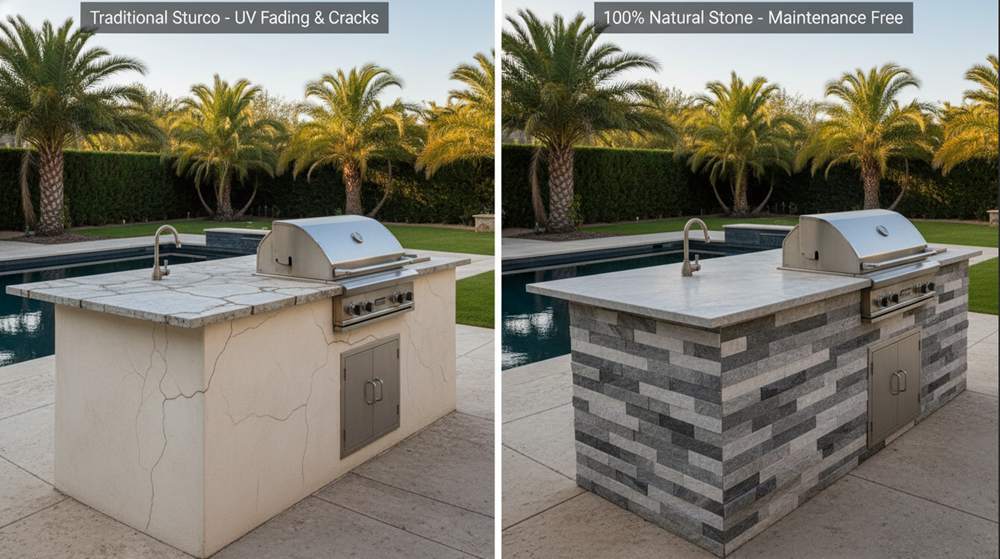
Specifying material for Outdoor Kitchens determines whether a project maintains its value or becomes a liability of cracking stucco and faded surfaces. While budget finishes offer lower entry costs, failure to account for thermal stress and UV stability leads to expensive warranty repairs and long-term structural degradation.
This comparison evaluates how ASTM-standard freeze-thaw resistance and 100% natural mineral density prevent delamination. Prioritizing same-batch quarry consistency and CNC diamond-blade precision ensures a seamless, high-impact finish that survives extreme environmental shifts without the high maintenance costs of synthetic alternatives.
Why Natural Stacked Stone Beats Stucco for Outdoor Kitchen Islands?
Natural gestapelter Stein eliminates stucco’s cracking risks and UV fading. It provides a maintenance-free, high-value finish that survives extreme temperature shifts and architectural wear for decades.
Comparing Climate Resilience and Material Integrity
Stucco relies on a thin cementitious layer that behaves poorly under thermal stress. While it works for temporary budget fixes, it lacks the structural density required for high-traffic outdoor cooking environments. Natural stone functions as a protective shield for the island substrate.
- Moisture Control: Stucco frequently develops hairline cracks in freeze-thaw cycles, allowing water to seep into the island frame and cause rot.
- Impact Strength: Natural stone veneers offer a high-impact surface that resists chipping from lawn equipment or furniture collisions better than brittle stucco.
- Structural Longevity: Natural minerals maintain their integrity without the peeling or delamination common in painted masonry surfaces.
- Visual Texture: Authentic stone creates deep shadows and varied textures that remain consistent through heavy weather cycles.
Choosing stone over stucco removes the need for frequent repainting and patch repairs. It transforms the island from a basic utility into a permanent architectural feature that actually increases property value.
ASTM-Standard Freeze-Thaw Resistance and UV Stability
Top-Quellstein materials undergo rigorous testing to ensure they meet the demands of North American and European climates. We focus on mineral density to prevent the color loss and structural fatigue seen in synthetic or stucco finishes.
- UV Stability: Materials like California Gold or Midnight Slate contain inherent UV resistance, ensuring colors never fade under direct sun exposure.
- ASTM Standards: Certified Freeze-Thaw Resistance prevents structural failure and internal fissures during harsh winter transitions.
- Batch Consistency: Our Same-Batch Quarry Consistency ensures 95% hue uniformity across the entire order, avoiding the patchy appearance of mixed stucco pigments.
- L-Corner Systems: Pre-fabricated matching L-Corners provide a seamless wrap-around finish that protects island edges and simplifies on-site installation.
Labor efficiency improves when using modular stone panels compared to the multi-day drying times required for professional stucco application. By utilizing the Z-shape interlocking system, installers can hide vertical joints and achieve a high-end look without the maintenance headache of traditional masonry.

Choosing Weather-Resistant Materials: Comparing Slate vs. Quartzite Performance
Quartzite provides superior structural hardness (Mohs 6-7), while slate offers 900°C fire resistance and low absorption. Both materials meet 2026 ASTM freeze-thaw standards for extreme climates.
| Technical Property | Natural Slate | Natural Quartzite |
|---|---|---|
| Mohs Hardness | 3.0 – 4.0 | 6.0 – 7.0 |
| Water Absorption | Extremely Low (Natural Barrier) | Low (Requires Sealing) |
| Maintenance | Low (No mandatory sealing) | Moderate (Biannual Sealing) |
| Thermal Limit | Fire resistant up to 900°C | High (Standard BBQ use) |
Evaluating Hardness and Porosity for Structural Longevity
Mineral density determines how an outdoor installation survives the friction of daily use and the chemical stress of moisture. Quartzite features a Mohs hardness of 6-7, which is significantly higher than slate’s 3-4 rating. This structural density provides better protection against surface scratches from patio furniture or kitchen tools. We recommend quartzite for heavy-use countertops or islands where physical contact is frequent.
- Surface Protection: Quartzite’s high Mohs rating makes it nearly impervious to typical surface abrasion.
- Moisture Defense: Slate possesses inherently low water absorption rates, acting as a natural barrier in humid environments.
- Load Application: Density differences dictate that quartzite handles heavy-traffic impact more effectively, while slate excels in vertical cladding.
- Thermal Stability: Both materials prevent expansion and contraction during 2026 temperature fluctuations, maintaining joint integrity.
Meeting ASTM Freeze-Thaw and UV Stability Standards
Climate resilience defines the commercial value of stone veneers in the North American market. Top-Quellstein materials undergo rigorous testing for ASTM-standard freeze-thaw resistance. This testing ensures that even in northern US and Canadian climates, the stone does not suffer from delamination or internal structural failure caused by trapped ice expansion.
- Maintenance Protocols: Quartzite requires biannual sealing to maintain its protective shield, whereas slate remains low-maintenance.
- Color Fastness: Alaska Gray Quartzite and Carbon Black Slate offer inherent UV stability, so colors do not fade under direct 2026 sunlight levels.
- Batch Uniformity: We utilize same-batch quarry consistency to ensure uniform expansion rates across the entire installation.
- Precision Engineering: Our CNC diamond-blade edges provide tight fits that reduce the risk of joint failure in extreme weather cycles.
Selecting between these materials involves balancing the need for physical hardness against maintenance preferences. While quartzite demands regular sealing to prevent oil penetration, its resilience against mechanical wear is unmatched. Slate provides a functional advantage for projects prioritizing fire safety and minimal long-term upkeep, especially in vertical applications where high-impact resistance is less critical.
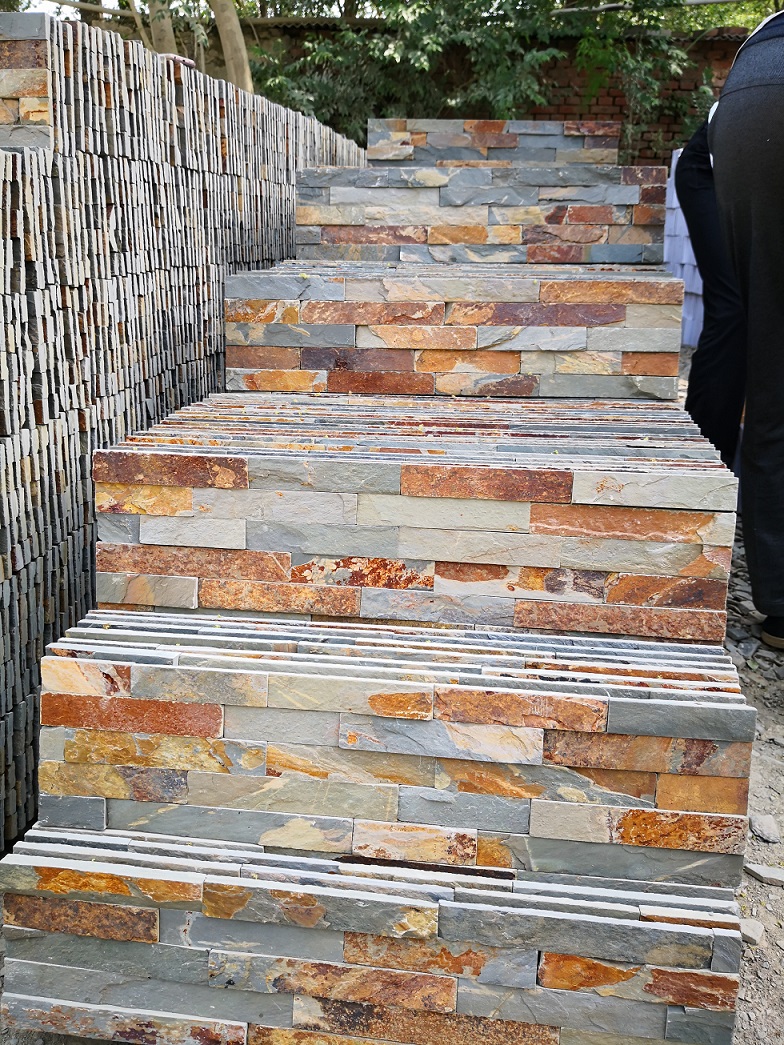
Elevate Projects with Factory-Direct Ledger Panels
How Do You Protect Your Natural Stone from BBQ Grease and Stains?
Apply high-quality, heat-resistant sealers immediately after installation to block oil absorption. Use pH-neutral cleaners and wipe grease spills promptly to maintain the stone’s integrity in heavy cooking zones.
The Role of Heat-Resistant Sealers in Oil Prevention
Natural stone contains microscopic pores that behave like sponges when they come into contact with hydrophobic substances. BBQ grease and cooking oils penetrate these voids quickly. Once oil sets deep within the mineral matrix, removal becomes nearly impossible without professional-grade extraction tools.
- Surface Barriers: High-heat resistant sealers provide a functional shield that prevents oils from migrating deep into the stone during high-temperature cooking sessions.
- Timing and Absorption: Sealing buys time for cleanup. Blotting spills immediately ensures grease does not bypass the protective layer or exploit gaps in the stone’s natural cleft texture.
- Heat Durability: Standard interior sealers often fail under grill heat. Use penetrating sealers designed for outdoor kitchen environments to maintain protection near active fire features.
Maintenance Protocols for Natural Quartzite and Slate Panels
Maintaining the aesthetic of gestapelter Stein requires specific chemistry. Using the wrong cleaners can strip protective sealers or etch the 100% natural mineral structure of materials like quartzite or slate, leaving the wall vulnerable to the elements.
- pH-Neutral Cleaning: Avoid acidic or alkaline cleaners. Neutral stone soaps effectively remove surface grime without compromising the integrity of Top Source Stone’s natural minerals.
- Environmental Resistance: Our panels are engineered for high salinity and UV stability. This ensures the stone handles coastal salt spray and intense sun exposure without fading or structural degradation.
- Resealing Schedules: We recommend a periodic resealing schedule every 12 to 24 months. This is critical for high-traffic BBQ areas where heat and grease exposure are frequent.
- Freeze-Thaw Performance: For northern climates, ensure the stone is sealed to prevent night condensation from entering pores, which causes cracks during freeze-thaw cycles.

Constructing the Substrate: Why Cement Board is Mandatory for Vertical Stone.
Cement board provides the rigid, moisture-resistant foundation required to handle vertical shear forces and prevents structural failure from heavy stone panels in high-humidity environments.
Structural Load Management and Moisture Defense
Drywall is essentially paper and gypsum. It works for paint, but it fails as a substrate for natural stone because it lacks compressive strength. Our natural stacked stone panels weigh between 8 and 12 lbs/sq.ft (approx. 30-40kg/m²), with rough-cut premium selections reaching 55kg/m². On a vertical wall, this weight creates constant shear stress. Cement board remains dimensionally stable under this load, whereas drywall or wood backings compress and eventually allow the stone to pull away from the wall.
Moisture is the other silent killer in outdoor kitchen builds. In high-humidity regions or coastal markets like Florida and the GCC, ambient moisture penetrates stone pores. If that moisture reaches a drywall substrate, the backing rots and the entire installation collapses. Cement board, made of Portland cement and glass mesh, is impervious to water-driven structural failure.
- Vertical Load Capacity: Engineered to support architectural stone weighing up to 55kg/m².
- Substrate Stability: Eliminates the compression and warping risks associated with gypsum or wood.
- Composition: Utilizes Portland cement, aggregate, and glass mesh for maximum rigidity.
ASTM Compliance for Heavyweight Architectural Stone
Professional B2B installations must meet specific building codes to ensure long-term liability protection. Using cement board ensures the assembly complies with ASTM C1325 and ICC-ES AC3769 standards. These codes govern permanent vertical installations of heavy masonry veneers. By following these standards, installers create a bond that survives extreme environmental shifts.
For our 100% natural slate and quartzite, cement board optimizes the bond strength of polymer-modified mortars. When the substrate is stable, you can often skip the labor-intensive process of installing wire lath, provided the correct thin-set is used. This creates a faster, cleaner installation for large-scale commercial projects without sacrificing structural integrity.
- Code Adherence: Meets ASTM C1325 and ICC-ES AC3769 requirements for permanent cladding.
- Environmental Resistance: Guaranteed freeze-thaw and high-salinity resistance for coastal and northern climates.
- Bond Optimization: Provides a high-grip surface for 100% natural minerals, eliminating the need for metal lath in many specifications.

Creating a Cohesive Outdoor Living Space with Matching Pavers and Trims.
Achieve professional results by aligning material textures and colors. Use matching L-corners and same-batch quarry stone to ensure tight transitions between vertical walls and horizontal patios.
Designing with Material and Pattern Consistency
A professional outdoor environment relies on a unified visual language. To avoid a fragmented look that feels like a collection of separate projects, we focus on a “single-batch” philosophy. Integrating horizontal surfaces with vertical features requires an intentional strategy for both scale and movement.
- Laying Patterns: Apply a consistent Running Bond pattern across patios and walkways to maintain an uninterrupted visual flow throughout the site.
- Scale Management: Utilize oversized pavers in expansive kitchen areas to reduce visual noise and minimize the number of visible grout lines.
- Functional Zoning: Define distinct dining and relaxation areas using coordinating trim pieces and edge enhancements to provide structure without breaking the color palette.
For B2B projects, maintaining these standards across large square footages is only possible when the material dimensions and textures are calibrated to work together. This consistency simplifies the installation process and ensures the final project matches the architectural rendering.
Achieving Texture Synchronization with Matching L-Corners
Visual disjointedness often occurs at the corners of kitchen islands or retaining walls. When on-site cuts are used, the raw edges of the stone are exposed, ruining the illusion of solid masonry. We address this technical challenge through factory-engineered components that ensure the texture continues around every bend.
- Pre-fabricated L-Corners: We provide 90-degree matching corners for every series, ensuring color and texture synchronization at wall transitions without on-site miter cuts.
- Same-Batch Quarry Consistency: We source stone from the same quarry vein per order to maintain 95% hue uniformity, preventing the “patchy” look common in mixed inventory.
- CNC Diamond-Blade Precision: Our interlocking Z-shape and S-shape panels use precision edges to create tight joints that hide the substrate and mimic the look of solid architectural blocks.
By utilizing a Project-Ready Full Solution, contractors reduce on-site labor costs while delivering a finish that satisfies high-end residential or commercial requirements. This system ensures that the horizontal pavers and vertical ledgestone function as a single, coordinated architectural unit.
Häufig gestellte Fragen
Which natural stone materials offer the best heat resistance for BBQ areas?
Granite and quartzite are the top performers for 2026 outdoor kitchens. These materials handle high temperatures from grills and cooktops without cracking or fading. In high-traffic cooking zones, quartzite options like Sierra Blue or Alaska Gray provide a durable surface where you can place hot pans directly on the stone without structural risk.
Does outdoor stacked stone require regular sealing?
Yes. Sealing protects the stone from moisture, night condensation, and salt spray, which is especially vital for projects in coastal regions or the Gulf. For outdoor kitchens, a penetrating sealer prevents BBQ grease and oil from soaking into the porous surface. We recommend resealing every 1 to 3 years to maintain the stone’s integrity and prevent permanent discoloration.
How do you remove grease or oil stains from stone veneer?
Use a poultice made of baking soda and water. Apply the thick paste to the stain and cover it for 24 to 48 hours to draw the oil out of the stone pores. Clean the area afterward with a pH-neutral stone cleaner. Avoid acidic cleaners, bleach, or ammonia, as these chemicals can etch natural minerals and cause permanent surface damage.
Can stacked stone panels be installed directly onto a grill island frame?
Natural stone panels require a stable substrate, such as cement board, rather than direct attachment to a frame. Because our ledger panels are engineered to be lightweight—typically 8 to 12 lbs per square foot—they do not require additional structural footings or brick ledges. However, the rigid cement board is necessary to handle the vertical load and shear forces of the stone.
How do you ensure color consistency on large-scale exterior walls?
We minimize natural color shifts through strict source control, pulling stone from the same quarry vein for each specific order. This “Same-Batch Quarry Consistency” ensures 95% hue uniformity across a single batch. This process prevents the patchy, mismatched appearance that occurs when mixing stone layers from different production runs.
Final Thoughts
Stucco and synthetic finishes invite frequent warranty claims due to cracking and UV fading, which erode your reputation and profit margins. Choosing Top Source Stone’s 100% natural quartzite or slate ensures your installations withstand extreme freeze-thaw cycles and chemical exposure without structural failure. Our same-batch quarry consistency protects the visual integrity of large-scale projects, eliminating the patchy, mismatched appearance common in lower-tier inventory.
Eliminate the guesswork in your supply chain by requesting a sample kit to verify our CNC diamond-blade precision and interlocking fitment firsthand. We recommend starting with a 300-square-meter trial order to experience our “Big 10″ best-selling North American colors. Contact our team today to discuss bulk pricing or private label options, backed by our pre-shipment visual verification for total transparency.
