
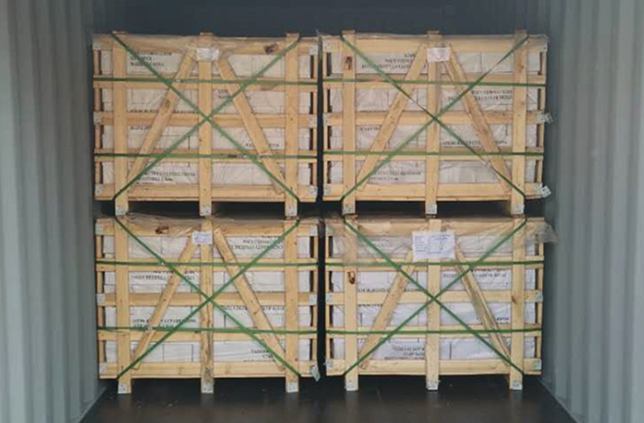
E-commerce logistics for heavy masonry products live or die by the breakage rate, a metric that directly dictates the viability of selling stone online. When fragile materials fail during the last mile, companies face an immediate spike in return costs and a significant hit to their net margins. Natural stone offers a physical advantage here, as its geological density provides a level of structural resilience that artificial substitutes often lack under the stress of turbulent shipping environments.
This technical overview outlines the specific variables that prevent material degradation during transport, from packaging engineering to calculating weight-based shipping overhead. We compare the flexural strength of natural ledger panels against manufactured stone to show how material selection impacts long-term profitability. Use these insights to refine your fulfillment strategy and reduce the logistical friction inherent in heavy-goods delivery.
The Shipping Challenge: Breakage Rates in Last-Mile Delivery
Last-mile transit represents the most volatile phase of the stone supply chain, where rushed handling protocols and multiple vehicle transfers frequently compromise the structural integrity of natural ledger panels.
Financial Impact of Transit Damage
Damaged goods during the final delivery phase trigger a cascade of direct and indirect costs that extend far beyond the material’s initial purchase price. Direct losses for basic operational handling average $15 to $20 per damaged shipment, but the true financial drain lies in the replacement logistics and the complex return processing cycle. These expenses eat into the narrow margins of B2B distributors and wholesalers who must absorb the cost of secondary freight.
Broken ledger panels also create a ripple effect at the job site. When inventory arrives compromised, construction timelines stall. In the 2026 labor market, these delays result in secondary labor cost overruns as installation crews remain idle or must be rescheduled. We see that project managers now prioritize delivery reliability as a primary metric for selecting their long-term material partners.
Handling Risks in Multi-Stage Handoffs
The journey from a regional warehouse to a job site involves several high-risk touchpoints. As delivery speed demands intensify, handling protocols often suffer. Each transfer between vehicle types—from heavy freight trucks to smaller last-mile vans—presents a fresh opportunity for impact damage. Inadequate equipment at the final delivery point often results in dropped or mishandled crates, particularly when drivers are pressured to meet tight windows.
- Rushed sorting at regional hubs leads to improper weight distribution within local delivery vehicles.
- Frequent manual handoffs increase the likelihood of edge chipping on panels that lack reinforced packaging.
- The absence of lift-gate equipment at residential delivery sites frequently results in unstable unloading conditions.
Erosion of Customer Trust Through Shipping Failures
Repeated shipping failures do more than hurt the balance sheet; they degrade the professional trust necessary for B2B growth. Receiving cracked natural stone creates immediate friction between contractors and homeowners, damaging the contractor’s reputation. This friction often forces distributors to maintain larger buffer stocks to cover potential damage, which ties up capital that could be used for scaling operations.
Suppliers who cannot guarantee shipment stability face a steady migration of clients toward local quarry sourcing. Even if long-distance shipping offers a lower price per square foot, the risk of project delays makes it less competitive. Reliability in the final delivery phase has become a key differentiator in the 2026 stone market, separating high-volume leaders from struggling distributors.
Why Manufactured Stone is More Brittle and Prone to Cracking
Manufactured stone substitutes the interlocking mineral bonds of natural geology with polymer resins, resulting in a material that frequently fails under thermal and structural stresses where natural ledger panels remain stable.
Polymer Composition and Structural Rigidity
Manufactured stone relies on resin binders that lack the interlocking mineral strength found in natural stone. These resin-based composites exhibit significantly higher brittleness, making them less capable of absorbing structural shifts common in modern construction. The synthetic binding process creates a material prone to snapping under tension during handling or settlement in 2026 projects. In contrast, natural stone ledger panels provide superior density and impact resistance compared to these engineered alternatives.
| Technical Property | Manufactured Stone (Polymer) | Natural Piedra apilada (TSS) |
|---|---|---|
| Structural Binder | Polyester/Acrylic Resins | Interlocking Mineral Veins |
| Thermal Stability | Softens at 150°F (65°C) | Non-combustible; UV Stable |
| Impact Resistance | Low (High Brittleness) | High (Dense Silicates/Slate) |
Thermal Sensitivity and Resin Softening
Synthetic stone faces structural risks when exposed to moderate heat or rapid temperature shifts. Resin binders begin to soften at temperatures as low as 150°F, compromising the panel’s internal bond. Thermal shock frequently causes micro-cracks in manufactured products, especially when used near fireplaces or in exterior applications. Natural stone remains stable and non-combustible, whereas manufactured stone loses integrity under heat stress.
- Thermal shock vulnerability leads to edge delamination in exterior freeze-thaw cycles.
- Polymer degradation under UV exposure causes fading and surface chalking over time.
- Resin softening compromises the adhesive bond, increasing the risk of panel detachment.
Impact of Manufacturing Quality Defects
Inconsistent fabrication standards often leave manufactured stone with internal weaknesses that lead to failure. Insufficient vacuum pressure during production creates air bubbles that serve as fracture points within the panel. Low press tonnage reduces the overall density of the material, making it vulnerable to breaking during last-mile delivery. Top Source Stone utilizes precision infrared cutting and three-stage inspections to avoid these structural flaws in our natural stone ledger panels.
Stress Concentration and Installation Vulnerabilities
Manufactured variants struggle to handle localized pressure compared to the rugged durability of natural ledger panels. Uneven installation surfaces create stress concentration points that easily crack brittle manufactured stone. Because manufactured stone lacks the natural flexibility of stacked stone systems, it leads to more frequent customer returns due to breakage. Natural stone panels offer a more forgiving installation experience and higher long-term value for contractors and homeowners alike.
Scale Your Business with Factory-Direct Stone

Packaging Engineering for Natural Stone Ledger Panels
Effective packaging for natural stone must balance the high density of slate and quartzite with the mechanical realities of international maritime transit and last-mile handling.
Industrial Crate Construction and Material Standards
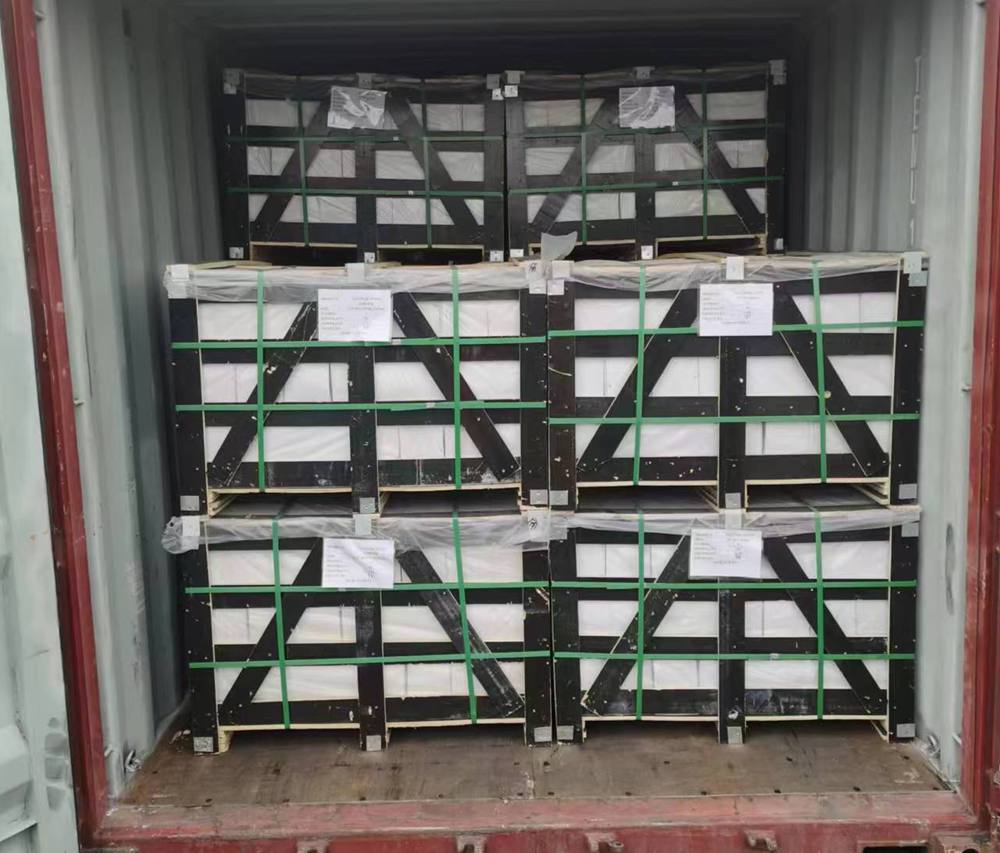
We utilize reinforced plywood crates for international export to maintain structural integrity while bypassing the delays associated with solid wood fumigation. These crates provide high-density support for natural stone panels that weigh between 8 and 13 lbs/sqft. By choosing plywood, we eliminate the need for heat treatment or fumigation, which streamlines 2026 logistics and ensures faster customs clearance at major ports.
- Plywood construction offers superior impact resistance compared to standard pine pallets.
- Reinforced corners and base plates prevent pallet failure during multi-layer stacking in high-volume shipping hubs.
- Standardized 110cm x 110cm dimensions ensure compatibility with global warehouse racking systems.
| Logistics Parameter | Standard Paneles de libro mayor | Rough/Premium Panels |
|---|---|---|
| Unit Weight | 30-40 kg/m² (8-12 lbs/sqft) | 55 kg/m² (11-13 lbs/sqft) |
| Carton Content | 7-8 Pcs (Approx. 0.70 m²) | 5 Pcs (Approx. 0.45 m²) |
| Crate Capacity | 48-60 Boxes (30-37 m²) | 48-60 Boxes (21-27 m²) |
Internal Stabilization and Moisture Mitigation
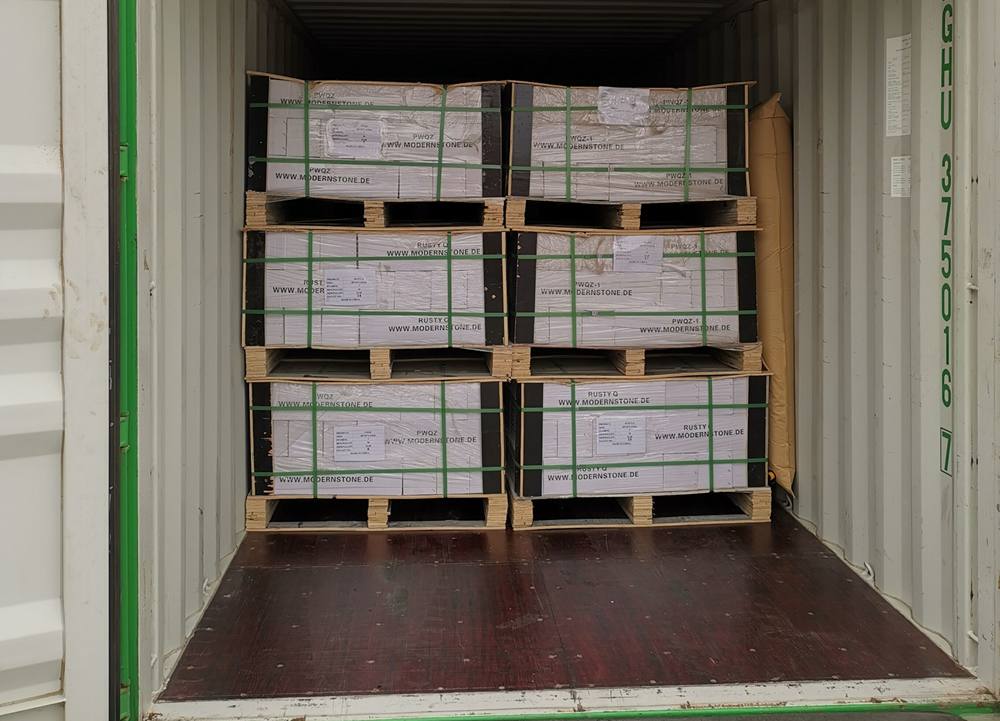
Transit through salt-rich maritime environments requires proactive protection against moisture and shifting. We employ polythene liners and moisture-proof barriers to prevent stone discoloration or surface damage during the 20-30 day sea voyage. To combat movement, industrial airbags and wire reinforcement systems fill voids within the 20GP containers, effectively neutralizing the risk of product displacement during rough transit.
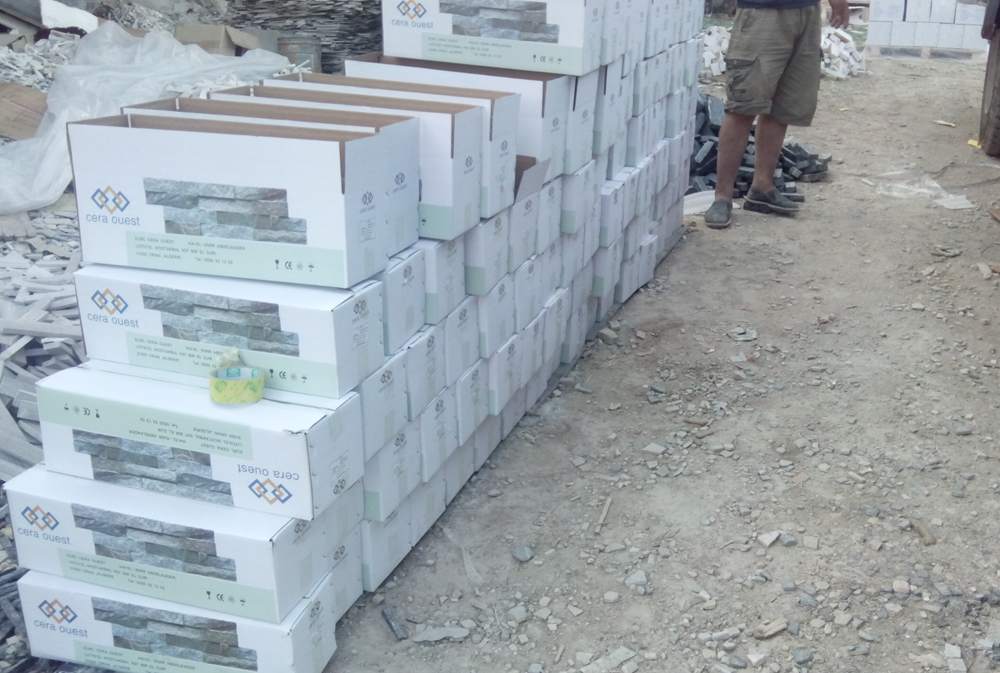
- 5-ply reinforced export-grade cartons provide individual panel cushioning.
- Internal wire banding secures heavy loads to the pallet base to prevent sliding.
- Custom-printed cartons feature clear handling instructions to reduce warehouse mismanagement.
Production-Integrated Quality Control and Precision
Packaging safety starts at the cutting stage. We use infrared and CNC diamond-blade equipment to create exact 6” x 24” dimensions. This precision allows panels to interlock tightly within the carton, naturally resisting vibration and reducing the chance of edge chipping. A three-stage inspection process verifies surface cleanliness and bond strength before the stone enters the packaging line.
Removing glue residue and contaminants before packing prevents chemical reactions or surface abrasion during long-term storage in humid distribution centers. By ensuring a snug fit, we minimize internal movement, which is the primary cause of breakage in LTL (Less-Than-Truckload) shipping scenarios.
Strategic Container Loading and Logistics Management
Optimizing pallet configurations is essential for maximizing container space while adhering to safety regulations. For shipments to the United States, we follow a strict 17.5-ton port limit unless destination port approval for heavy-weight standards (up to 26.5 tons) is secured. We distribute weight evenly across the container floor to maintain stability during both truck and sea transport.
- Standard 20GP containers accommodate 25 to 30 pallets, reaching a maximum coverage of 860 m² for standard panels.
- L-shaped corner pieces receive dedicated bracing to protect their 90-degree geometry from impact.
- Detailed pre-shipment photos and videos provide visual verification of crate integrity before the balance payment is made.
Calculating Shipping Costs: Weight vs. Value Density
Effective stone logistics in 2026 requires balancing high material density with strict port weight limits to negate the impact of carrier dimensional weight pricing.
Dimensional Weight Impact on Stone Logistics
Global shipping carriers prioritize dimensional weight (DIM) formulas to maximize their cargo space efficiency. For piedra natural distributors, this means the relationship between the physical size of the crate and its actual weight determines the billable rate. Because piedra natural is inherently dense, precision packaging is the primary tool to avoid “paying for air.” We utilize standardized 6” x 24” panel formats that allow for tighter internal packing configurations than irregular flagstone or loose stone materials.
| Logistics Metric | Standard Paneles de libro mayor | Rough/Premium Panels |
|---|---|---|
| Average Unit Weight | 8 – 12 lbs/sq.ft | Approx. 15 lbs/sq.ft |
| Max Pallet Coverage | 37.80 m² (60 Boxes) | 27.00 m² (60 Boxes) |
| 20GP Container Limit | 750 – 860 m² | 480 – 540 m² |
- Carriers compare actual stone weight against volumetric weight; our high-density packing ensures actual weight usually dictates the rate.
- Precision-cut CNC diamond-blade edges reduce package volume by 12% compared to hand-split irregular edges.
- Standardized carton dimensions (61cm x 15cm x 13cm) eliminate dead space within the plywood export crates.
Optimizing Freight Density for Ledger Panel Distribution
Natural stone ledger panels provide a superior weight-to-volume ratio, allowing distributors to maximize container payloads. While lightweight e-commerce goods often “cube out” a container before reaching weight limits, stone “weighs out” first. This is particularly relevant for USA-bound shipments where the strict 17.5-ton port weight limit requires strategic pallet loading to avoid heavy-weight surcharges.
We employ reinforced 5-ply export-grade cartons and fumigation-free plywood crates to manage these high-density loads. This engineering prevents the shifting common in LTL (Less-Than-Truckload) transit, where cargo density must remain high to stay within favorable freight classes. By reaching maximum weight capacity before hitting spatial limits, we reduce the total shipping cost per square foot for wholesale buyers.
Value Density Ratios for Natural Stone Materials
The intrinsic value of materials like marble, quartzite, and slate significantly improves the cost-to-weight ratio. High-value piedra natural justifies the logistical expenditure by delivering a higher property value increase per pound transported compared to cheaper, bulkier building materials like concrete-based faux stone.
Wholesale buyers maximize their margins by ordering full pallets, which spreads the fixed costs of logistics—such as lift-gate fees and documentation—across a larger volume of premium material. This strategy reduces the logistics component of the final project invoice, ensuring that the primary investment goes into the quality of the stone rather than the transport itself.
Reducing Customer Returns Through Material Durability
Durable raw materials and proactive manufacturing protocols serve as the primary defense against the high costs of last-mile damage and product returns in the stone industry.
Inherent Resilience of Natural Stone vs. Manufactured Composites
Natural stone ledger panels provide a structural integrity that manufactured concrete composites cannot replicate. While engineered stone relies on resin binders that soften at 150°F and remain vulnerable to thermal shock, natural slate and quartzite are chemically stable and physically dense. This inherent durability ensures that the product maintains its aesthetic and structural properties even under extreme environmental stress, directly reducing the likelihood of long-term warranty claims.
- Natural stone resists UV damage and maintains its original color permanently, unlike pigmented concrete composites that fade over time.
- The dense physical properties of slate, quartzite, and marble provide natural weather resistance that meets 2026 exterior performance standards.
- Delivering a product that retains its integrity for decades prevents customer dissatisfaction and protects the reputation of the distributor.
Industrial-Grade Adhesive and Precision Interlocking
The bond between individual stone pieces and the panel substrate is a critical failure point during transit. We use high-strength epoxy resins to create a permanent connection, preventing stone “drop-off” during the vibrations common in maritime and last-mile shipping. This chemical bonding is paired with CNC diamond-blade cutting to produce precise Z-shape and S-shape interlocking patterns.
- Specially formulated epoxy resin ensures a permanent bond, effectively eliminating stone detachment during rough handling.
- Infrared cutting equipment produces precise dimensions, allowing panels to interlock seamlessly and reducing breakage during the installation process.
- Rigid substrate materials provide the necessary structural support to withstand the heavy vibrations of international logistics.
Three-Stage Quality Control Protocols
We implement a rigorous inspection framework that identifies and removes defective panels long before they enter the distribution chain. Quality control is not treated as a final check but as a continuous process integrated into every stage of production. This proactive strategy ensures that B2B partners receive consistent, project-ready materials that meet the “Big 10” inventory standards.
- Inspectors evaluate stone quality and dimensional accuracy immediately after the initial infrared cutting process.
- A secondary audit verifies the bond strength and the integrity of the interlocking pattern post-assembly.
- Final pre-shipment audits ensure that only panels meeting strict durability and aesthetic standards are loaded for transport.
Strategic Packaging and Load Stability
Engineering the packaging is as important as engineering the stone itself. Last-mile delivery is often the most dangerous phase for heavy building materials, where rushed handling can lead to chipped edges and cracked panels. We utilize 5-ply reinforced export-grade cartons and fumigated plywood crates to shield the product from impact and environmental fluctuations.
- Reinforced corrugated cartons and sturdy plywood crates protect fragile edges and corners from impact during multiple handoffs.
- Strategic container loading and specialized bracing techniques prevent the load from shifting during maritime and overland transit.
- Durable packaging materials drastically reduce “damaged on arrival” reports, protecting the profit margins of distributors and contractors.
Conclusion
Natural stone’s structural integrity and inherent durability provide a significant advantage over brittle manufactured alternatives throughout the logistics chain. High-quality packaging engineering, including reinforced 5-ply export-grade cartons and plywood crates, mitigates the risks of last-mile delivery breakage. Reducing these physical losses directly protects the profit margins of e-commerce retailers and regional wholesalers by minimizing return rates.
Contact our team to review technical specifications or request high-definition visual verification of our current Big 10 inventory. We can help you optimize your next container shipment for maximum weight efficiency and minimal transit damage.
Preguntas frecuentes
Is it safe to ship stacked stone via UPS?
While shipping via UPS Ground is possible for small samples, shipping full orders of stacked stone through standard parcel carriers carries a high risk of breakage. The “last-mile” delivery phase involves multiple handoffs and automated sorting systems that can compromise heavy, brittle materials. For professional-grade results and minimal damage, LTL (Less Than Truckload) freight on pallets is the recommended industry standard for safety and stability.
How to prevent stone breakage in shipping?
Breakage prevention requires a multi-layered packaging strategy. We utilize high-density foam inserts or reinforced corrugated dividers within individual boxes to isolate stone pieces. On a macro level, boxes must be stacked vertically on pallets, secured with plastic edge protectors, and tightly shrink-wrapped to eliminate shifting. Implementing real-time tracking and selecting carriers with specialized “white glove” or building-material experience further reduces the risk of rushed, negligent handling.
What is the return rate for stone veneer?
The typical return rate for stone veneer in the e-commerce sector ranges from 5% to 12%. These returns are primarily driven by shipping damage or aesthetic discrepancies. Because each damaged shipment can incur direct costs of $15-20 plus the loss of customer trust, industry leaders focus on “first-attempt success” through rigorous packaging standards to keep this rate as low as possible.
How is stacked stone packaged for transport?
Stacked stone is packaged in modular, heavy-duty cardboard boxes, typically containing 5-10 square feet of material. These boxes are then arranged on a heavy-duty wooden pallet. To ensure structural integrity during transport, the pallet is reinforced with plastic strapping and covered in industrial-grade stretch film. This configuration prevents the stones from rubbing together or shifting, which is the primary cause of cosmetic “scuffing” or structural snapping.
Is natural stone too heavy for online sales?
No, piedra natural is a highly successful category for online sales provided the logistics chain is optimized for weight. While the weight presents challenges for last-mile parcel carriers, the shift toward residential LTL delivery with lift-gate service has made online stone sales a standard practice. The key to profitability lies in managing the high shipping costs through efficient palletization and minimizing the financial losses associated with transit damage.
