
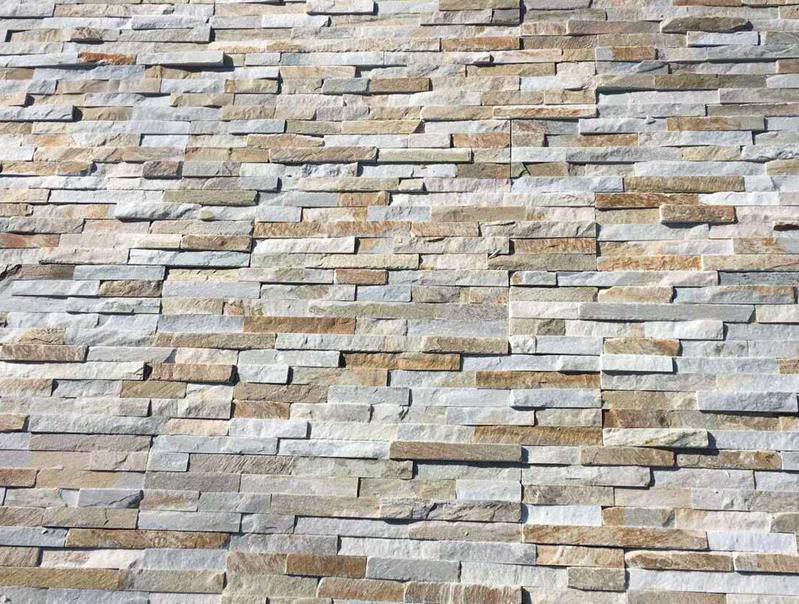
UV stability testing serves as the critical benchmark for predicting whether an exterior facade will maintain its asset value or succumb to costly aesthetic degradation within its first decade of service. When architects specify materials for high-exposure environments, they face the risk of irreversible color shifting that triggers expensive replacement projects and legal disputes. Understanding how various minerals react to prolonged photon bombardment allows developers to mitigate these risks before breaking ground.
This guide explores the crystalline structures that give natural stone its inherent resistance to solar radiation and examines the technical differences between xenon arc protocols and real-world exposure. We analyze why synthetic alternatives lose their luster while genuine stone preserves its original character, even in high-UV regions. By following these performance standards, project managers can establish a reliable procurement strategy for exterior cladding that survives the sun.
The Chemistry of Color: Why Natural Minerals are UV Stable?
Genuine mineral surfaces achieve permanent color stability because their pigmentation is an inherent property of inorganic atomic bonds, which remain chemically inert under high-energy solar radiation.
Inorganic Pigmentation and Atomic Bond Strength
Natural stone panels derive their color from inorganic minerals like iron oxide, manganese, and silicates. These substances lack the carbon-to-carbon bonds found in synthetic dyes and resins. High-energy UV photons easily sever organic molecular chains, leading to the rapid fading observed in manufactured products. Because the minerals in our 100% natural stacked stone are chemically stable, they resist the oxidation processes that cause artificial alternatives to turn gray or brittle.
| Performance Metric | Piedra natural apilada | Manufactured Faux Stone |
|---|---|---|
| Pigmentation Base | Inorganic Earth Minerals | Synthetic Dyes & Resins |
| UV Stability (10+ Years) | 99% Hue Retention | Significant Graying/Fading |
| Atomic Bonding | High-strength Crystalline | Vulnerable Carbon Bonds |
Color integrity in ledgestone panels depends on where the material is sourced. We maintain hue uniformity of 95% within single batches by extracting stone from the same quarry vein. This consistency ensures that the color is integrated throughout the entire thickness of the panel, rather than existing as a thin surface-level coating that might wear away or bleach under intense sunlight.
Crystal Lattice Structures and Energy Dissipation
The dense crystalline arrangement of minerals like quartz and slate provides a physical mechanism for managing solar energy. These crystal lattices effectively distribute thermal and light energy through the stone’s body, preventing the localized chemical reactions that lead to surface discoloration. This architectural-grade durability is a primary reason why quartzite and granite varieties remain the dominant choice for high-sunlight regions.
- Precision-cut natural stone panels retain their luster because internal mineral layers provide consistent color depth.
- Thermal resistance in natural minerals prevents the micro-expansion that compromises the structural integrity of synthetic veneers.
- Natural quartzite and slate varieties resist the “UV shock” phase that often lightens or darkens manufactured products within the first 36 months of exposure.
Resistance to Photo-Oxidation in High-UV Environments
Natural minerals do not contain volatile organic compounds (VOCs) that react with sunlight to cause “chalking” or surface brittleness. In extreme climates like the UAE or Australia, where solar intensity is high, genuine mineral surfaces maintain their physical profile for decades. To complement this inherent stability, we utilize high-strength epoxy resins formulated specifically to match the UV resistance of the stone itself, ensuring the panel bonding agent does not fail under prolonged exposure.
Long-term architectural data confirms that while concrete-based discolors at a rate 2.61 times higher than natural slate, genuine stone remains stable. For B2B importers serving high-altitude or desert zones, specifying natural stone panels ensures the end-user avoids the common “graying” issues associated with lower-cost manufactured veneers.
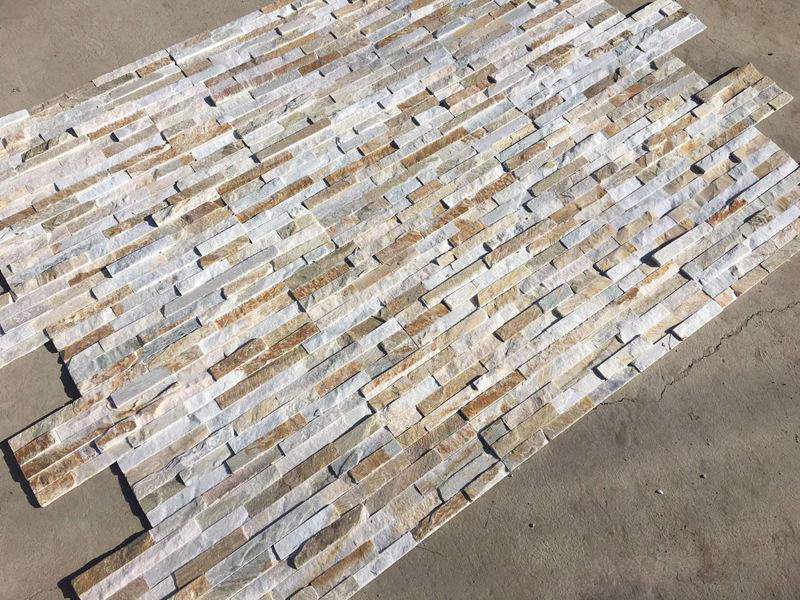
Testing Protocols: Xenon Arc vs. Natural Sunlight Exposure
Xenon arc technology provides the objective data necessary to predict long-term mineral stability, replacing the variability of field exposure with standardized laboratory cycles.
Accelerated Weathering with Xenon Arc Technology
Xenon arc testing serves as the 2026 industry standard for evaluating the UV stability and colorfastness of natural stone products. This method provides a controlled environment that ensures reproducible results across different testing facilities, displacing older methods by offering superior accuracy in predicting how minerals respond to light stress. By applying these protocols, we verify the permanent, non-fading nature of stacked stone before it reaches the job site.
- Ensures data reproducibility across global testing labs.
- Replaces subjective visual inspections with quantifiable spectral analysis.
- Validates mineral integrity for high-exposure architectural facades.
Full Solar Spectrum Replication
This protocol mimics the complex range of light found in the atmosphere, including UV, visible, and infrared radiation. Replicating precise geographic variables allows us to simulate high-intensity zones like the UAE or Australia. This ensures that piedra natural minerals maintain their luster when exposed to all wavelengths of light, accounting for seasonal variations in light intensity that natural exposure cannot provide in a short timeframe.
| Performance Metric | Xenon Arc (ASTM G155) | Natural Sunlight Exposure |
|---|---|---|
| Spectrum Control | Full Solar (UV, Visible, IR) | Variable / Atmospheric Filtered |
| Test Duration | Weeks (Compressed) | Years (Real-time) |
| Reproducibility | High (Standardized Cycles) | Low (Weather Dependent) |
Time Compression in Durability Assessment
High-performance testing compresses years of environmental exposure into a multi-week laboratory cycle. This data enables contractors and designers to see the predicted appearance of stone facades decades into the future. Furthermore, we assess the bond strength of high-strength epoxy resins under concentrated thermal and light stress. This reduces the research and development cycle for new stone collections while maintaining high quality standards for B2B supply chains.
- Predicts aesthetic evolution over 20+ year spans.
- Tests resin stability against delamination under UV load.
- Accelerates the market readiness of new quarry veins.
The Role of Natural Sunlight Validation
While laboratory testing is primary, natural sunlight exposure remains a necessary tool for long-term field validation. This secondary phase confirms that lab results align with the unpredictable variables of real-world outdoor environments. Natural field testing validates the performance of stone in specific humid or high-altitude climates, providing the final assurance that piedra natural outlasts pigmented concrete alternatives in color retention and structural integrity.
Premium Stacked Stone for Architectural Needs

Why Faux Stone Fades While Natural Stone Maintains Luster?
Natural stone maintains its visual integrity because its color is a geological property of the mineral itself, whereas manufactured alternatives rely on synthetic pigments and resins that inevitably oxidize when exposed to ultraviolet radiation.
Mineral Composition vs. Synthetic Pigments
The fundamental difference in color retention lies in how the material acquires its hue. Natural stone panels derive their color from minerals fused over millions of years of geological pressure. This process makes the pigment an inseparable part of the stone structure. Natural materials like slate, quartzite, and marble do not require artificial coloring agents to achieve their visual depth.
| Performance Feature | Piedra natural apilada | Manufactured Faux Stone |
|---|---|---|
| Color Source | Inherent Mineral Composition | Surface-Applied Liquid Dyes |
| UV Stability | High (Chemically Inert) | Low (Fades in 5-10 Years) |
| Structural Binder | Natural Crystalline Bonds | Synthetic Resins & Cement |
| Weathering Effect | Graceful Aging/Patina | Chalking and Graying |
Faux stone relies on concrete composites mixed with liquid pigments that exist primarily on the surface or within a porous cement matrix. Exposure to rain and sunlight causes these surface-level pigments to leach or oxidize. This often leads to a washed-out, gray appearance that compromises the architectural intent of the building.
- Pigment in piedra natural is deeply embedded through geological formation.
- Artificial colors in faux stone are susceptible to environmental leaching.
- Manufactured products lack the multi-dimensional color depth of real minerals.
UV Oxidation and Resin Breakdown in Manufactured Products
Artificial stone products use synthetic resins and binders that lack the chemical stability required for long-term solar exposure. Research indicates that faux stone products typically show noticeable fading within 5 to 10 years of direct UV exposure. Ultraviolet rays break down the chemical bonds in these synthetic resins, causing the material to become brittle and lose its original finish.
Natural stacked stone remains chemically inert under solar radiation. It preserves its texture and luster for decades without degradation. High-performance materials like those in the Top Source Stone inventory undergo natural formation processes that render them immune to the “UV shock” phase that plagues manufactured veneers.
- UV radiation triggers polymer degradation in synthetic binders.
- Natural stone maintains structural and aesthetic integrity for over 50 years.
- Manufactured stone often requires post-installation coatings that can yellow over time.
Geological Stability in High-Exposure Environments
Natural stone maintains its aesthetic integrity because its physical properties resist the environmental stressors that impact man-made alternatives. Stacked stone panels provide a permanent color solution for exterior facades in high-UV regions like Australia or the Middle East. The lack of volatile organic compounds (VOCs) and synthetic binders ensures that the material does not yellow or peel.
- Natural quartzite and slate offer inherent resistance to salt-attack and high salinity.
- Physical durability remains constant regardless of heat cycling and solar intensity.
- Crystalline structures in granite and quartzite reflect a portion of UV energy, reducing thermal absorption.
Long-term Maintenance and Property Value Impact
The choice between natural and faux stone affects the long-term maintenance costs and the overall resale value of a building project. Faded faux stone often requires expensive staining or complete replacement to restore curb appeal after a decade of use. Natural stone panels increase property value because they are recognized as a premium, permanent asset that ages gracefully.
Simple cleaning with pH-neutral solutions keeps natural stone looking new. Faded faux stone cannot be easily restored to its original state once the internal pigments have oxidized. For commercial developments and high-end residential projects, natural stone represents a lower total cost of ownership despite a higher initial material investment.
- Natural stone eliminates the need for periodic re-staining or cosmetic repairs.
- Resale values for natural revestimiento de piedra remain significantly higher than synthetic alternatives.
- Maintenance of natural stone is limited to standard cleaning rather than structural restoration.
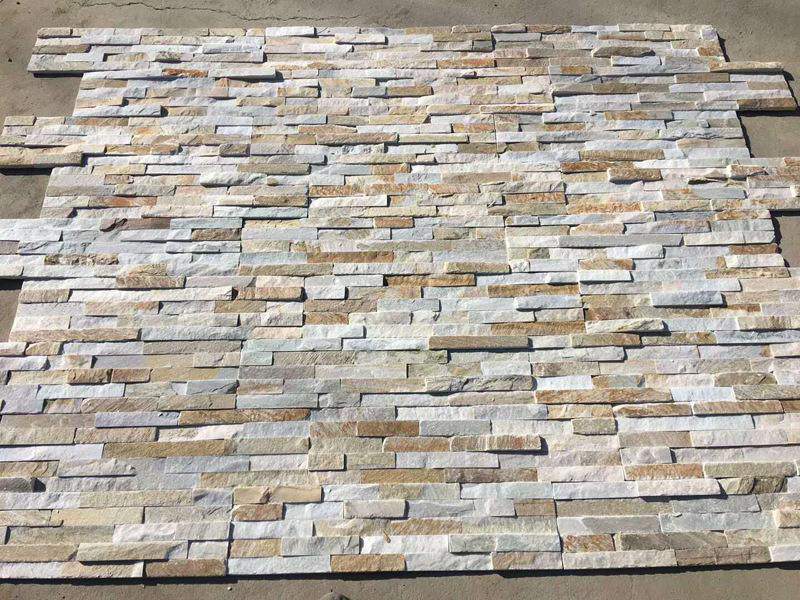
Regional Analysis: Stone Performance in High-UV Zones (e.g., UAE, Australia)
Project specifications in extreme climates now prioritize mineral-based cladding to solve simultaneous challenges of solar radiation, thermal expansion, and salt-air degradation.
Arid Climate Durability in the Middle East and UAE
Natural stone panels provide a critical thermal defense for architectural envelopes in the Middle East, where surface temperatures regularly exceed 70°C. In the UAE market, building professionals favor quartzite and slate because these minerals maintain their dimensional profile under extreme heat. Synthetic cladding and resin-based faux stones often experience warping or “oil-canning” when exposed to the desert’s high solar load, but piedra natural remains structurally inert.
- Natural stone minerals act as a high-mass thermal buffer, slowing the transfer of solar heat into the building interior.
- Our quartzite varieties offer superior resistance to the abrasive effects of wind-blown sand, preserving the split-face texture for decades.
- The absence of synthetic binders ensures that the stone will not off-gas or degrade chemically under sustained UV bombardment.
UV Stability and Salt Resilience in Australia
Coastal and high-UV regions in Australia present a dual challenge: intense Southern Hemisphere solar radiation and aggressive salt-attack. Natural stone demonstrates significantly lower water absorption rates than manufactured alternatives, which prevents salt crystallization within the pores. This characteristic is vital for preventing surface spalling and maintaining the integrity of the ledge profile in seaside applications.
Because Piedra fuente superior extracts material from consistent quarry veins, the mineral pigments remain stable under the high UV index found in Australian latitudes. While concrete-based veneers often turn gray or lose their primary hues within five years, natural slate and quartzite maintain their native color profiles. The 2026 design standards for Australian outdoor living spaces increasingly mandate these natural textures to ensure long-term aesthetic value without the need for frequent replacement.
Thermal Conductivity and Heat Management in 2026 Infrastructure
Modern infrastructure projects now use specific stone finishes to mitigate the urban heat island effect. Selection criteria favor lighter-colored stones—such as our Glacier White and Alaska Gray Quartzite—which reflect a higher percentage of solar energy. By utilizing these high-reflectance materials, contractors meet evolving energy efficiency requirements that penalize materials with high thermal conductivity.
- Lighter quartzite and marble reflect solar energy to keep building facades cooler than darker, heat-absorbing synthetics.
- The rough-hewn, split-face texture of natural stone panels diffuses direct sunlight, reducing glare in high-density urban corridors.
- Architects leverage the low thermal conductivity of piedra natural to reduce the cooling loads on HVAC systems in large-scale commercial developments.
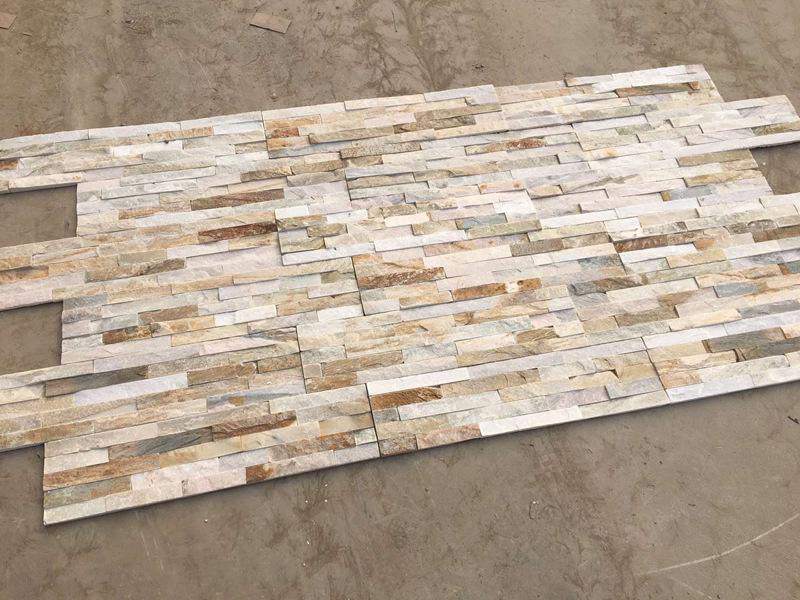
Does Sealing Enhance UV Protection for Natural Stone?
While natural stone exhibits inherent geological stability, modern 2026 sealing technologies provide a critical secondary defense by neutralizing high-intensity radiation and preventing the subsurface oxidation that leads to long-term color drift.
Subsurface Protection via Impregnating Sealers
Impregnating sealers represent the most effective long-term defense for exterior stacked stone panels. These formulations penetrate deep into the stone’s pore structure, creating a hydrophobic barrier that sits well below the surface where UV light cannot reach. This internal placement protects the chemical integrity of the sealer itself, ensuring it does not break down under direct solar heat or intense light cycles.
- Impregnating sealers operate entirely below the surface of the ledger panels, shielding the barrier from direct solar contact.
- Subsurface placement prevents the chemical breakdown of the sealer, ensuring long-term mineral stability and structural integrity.
- Internal sealing maintains the natural breathability of the stone while blocking moisture that can accelerate weathering in high-sunlight zones.
UV-Absorbing Additives in Chemical Sealants
Advanced stone care standards in 2026 emphasize the use of specialized UV-absorbing compounds. These additives function by dispersing high-intensity light waves and converting them into harmless thermal energy before they can interact with the stone’s mineral pigments. By neutralizing this radiation at the molecular level, these sealants prevent the microscopic surface degradation that often results in a dull or matte appearance over time.
- Advanced sealants incorporate UV-absorbing compounds that effectively disperse energy from high-intensity light waves.
- Protective blockers prevent the microscopic surface degradation that often results in a matte or chalky finish on exterior walls.
- Strategic application on exterior facades reduces the cumulative impact of solar exposure on natural mineral pigments like those found in quartzite and slate.
Performance of Topical Acrylic and Polyurethane Shields
Topical sealers, such as high-grade acrylics or polyurethanes, provide a sacrificial physical film that guards against environmental contact. These shields reflect a portion of solar energy away from the wall surface while significantly enhancing the visual depth of stones like Carbon Black slate or Golden Honey quartzite. While these coatings require more frequent maintenance than impregnating sealers, they offer a robust primary defense in coastal or high-salinity zones.
- Acrylic and polyurethane coatings create a physical film that guards the stone from direct environmental contact and abrasive wind.
- Topical sealers enhance the depth of color in slate and quartzite while providing a layer of sacrifice against the elements.
- Regular maintenance with UV-stable coatings ensures that stacked stone panels retain their original quarry luster through 2026 and beyond.
Conclusion
Natural minerals provide a permanent defense against solar degradation, ensuring exterior walls maintain their original hue and structural integrity over decades. Selecting materials backed by rigorous UV testing protects the visual appeal of architectural projects and prevents the premature graying common in manufactured alternatives. This commitment to raw material quality ensures that installations in high-UV regions remain vibrant and durable without the need for constant maintenance.
Review the specific solar exposure levels of your upcoming project to select the most appropriate quartzite or slate variety for your regional climate. You can request our technical data sheets or a professional sample set to verify material performance and color consistency for your wholesale requirements.
Preguntas frecuentes
Does natural stone fade in direct sunlight?
Natural stone is inherently UV stable because its coloration is derived from internal mineral compositions and crystal structures rather than synthetic dyes. While some stones may undergo a subtle surface oxidation or “bleaching” over many decades, they do not fade in the traditional sense. The trace elements within the minerals determine their long-term color stability, making natural stone far more resilient to direct sunlight than manufactured alternatives.
How to test stone for UV resistance?
To accurately assess UV resistance, materials are subjected to Accelerated Weathering tests, such as ASTM G154 or G155, which use fluorescent UV lamps and moisture cycles to simulate years of exposure. In professional settings, we also analyze the stone’s crystal structure and particle sizing to determine oxidation resistance. For site-specific verification, a “patch test” exposing a sample to direct sunlight for a prolonged period can confirm the material’s mechanical and aesthetic performance.
Why is my manufactured stone turning gray?
Manufactured stone typically turns gray because its color is achieved through synthetic iron oxide pigments layered onto a concrete-based binder. Over time, UV radiation breaks down these synthetic stabilizers and pigments—a process known as photo-degradation. As the surface pigments oxidize and wear away, the natural gray color of the underlying cementitious material is revealed, leading to a loss of the original vibrant aesthetic.
Best stone for high-sunlight exterior walls?
Granite and Quartzite are the most recommended natural stones for high-sunlight exterior walls due to their exceptional UV absorption characteristics and dense crystal structures. These materials are highly resistant to oxidation and mechanical wear. When selecting stone for high-exposure environments, focus on mineral-based formulations with high density and low porosity to ensure the facade maintains its structural integrity and color balance without the need for synthetic stabilizers.
Does natural slate change color over time?
Yes, natural slate can change color depending on its classification as “fading” or “unfading.” This change is driven by the oxidation of trace elements, such as iron pyrite or carbon, within the stone. “Fading” slates will gradually develop a weathered patina, shifting toward hues of buff, tan, or brown when exposed to sunlight and moisture. “Unfading” slates, however, possess a specific mineral composition that maintains its original color for the duration of the material’s lifespan.
