

Sealing natural stone is the technical baseline for preventing efflorescence and moisture-driven delamination in high-exposure architectural facades. Skipping this step leads to permanent mineral staining and freeze-thaw cracking, which triggers costly warranty claims and structural remediation for facility managers.
We use water-based penetrating sealers to preserve ASTM-standard durability while maintaining 100% mineral breathability for our Z-shape interlocking series. This approach protects the CNC diamond-blade precision of our quartzite and slate, ensuring that Same-Batch Quarry Consistency remains visually pristine even in high-salinity coastal environments.
Does Your Natural Stacked Stone Project Actually Need a Sealer?
Exterior projects and high-moisture interiors require penetrating sealers to block efflorescence and rust while maintaining mineral breathability. Dry interior accents remain optional but benefit from added protection.
Assessing Environmental Risks and Stone Porosity
Location determines the necessity of a sealer. While an interior feature wall in a controlled environment often stays pristine without intervention, exterior installations face constant pressure from rain, snow, and irrigation runoff. These elements drive moisture into the stone’s cellular structure, leading to long-term aesthetic and structural issues.
- Porous Materials: Stones like limestone and travertine have high absorption rates and trap stains easily if left unprotected.
- Iron-Rich Slate: Unsealed slate exposed to moisture can develop rust spots as internal minerals oxidize.
- Efflorescence Prevention: Sealing stops the migration of salt deposits—the chalky white residue that often mars the face of natural stone after wet weather.
Protecting ASTM-Standard Freeze-Thaw Durability
For B2B projects in Northern climates, sealing is a technical requirement to maintain the structural integrity of the installation. Piedra fuente superior products adhere to strict ASTM freeze-thaw standards, but a sealer acts as the primary defense against water expansion within the stone pores during temperature drops.
- Vapor Permeability: We recommend water-based penetrating sealers because they allow 100% natural quartzite and slate to “breathe” while repelling liquid water.
- Coastal Resilience: In high-salinity or high-humidity regions, sealers prevent salt-air degradation and maintain the stone’s UV stability.
- Contaminant Resistance: A proper seal ensures that dust, dirt, and organic growth cannot bond with the split-face texture, simplifying long-term maintenance for commercial property owners.

Penetrating Sealers vs. Topical Coatings: Which Protection is Better?
Penetrating sealers provide breathable, subsurface protection for piedra natural. Topical coatings create a glossy sacrificial layer but risk trapping moisture and require frequent maintenance in exterior commercial projects.
Subsurface Integration vs. Surface Film Barriers
The primary difference between these two technologies lies in how they interact with the stone’s geology. Penetrating sealers soak into the microscopic pores of the stone to create a hydrophobic bond. This chemical reaction happens beneath the surface, leaving the stone’s appearance and texture unchanged while repelling liquids from within.
Topical coatings act as a physical layer on the exterior of the stone. While they serve as a sacrificial barrier against surface stains, they effectively “shrink-wrap” the material. For B2B buyers managing large-scale exterior installations, this film creates significant technical risks regarding vapor transmission and safety.
- Breathability: Penetrating sealers allow stones to breathe, preventing vapor pressure buildup that leads to delamination.
- Slip Resistance: Research shows penetrating sealers maintain the stone’s original friction coefficient better than film-forming topical alternatives.
- Moisture Management: Subsurface protection prevents water from becoming trapped behind a topical film, which can cause mold or structural weakening.
Preserving the UV Stability of Natural Quartzite and Slate
Top Source Stone utilizes 100% natural minerals like Quartzite and Slate. These materials possess inherent UV stability, meaning they will not fade in high-sunlight environments like the US Sun Belt or the Middle East. Choosing the right sealer is critical to maintaining this natural advantage without introducing artificial failure points.
Penetrating sealers are the standard for 2026 architectural designs because they preserve the authentic “Natural Cleft” finish of the stone. Because they do not sit on the surface, they cannot yellow, cloud, or peel when exposed to the high salinity and humidity typical of coastal regions.
- Aesthetic Integrity: Maintaining the original quarry-source texture ensures the project looks exactly as specified by the architect.
- Freeze-Thaw Resilience: Penetrating formulas protect panels in extreme northern climates by stopping water from expanding inside the stone pores.
- Chemical Stability: Unlike topical sealers that may react with salt spray or humidity, penetrating bonds remain stable and invisible.
For commercial dealers and wholesalers, recommending penetrating sealers for natural stone panels reduces long-term liability. These formulas last longer and require less frequent reapplication than topical coatings, protecting the end-user’s investment and the stone’s structural integrity.
Premium Natural Stone for Architectural Needs
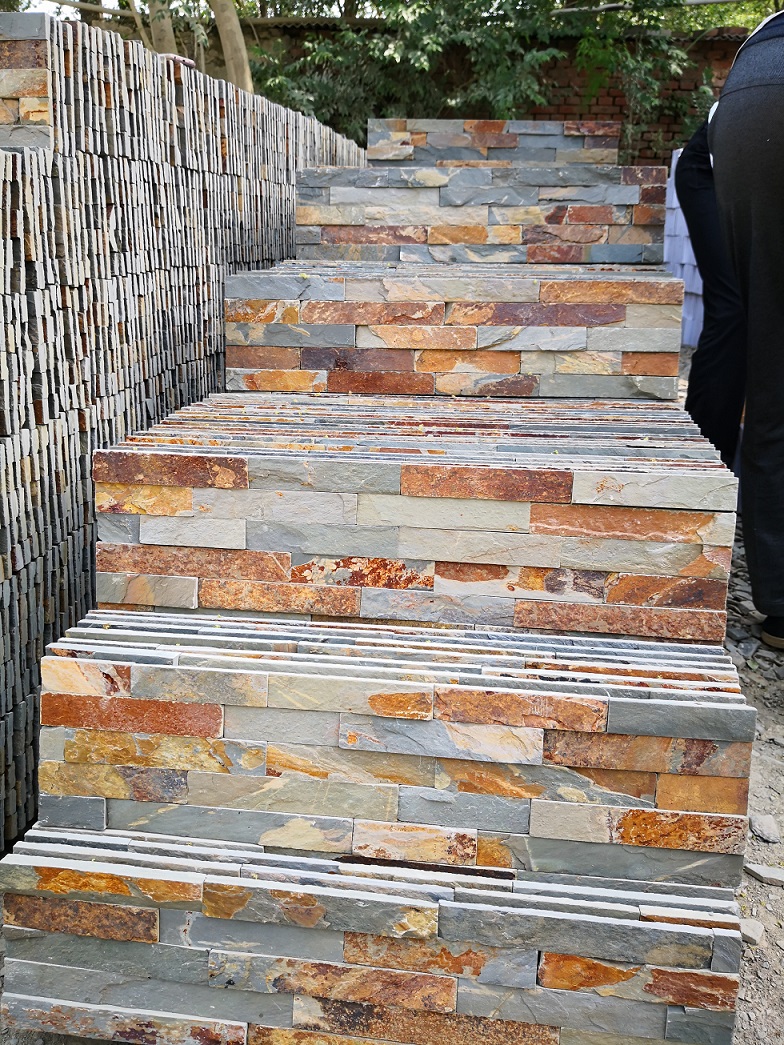
How to Achieve the Luxury “Wet Look” with Advanced Color Enhancers.
Enhancers saturate stone pores to deepen pigments, creating a permanent wet look. This treatment protects high-end materials like Carbon Black slate while highlighting natural mineral textures.
Mineral Saturation and Visual Depth Mechanisms
Professional-grade enhancers work through chemical saturation rather than topical layering. These products do not sit on the surface like a wax; they enter the micro-pores of the mineral to fundamentally change how light reflects off the stone. This process brings out the inherent character of the material without the artificial sheen of plastic films.
- Deep Penetration: Advanced enhancers reach into the stone pores to enrich natural pigments without creating a plastic-like film or residue.
- Optical Mimicry: The chemical formulation mimics the refractive index of water, pulling hidden veining and grain structures to the surface for maximum visual impact.
- Resin Shielding: High-performance resins block oil, water, and mildew while maintaining the stone’s natural breathability and structural integrity.
Ensuring Uniformity with Same-Batch Quarry Consistency
Material quality dictates the success of a color-enhanced project. Because enhancers darken the stone, any variation in mineral density or batch color becomes magnified. Dealers must prioritize source control to ensure the final installation looks intentional and premium rather than blotchy.
- 95% Hue Uniformity: Top Source Stone utilizes Same-Batch Quarry Consistency, ensuring that every panel responds evenly to enhancement across large-scale architectural walls.
- Vein Control: Sourcing material from the same quarry vein prevents the patchy or inconsistent darkening often found in mixed-batch inventory.
- Edge Precision: We apply sealers to CNC diamond-blade edges to protect Z-shape interlocks from moisture intrusion, specifically for upcoming 2026 high-exposure projects.

Professional Sealing Protocols for Showers and Poolside Wet Areas.
Wet area durability relies on dual-stage sealing. Applying a penetrating sealer before and after grouting shields stone from chlorine, salt, and mold growth in high-humidity environments.
Dual-Stage Penetrating Sealer Application
Sealing for 2026 high-humidity projects is a technical requirement rather than an aesthetic choice. A two-phase protocol prevents permanent grout haze and moisture-driven delamination in showers and water features.
- Pre-Grouting Seal: Apply to clean, dry panels at least 2 hours before installation. This blocks mineral absorption and prevents grout pigments from staining the stone pores.
- Post-Grouting Seal: Apply a secondary coat over the entire surface once the grout is cured. This creates a unified shield for both the stone face and the grout joints.
- Maintenance Intervals: Reseal shower enclosures every 6 to 12 months. Pool surrounds and exterior features typically require maintenance every 3 to 5 years.
Salinity and Humidity Resistance Specs
Piedra fuente superior materials are engineered for environmental stress. For coastal developments or commercial pool decks, the stone must withstand chemical exposure and extreme UV cycles without losing structural integrity.
- Inherent UV Stability: Natural quartzite and slate models, including Glacier White and Midnight Slate, resist color degradation even under intense direct sunlight.
- Salinity Resistance: Standardized protocols for 2026 projects ensure materials withstand high-salt environments common in Gulf regions and coastal North America.
- Chemical Protection: We recommend chlorine-resistant water-based penetrating sealers for the Big 10 inventory to maintain split-face textures in heavy-use zones.
Using CNC diamond-blade precision during manufacturing ensures these panels fit tightly, reducing the amount of exposed grout and further minimizing areas where moisture or mold can take hold.

Step-by-Step Guide: How to Apply Stone Sealer Without Streaking
Clean, bone-dry stone is the baseline. Apply thin coats in 4-sq-ft sections, dwell for 10 minutes, and buff completely dry to prevent sticky residue and streaks.
| Application Phase | Professional Requirement | Expected Outcome |
|---|---|---|
| Preparation | 28-day mortar cure; bone-dry surface | Zero moisture entrapment |
| Distribution | Low-pressure spray with immediate back-roll | Uniform surface saturation |
| Dwell Time | 5 to 15 minutes (keep surface wet) | Maximum mineral penetration |
| Finishing | Microfiber buffing of all excess liquid | Streak-free, matte finish |
Surface Preparation and Sectional Application Methods
Streak-free results depend entirely on the initial state of the stone. Installers must remove all dust, dirt, and chalky white efflorescence residue before the sealer touches the wall. If the stone is damp, the sealer will trap moisture, leading to a blotchy, clouded appearance that often requires professional stripping to fix. For new Top Source Stone installations, we recommend waiting at least 28 days for the mortar joints to cure fully before applying any chemical protection.
Control the application by dividing the wall into small sections, typically three to four square feet. This sectional approach allows the team to maintain a “wet edge,” preventing visible lap marks where different application passes overlap. We suggest the following tool kit for bulk B2B projects:
- Low-Pressure Pump Sprayers: These ensure even product distribution across large-scale vertical surfaces.
- Nap Rollers (3/8″ to 1/2″): Use these for “back-rolling” immediately after spraying to push the sealer into the natural clefts.
- Lambswool Applicators: These work best for applying thin, singular coats of penetrating sealers on smoother ledgestone.
Residue Management for Z-Shape Interlocking Panels
Top Source Stone’s Z-shape interlocking panels utilize CNC diamond-blade precision to create a seamless fit. However, these tight “male-female” joints can catch and pool excess sealer if the application is too heavy. Apply the product sparingly around the interlocking edges to avoid drips that could dry into a sticky, amber-colored film. Maintaining a dwell time of 5–15 minutes allows the sealer to soak into the 100% natural slate or quartzite minerals without hardening on the surface.
Texture plays a major role in how much product you need. Our Rough Series models, which feature a deeper 3.5cm profile, require aggressive buffing with microfiber cloths to reach into the deep crevices and remove standing liquid. Highly porous models from our “Big 10” inventory, such as Golden Honey and Arctic Golden, often absorb the first coat almost instantly. For these specific stones, apply a second coat while the first is still damp to ensure the sealer reaches the core of the mineral structure.
- Quartzite Porosity: Models like Glacier White require careful monitoring to ensure the sealer penetrates rather than puddled.
- Vertical Gravity: Start at the bottom of the wall and work upward. This ensures any accidental drips land on already-sealed areas, preventing permanent streak marks.
- Buffing Protocol: Change microfiber cloths frequently. A saturated cloth will simply move excess sealer around instead of removing it.
Preguntas frecuentes
How often should I reseal natural stacked stone?
Standard installations generally require resealing every 3 to 5 years. High-exposure areas, including exterior facades, pool surrounds, or regions with intense freeze-thaw cycles, often need attention every 2 years. You can perform a water test by splashing the surface; if the stone absorbs moisture instead of letting it bead, apply a new coat to maintain protection.
What is the best type of sealer for stone veneer?
Water-based penetrating sealers are the professional standard for natural stone. These products soak into the pores to create a breathable barrier against oil and water without altering the natural cleft texture. Avoid topical or surface sealers for exterior projects. These film-forming products trap moisture and tend to peel, flake, or yellow when exposed to UV light.
Will applying a color enhancer permanently change the stone?
Yes. Color enhancers create a permanent “wet look” by darkening the minerals and intensifying the natural grain of the stone. Because the sealer penetrates deep into the material, the effect is irreversible. We recommend testing the product on a spare panel or an inconspicuous area to confirm the visual result before full application.
Is sealing necessary for interior accent walls?
Sealing is optional for dry interior walls but highly recommended for moisture-prone areas like bathrooms, laundry rooms, or fireplace surrounds. Sealing protects porous stones like limestone from staining and prevents iron-rich slate from developing rust spots when exposed to humidity or occasional splashes.
Can I use a sprayer to apply the sealer?
Low-pressure pump sprayers are an efficient way to cover large, textured surfaces and ensure the sealer reaches deep into interlocking joints. For the best finish, use the “spray and back-roll” method. Apply the product with the sprayer and immediately follow with a foam roller to prevent the sealer from puddling in the stone’s crevices or deep textures.
Final Thoughts
Proper sealing protocols turn a standard installation into a durable architectural asset while reducing long-term maintenance liability for your clients. Top Source Stone’s 100% natural quartzite and slate require penetrating sealers to maintain their ASTM-standard freeze-thaw resilience and UV stability. Relying on same-batch quarry consistency ensures that color-enhanced projects remain uniform and professional across large-scale commercial developments.
Verify the quality of our “Big 10” inventory by requesting a sample kit to test absorption and finish compatibility firsthand. We offer a 300-square-meter trial order with pre-shipment visual verification to ensure your inventory meets the exact specifications of your project pipeline. Contact our factory team today to secure direct quarry pricing and discuss your custom private label requirements.
