

Calculating the backsplash cost for natural stone requires balancing raw material prices against escalating masonry labor. Relying on retail suppliers often subjects dealers to 30% middleman markups and inconsistent quarry batches that force contractors to over-order. For high-volume projects, these inefficiencies quickly compromise project viability and erode profit margins.
We analyze how direct quarry sourcing and CNC diamond-blade precision maintain budget control. Utilizing interlocking Z-shape systems and pre-fabricated L-corners reduces on-site labor by up to 60%. This review details how 8-12 lbs/sq.ft panels and 95% hue uniformity secure a professional finish without the expense of manual miter cutting.
How much does a stacked stone backsplash cost per square foot?
In 2026, natural stacked stone backsplashes cost $13.50–$24.00 per square foot installed, combining $9–$17 for panels and $4.50–$7.00 for professional masonry labor.
Material selection and local labor availability drive the primary cost variables for interior projects. While high-end marble or onyx can push prices higher, most B2B buyers focus on slate and quartzite varieties for their balance of durability and price point.
Current market rates for materials and professional labor
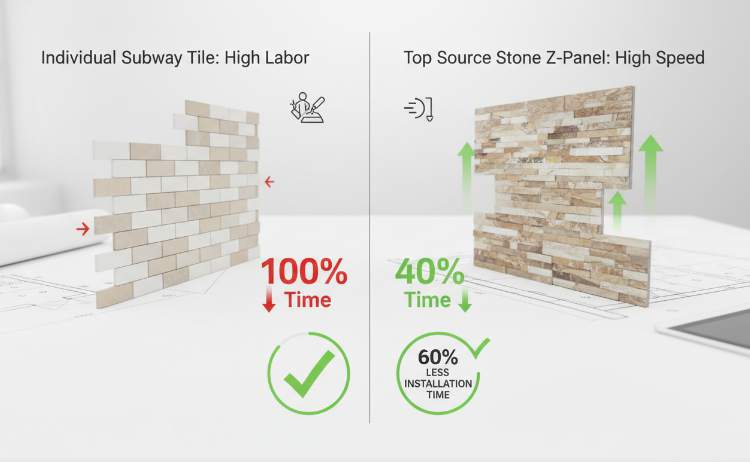
Labor for stacked stone remains surprisingly competitive compared to traditional ceramic tile. Because panels cover more surface area per placement than individual subway tiles, installers often provide lower per-square-foot rates for these systems.
- Material Costs: $9.00 to $17.00 per square foot for standard slate or quartzite panels.
- Labor Rates: $4.50 to $7.00 per square foot for small-scale interior masonry.
- Total Project Budget: $900 to $3,500 for a standard 20 to 40 square foot kitchen area, including supplies and logistics.
While traditional tile installation averages $7.00 to $12.00 per square foot, the modular nature of stacked stone reduces the hours required on-site. This makes it an efficient choice for large-scale multi-unit developments or high-turnover renovation projects.
Savings from B2B factory sourcing and interlocking panel systems
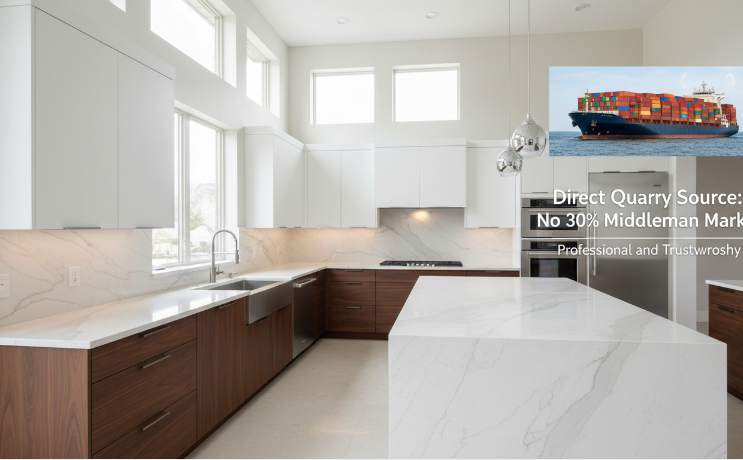
Sourcing directly from Top Source Stone eliminates middleman markups that typically inflate retail pricing by 30% or more. As a direct quarry source factory, we control the supply chain from the mountain to the crate to protect your project margins.
- Direct Quarry Sourcing: Middleman-free pricing ensures maximum cost-efficiency for high-volume B2B orders.
- CNC Diamond-Blade Precision: Z-shape and S-shape interlocking panels utilize a male-female connection system to camouflage joints and reduce on-site labor hours.
- Lightweight Engineering: Panels weighing 8-12 lbs/sq.ft eliminate the need for expensive structural footings or heavy-duty wall reinforcements.
The precision of the interlocking design allows professional installers to complete 40–50 square feet per day. This is nearly double the speed of individual tile placement, directly lowering the total billable labor for the project.
Material Comparison: Slate vs. Quartzite kitchen budgets
Slate offers a versatile $12–$25 entry point, while quartzite commands premium rates for its marble-like durability. Both require sealing, but quartzite provides superior hardness for high-traffic zones.
Market pricing for natural stone textures
Slate pricing depends heavily on the intended finish. Split-face textures, common in our California Gold and Midnight Slate series, provide an accessible entry point for B2B distributors. These natural cleft surfaces require less processing than high-honed premium slabs, keeping the material cost closer to the $12 per square foot range. This makes slate a high-volume mover for multi-unit residential projects.
Quartzite sits at a higher price tier because it bridges the gap between the look of marble and the hardness of granite. On the Mohs scale, quartzite is significantly harder than slate, which drives up production costs. Specialized CNC diamond blades are necessary to cut these panels without chipping. While material costs are higher, the density of quartzite often results in lower long-term maintenance costs for the end-user.
- Slate Material Cost: $12 – $25 per square foot for stacked panels.
- Quartzite Material Cost: Often starts at the higher end of piedra natural ranges due to mineral hardness.
- Installation Labor: $4.50 – $7.00 per square foot for both materials when using interlocking panels.
Direct quarry sourcing and hue uniformity
Sourcing directly from Top Source Stone eliminates middleman markups that typically inflate retail prices by 30% or more. We control the supply chain from the mountain to the crate. For B2B buyers, this translates to better profit protection and stable pricing even when market demand for premium colors like Glacier White quartzite fluctuates. We strictly serve the trade to ensure these margins stay with the dealer.
Technical consistency is where project budgets are won or lost. We source from the same quarry vein per order to maintain 95% hue uniformity within a single batch. This precision prevents “patchy” walls and eliminates the need for contractors to over-order material just to compensate for color shifts. Using our strategic inventory models ensures that the stone arriving at the job site matches the showroom sample.
- Ready-to-Ship Slate: California Gold, Midnight Slate, Copper Canyon.
- Ready-to-Ship Quartzite: Glacier White, Alaska Gray, Golden Honey, Sierra Blue.
- B2B Logistics: 25 – 30 pallets per 20GP container to maximize shipping efficiency.
- Project Support: Precision-cut Z-Shape interlocking systems reduce on-site labor time by up to 60%.
Elevate Projects with Factory-Direct Stacked Stone

Labor rates for small-scale interior masonry
2026 labor rates range from $50 to $105 per hour. Modular Z-shape systems reduce installation time by 50% compared to traditional loose-set stone.
Current hourly and square foot rates for skilled masonry
Hiring a skilled mason for interior work in the 2026 market involves balancing hourly rates with project-specific square foot pricing. Rates vary based on the detail required for backsplashes or intricate repairs.
- Hourly Labor: Skilled masons charge $50–$105 per hour for interior repairs and backsplash installations.
- Square Foot Pricing: Small-scale interior applications average $13–$30 per square foot.
- Metro Premium: Major metropolitan areas command a 20–30% labor premium due to skilled labor shortages.
- Simple Repairs: Interior wall repairs or tuckpointing typically fall at the lower end of the $50–$75 range.
Labor reduction through interlocking Z-shape and L-corner engineering
Piedra fuente superior utilizes specific engineering to lower the total labor budget. When the material is precision-engineered, contractors spend fewer billable hours on manual adjustments and cutting.
- CNC Diamond-Blade Precision: Our Z-shape panels interlock seamlessly, which eliminates time-consuming joint alignment on the wall.
- Pre-fabricated 90-degree L-corners: These matching corners remove the need for on-site miter cutting, a task that typically adds several hours to traditional masonry quotes.
- Lightweight Engineering: The 8–12 lbs/sq.ft design allows installation directly onto cement board, bypassing the need for expensive structural footings.
- Modular Connection Systems: Male-female connection systems enable faster coverage of large areas, reducing the total billable days for a standard kitchen backsplash.
Hidden costs of outlet extenders and trim pieces
Beyond stone panels, budget for outlet extenders, long screws, and miter labor. Using pre-fabricated L-corners and bulk hardware packs cuts these secondary fees by 20%.
Hardware expenses for electrical box depth adjustments
Standard natural stone panels from Top Source Stone range from 1cm to 2.5cm, with premium rough-cut styles reaching 3.5cm. This thickness pushes the electrical outlet back into the wall, making it impossible to mount faceplates safely without modifications. Installers must account for the specific hardware required to bridge this gap.
- Extender Sizing: Stone thickness dictates the need for plastic spacers or box extenders ranging from 1/4 inch to 1-1/2 inches to bring the outlet flush with the stone.
- Machine Screws: Standard stone kits rarely include the 2-inch or 3-inch extra-long machine screws needed for deep installations. Buying these individually at retail adds unnecessary per-unit costs.
- Bulk Purchasing: For wholesalers and dealers managing large-scale projects, sourcing 24-pack or 48-pack spacers protects project margins compared to buying individual units.
Mitigating trim labor with matching L-shaped corners
Traditional masonry relies on manual on-site miter cuts to finish corners. This process is labor-intensive and requires a wet saw, often resulting in high hourly rates and significant material waste from cracked edges. We provide a more efficient alternative through our manufacturing process.
- Project-Ready L-Corners: Our factory produces pre-fabricated 90-degree L-corners for every series. Using these eliminates the need for manual on-site miter cuts and reduces the hours billed by skilled masonry labor.
- Precision Manufacturing: CNC diamond-blade edges ensure a consistent fit. This precision prevents field-cut failures and ensures the “male-female” interlocking system remains intact at wall transitions.
- Architectural Finish: Matching L-corners provide better visual consistency than field cuts. Because we source corners from the same quarry vein as the flat panels, color and texture remain synchronized across the entire wall.

Total project cost: Stacked stone vs. Subway tile
Subway tile costs $7–$35 per square foot installed, while natural stone ranges from $7–$45. Interlocking stone panels often lower total labor hours on larger surfaces compared to individual tiles.
| Cost Category (Per Sq. Ft.) | Subway Tile (Ceramic/Porcelain) | Piedra natural apilada |
|---|---|---|
| Material Cost | $1 – $15 | $2 – $25 |
| Installation Labor | $7 – $15 | $4.50 – $20 |
| Total Installed (Avg) | $7 – $35 | $7 – $45 |
Comparing installation expenses for 2026 projects
Material pricing for subway tile stays relatively low due to mass production, but labor remains the heavy hitter. For a standard 40-square-foot backsplash, you should budget between $210 and $1,000. While the tiles are cheap, the time required to space, grout, and clean each individual piece drives up the hourly masonry bill.
Natural stone backsplashes using slate or quartzite see a wider material spread, usually between $2 and $25 per square foot. On a small 40-square-foot project, this pushes total costs to a range of $210 to $1,800. But the math changes as the project grows. For 100-square-foot installations, stone veneer panels become highly efficient, keeping total costs between $400 and $2,100 because installers cover more ground per hour.
- Subway Tile Materials: $1 to $15 per square foot.
- Natural Stone Materials: $2 to $25 per square foot (Slate, Quartzite, Travertine).
- Labor Variance: Professional tile labor costs $7–$15 per square foot, whereas panelized stone labor can drop to $4.50–$7.00.
Reducing labor with interlocking Z-shape technology
Engineering has solved the high cost of traditional masonry labor. Top Source Stone Z-shape and S-shape panels use a male-female connection system. This design removes the need for manual grout lines, a process that consumes the majority of a tile installer’s time. By eliminating grouting, installers can often complete 40–50 square feet per day compared to just 15–25 square feet with traditional tile.
The precision of these panels stems from CNC diamond-blade edges. These tools ensure every modular piece fits tightly, which stops installers from wasting time on manual adjustments or excessive cutting. We also provide matching pre-fabricated 90-degree L-corners. These eliminate the need for hand-mitering edges at wall transitions, which is traditionally a high-skill, high-cost task.
- Weight Efficiency: Panels weigh 8–12 lbs/sq.ft, removing the need for expensive structural footings or heavy-duty wall reinforcement.
- Seamless Technology: Interlocking edges camouflage vertical joints and hide the installation substrate.
- Precision Cuts: CNC diamond-blade edges ensure a consistent fit for a professional architectural finish.
Final Thoughts
Choosing lower-cost loose stone often backfires when high labor hours and patchy color variations erode your project margins. Our CNC diamond-blade precision and 95% hue uniformity ensure a seamless finish that protects your professional reputation and minimizes on-site adjustments. Investing in factory-direct interlocking systems converts material premiums into significant labor savings and reliable client satisfaction.
Eliminate the guesswork in your next inventory cycle by requesting a physical sample kit of our “Big 10” best-selling colors. We maintain ready-to-ship stock for high-volume distributors looking to secure stable 2026 pricing for multi-unit developments. Contact our team to review your private label requirements or to receive a landed cost quote for your specific port.
Preguntas frecuentes
Is a stacked stone backsplash more expensive than traditional tile?
Natural stone panels generally cost between $12 and $25 per square foot for materials, which is higher than standard ceramic tile. However, the interlocking Z-shape design reduces installation time by up to 60%. Because professional installers can cover more area in less time, the total project cost in 2026 is often comparable to high-end tile installations.
Can I install natural stone panels over existing backsplash tile?
You can install stacked stone over tile if the surface is properly prepped. The existing tile must be roughened or sandblasted so the mortar can bond, and the wall must be strong enough to support 8 to 13 lbs per square foot. Using a polymer-modified thinset is required to ensure the heavy stone stays permanently attached to the substrate.”
What tools are required to cut stacked stone during installation?
A wet saw equipped with a diamond blade is the only tool that ensures clean cuts without cracking the natural stone. While an angle grinder is useful for small cutouts around electrical outlets, a wet saw is necessary for all straight edges and corner adjustments to maintain the professional finish of the 6\” x 24\” panels.
How do you clean and maintain stone in a high-grease kitchen area?
The best protection is applying a high-quality stone sealer once every 12 months. This prevents grease and food particles from soaking into the minerals. For 2026 maintenance, use a pH-neutral stone cleaner and a soft-bristled brush to remove residue from the natural clefts without damaging the stone surface or the sealer.
Does Top Source Stone offer retail sales for residential projects?
No. We operate strictly as a B2B manufacturer and source factory. We serve wholesalers, retailers, and brand owners with a minimum order quantity (MOQ) of 300 square meters. This business model allows us to protect the profit margins and territories of our professional partners and dealers.
SEO
Title: Stacked Stone Backsplash Cost: Is the High-Texture Look Worth the Price?
Description: Stacked stone backsplash cost guide for B2B. Direct quarry sourcing with 95% hue uniformity. Z-shape panels cut labor hours by 60%.
URL: stacked-stone-backsplash-cost
Keywords: Stacked Stone Backsplash Cost
