

Adherence to the standard thickness (spec) serves as the primary safeguard against the structural weight imbalances and adhesive failures that derail commercial masonry projects. When individual stone units deviate from these requirements, crews face increased mortar waste and slowed installation cycles that erode project margins. Missing these precise measurements leads to structural liability issues and failed building inspections, turning a simple material choice into a significant business risk.
This technical breakdown analyzes the mechanics of veneer depth, including the specific engineering of sawn-back surfaces and the physics of the one-inch adhesion sweet spot. We evaluate quality control tolerances, the differences between bed depths, and how thickness uniformity directly reduces on-site labor costs. Following this analysis provides a technical standard operating procedure for ensuring material consistency across large-scale B2B bulk orders.
Why the 1-Inch (25.4mm) Thickness is the “Sweet Spot” for Adhesion
Precision-calibrated 1-inch stone thickness provides the critical mass necessary for bond stabilization while maintaining a lightweight profile that eliminates the need for structural footings.
Standardizing our thin stone veneer at a 25.4mm depth serves a specific engineering purpose beyond aesthetics. This thickness ensures that the high-strength epoxy resin or specialized mortar has sufficient body to grip the stone. Because we utilize 100% natural minerals like quartzite and granite, the material requires a certain structural rigidity to prevent warping or shifting during the curing process. By maintaining this specific depth, we guarantee the stone remains stable on the substrate, allowing the adhesive to reach its full rated tensile strength without being compromised by stone movement.
Optimizing Epoxy Contact Area
Effective adhesion relies heavily on the quality of the bonding surface. We process our stone with precision infrared cutting to create an individually sawn-back finish. This creates a perfectly flat plane that maximizes the effective contact area for high-strength epoxy resins. Unlike irregular or rough-backed stones that create air pockets and weak points, our flat-back engineering ensures the adhesive layer remains consistent across the entire piece.
- Precision-cut backs eliminate high spots that cause uneven adhesive distribution.
- Increased surface contact translates to higher shear resistance in vertical applications.
- Specific 25.4mm depth provides a stable platform for hand-laid “bespoke random-lay” patterns.
Balancing Structural Integrity and Weight
Managing dead load is a primary concern for B2B developers and architects. Our 1-inch standard hits the “sweet spot” by weighing approximately 65kg/m² (8-13 lbs per square foot). This weight is substantial enough to feel like authentic masonry but light enough to meet the 15 lbs per square foot limit set by most building codes for adhered veneers. This engineering choice allows our partners to specify real stone for high-rise or wood-framed projects without investing in expensive structural wall ties or foundation ledgers.
The density of our quartzite and granite ensures that even at this reduced thickness, the stone resists cracking. While artificial “lick-and-stick” concrete products often snap during thermal expansion, our high-density piedra natural maintains its integrity. This durability is essential in 2026 climate conditions, where exterior cladding must withstand rapid temperature shifts and high UV exposure without delaminating from the wall.
Thermal Stability and Weather Resistance
The 25.4mm depth acts as a thermal buffer. Natural stone possesses low thermal conductivity, meaning a 1-inch layer effectively shields the underlying adhesive from extreme heat and freeze-thaw cycles. If the stone were too thin, temperature fluctuations would reach the bond line too quickly, causing the adhesive to fatigue over time. Our thickness ensures the stone remains non-combustible and maintains its color fastness for decades.
- The 1-inch profile provides enough depth for authentic masonry corner wraps (L-shapes).
- Thicker stone profiles absorb environmental stress better than 10-15mm alternatives.
- Natural mineral composition prevents the moisture absorption issues common in porous manufactured stone.
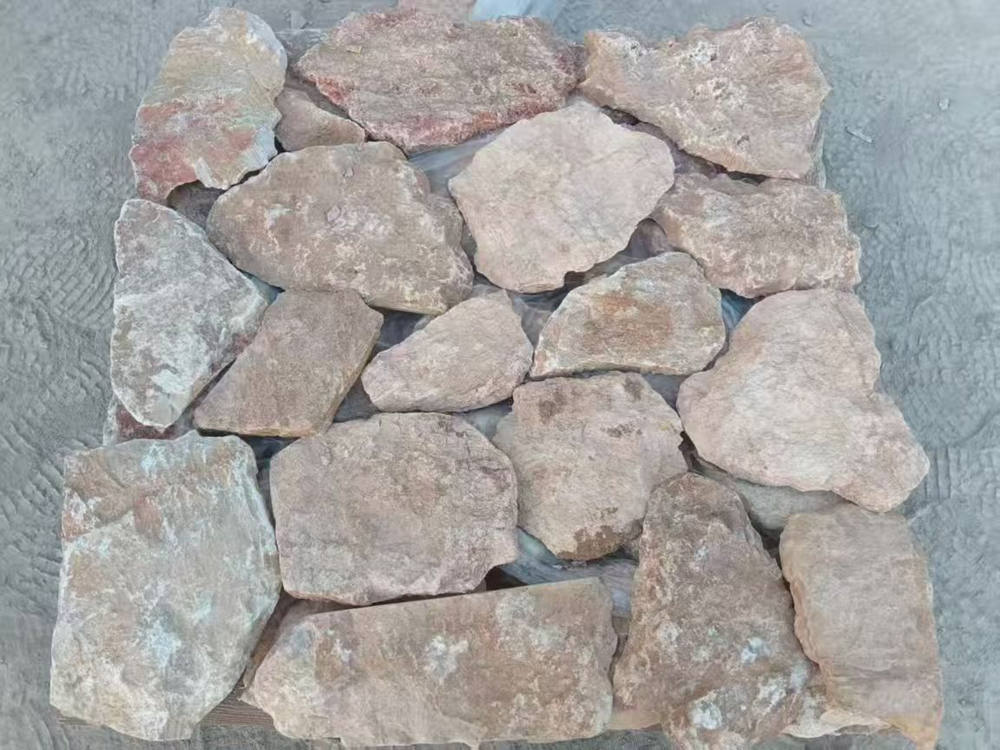
Understanding Thickness Tolerances: What is Acceptable for B2B QC?
Precision thickness control in natural thin stone veneer is the primary factor in eliminating lippage and ensuring the 65kg/m² weight limit stays within structural safety margins for modern substrates.
Industry Standard Variation for Natural Stone Panels
Natural stone manufacturing operates within organic material constraints, yet B2B procurement requires strict adherence to percentage-based tolerances. For Piedra fuente superior, we maintain a thickness control of 25–40mm. This range accounts for the geological density of materials like High-Density Quartzite while ensuring the product remains lightweight enough for installation on cement board or prepared drywall without additional footings. Standard industry tolerances for natural stone typically allow for a 1–5% deviation, but we implement infrared cutting technology to keep variations at the lower end of this spectrum.
| Specification Metric | Standard Market Average | Top Source Stone Precision |
|---|---|---|
| Thickness Range | 19mm – 50mm (High Variance) | 25mm – 40mm (Strictly Monitored) |
| Backing Finish | Split-face or Rough Sawn | 100% Individually Sawn-Back |
| QC Inspection | Final Batch Sampling Only | Three-Stage (Cut, Assembly, Pack) |
Acceptable Deviations for Seamless Interlocking
While we provide a Bespoke Random-Lay Pattern rather than factory-glued panels, thickness consistency remains vital for the “flushness” of the wall. When stones are individually hand-laid, excessive thickness in a single piece forces the mason to use more mortar to build up surrounding stones, leading to aesthetic “lippage.” Our 2026 production protocols utilize ultrasonic thickness monitoring to ensure that no single piece exceeds the 40mm limit. This precision reduces on-site labor by up to 30% because installers spend less time shaving stone backs and more time setting the veneer.
Impact of Tolerances on Structural Integrity and Weight
Thickness control is a matter of safety and logistics. Every millimeter of unnecessary stone adds to the dead load of the structure. By maintaining a strict 25–40mm profile, we keep the weight at approximately 65kg/m². This allows for safe installation on interior and exterior vertical surfaces without the massive footings required for 3-5 inch full-bed masonry. Furthermore, the individually sawn-back finish ensures that the bonding agent—whether high-strength epoxy or modified mortar—achieves 100% surface contact, preventing the air pockets that often lead to failure in freeze-thaw cycles.
- Weight Management: Staying under 15 lbs/sqft (approx. 73kg/m²) is mandatory for building code compliance on many substrates.
- Bonding Security: Flat backs facilitate a uniform bondline thickness, which research identifies as critical for long-term joint strength.
- Shipping Optimization: Consistent thickness prevents overweight containers, ensuring your 17.5-ton USA port limits are never breached by accidental “bulkiness.”
Premium Stacked Stone for Architectural Needs
How Inconsistent Thickness Increases On-Site Mortar Waste
Unpredictable stone thickness forces masonry crews into a cycle of over-mixing and corrective bedding that erodes project profitability and material efficiency.
Factors Driving Variable Material Consumption
Field conditions in 2026 construction projects frequently cause thickness fluctuations that disrupt material flow. High stone moisture absorption levels change how mortar behaves during the application process, affecting the initial grip and workability. Variable practices among crews lead to significant deviations from project specifications. When the stone lacks a uniform profile, installers adjust the bed depth on the fly to compensate, which drives up total material consumption beyond the original estimates.
Compliance Challenges with ANSI A108.01 Standards
Maintaining compliance with ANSI A108.01-2.6.1.4 standards proves difficult when using stone with irregular backing. These industry regulations mandate precise ranges, such as 3/4 to 1 1/4 inches for residential veneer. Inconsistent stone thickness forces crews to use extra bonding material to meet these 2026 regulatory requirements. Using a 100% sawn-back product like the Top Source Stone line eliminates this struggle by providing a flat bonding surface that stays within the required tolerances without extra mortar.
Correlation Between Mixing Volume and Surface Irregularity
Surface irregularities require installers to mix larger mortar batches to manage product depth variations and potential slump. Uneven stone backs necessitate a thicker mortar bed to achieve a level, professional finish. This increased mixing volume leads to higher rates of discarded material. When the mortar in the bucket sets before the installers can manually adjust for irregular stone depths, the resulting waste adds a hidden cost to the masonry budget.
Financial Impact of Installation Delays
Managing inconsistent stone dimensions increases labor hours and total project expenditures. Crews lose efficiency as they manually adjust individual stones to maintain a flat bonding surface across the wall. The combination of material waste and extended timelines directly hits the bottom line. Modern 2026 contractors prefer precision-cut, individually sawn-back veneer to avoid these delays and protect their profit margins.

The Engineering of Sawn-Backs: Ensuring a Flat Bonding Surface
Sawn-back engineering replaces unpredictable natural split surfaces with calibrated planes, ensuring maximum adhesive contact and eliminating the structural voids that typically plague traditional stone masonry.
Precision Infrared Cutting for Uniform Backing
Top Source Stone utilizes advanced infrared cutting technology to maintain exact dimensional control during the primary fabrication phase. This equipment scans the raw stone blocks to guide diamond-tipped blades, creating a perfectly flat profile for every individual piece of thin stone veneer. By removing the natural irregularities found on the rear of raw stone, we provide a calibrated surface that allows for flush mounting against modern substrates like cement board or masonry.
| Backing Specification | Surface Geometry | Operational Impact |
|---|---|---|
| 100% Sawn-Back (Top Source) | Precision Calibrated / Flat | 30% Labor Savings; Flush Adhesion |
| Natural Split-Back (Generic) | Convex / Irregular / Jagged | High Mortar Waste; Manual Shimming |
Standardizing this rear profile ensures that even when dealing with random sizes—ranging from 100mm to 200mm in width—the bed depth remains consistent. This level of uniformity is essential for B2B distributors who need to guarantee a predictable installation experience for their contractor clients.
Enhancing Bond Strength with Calibrated Surfaces
Sawn-back engineering maximizes the contact area between the stone and the adhesive resin. While research indicates that optimal structural adhesive layers are often less than 1mm, natural stone requires a slightly thicker mortar bed to accommodate thermal expansion. Our flat surfaces allow high-strength mortars and epoxies to distribute evenly across the entire back of the stone. This prevents the formation of air pockets, which are the primary cause of moisture accumulation and stone detachment in harsh environments.
- Eliminating “hollow spots” behind the stone veneer reduces the risk of freeze-thaw damage.
- Precision-sawn surfaces create a permanent bond with the substrate without the need for structural footings.
- Uniform backing ensures the stone remains secure under varying weather conditions by distributing mechanical stress equally.
Minimizing Installation Labor through Flush Mounting
Precise surface preparation at the factory level significantly reduces the need for thick mortar beds and manual on-site adjustments. Because each piece of our thin stone veneer features a flat back, masonry teams can apply the “buttering” technique efficiently, sitting the stone directly against the wall. This speeds up the assembly process and reduces the volume of mortar required for the project.
Inconsistent stone thickness usually forces installers to waste time “shimming” individual pieces to achieve a level face. Our strict 25–40mm thickness control eliminates this step. Contractors save on both material costs and labor hours, as they no longer need to shave down the backs of stones to fit uneven surfaces. This engineering approach makes our loose stone veneer a preferred choice for large-scale commercial cladding where production speed is a critical KPI.
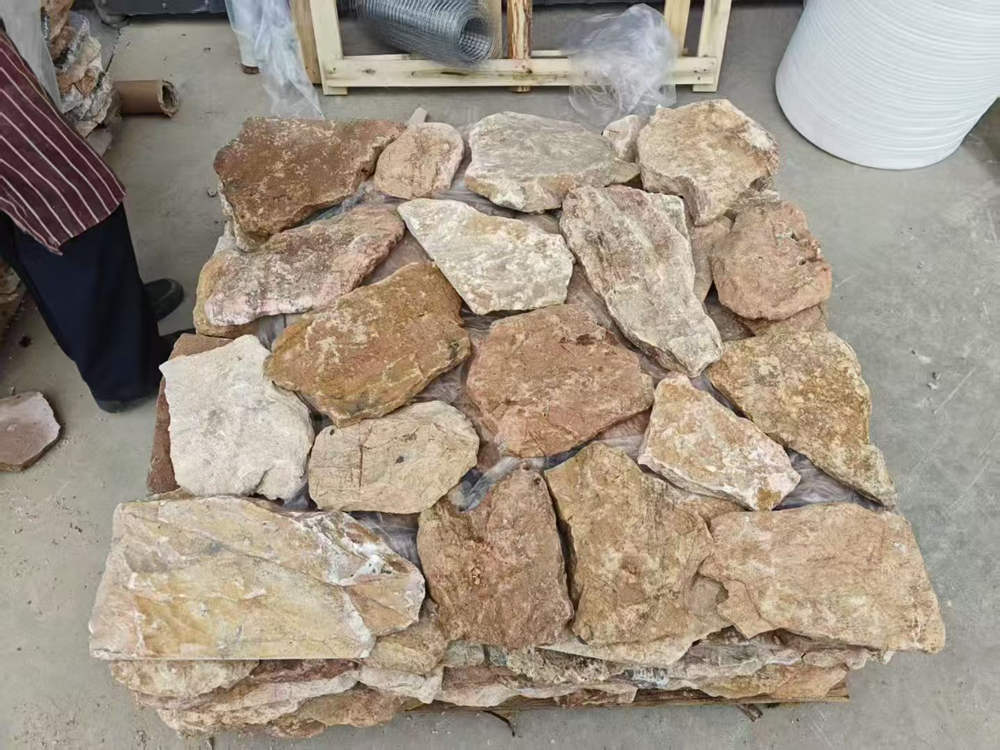
Comparing Bed Depth: Thin Veneer vs. Traditional Full-Bed Stone
Bed depth dictates the entire structural engineering of a wall, separating lightweight adhered veneers from heavy-load masonry that requires dedicated foundation ledges.
Weight and Thickness Profiles
Stone depth directly influences the physical load and material handling requirements on every job site. Thin stone veneers maintain a profile between 0.75 and 1.5 inches in thickness. We strictly maintain our Top Source Stone production at 25–40mm to ensure these lightweight advantages remain compatible with modern wall substrates. Standard thin units weigh approximately 8 to 13 pounds per square foot, which allows for easier transport and faster staging during the construction phase.
| Specification | Thin Stone Veneer | Traditional Full-Bed Stone |
|---|---|---|
| Average Thickness | 25mm – 40mm (1″) | 76mm – 127mm (3″ – 5″) |
| Weight per Sq. Ft. | 8 – 13 lbs (Approx. 65kg/m²) | 40 – 60+ lbs |
| Foundation Needs | Direct-to-Substrate (No Ledge) | Load-Bearing Concrete Ledge |
Traditional full-bed stone measures 3 to 5 inches deep. This creates a significantly heavier structural profile that demands robust logistical planning. The increased mass of full-depth stone makes it unsuitable for many interior retrofits or high-rise exterior cladding where weight limits are a primary engineering constraint.
Structural Footing Requirements
The choice of bed depth determines whether a project requires specialized foundation work or masonry ledges. Thin stone veneer eliminates the need for structural footings or reinforced wall ledges. Installers apply these stones directly to cement board, brick, or concrete surfaces using high-strength mortar. This flexibility allows architects to add natural stone aesthetics to existing structures without excavating for new foundations.
Traditional full-bed stone requires a dedicated concrete ledge to support the vertical weight of the stack. This ledge must be integrated into the foundation during the early stages of construction. Skipping this step with full-bed stone leads to structural failure. Thin veneer provides a workaround for this limitation, enabling natural stone finishes on almost any vertical surface.
Installation Speed and Labor Demands
Labor efficiency scales with the simplicity of the stone application system and the total weight of the material. Choosing lightweight systems like our loose-stone veneers reduces labor costs because they require less structural preparation. Every piece features a 100% sawn-back finish, providing a flat bonding surface that ensures maximum adhesion and faster placement.
Traditional masonry involves slow, meticulous stacking. It consumes significantly more mortar on-site and requires highly specialized masons to manage the weight and balance of deep stones. By switching to a thinner profile, contractors accelerate wall coverage and minimize the volume of mortar waste generated during the installation process.
Why Thickness Uniformity Reduces Installation Labor Costs
A standardized thickness of 25–40mm transforms stone installation from an inefficient on-site corrective process into a predictable, high-speed technical workflow.
Consistent thickness in loose stone allows units to sit flush against the substrate, eliminating the tedious process where installers must vary mortar depth to compensate for stone irregularities. In the high-standard construction environments of 2026, Top Source Stone’s precision specs ensure that skilled masons spend zero time back-leveling individual pieces, allowing them to focus entirely on laying efficiency. This industrial-grade production standard significantly reduces reliance on highly specialized labor, enabling general crews to deliver high-quality results in less time.
- Contractors can proceed with large-scale installation immediately, eliminating wasted hours spent grinding down stone backs on-site.
- Standardized thickness drastically cuts manual adjustment time, creating a smoother installation rhythm.
Accelerating Overall Loose-Stone Installation Speed
While we uphold the unique character of 100% natural loose stone, the precisely controlled 25–40mm depth ensures every piece maintains planar consistency during application. This uniformity prevents installation bottlenecks caused by edge thickness deviations, allowing teams to move as quickly as if they were handling precision-engineered components. Although this is not a pre-fabricated interlocking system, our regular sawn-back process achieves an installation speed that approaches panelized efficiency.
- Workers can set stone with a more consistent cadence, significantly increasing the square footage installed per hour.
- The uniform backing reduces the need for on-site cutting and shimming, helping projects finish ahead of schedule.
Reducing Remediation Costs Caused by Surface Irregularity
By keeping thickness tolerances within a minimal range, we effectively prevent “lippage” and uneven surface finishes. As a B2B supplier, we understand that post-installation maintenance and rework are lethal to project margins. Through our three-stage quality check, we ensure every stone shipped meets strict physical parameters, removing the need for work stoppages to manually adjust or replace defective units after installation.
- Superior surface flatness leads to a smoother inspection process and faster project handover for contractors.
- Structural risks associated with uneven thickness are eliminated, ensuring long-term visual and physical integrity.
Precision Mortar Control to Optimize Workflow
The uniform sawn-back design makes mortar bed depth entirely predictable. Since the stone backs are consistently flat, installation crews can estimate material needs with higher accuracy, reducing interruptions caused by frequent adjustments to adhesive volume. Workers can mix and apply mortar in standardized ratios, which not only lowers material waste but also makes 2026 project cost accounting extremely precise.
- Stable material consumption rates help project managers strictly control budgets and prevent cost overruns.
- Predictable material usage optimizes on-site supply chain management and avoids unnecessary downtime.
Conclusion
Maintaining a 25–40mm thickness with 100% sawn-backs ensures superior adhesion and minimizes mortar waste on large-scale projects. These technical specs allow buyers to balance the authentic look of a full-bed stone wall with the weight and labor efficiencies required for modern B2B construction. Precision in thickness tolerances protects your project budget by reducing installation time and ensuring long-term structural integrity.
Review your current inventory specs against these standards to ensure quality consistency across your next container order. Contact Top Source Stone for a technical data sheet or to request a sample crate for your next commercial development.
Preguntas frecuentes
How thick is thin stone veneer?
Thin stone veneer typically ranges from 0.75 inches to 1.5 inches in thickness. Unlike full-bed masonry, which can be 3 to 5 inches thick, thin veneer is specifically sawn to a depth that allows it to be installed without the need for additional structural support or wall ties.
Why does thickness vary in natural stone?
Thickness variations occur because piedra natural is quarried from organic formations. Factors such as the stone’s geological grain, mineral density, and the precision of the diamond saws used during the “thin-cut” process contribute to slight deviations. These natural inconsistencies provide the authentic texture and depth characteristic of real stone installations.
What is the best thickness for interior walls?
For interior applications, a thickness of 1 inch is often considered the industry standard. This depth provides enough “reveal” to look like a full-thickness stone while remaining lightweight enough to be applied directly to a prepared substrate, such as cement board or a scratch coat, without encroaching too far into the living space.
Does thickness affect the freeze-thaw rating?
Freeze-thaw resistance is primarily determined by the stone’s porosity and absorption rate rather than its thickness. However, thinner cuts can be more susceptible to thermal shock if the adhesive bond is poor. High-quality natural stone veneers are tested to ensure they can withstand extreme temperature cycles regardless of their thin profile.
How thin is “too thin” for real stone?
Any stone cut thinner than 0.5 inches is generally considered “too thin” for standard veneer applications. Stone cut to this extreme fragility risks cracking during transport and installation, and it lacks the structural integrity to hold a secure bond with the mortar bed or polymer-modified thin-set.
How to measure thickness in bulk orders?
Thickness in bulk orders is measured using a random sampling method. Quality control teams use calipers to check multiple pieces per pallet, ensuring they fall within the specified tolerance (e.g., +/- 0.25 inches). Since thin veneer is sold by the square foot (flats) or linear foot (corners) rather than weight, the average thickness is used to calculate the volume and shipping requirements.
