
Stone Fireplace Safety sourcing prevents warranty claims and protects dealer margins: low-rated veneers, improper backing or resin-based panels commonly fail under thermal stress, creating callbacks, emergency rework and lost project profit.
We benchmark suppliers to Top Source Stone specs — 6″ x24″ (150×600mm) panels, 1–2.5 cm thickness, 30–40 kg/m² weight, Same-Batch Quarry Consistency and an MOQ of 300 m² — and require Direct Quarry Source, CNC diamond-blade precision and verified high-temperature/fire assembly tests.
Best Adhesives for High-Heat Stone Installations
Quick Comparison
| Nom de produit | Best For | Key Feature | Verdict |
|---|---|---|---|
Epoxy Adhesives |
Structural | Two-component, rigid bonds with high temperature stability and superior chemical & moisture resistance (products cited up to ~230°F). | Ideal for structural stone and smooth/non-porous surfaces exposed to heat; extremely strong but rigid—avoid where thermal movement is expected. |
Polyurethane Adhesives |
Flexible | Cures to flexible, weather- and UV-resistant bonds that accommodate movement, vibration, and thermal expansion; waterproof. | Great for mixed-material assemblies and outdoor/wet or cold conditions; not as rigid—less suitable for structural, high-heat load-bearing joints. |
Polyaspartic / Urethane-Based Adhesives |
UV-Resistant | Blends that combine polyurethane flexibility with enhanced UV protection and long-term color stability; resilient under extreme thermal cycling. | Excellent for horizontal, sun-exposed surfaces (patios, countertops) where UV and color stability matter; not recommended as primary structural/vertical high-heat joint adhesive. |
Cement-Based Mortars |
Traditional | Durable, moisture-resistant bedding for heavy stone and structural applications with proven long-term masonry performance. | Trusted for permanent, load-bearing stone installations; reliable moisture resistance but requires longer curing time versus modern adhesives. |
Best Adhesives for High-Heat Stone Installations
Epoxy Adhesives
The Verdict: Two-part epoxies cure into rigid, durable bonds with strong chemical and moisture resistance and high temperature stability—ideal for structural stone and smooth, non-porous surfaces exposed to heat.
✅ The Good
- Exceptional bonding strength and temperature resistance (products cited up to ~230°F).
- Excellent chemical and moisture resistance for exterior and heat-exposed installations.
⚠️ The Bad
- Rigid bond—poor at accommodating thermal movement; risk of stress if materials expand.
Polyurethane Adhesives
The Verdict: Polyurethane cures to flexible, weather- and UV-resistant bonds that hold strength under movement, vibration, and thermal expansion—well suited to mixed-material assemblies and wet or cold conditions.
✅ The Good
- Accommodates thermal expansion and vibrations between dissimilar materials.
- Waterproof and UV-resistant properties enable reliable year-round outdoor use.
⚠️ The Bad
- Less rigid than epoxy—may not be ideal for structural, high-heat load-bearing joints.
Polyaspartic / Urethane-Based Adhesives
The Verdict: Polyaspartic and urethane blends combine polyurethane flexibility with enhanced UV protection and color stability, making them a strong choice for horizontal, sun-exposed surfaces that face extreme temperature cycles.
✅ The Good
- Outstanding UV resistance and long-term color stability.
- Maintains flexibility under repeated thermal cycling.
⚠️ The Bad
- Best suited for horizontal, sun-exposed applications (patios, countertops) rather than primary structural or vertical high-heat joints.
Cement-Based Mortars
The Verdict: Traditional cement mortars give a durable, moisture-resistant foundation for heavy stone and structural work, with proven long-term performance though they require longer curing times than modern epoxy systems.
✅ The Good
- Trusted method for permanent, load-bearing stone installations.
- Good moisture resistance and proven long-term performance in masonry.
⚠️ The Bad
- Longer curing time and slower installation compared to epoxies and modern adhesives.
Best Adhesives for High-Heat Stone Installations
The Verdict: Match adhesive chemistry to the job: use epoxy where rigid, heat-stable structural bonds are required; choose polyurethane for flexible, weatherproof joints that handle thermal movement; pick polyaspartic blends for UV-stable, sun‑exposed horizontals; rely on cement mortars for heavy, load-bearing bedding when long-term masonry durability matters.
✅ The Good
- Two-component epoxies deliver rigid, heat- and chemical-resistant bonds (products cited up to ~230°F).
- Polyurethane stays flexible, handles thermal expansion, vibration, and wet conditions while remaining UV-resistant.
- Polyaspartic/urethane blends offer outstanding UV and color stability for sun‑exposed horizontal surfaces.
- Cement-based mortars provide proven, moisture-resistant bedding for heavy, load-bearing stone.
⚠️ The Bad
- Epoxy’s rigidity can create stress if materials expand under heat—risk of cracking at joints.
- Polyurethane lacks the stiffness of epoxy and may not suit primary structural, high-heat load-bearing joints.
- Polyaspartics perform best on horizontals; they’re not the first choice for vertical structural joints exposed to high heat.
- Cement mortars require longer curing times and slower installation compared with modern adhesives.
Understanding Fire Ratings for Interior Stone Veneer
Natural stacked stone veneer is non-combustible and commonly meets Class A flame-spread criteria, but the finished wall’s fire performance depends on the full assembly — substrate, adhesive or mortar, any cavity and detailing. For fireplace surrounds, specify fire-rated backing, high-temperature adhesives or mortars, and documented assembly tests when an hourly rating is required.
What fire ratings and classifications mean for stone veneer
Natural stone and high-quality manufactured veneers are non-combustible because they consist of solid minerals, cement and aggregates, so they do not ignite or feed flames.
Top-performing stone veneer products typically achieve Class A surface ratings and can show a flame spread index below 25 on standard surface tests — that measures how the material’s surface contributes to flame spread, not how long a wall assembly will resist fire.
Stone resists high temperatures without structural degradation, so it suits fireplace surrounds and other heat-exposed interiors; natural stone also acts as useful thermal mass that absorbs and slowly releases heat.
Remember: a fire-rating label describes surface behavior only. If your project needs an hourly firewall rating, test the complete assembly rather than relying on veneer classification alone.
Installation details that influence fire performance
Fire resistance depends on the full wall assembly: veneer, adhesive or mortar, the backing material, and any cavity or insulation behind the stone all affect how heat moves and how the wall performs in a fire.
Always install stone veneer over non-combustible, fire-rated backing such as cement board; do not bond veneer directly to standard drywall in heat-exposed applications.
Use adhesives or mortars rated for high-heat applications — options range from cement-based mortars for traditional installs to high-temperature epoxies where extreme resistance is required; select products tested for the expected service temperature and for compatibility with natural stone.
Seal and detail joints to limit heat transfer and block potential flame or hot-gas paths behind the veneer, and where relevant use mechanical fixing or anchors to account for thermal movement around a fireplace opening.
Product notes for specification: our standard stacked panels measure 6″ x24″ (150 x 600 mm) or 6″ x22″ (150 x 550 mm), thickness typically 1–2.5 cm (up to 3.5 cm for premium/rough), with finished weights roughly 8–13 lbs/sq.ft — these dimensions affect substrate choice, fixing method and the assembly’s thermal mass at the hearth.

Code, testing and verifying fire safety for fireplace installations
When an hourly fire-resistance rating is required, test the complete wall assembly to ASTM E119 (or the local equivalent); veneer-only tests do not establish an hourly rating for the wall system.
Always check local building codes and the appliance manufacturer’s installation instructions for required clearances, hearth protection, and approved substrates for the specific fireplace or stove model in use.
Request manufacturer data sheets, third-party flame-spread classification reports and any assembly test results up front; keep those documents with your project files so inspectors can quickly verify compliance during approvals.
For professional projects, document the tested assembly, materials specified, and on-site installation steps — photos, torque or anchor records, and adhesive product IDs help validate compliance and protect margins by reducing call-backs and claims.
Can Manufactured Stone Withstand High Heat Without Cracking?
Short answer: some manufactured surfaces handle moderate heat, but they perform very differently from natural stone. Engineered quartz contains polymer resins (about 7–10%) that begin to degrade above roughly 150°C (300°F), so direct, repeated contact with hot cookware or exposure to thermal shock can cause discoloration, warping, or cracking. By contrast, natural stones we supply—quartzite and granite among them—tolerate much higher temperatures and are a safer choice for fireplaces, stove surrounds, and high-heat architectural uses.
| Property | Engineered Quartz / Manufactured Stone | Pierre naturelle empilée (our product) |
|---|---|---|
|
Composition |
Quartz aggregates bound with polymer resins (7–10%). Resins control color and bonding but limit heat tolerance. |
100% natural stone (quartzite, slate, granite, sandstone, marble). No polymer matrix—better innate heat stability and long-term thermal performance. |
|
Practical heat limits |
Resins can degrade above ~150°C (300°F). Thermal shock risk is real when a hot pan hits a cool surface. |
Most natural stones like quartzite and granite tolerate temperatures up to ~300°C (572°F) and stand up well to repeated heat cycles used near fireplaces or grills. |
|
Failure modes |
Discoloration, warping, cracking, and potential off-gassing if resins break down under heat. |
Cracking is mainly from thermal cycling combined with moisture or structural movement; properly selected natural stone and correct substrate reduce claims and callbacks. |
Heat limits and common failure modes of engineered quartz
Engineered quartz relies on polymer resins to bind quartz crystals. Those resins start to soften or degrade at elevated temperatures—typically above about 150°C (300°F). When resins weaken the surface can discolor, warp, or crack. Thermal shock is a key risk: a hot pan placed on a cooler engineered surface can create rapid, localized expansion and cause fractures. Under normal countertop use failures are uncommon, but risk rises with repeated direct exposure to high heat.
How manufacturing and material choices affect heat resistance
Manufacturing controls matter. Curing temperature, resin chemistry, and the ratio of aggregate to binder change thermal performance and residual stress in the slab. Higher cure temperatures and premium resin formulations improve resistance, while low-cost options often show worse behavior under heat. For our natural stacked stone panels, sourcing from the same quarry vein reduces color and structural variability across a job, and CNC precision cutting in interlocking profiles limits stress points at joints—both reduce installation risks in heat-exposed assemblies.
Comparison with natural stone and practical protection measures
Natural stone—especially quartzite and granite—handles far higher temperatures than resin-based surfaces, and it won’t off-gas when heated. For high-heat uses like fireplace surrounds or stove backs, specify natural stone panels on a non-combustible, code-compliant backing (cement board or CMU) and maintain required clearances. For countertops, always recommend trivets or heat pads; avoid placing hot pans directly on any engineered surface. For installers and dealers, offering matching L-corners and interlocking Z/S-shape panels speeds installation, lowers labor cost, and reduces on-site adjustments that can introduce stress.

Installation and product selection guidance for B2B buyers
For commercial or specification projects where heat exposure is expected, specify our Pierre naturelle empilée (quartzite or granite models from the Big 10 inventory). Ask for same-batch quarry consistency and matching L-corners to simplify installation and cut call-backs. When bonded assemblies face significant heat, choose heat-tolerant adhesives (two-part epoxies for rigid, high-heat bonds or polyurethane where movement tolerance matters) and verify the full wall assembly meets local fire and building code requirements.
If you want, we can supply technical sheets showing heat-tolerance ranges by stone type, pre-shipment photos of same-batch crates, and recommended adhesive products to minimize warranty risk on heat-exposed installations.
Premium Stacked Stone for Faster Profits
Why Natural Stone is the Ultimate Thermal Mass for Fireplaces
Natural stone soaks up fire heat quickly, stores that energy in dense mineral mass, and radiates warmth slowly over hours. For dealers and installers, that means quieter thermostat cycles, lower fuel use for occupants, and a durable surround that holds value over decades. Our panel systems — engineered for fast installation and same-batch consistency — turn thermal performance into predictable, project-ready outcomes.
How stone absorbs, stores and slowly releases heat
Stone’s thermal conductivity lets it absorb combustion heat rapidly, then its high heat capacity holds that energy and releases it over time. The result is steady radiant warmth that continues long after the flame dies down.
Compared with metal, which heats and cools quickly, masonry and natural stone provide a much longer useful heating period. That gradual release improves comfort without extra fuel input.
Masonry-heater concepts—layers of firebrick, stone or clay with internal flues—use thermal mass to capture combustion heat and redistribute it more efficiently than simple metal stoves. For building-spec projects, that translates to measurable energy savings and fewer occupant complaints.
How thermal mass lowers fuel use and stabilizes room temperature
By storing heat and emitting it slowly, stone reduces reliance on central systems during cold spells and cuts fuel consumption over time. For commercial resellers, this improves the product value proposition to end clients and supports stronger sales conversations.
Thermal mass smooths temperature swings, so rooms stay comfortable longer after a burn. That stability reduces thermostat cycling and can lower maintenance calls tied to heating-system complaints.
The practical outcome is lower heating bills for occupants and clearer performance claims for spec sheets—benefits dealers can use to protect margins and territory.
Durability, safety and installation-relevant specs for fireplace surrounds
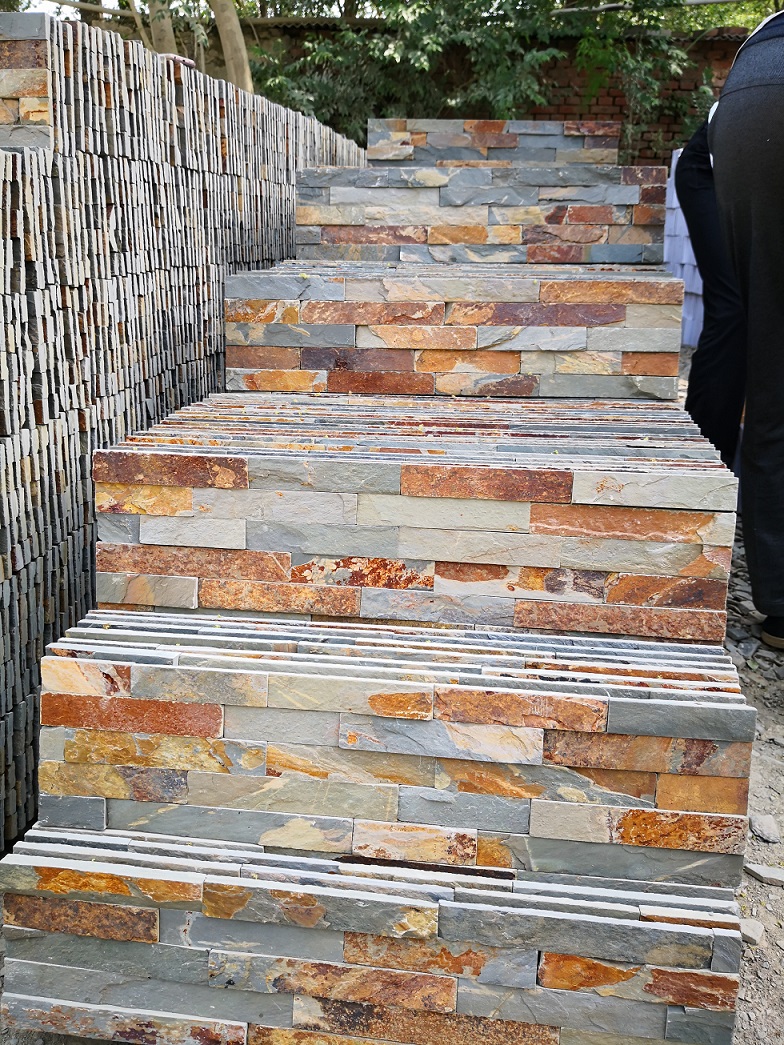
Pierre naturelle empilée (Ledgestone) is 100% natural mineral (slate, quartzite, sandstone, granite, marble) and inherently non-combustible, making it suitable for fireplace surrounds when installed to code. Our inventory emphasizes “Same-Batch Quarry Consistency” to avoid patchy color shifts on large walls.
Standard panel size: 6″ x24″ (150 x 600 mm) or 6″ x22″ (150 x 550 mm). Typical thickness: 1–2.5 cm; premium/rough options up to 3.5 cm. Flat-panel weight: approximately 30–40 kg/m² (8–12 lbs/ft²); rough panels run around 55 kg/m². These specs help engineers and masons plan support and freight precisely.
For drywall surfaces, install cement backer board before cladding. Our interlocking Z- and S-shape panels plus matching L-corners speed installation, conceal vertical joints, and reduce on-site cutting—saving labor and lowering claim risk.
Stone resists warping, rust and heat-related breakdown seen in some metals or synthetic products, and it does not off-gas under normal fireplace temperatures. We offer freeze-thaw resistant grades and inherent UV stability for long-term appearance retention.
For high-heat applications use recommended adhesives or mechanical fixing. Epoxy or heat-rated cement mortars are common choices for structural or exposed installations; polyurethane adhesives work where thermal movement must be accommodated. Seal stone with a quality natural-stone sealer for stain resistance when required, keeping in mind the panel system itself is not a waterproof barrier.
We source directly from the quarry (“Direct Quarry Source”) and provide pre-shipment visual verification of crates so your customers receive consistent, project-ready material. That supply control protects margins, reduces substitution claims, and speeds installation on site.
Chemical Off-gassing: Concrete Pigments vs. Natural Minerals
Mineral silicate systems and 100% natural stone finishes do not off‑gas; acrylics and many synthetic concrete coatings can. For specification teams and dealers, that means choosing mineral binders or specifying natural stacked stone panels when indoor air quality or fireplace installations demand zero VOC emissions and long-term durability.
Mineral (silicate) paints: formulation and why they don’t off‑gas
Mineral silicate paints use potassium silicate (waterglass) as the binder and inorganic, alkaline‑resistant pigments. Their basic ingredients are potassium carbonate and water, not organic solvents or polymer resins, so they release no volatile organic compounds during or after curing.
Because they contain no solvents, plasticizers or biocides, mineral paints are essentially VOC‑free and remain stable over time. That chemistry explains why conservators and builders have used silicate systems on masonry for a century, and why many manufacturers back them with long warranties against fading and adhesion loss.
From a B2B perspective, mineral systems reduce long‑term maintenance and call‑backs: their UV stability and resistance to wind, rain and freeze‑thaw cycles translate into fewer color or adhesion complaints on projects in diverse climates.
Acrylic and synthetic paints: sources of VOCs and indoor air concerns
Acrylic and other synthetic concrete coatings rely on petroleum‑derived resins and a mix of additives. Those organics can emit VOCs and other volatile compounds as they cure or when heated, which affects indoor air quality in enclosed spaces.
For interiors and areas near occupied spaces, that off‑gassing risk matters. When specifying coatings near fireplaces or enclosed rooms, evaluate ventilation, choose certified low‑VOC products, or specify mineral silicate alternatives to avoid long‑term emissions.
Also note that some resin‑based materials can change when repeatedly exposed to heat; if a finish will face high temperatures, confirm thermal stability with manufacturers and prefer non‑organic systems where possible.
Concrete pigment safety and comparing natural stone finishes
Pigment safety depends on chemistry, not the “natural” label. Common concrete pigments include chromium oxide (green), cobalt oxide (blue), titanium dioxide (white) and synthetic iron oxides. Each should be evaluated by its material safety data sheet for handling and exposure risks.
Natural stone finishes, by contrast, contain no binders or organic additives and do not emit VOCs. For projects where eliminating off‑gassing is a priority—interior walls, hospitality suites, healthcare spaces, or fireplace surrounds—100% natural stone panels remove the emission vector entirely.
Practical guidance for specifiers: review MSDS/technical data for pigment batches, prefer mineral silicate systems when low emissions are required, and specify natural stacked stone panels when you want guaranteed zero VOC output and long service life.
Product note: Top Source Stone natural stacked stone is 100% natural mineral stone with inherent UV stability and no VOC emissions, sourced by batch to maintain hue uniformity and reduce on‑site variability for large architectural projects.
Final Thoughts
While lower‑cost manufactured veneers cut initial spend, only 100% Natural Stacked Stone from Top Source Stone — Direct Quarry Source with Same‑Batch Quarry Consistency and CNC diamond‑blade precision — shields your projects from thermal‑resin failures, off‑gassing claims and visible color variation that eat into margins and spark callbacks. Our standard panels (6″ x24″, roughly 30–40 kg/m²) and interlocking Z/S profiles speed installation and reduce on‑site adjustments, keeping installations predictable and profitable.
Don’t guess on performance — verify it: request a sample kit and our heat‑tolerance technical sheets or move forward with a small trial order (MOQ 300 m²) to confirm fit, finish and same‑batch color control. Contact our sales or engineering team for pre‑shipment photos, OEM/private‑label options and recommended high‑heat adhesives so you can close the specification with confidence.
Foire aux questions
Are stacked stone panels safe to use around a fireplace?
Yes. Natural stacked stone is non-combustible and well suited to fireplace surrounds. For a safe installation, follow local building codes, maintain the required clearances to combustibles, use heat‑resistant adhesives or mechanical fixing where specified, and schedule annual chimney inspections to manage creosote—the most common chimney fire risk.
What surfaces can I install the panels on?
Install on firm, non‑flexing substrates such as cement board, brick, or concrete. If starting from interior drywall, add a layer of cement board first to create a stable, code‑compliant backing for our natural stacked stone panels.
Do I need extra structural support for the panels?
Most standard panels weigh about 30–40 kg/m² (8–12 lbs/sq.ft) and typically don’t require special footings. Rough or heavy panels run near 55 kg/m² and may need added support. For large spans, elevated installations, or project‑specific load concerns, consult a structural engineer before ordering.
How do you prevent stone pieces from coming loose?
We bond the stone to a panel backing using high‑strength epoxy in factory conditions and apply strict quality control during bonding. On site, proper substrate prep, the correct adhesive or mechanical fixing, and following the installation guidelines keep pieces secure and reduce detachment risk.
Are the panels waterproof for exterior use?
Stone itself resists water, but the panel system is not a full waterproof barrier. For exterior or wet locations we recommend installing a weather‑resistive barrier, correct flashing and drainage details, and applying a suitable stone sealer where specified to protect the assembly and substrate.
How should I clean and maintain the panels?
For routine cleaning use a soft brush and water. For stubborn dirt choose a pH‑neutral stone cleaner and avoid acidic products and high‑pressure washing. For fireplace surrounds keep the chimney and hearth inspected and cleared of creosote at least annually.
What panel sizes, edge profiles and corner options are available?
Standard panels come in 6″ x24″ (150 x 600 mm) and 6″ x22″ (150 x 550 mm). We offer interlocking Z‑shape and S‑shape panels that hide vertical joints using a male‑female connection, plus matching L‑corners for consistent wraps and simplified installation.
Do natural stacked stone panels off‑gas harmful chemicals?
Natural stone itself contains minerals and does not emit the VOCs associated with some manufactured composites. If low emissions are required, confirm that any sealers, adhesives or ancillary products used on site are low‑VOC, and request product data from your supplier.
What are typical ordering minimums and lead times for B2B buyers?
Our factory MOQ for B2B orders is 300 m² (mix & match allowed). In‑stock models dispatch in about 10–15 days; full production lead time for container orders is roughly 20–25 days. Contact us for exact container loading and shipping options.
What safety steps help protect families with children and pets around stone fireplaces?
Use guard screens or hearth barriers, maintain smoke and CO detectors, and keep a clear safety perimeter. Choose appropriate fuel, consider electric fireplaces for lower maintenance and risk, and schedule regular chimney and fireplace inspections to keep the system safe for families and pets.
Can you put faux (manufactured) stone on a fireplace?
Yes. Manufactured stone veneer can be specified for fireplace surrounds when the product is rated for high‑temperature use and installed correctly. Keep a heat‑resistant barrier between the veneer and the firebox, never install veneer inside the firebox or on the hearth, and follow local building codes—some projects require Class B or other fire‑rated products. Use mechanical anchors in addition to high‑temperature adhesive, schedule installation when ambient temperatures will remain above roughly 40°F for about a week, and consult a qualified installer for code compliance and safe detailing.
Is natural stone fire-resistant?
Yes. Natural stone is non‑combustible and tolerates very high temperatures without burning or deforming. Dense materials such as quartzite and granite resist heat transfer and retain structural integrity under repeated heat cycles, which makes natural stone a reliable choice for surrounds when used with a properly specified fire‑rated wall assembly. Our Pierre naturelle empilée line is quarried from single veins per order to ensure consistent color and performance for architectural applications.
Does manufactured stone off‑gas when heated?
It depends on the product. Some manufactured veneers contain resins or binders that can degrade and produce odors under repeated high heat. Other engineered products, including sintered stone or high‑temperature cement mixes, are formulated to avoid off‑gassing. Always request the manufacturer’s high‑temperature testing, certificates, and installation guidance before specifying a manufactured veneer for a fireplace.
Can you use stone veneer behind a wood stove?
Yes, when installed over a non‑combustible backing and with the manufacturer’s clearance distances. Stone veneer must be fixed to cement backer board, CMU, or another approved non‑combustible substrate rather than drywall or wood sheathing. Maintain the stove manufacturer’s required clearances—commonly between 12 and 36 inches depending on the unit and local code—and avoid sealing the immediate stove surround where high heat could affect sealants. Natural stone veneers handle repeated heat cycles better than many lightweight manufactured options.
Why is my fireplace stone cracking?
Cracking most often comes from thermal cycling, moisture penetration and freeze‑thaw stress, failing mortar joints, structural movement, or improper material choice and installation. Sudden thermal shock (rapid cooling of hot stone) can also cause fractures. Have a qualified mason inspect the assembly, improve drainage and flashing, repair deteriorated mortar, and correct installation flaws to limit further damage.
Which natural stones are safest for fireplaces?
All natural stones are non‑combustible, but quartzite and granite stand out for heat resistance, low porosity and long‑term durability. Limestone is acceptable but softer and more porous, so it needs more maintenance. Avoid engineered quartz for direct, high‑heat applications—its polymer resins can soften, discolor or fail under intense heat. For architectural projects we supply quartzite and slate panels sourced from the same quarry vein to ensure consistent color and proven thermal performance.
