

Deciding on stone formats (micro vs. standard) determines whether a commercial facade maintains architectural precision or suffers from excessive visual noise. Incorrect format selection for large-scale builds increases on-site labor hours and risks project-wide aesthetic rejection.
This analysis benchmarks standard 6×24 panels against the Pencil Series using CNC diamond-blade precision. We examine how same-batch quarry consistency and Z-shape interlocking systems ensure 95% hue uniformity, helping category managers secure a predictable, project-ready solution that minimizes installation overhead.
The Architectural Shift Toward Linear Design: What is Micro-Ledger?
Micro-ledger uses ultra-thin natural stone strips to deliver a refined, linear aesthetic. This format replaces rugged textures with a streamlined profile suited for 2026 minimalist architectural designs.
Defining the Micro-Ledger Aesthetic in Linear Design
Architects are moving away from the bulky, rugged textures that defined traditional ledgestone. The current preference leans toward horizontal emphasis and compressed stone heights. Micro-ledger meets this demand by slimming down the individual stone components, creating a wall profile that feels streamlined rather than chunky.
High-density stone strips create a visual sense of movement and depth. By packing more layers into the same vertical space, the design achieves a complex texture that remains sophisticated and controlled. This format works specifically well for large-scale commercial facades and contemporary residential feature walls where a sense of architectural precision is required.
Engineering the Pencil Series for High-Impact Detail
The Pencil Series translates the micro-ledger concept into a high-performance modular system. We focus on maximizing detail within a standard footprint, ensuring that each panel contributes to a tight, linear finish without the labor costs of hand-stacking individual thin strips.
- Strip Density: 10 to 12 rows of thin natural stone strips per 6×24 inch panel.
- Edge Precision: We use CNC diamond-blade cutting to ensure tight, linear fitment.
- Material Finish: Natural cleft and split-face textures that retain organic character within a controlled format.
- Modular Design: Standard 6″ x24″ sizing with interlocking Z-shape edges to hide vertical joints.
Using pre-assembled panels allows installers to work significantly faster than with traditional mortar-applied individual stones. This format bridges the gap between the organic beauty of natural quartzite or slate and the geometric consistency required by modern engineering standards.

6×24 Panels vs. Thin Strips: How to Choose the Right Proportion
Choose formats based on architectural scale: 6×24 panels anchor large facades, while thin strips provide refined detail for interiors and smaller residential features.
| Feature | Standard 6×24 Panels | Pencil / Thin Strips |
|---|---|---|
| Primary Use | Exterior facades, commercial walls | Interior accents, fireplaces |
| Visual Density | Low-noise, clean architectural lines | High-detail, rugged texture |
| Interlock Type | Z-Shape or S-Shape modular | Linear stack or mesh-mounted |
| Installation Speed | Fast (40-50 sq.ft per day) | Moderate (Requires precision) |
Matching Panel Scale to Architectural Volume
Property size dictates the appropriate stone format. Large-scale builds, such as two-story residences or expansive commercial fronts, require the wider proportions of 6×24 panels. Smaller formats on massive walls create “visual noise,” making the surface look cluttered rather than structural. By using larger modular pieces, you maintain clean lines that respect the building’s volume.
- Residential Scale: Large homes benefit from 6×24 panels; cottages and ranches pair better with narrow lap siding and thin strips.
- Line Density: Horizontal line frequency affects perceived height; fewer lines (larger panels) make a wide wall look more stable.
- Commercial Application: Wider panel formats reduce the “busy” pattern often seen on large-scale exterior cladding.
- Visual Balance: Traditional compact styles use 6-inch widths to achieve architectural harmony without overwhelming the entryways.
Using the wrong scale often leads to a mismatched aesthetic. If the stone strips are too thin for a high facade, the natural texture disappears into a muddy, grey blur from a distance. For 2026 builds, designers are leaning toward cleaner, wider formats for exteriors to emphasize the stone’s mineral character over the grout lines.

Standard Interlocking Panels and the Pencil Series Specification
Top Source Stone manufactures both standard modular systems and high-detail linear formats to meet varying design intensities. Our standard 6×24 panels rely on a male-female interlocking system to eliminate visible vertical joints, while our Pencil Series focuses on the intricate layering of natural quartzite and slate.
- Interlocking System: Z-shape and S-shape designs create a grout-free, seamless appearance across long spans.
- Pencil Series Detail: Features 10 to 12 rows of ultra-thin stone strips for sophisticated, high-impact interior finishes.
- CNC Precision: We use CNC diamond-blade edges to ensure every panel fits tightly, maintaining consistent horizontal alignment.
- Thickness Range: Standard panels vary from 1cm to 2.5cm, while premium rough formats reach 3.5cm to intensify shadow lines.
Technical precision is the difference between a professional finish and a DIY look. Because we source from the same quarry vein per order, our panels maintain 95% hue uniformity. This consistency allows the interlocking “male-female” connections to blend into the wall, ensuring the focus remains on the natural stone texture rather than the installation seams.
Premium Natural Stone for Professional Projects
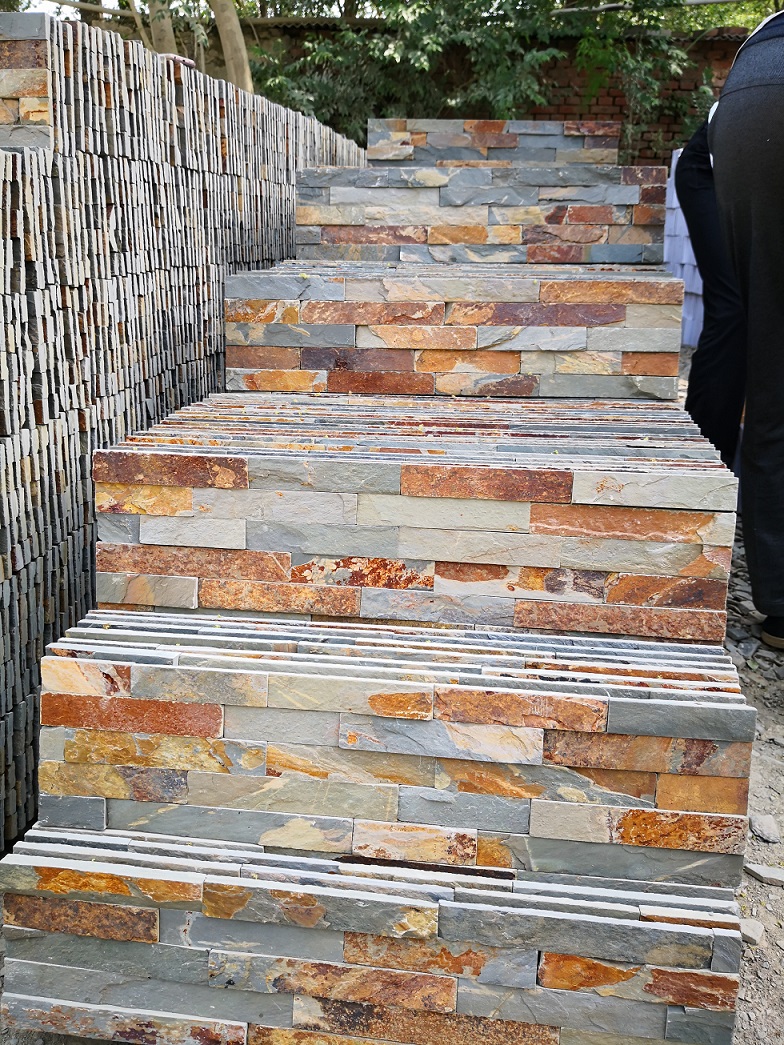
Visual Impact: Clean Modern Lines vs. Rugged Traditional Texture
Modern designs use Flat Series for linear minimalism, while traditional projects require Rough Series’ split-face textures to create high-contrast organic shadows.
Achieving Minimalist Geometry through Linear Precision
Modern architecture relies on uniform color consistency and tight dimensional tolerances to create geometric order. In high-end commercial spaces, architects specify smooth finishes and low-profile panels to reduce shadow lines. This creates a sleek, flat surface that fits the aesthetic of contemporary office lobbies or luxury kitchen backsplashes.
- Material Selection: Light-reflective materials such as Glacier White or Alaska Gray Quartzite accentuate clean lines without overwhelming the space.
- Edge Precision: CNC diamond-blade edges ensure a consistent fit, providing a professional finish even with hand-assembled natural stone.
- Low-Profile Design: Standard 1cm to 2.5cm thickness keeps the wall profile slim and unobtrusive in narrow interior corridors.

Creating Deep Shadows with the Rough Series Panel System
Traditional and rustic designs require the authentic character of natural cleft stone. The Rough Series provides the heavy texture needed to mimic traditional dry-stack masonry. These panels create dramatic, multi-dimensional shadows that change throughout the day, making them the preferred choice for mountain lodges and exterior landscape features.
- Dimensional Depth: Panels feature thickness variations up to 3.5cm, which generates high-contrast visual depth on large-scale facades.
- Weather Resistance: Varieties like California Gold Slate offer organic color shifts and high salinity resistance, ensuring durability in coastal or high-humidity environments.
- Installation Weight: Rough panels average 55kg/m², providing a substantial, premium feel for structural-look exterior walls.

Does the Format of Your Stone Panel Affect the Speed of Installation?
Panel format dictates speed. Pre-assembled modular systems install 80% faster than traditional stone, allowing crews to cover 50 square feet daily while cutting waste to 5%.
Efficiency Gains of Pre-Assembled Modular Panels
Traditional masonry often acts as a productivity bottleneck. When installers must select and fit individual stones on-site, labor costs spiral. Modular panels shift the configuration work from the job site to our factory floor, allowing crews to focus on assembly rather than selection.
- Installation Rate: 40-50 square feet per day per person, compared to 15-25 sq ft for traditional tile placement.
- Material Waste: 5-8% on average, which is significantly lower than the 15-20% waste common with individual stone veneer.
- Standardized Dimensions: Standard 6″ x24″ panels cover large surface areas with fewer seams, accelerating project timelines for large-scale facades.
Standardizing the panel size helps dealers and wholesalers project labor costs more accurately. Our panels provide the predictable coverage needed for high-volume B2B distribution and commercial bids.
The Impact of CNC-Cut Interlocking Systems on Labor
Loose tolerances in stone manufacturing force contractors to spend hours on manual trimming. We use CNC diamond-blade precision to ensure every edge fits tightly without adjustments. This engineering removes the need for gap-filling or specialized on-site masonry work.
- Interlocking Design: Z-shape and S-shape systems use a male-female connection to camouflage vertical joints automatically.
- Pre-fabricated L-Corners: Matching 90-degree corners eliminate the need for complex miter cuts on-site, saving hours of specialized labor at wall transitions.
- Continuous Workflow: Precision panels allow for immediate stacking without waiting for scratch coats to dry, unlike traditional mortar-applied stone.
By providing a project-ready solution with matching corners for our “Big 10” inventory, we reduce the technical skill level required for a professional finish. This focus on modularity helps our partners protect their margins by minimizing project overhead and on-site labor hours.

Why are Architects Increasingly Specifying Micro-Ledger for High-End Projects?
Architects specify micro-ledger for its refined linear geometry. The thin-strip profile adds organic texture without disrupting clean architectural lines, fitting the 2026 demand for sophisticated minimalist facades.
Linear Geometry and the Shift toward Modern Minimalist Textures
Architects in 2026 are moving away from bulky, traditional stone formats that feel too rustic for contemporary aesthetics. They utilize the horizontal emphasis of micro-ledger to elongate wall surfaces, creating a sense of expansive space in luxury residential and commercial lobbies. This format provides a bridge between raw natural beauty and the strict geometric requirements of modern architecture.
The thin-strip profile allows for subtle shadow play and textural depth. Unlike standard ledger panels that can appear “busy” or heavy, micro-ledger enhances high-end interiors by maintaining a slim, sleek profile. It provides enough organic variation to feel authentic while remaining disciplined enough for clean architectural feature walls.
Precision Engineering of the Pencil Series for Seamless Wall Surfaces
Top Source Stone meets these architectural standards through the Pencil Series, which incorporates 10 to 12 rows of thin stone strips per panel. This creates a much more intricate detail level than the common 6×24 formats found in retail channels. We use CNC diamond-blade precision to ensure every linear strip fits tightly, maintaining the razor-sharp lines required for high-spec projects.
- Interlocking System: Our Z-shape and S-shape panels use a “male-female” connection to camouflage vertical joints and hide the substrate.
- Corner Solutions: Pre-fabricated matching L-Corners ensure a continuous texture wrap at 90-degree transitions, eliminating the need for miter cuts.
- Material Precision: CNC diamond-blade cutting ensures a consistent fit across the entire batch, preventing the “stepped” gaps typical of lower-grade stone.
- Batch Consistency: We source from the same quarry vein per order to ensure 95% hue uniformity across large-scale facades.
By pre-assembling these intricate strips into modular panels, we reduce the complexity of on-site labor. Contractors achieve a hand-stacked look in a fraction of the time, while the interlocking design ensures the final surface remains monolithic and seamless.

Foire aux questions
Micro-ledger formats prioritize linear precision and weight efficiency for modern commercial projects, utilizing CNC-cut strips to reduce installation labor while maintaining natural stone integrity.
What defines a micro-ledger format compared to standard stacked stone?
Micro-ledger refers to panels composed of thinner, more linear stone strips. Our Pencil Series features 10 to 12 rows per panel to achieve this look. While standard pierre de grand livre has a rugged, variable depth, micro-formats emphasize crisp horizontal lines and a sleeker architectural profile suited for modern design trends.
Are thin stone panels suitable for small-scale interior projects like bathrooms?
Yes. Thinner stone formats work for tight spaces because they provide natural texture without significantly reducing square footage. We recommend using lighter-toned quartzite, such as Glacier White or Alaska Gray, to maintain a sense of openness in compact areas while ensuring moisture resistance.
Does the thinner format make installation faster for contractors?
The lightweight nature of these panels—averaging 8-12 lbs per square foot—eliminates the need for structural footings. Combined with our Z-shape interlocking system and CNC diamond-blade precision edges, installers achieve a seamless finish with significantly less site labor compared to traditional hand-stacked stone.
What are the standard dimensions for these architectural stone panels?
We manufacture standard panels in 6″ x24″ (150x600mm) and 6″ x22″ (150x550mm) sizes. For a professional wrap-around finish, we provide matching pre-fabricated 90-degree L-corners for every series in our inventory, ensuring texture and color synchronization at all wall transitions.
How does the factory maintain color consistency for large-scale commercial orders?
We utilize Same-Batch Quarry Consistency protocols, sourcing material from the same quarry vein for each specific order. This process ensures 95% hue uniformity across the batch, preventing the patchy appearance often found in lower-grade stone shipments and protecting the visual integrity of large commercial facades.
