
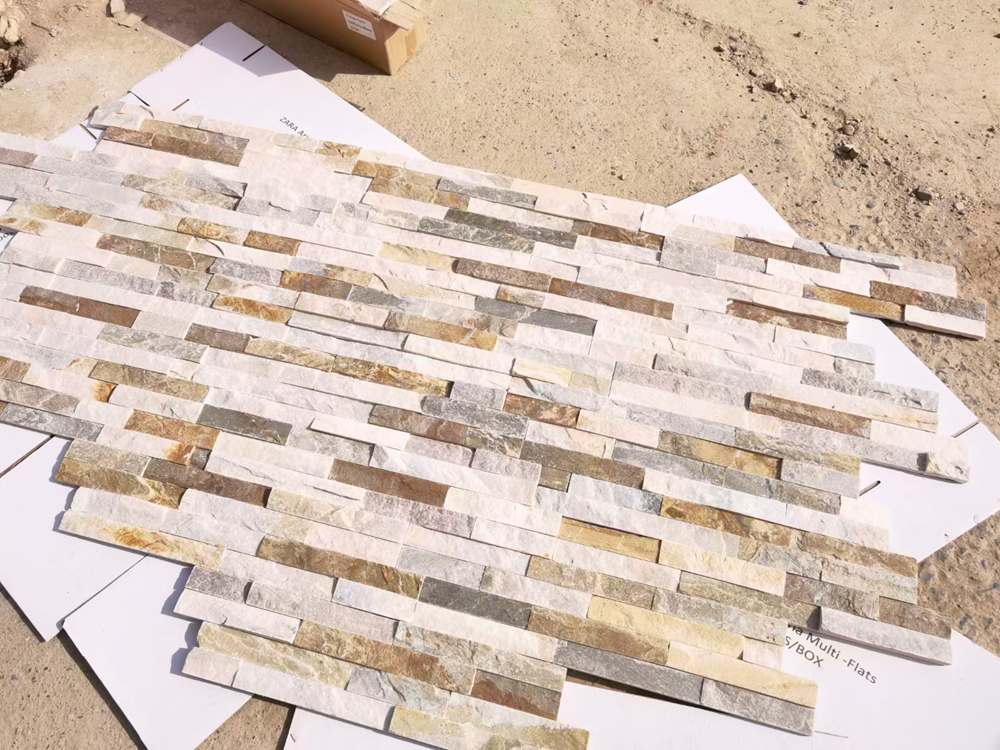
Sourcing professional-grade **Stacked Stone Veneer** is the only defense against the inconsistent sorting and surface scaling that trigger expensive dealer callbacks. Relying on retail-grade imports often leads to patchy color mismatches and structural failures, eroding the profit margins of high-volume distributors.
We benchmark material quality against **ASTM C170** strength standards and **ASTM C97** absorption limits. This analysis evaluates direct quarry sourcing and **17.5-ton port weight optimization** to help you secure a scalable, high-margin inventory pipeline.
What is Natural Stacked Stone Veneer?
Natural stacked stone veneer uses 100% genuine stone panels, like slate or quartzite, weighing under 15 lbs/sqft to provide masonry texture without the need for structural footings.
Genuine Stone Composition and Performance
This cladding serves as a non-loadbearing alternative to full-bed masonry. We use 100% natural stone, including slate, quartzite, granite, and marble, harvested directly from quarry sources. By splitting the stone into thin sections, we achieve the rugged texture of traditional masonry while remaining within the weight limits for adhered veneer applications.
- Materials: Slate (HS 6803.00.90), Quartzite (HS 6802.93.11), Sandstone, Granite, and Marble.
- Installation: Designed as an adhered veneer for concrete, CMU, or cement board substrates.
- Weight Profile: Typically 8–12 lbs/sqft, which meets IBC standards for installation without wall ties or reinforced ledges.
- Quality Grade: Grade A sorting ensures batch color consistency and eliminates “patchy” visual defects common in retail-grade stone.
The High-Strength Z-Shape Interlocking Panel System
The efficiency of modern stacked stone comes from the modular panel system. We factory-assemble precision-cut stone pieces into standardized units. This system allows installers to cover large surface areas quickly, reducing labor overhead while maintaining tight tolerances that hide the structural backing.
- Standard Dimensions: 6″ x24″ (approx. 150mm x 600mm) modular units.
- Seamless Design: Z-shape interlocking edges eliminate visible vertical joints and grout lines.
- Bonding: High-strength industrial epoxy resin backing ensures a permanent connection between stone pieces.
- Engineering Compliance: Selection follows ASTM C170 for compressive strength and ASTM C97 for low water absorption.
- Durabilité: Formulated to be freeze-thaw resistant for use in extreme northern climates.
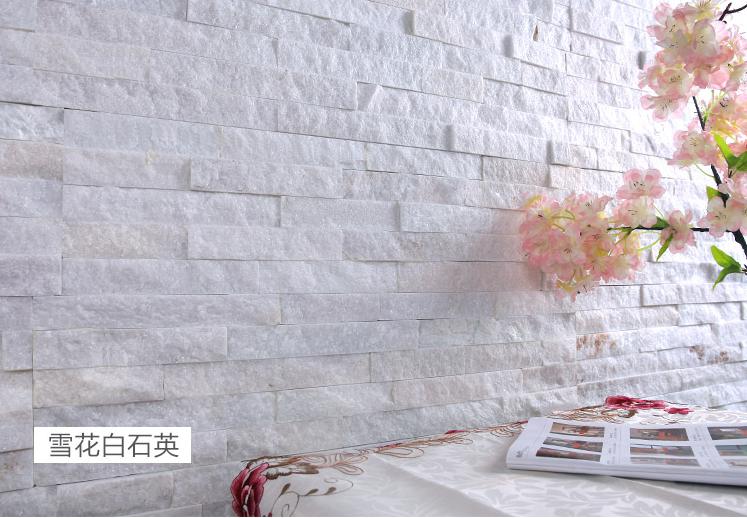
Natural vs. Manufactured Veneer: A Cost-Benefit Analysis
Natural stone provides superior UV stability and lower maintenance than concrete composites, while our 8–12 lbs/sqft panels eliminate the need for expensive structural footings.
Material Composition and Visual Authenticity
Manufactured veneer relies on concrete mixes and chemical pigments to mimic the look of earth-mined materials. These artificial binders often degrade under intense UV exposure, leading to surface chalking and pigment loss. Natural stone retains its color because the mineral composition runs through the entire panel. Even if the surface chips, the visual integrity remains unchanged.
- Core Materials: 100% Natural Slate, Quartzite, Sandstone, Granite, and Marble.
- Color Stability: Mineral-based pigments that do not fade or “wash out” over decades of exposure.
- Sorting Standard: Strict batch color consistency to prevent the patchy, “tiled” look common in low-end imports.
- HS Codes: Slate (6803.00.90) and Quartzite (6802.93.11).
Commercial architects prioritize natural quartzite and slate for high-traffic facades because these materials exceed the density requirements of ASTM C170. While manufactured stone must meet ASTM C1670 standards to ensure basic compressive strength, natural stone inherently possesses the flexural strength needed to withstand structural shifts without brittle cracking.
Structural Efficiency and Maintenance Requirements
A major misconception is that natural stone is too heavy for standard framing. Top Source Stone engineers panels to weigh between 8–12 lbs/sqft. This places our natural veneer within the same weight class as manufactured alternatives, allowing for direct adherence to substrates without the cost of reinforced foundations or masonry ledges.
- Weight Profile: 8–12 lbs/sqft (30–40kg/m2) for standard flat and pencil styles.
- Installation System: Seamless Z-shape interlocking panels for grout-free application.
- Thermal Resilience: Freeze-thaw resistant properties suitable for extreme Northern climates.
- Maintenance: Requires only periodic sealing; resists the chemical damage often caused by cleaners on painted concrete veneers.
Concrete-based stone typically shrinks over time, creating tension at the bond line. Natural stone remains dimensionally stable. By using a high-strength glued backing system, we ensure the bond integrity remains permanent in both interior feature walls and heavy-duty exterior cladding. This stability reduces long-term liability for wholesalers and developers who cannot afford delamination failures on large-scale projects.
Key Material Grades (A, B, C) and Their Impact on Margin
Grade A stone protects dealer margins by meeting ASTM C170/C97 standards, minimizing the high maintenance and callback risks associated with lower-grade, porous materials.
| Feature | Grade A (Premium) | Grade B (Standard) | Grade C (Economy) |
|---|---|---|---|
| Compressive Strength | >24,000 psi (ASTM C170) | 18,000 – 21,000 psi | <15,000 psi |
| Absorption Rate | Low (ASTM C97) | Moderate | High (Porous) |
| Density | >170 lbs/cu ft | 155 – 165 lbs/cu ft | <150 lbs/cu ft |
| Profit Strategy | Zero callbacks; high retention | Moderate maintenance | High risk; low net margin |
Defining Grade A, B, and C Standards in Stone Veneer
Wholesale margins depend on material density and structural integrity. Grade A stone provides a high-density structure exceeding 170 lbs/cu ft and compressive strengths above 24,000 psi. These specs ensure the material survives harsh freeze-thaw cycles without the spalling or surface scaling common in lower-tier products.
Lower tiers like Grade B and C often show elevated water absorption rates. This porosity increases the risk of cracking, especially in northern climates where moisture expansion is constant. Dealers selling Grade C materials often face expensive post-installation sealing requirements and structural pits that lead to site waste.
- ASTM C170: Grade A exceeds 24,000 psi compressive strength.
- Density: High-density stones average 170 lbs/cu ft for durability.
- Maintenance: Lower grades require frequent chemical sealing to prevent deterioration.
Batch Color Consistency and Pre-Shipment Verification
Direct quarry control prevents the “patchy” appearance often seen in stone sourced through middlemen. By managing the extraction at the source, we ensure batch color consistency across hundreds of square meters. This level of sorting at the factory level eliminates defective panels, reducing site waste and protecting dealer profit margins.
Transparency in the B2B supply chain is vital. We utilize Pre-Shipment Visual Verification through photos and videos to confirm grade quality before the balance payment. This process ensures the material matches the technical specs required for the project, preventing the logistical nightmare of rejecting a container after it arrives at the port.
- Quarry Sourcing: Direct control ensures batch-to-batch color stability.
- Visual Verification: Live photos and videos provided before final payment.
- Waste Reduction: High-level factory sorting eliminates broken or mismatched pieces.
- Inventory Accuracy: Standard 6″ x24″ panels ensure predictable pallet counts and load planning.
Premium Factory-Direct Stacked Stone Ledger Panels
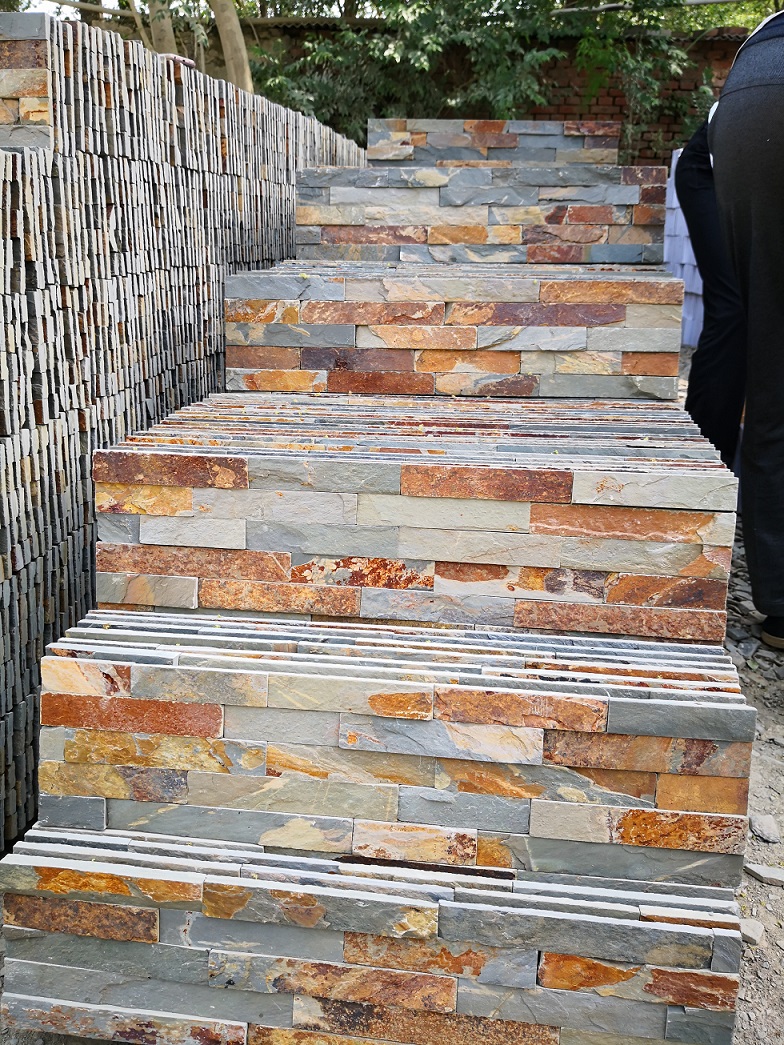
Standard Dimensions for Global Markets (6″x24″ vs Euro-Sizes)
Standardized 6″x24″ and 15x60cm formats ensure seamless installation while optimizing container weights at 17.5 tons, preventing logistical delays at US ports and protecting wholesaler margins.
Regional Dimension Standards for North American and European Markets
B2B inventory strategies rely on alignment with regional construction grids. While the 6″x24″ format is the absolute baseline for North American distribution, European projects demand metric modularity to minimize waste. Standardizing these dimensions allows for pre-calculated coverage and significantly reduces onsite labor costs.
- North American Standard: 6″ x24″ (approx. 150mm x 600mm) for wholesale and residential supply.
- European/Asian Standard: 15x60cm or 30x60cm metric variants for modular grids.
- Commercial Formats: Large thin veneers reaching 120x280cm for seamless architectural facades.
Precision Calibration and US Port Weight Optimization
Logistics dictate profitability in the stone trade. We strategically load containers at 17.5 tons for North American ports to comply with strict 2026 road weight regulations. This precision extends to the product itself, where infrared cutting ensures consistent thickness, preventing the dust traps and uneven surfaces common in lower-grade imports.
- US Port Optimization: 17.5 tons per 20GP container to meet road legal limits.
- Thickness Tolerance: 0.75″ to 1.25″ calibrated via infrared sensors.
- Areal Weight: 8–12 lbs/sqft (30–40kg/m2) to ensure substrate compatibility.
- Interlock System: Seamless Z-shape design for grout-free professional finishes.
These technical specifications protect the structural integrity of the installation. By maintaining a weight under 15 lbs/sqft, these panels remain compliant with international building codes for adhered veneers, eliminating the need for expensive structural footings or heavy-duty wall ties.
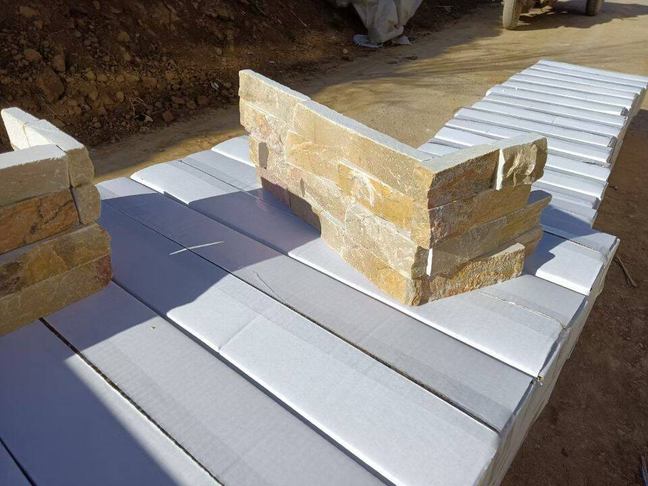
How Sourcing Direct from Hebei, China Lowers Your Landed Cost
Eliminating trading markups and optimizing container weights to 17.5 tons reduces US inland freight costs and avoids heavy-weight fines, securing your wholesale margins.
| Cost Factor | Direct Quarry (Hebei) | Trading Company |
|---|---|---|
| Intermediate Markup | 0% (Factory Direct) | 15% – 25% Commission |
| US Inland Freight | Optimized (17.5 Tons) | Standard (High-Weight Fines) |
| Inventory Access | Direct Quarry Stock | Third-party Sourcing |
Eliminating Intermediate Markups through Direct Quarry Access
Trading companies typically add 15-25% to the base price of natural stone. By partnering with Top Source Stone, you bypass these middlemen and buy directly from the source in the Hebei stone cluster. We protect our partners by operating on a strict B2B-only wholesale model, meaning we never compete with our dealers at the retail level.
- Profit Protection: Removal of third-party commissions to safeguard distributor margins.
- Batch Consistency: Factory-level sorting at the quarry ensures color uniformity and reduces job-site waste.
- Supply Velocity: Lead times reduced to 10–15 days for in-stock inventory.
- Market Exclusivity: Zero C-end retail sales to prevent price dilution for local wholesalers.
Reducing Inland Freight with US-Port Weight Optimization
Logistics often represent the largest variable in your landed cost. Standard 20GP containers frequently exceed North American road weight limits, triggering expensive “overweight” permits or drayage fines. We solve this through strategic loading based on your local port regulations.
- 17.5-Ton Loading: Precise 20GP container weights to meet US road limits without permit surcharges.
- Pallet Density: Volume of 756–864 m2 per container distributed across 20 specialized pallets.
- Standardized Dimensions: 6×24 inch panels (150mm x 600mm) ensure predictable stacking and zero transit breakage.
- Visual Verification: High-definition photos and videos provided pre-shipment to confirm order accuracy before final payment.
The 6×24 inch format is the North American standard for a reason. It balances weight for installers (8–12 lbs/sqft) while maximizing shipping efficiency. When we load to the 17.5-ton limit, we spread the ocean freight cost across the maximum allowable volume, lowering the per-square-foot price at your warehouse door.
Testing for Quality: Water Absorption & Density Standards
ASTM C97 and C170 compliance prevents moisture damage. Our panels maintain 8–12 lbs/sqft, ensuring structural safety and freeze-thaw resistance for 2026 commercial building standards.
Evaluating ASTM C97 Absorption and C170 Strength Metrics
Contractors face significant liability when stone spalls or scales due to moisture intrusion. We select raw materials based on absorption rates to ensure the stone remains stable in high-exposure exterior zones. High water absorption directly causes bond failures when the material expands during saturation and shrinks during drying.
- ASTM C97: Measures water absorption to prevent surface scaling and spalling.
- ASTM C170: Benchmarks compressive strength to withstand vertical pressure on commercial facades.
- Flexural Strength: Prevents panel cracking during the thermal expansion and contraction cycles of outdoor installations.
- Freeze-Thaw Resistance: Essential for northern climates in the USA, Canada, and Europe.
Low water absorption is the baseline for 2026 climate-resilient designs. We verify that our quartzites and slates meet these benchmarks before production begins. This prevents the patchy appearance and mineral bleeding common in lower-grade factory outputs that ignore density standards.
Lightweight High-Density Engineering for Wholesale Distribution
Weight dictates landed cost and installation complexity. Most adhered veneers fail code requirements if they exceed 15 lbs/sqft. We engineer our natural stone panels to a specific range of 8–12 lbs/sqft (30–40kg/m2). This allows installers to use standard wall substrates without expensive structural reinforcements or heavy footings.
- Dimensions: Standard 6″ x24″ (150mm x 600mm) modular panels.
- US Port Optimized: Approx. 17.5 Tons per 20GP container to meet road weight limits.
- Container Volume: 756–864 m2 per container across 20 pallets.
- Materials: 100% natural Slate, Quartzite, and Marble (e.g., Alaska Gray, Glacier White).
Wholesalers benefit from weight-optimized shipping. By capping the load at 17.5 tons for North American ports, we help distributors avoid overweight fines while maximizing square footage per shipment. We provide pre-shipment visual verification for every batch to ensure color consistency and density meet the specific requirements of large-scale 2026 projects.

Packaging Standards: Reinforcing Wood Crates for Sea Freight
Sea freight requires ISPM 15-compliant crates and 17.5-ton weight optimization. This prevents transit chipping while avoiding North American road weight surcharges.
Structural Reinforcement for Transit Protection
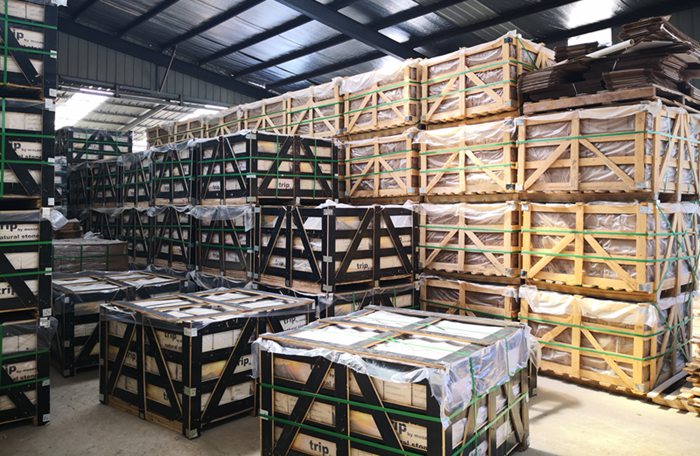
Shipping natural stone involves massive weight and multiple transfers. Any internal shifting leads to edge chipping, which destroys the product’s value before it reaches the warehouse. We secure stone panels using a multi-layer reinforcement strategy that targets the specific mechanical stresses of LTL transfers and crane movements.
- Crate Compliance: ISPM 15-certified fumigated wood or plywood alternatives to bypass customs delays.
- Internal Buffering: Polythene liners and internal foam spacers protect fragile edges from impact.
- Outer Protection: 3-5 ply reinforced export cartons with heavy-duty shrink-wrap.
- Structural Tension: High-tension steel or nylon banding to eliminate stone-on-stone friction.
Logistics and US-Port Optimization
Wholesale margins are often lost in the “last mile” due to weight violations. Standard 20GP containers can hold more weight than North American roads allow. We calibrate every shipment to meet regional regulations, ensuring the product moves from the port to your facility without transloading surcharges or legal hold-ups.
- Weight Target: 17.5-ton loading optimization for North American road weight limits.
- Carton Density: 7-8 pieces per carton for standard panels (approx. 8–12 lbs/sqft).
- Pallet Capacity: 48–60 cartons per pallet to balance stability and forklift mobility.
- Transparency: Pre-Shipment Visual Verification through photos and videos of the actual loaded crates.
Using these specific packaging metrics reduces breakage rates to near zero. By controlling the weight at the source, we protect your cash flow from the hidden costs of international logistics. You receive the exact pallet count and quality confirmed during our pre-shipment inspection.
Final Thoughts
Sacrificing material density for a lower entry price usually results in costly site failures and faded facades. We maintain strict Grade A sorting and ASTM compliance to eliminate the liability associated with porous, low-grade imports. Your long-term profitability relies on supplying natural stone that stays dimensionally stable and color-fast for decades.
Eliminate supply chain uncertainty by utilizing our pre-shipment visual verification for every container. We suggest requesting a sample kit or starting with a 300m² trial order to evaluate our interlocking precision and weight-optimized packaging firsthand. Reach out to our team to secure a landed cost quote tailored to your regional road weight regulations.
Foire aux questions
Is natural stone veneer significantly heavier than manufactured options?
Top Source Stone natural panels weigh between 8 and 12 lbs per square foot. This remains well under the 15 lb/sqft industry threshold for thin veneer, allowing you to install them on framed walls without adding structural footings or masonry ledges.
Can I install stacked stone panels directly over an existing brick facade?
Installation over brick works if the substrate is stable and free of paint or sealers. If the brick is old or contaminated, professionals attach metal lath and a scratch coat. This mechanical bond ensures a shear bond strength of at least 50 psi to prevent the stone from shedding.
What is the standard thickness for exterior versus interior stone veneer?
Thin veneer standards for both interior and exterior specify a thickness between 0.75 and 1.5 inches. This range ensures the material meets weight limits for vertical cladding while providing the depth needed for authentic architectural textures.
Will natural stone veneer fade or lose its color in direct sunlight?
Natural stone is color-stable because its hues come from mineral composition, not surface pigments. It does not experience the UV bleaching common in dyed concrete. Penetrating sealers can help preserve the original stone vibrance in high-exposure areas.
What type of adhesive provides the best bond for 6″x24″ natural stone panels?
We recommend Type S mortar or polymer-modified mortars that meet ANSI A118.15 standards. These offer the necessary non-sag properties and freeze-thaw resistance required for large-format natural stone, ensuring a permanent bond for both interior and exterior facades.
