

Chemical resistance determines the long-term survival of architectural facades in acidic urban environments. Manufactured concrete veneers frequently fail as low-pH rainwater dissolves synthetic binders, causing pitting and oxidation that destroy project aesthetics and dealer reputations.
Top Source Stone utilizes 100% natural Quartzite and Slate (HS Code 6802.93.11) that stay chemically inert against environmental pollutants. Our direct quarry source model ensures 95% hue uniformity and high salinity resistance, providing B2B wholesalers with a stable alternative that avoids the structural spalling common in pigmented concrete.
How Acid Rain Impacts Pigmented Concrete Surfaces
Acid rain dissolves concrete binders and oxidizes synthetic dyes, causing pitting and structural spalling, whereas natural stone remains chemically inert and color-fast in acidic environments.
Rainwater with a low pH does more than just erode the surface of manufactured concrete; it initiates a destructive chemical chain reaction. This process targets the very compounds that hold the material together, leading to visible degradation that often requires expensive repairs or total replacement for commercial projects.
Chemical Mechanisms of Surface Pitting and Pigment Loss
Acid rain reacts directly with the calcium hydroxide on the concrete surface. This reaction creates a gray-white plaster powder, stripping away the material’s alkalinity and leaving the aggregate exposed. The structural bond weakens as protective calcium-silicate hydrate compounds break down under constant acidic exposure.
- Sulfate Attack: Sulfate ions in the rain produce ettringite and gypsum crystals that fill pores before eventually shrinking, creating internal voids.
- Pigment Oxidation: Synthetic blue and green stains frequently oxidize or support fungal growth in acidic conditions, turning brown or black.
- Erosion Velocity: Combined with atmospheric CO2 absorption, surface erosion can progress at a rate of 20 micrometers per day.
- Spalling Sequence: Deterioration follows a predictable path from initial pitting to a honeycomb texture and final structural spalling.
The Stability of 100% Natural Quarry Sourced Surfaces
At Pierre de source supérieure, we specify natural Quartzite and Slate because these minerals do not contain the calcium-silicate hydrate bonds found in concrete. These 100% natural materials are chemically inert, meaning they do not react with the sulfuric or nitric acids found in urban rainfall.
- Mineral Stability: Natural stacked stone panels consist of minerals that offer inherent UV stability and high salinity resistance.
- Hue Uniformity: Sourcing from the same quarry vein ensures a 95% color consistency without the risk of the “patchy” look caused by pigment oxidation.
- Freeze-Thaw Resilience: High-density Slate and Quartzite structures resist the internal pressure of water expansion that causes concrete to crack.
- CNC Precision: Our diamond-blade edges provide a tight interlock, preventing acidic moisture from penetrating the installation substrate.
For B2B wholesalers and dealers, choosing natural stone over pigmented concrete is a matter of protecting long-term project margins. Natural stone maintains its architectural integrity and original color profile for decades, eliminating the liability associated with chemical surface failure in high-pollution or coastal environments.

Why You Should Never Use Acidic Cleaners on Manufactured Stone
Acidic cleaners dissolve cement binders in manufactured stone, causing irreversible etching and structural damage. Stick to pH-neutral solutions to protect surface integrity and sealants.
The Chemical Mechanism of Acidic Etching and Oxidation
Manufactured stone relies on cementitious binders to hold pigments and aggregates together. Introducing acids to this surface triggers an immediate destructive reaction that compromises the material’s aesthetic and physical bond.
- pH Levels 1-4: These highly acidic levels dissolve the cementitious binders found in manufactured stone composites.
- Etching: Acid contact creates permanent dull, cloudy patches and rough textures that cannot be wiped away or buffed out.
- Oxidation: Strong acids, particularly muriatic acid, catalyze oxidation reactions that cause visible blotchiness and rapid pigment loss.
- Structural Failure: Acids penetrate the stone’s pores to disrupt internal mineral bonds, making the material brittle and prone to surface spalling.
pH-Neutral Protocols and Sealant Preservation
For B2B wholesalers and project managers, maintaining the long-term value of an installation requires strict adherence to pH-neutral cleaning standards. This protects both the material and the protective layers applied during the final stages of construction.
- pH-Neutral Cleaners: We recommend specialized stone cleaners to prevent the chemical breakdown of surface sealants.
- Natural Stone Standard: Top Source Stone provides 100% natural stone—such as our Alaska Gray or Carbon Black series—which naturally resists the fading and pitting common in pigmented concrete imitations.
- Resealing Cycles: Apply high-quality sealants every 12–18 months to defend against environmental pollutants and moisture migration.
- Spill Management: Remove acidic liquids like vinegar, coffee, or wine immediately to prevent localized surface damage.
Standardizing these maintenance protocols ensures the architectural finish remains consistent with the original design specifications, avoiding the high cost of premature material replacement.
Boost Profit with Factory-Direct Stacked Stone
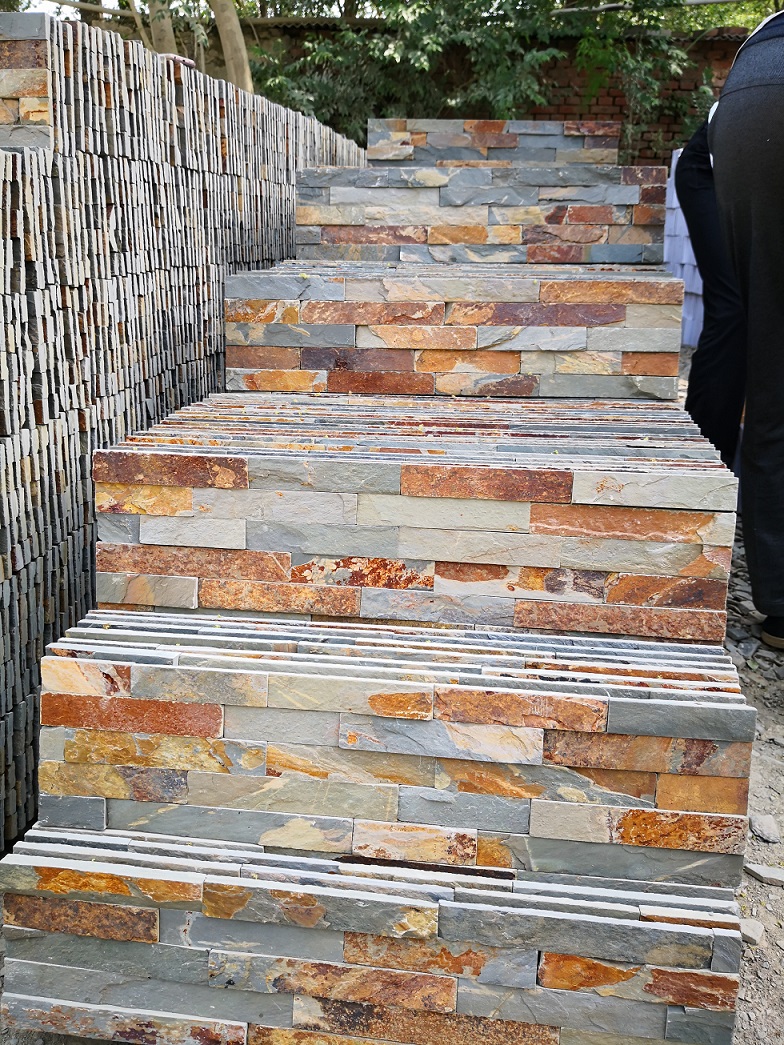
Natural Stone’s Resistance to Environmental Pollutants
Natural stone’s mineral stability ensures zero VOC emissions and immunity to chemical erosion, UV fading, and high-salinity coastal environments where manufactured alternatives often fail.
Chemical Inertness and Zero VOC Performance
Natural stone maintains biological and chemical stability without human intervention. While manufactured products rely on chemical binders and artificial pigments that react with urban pollutants, our 100% natural minerals remain inert. This stability is critical for large-scale commercial builds where long-term air quality and structural maintenance are non-negotiable.
- Zero VOC Emissions: 100% natural composition ensures no toxin release into the atmosphere or surrounding soil.
- Biological Defense: Inherent resistance to rot, mold, and insect damage eliminates the need for chemical pesticides or sealants.
- Urban Pollutant Stability: Natural minerals resist the surface powdering and aggregate exposure common in pigmented concrete when exposed to sulfur dioxide and atmospheric CO2.
UV Stability and High Salinity Resistance Standards
Coastal projects and high-exposure sites in regions like the Gulf or South Florida require materials that withstand extreme salt and solar loads. Natural quartzite and slate offer mineral-deep colors that do not rely on surface dyes, making them the preferred choice for durable architectural facades.
- Permanent UV Stability: Inherent minerals do not fade or lose color saturation under intense solar exposure, unlike “faux” stone pigments.
- Coastal Resilience: High salinity and humidity resistance prevents the structural spalling and salt-induced erosion that degrades porous manufactured products.
- Same-Batch Quarry Consistency: We source from the same quarry vein per order to maintain 95% hue uniformity, preventing uneven weathering across massive wall installations.
- Technical Classification: Our Slate (HS Code: 6803.00.90) and Quartzite (HS Code: 6802.93.11) meet rigorous international standards for environmental durability.

Salt Spray and Coastal Environments: A Durability Comparison
Natural stone outperforms manufactured alternatives in coastal zones by resisting salt crystallization and binder breakdown, maintaining structural integrity where artificial coatings and concrete materials fail.
| Durability Metric | Manufactured / Pigmented Concrete | Top Source Natural Stone |
|---|---|---|
| Salt Spray (ISO 12944-6) | Early blistering/peeling within 1,000 hours | Zero surface degradation; mineral stability |
| UV & Humidity Cycling | Pigment oxidation; color shifts (fading) | Inherent UV stability; no artificial binders |
| Intégrité structurelle | Salt wicking causes internal delamination | High-density crystalline structure |
| Maintenance Requirement | Frequent re-sealing to prevent etching | Low; routine fresh water rinsing |
The Limitations of Standard Salt Spray and Accelerated Corrosion Testing
Standardized tests often fail to reflect how materials behave over decades on a coastline. While ISO 12944-6 benchmarks 1,000 hours of continuous salt fog for C5-M marine durability, this static environment misses the “real-world” stress of shifting weather. Traditional pigmented coatings and manufactured stones frequently show early blistering during cyclic corrosion tests because salt air attacks the artificial binders holding the concrete together.
Industry data suggests ASTM B-117 testing lacks a strong correlation with long-term field performance. It ignores the synergy between salt, UV radiation, and freezing cycles. For high-stakes coastal builds, ISO 12944-9 cycles offer a better metric as they include UV and freezing phases. Salt-induced corrosion specifically accelerates the breakdown of the polymers and glues used in artificial cladding, leading to surface “sandification” and structural spalling.
- C5-M Standard: ISO 12944-6 requires 1,000 hours of exposure for marine certification.
- Failure Mode: Artificial binders in concrete-based stone exhibit peeling during cyclic humidity tests.
- Testing Gap: ASTM B-117 focuses on fog alone, missing the impact of UV-driven oxidation.
Natural Stone Resistance to High Salinity and Coastal Humidity
Pierre de source supérieure utilizes 100% natural quartzite and slate, materials that evolved over millions of years under geological pressure. These stones possess a mineral density that naturally prevents the salt-wicking seen in porous manufactured alternatives. Because the material is chemically inert, airborne chlorides cannot trigger the same oxidative breakdown that ruins artificial pigments in the Gulf or North American coastal regions.
Batch consistency is a priority for B2B supply chains in these environments. We source material from the same quarry vein for every order, ensuring the stone veins are dense enough to minimize internal delamination. This natural UV stability ensures that even under heavy salt splash and sea mist, the colors remain vibrant without the risk of the chemical fading associated with synthetic revêtement mural.
- Mineral Stability: Natural quartzite and slate resist salt-induced chemical dissolution.
- UV Performance: Zero artificial pigments mean no fading under high-salinity exposure.
- Quarry Control: Sourcing from consistent layers prevents internal moisture traps.
- B2B Standard: High salinity resistance ratings make these products ideal for ocean-front commercial developments.

Cleaning Protocols for Maintaining Long-Term Appearance
Maintenance requires daily debris removal and weekly deep cleaning with pH-neutral solutions. Proper sealing preserves Top Source Stone’s 100% natural minerals and architectural finish through 2026.
Routine Maintenance and Preventive Cleaning Schedules
For commercial installations, longevity depends on consistent debris management. Abrasive particles like sand or grit act as sandpaper on the surface of Pierre naturelle empilée if left unmanaged, eventually dulling the natural cleft finish. Maintenance teams should prioritize these routine tasks to protect the asset’s value.
- Daily Debris Removal: Sweep or vacuum hair and loose particles daily to prevent surface scratching.
- Weekly Texture Cleaning: Use soft-bristle brushes to address dirt accumulation within the deep crevices of split-face panels.
- Maintenance Logs: Establish documented cleaning procedures for facility staff to ensure uniformity across large-scale projects.
pH-Neutral Cleaners and Stone Sealant Requirements
Top Source Stone utilizes 100% natural minerals like Quartzite, Slate, and Granite. These materials are chemically sensitive to acidic or alkaline substances found in generic household cleaners. Using the wrong agent can cause permanent etching or trigger oxidation in the stone’s mineral veins.
- pH-Neutral Agents: Use only specialized stone cleaners to prevent chemical erosion and maintain the “Same-Batch” color consistency.
- Sealant Application: Apply a professional-grade stone sealant post-installation to build a moisture barrier that resists staining and salt spray.
- Equipment Limits: Avoid high-pressure washers. Intense water pressure can compromise the high-strength epoxy resin used to bond the individual stone pieces into modular panels.
Retailers and wholesalers should emphasize that while these stones are freeze-thaw resistant and highly durable, they are not maintenance-free. Proper chemical selection ensures the stone remains a high-value architectural feature for decades without the “pumice-like” degradation seen in poorly maintained installations.
Foire aux questions
Can acid rain cause permanent damage to stacked stone veneer?
Yes. Acid rain reacts with stones containing calcium carbonate, such as certain sandstones or marble, converting the material into water-soluble gypsum. This chemical reaction leads to surface erosion, pitting, and loss of texture. For projects in high-pollution areas, we recommend high-density quartzite or slate from the Top Source Stone inventory. These materials offer superior resistance to atmospheric acids compared to manufactured concrete alternatives which often suffer from aggregate exposure and powdery surface deterioration.
How do you maintain stone installations in coastal or high-salinity environments?
Coastal maintenance focuses on preventing salt crystallization. We suggest regular rinsing with fresh water to remove salt spray and using only pH-neutral cleaners for deep cleaning. Applying a high-quality breathable sealer is essential to prevent moisture from trapping salts within the pores. Our B2B clients in coastal regions typically select our quartzite series for its high salinity resistance and structural integrity, as it avoids the ‘sandification’ issues common with porous sedimentary alternatives.
Is natural stone naturally resistant to salt spray and coastal air?
Resistance varies by stone type. Sedimentary rocks like limestone often suffer from crumbling when exposed to salt. However, metamorphic rocks such as the slate and quartzite in our core collection are far more durable. These stones feature a dense mineral structure that resists the pressure of salt crystal expansion. This makes them suitable for modern architectural standards in seaside locations where salt spray causes rapid disintegration of lesser materials.
Why would a natural stone veneer exhibit color changes or fading?
Unlike pigmented concrete ‘faux’ stone, 100% natural stone is UV-stable and does not fade from sunlight. Any perceived color change usually results from mineral oxidation, environmental debris buildup, or exposure to harsh chemicals like bleach and muriatic acid. We source from the same quarry vein per order to ensure hue uniformity. Routine maintenance and avoiding acidic cleaners ensure the stone retains its original quarry-sourced hue for decades.
Which cleaning agents are safe for natural stone surfaces?
The safest option is a pH-neutral cleaner specifically labeled for natural stone use. Strictly avoid household acids like vinegar or lemon juice, as well as aggressive chemicals like ammonia or bleach, which etch the stone surface and break down protective sealants. For commercial applications, we recommend stone-specific soaps that protect both the mineral face and the high-strength assembly used in our natural panel systems.
