
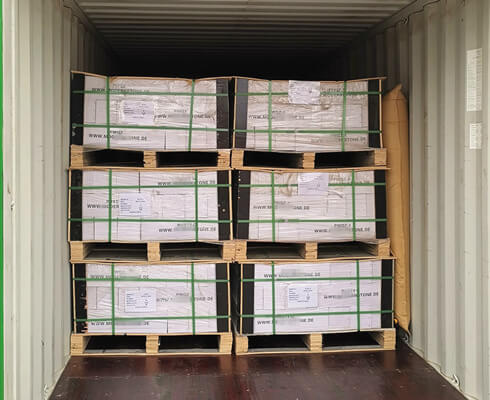
Freight & Logistics management serves as the primary defense against the 30% price fluctuation common in natural stone imports. Many procurement managers ignore the hidden variables between factory invoices and final warehouse delivery, allowing unexpected surcharges to dissolve resale margins before the material even reaches inventory.
This analysis benchmarks landed cost stabilization through payload maximization and strict weight strategy. We evaluate 20GP container efficiency against the 17.5-ton USA port standard to help you secure the lowest possible price per square meter while maintaining regulatory compliance.
What is “Landed Cost” and Why Does it Matter for B2B?
Landed cost covers every expense from the quarry to your warehouse. Tracking freight, duties, and handling ensures your resale margins remain protected against unexpected logistics shifts.
Total Acquisition Cost: Moving Beyond the Factory Invoice
The factory price is only the baseline. For natural stone importers, the gap between the initial invoice and the final warehouse cost often fluctuates by 30% or more. Real B2B profitability relies on accounting for the entire journey of the material before it ever reaches your inventory.
- Base Logistics: Product price at the factory gate combined with ocean freight and insurance premiums.
- Regulatory Fees: Customs clearance and import duties based on specific HS Codes, such as 6803.00.90 for slate or 6802.93.11 for quartzite.
- Port Handling: Destination charges and terminal fees at major ports across the USA, Canada, and Australia.
- The Final Mile: Inland trucking costs from the arrival port to your specific B2B warehouse or project site.
Protecting B2B Margins Through Direct Sourcing and Logistics Optimization
Controlling the landed cost requires direct oversight of the supply chain. Pierre de source supérieure eliminates middleman markups by acting as a direct quarry source, allowing dealers to capture the margin usually lost to trading companies. Efficiency in loading and weight management further reduces the cost per square meter.
- Middleman-Free Pricing: Secure pricing directly from the quarry source to remove intermediary fees.
- Payload Maximization: Reducing per-unit shipping costs by filling 20GP containers up to 860 square meters for standard panels.
- Weight Strategy: Planning loads around strict port limits, like the 17.5-ton USA standard, to avoid expensive heavy-weight surcharges.
- Visual Verification: High-definition photos and videos of finished goods before the balance payment prevent costly quality disputes at the destination.

How Ocean Freight Rates Impact Your Price per Square Meter?
Freight is a primary cost driver for natural stone. Volatility adds $2–$5 per square meter; maximizing container weight is the only way to protect B2B margins.
The Link Between Global Logistics and Per-Square-Meter Pricing
Shipping costs are not a background expense in the stone industry. Because natural stone carries high density and weight, ocean freight volatility impacts the landed cost per square meter more significantly than lighter building materials. When global container rates spike, the price per unit must adjust to prevent margin erosion.
- Freight Surcharges: Shipping rate increases of $4,000 or more per container add roughly $2 to $4 per kilogram to the total transport cost.
- Price Variance: Market volatility in 2026 shipping lanes creates a price swing of 10-15% for importers who lack long-term logistics contracts.
- Regulatory Costs: Fuel compliance fees and regional demand surges directly force price adjustments at the warehouse level to maintain profitability.
Optimizing 20GP Container Loads to Stabilize B2B Margins
We stabilize landed costs for our partners by maximizing every cubic inch of the shipping container. At Top Source Stone, our loading protocols focus on diluting the freight premium by increasing the total square footage per shipment while staying within legal weight limits.
- Container Capacity: We load 25 to 30 pallets per 20GP container, achieving a max coverage of 750 to 860 square meters for standard panels.
- Weight Management: We balance loads between the 17.5 Ton USA Port Standard and the 26.5 Ton Heavy-Weight allowances to help clients avoid overweight penalties.
- Standardized Crating: Crate weights maintained at 900kg to 1000kg allow for precise calculation of landed costs before the shipment leaves the factory.
- Rough Panel Density: For premium rough-stacked panels, we optimize loading to reach 480 to 540 square meters per container.
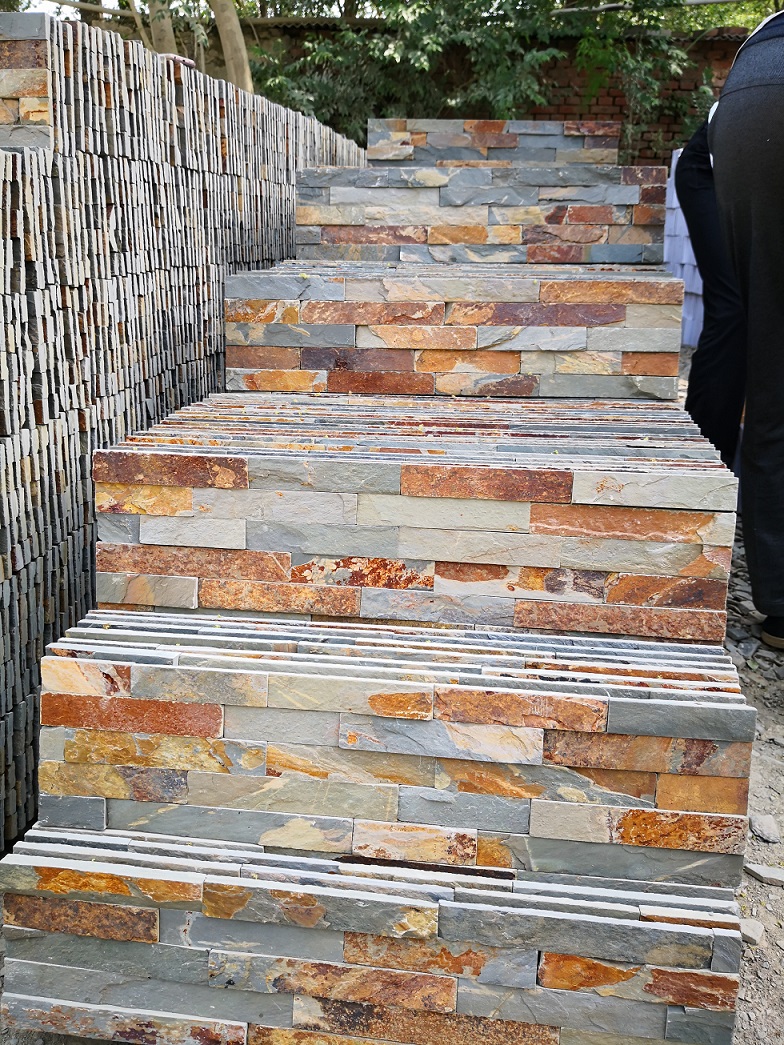
Premium Stacked Stone for Architectural Excellence
Decoding Import Duties and Tariffs for Natural Stone
2026 stone duties vary by origin. Brazilian quartzite sits at 10% while granite hits 50%. Using precise HS codes and 100% natural certification is the only way to protect margins.
Global Tariff Trends and Material-Based Duty Rates
Import monitoring has become a daily operational requirement for B2B distributors. Since 85% of US stone consumption relies on imports, even a minor shift in trade policy can wipe out a season’s profit. The market currently shows a massive gap in tax liability depending on where you source and what you buy.
- Brazil: Quartzite imports carry a 10% duty, while granite and marble are taxed at 50%.
- Egypt: Maintains a competitive 10% duty rate for 2026.
- European Union: Sourcing from Italy or Greece generally incurs a 15% duty.
- China: Natural stone faces a 30% base tariff, though engineered alternatives face much higher penalties.
This 40% cost difference between Brazilian quartzite and granite has forced a major shift in inventory strategy. Distributors are increasingly prioritizing quartzite to keep landed costs manageable while navigating the 30% base tariff on Chinese materials, which continues to drive supply chain diversification into Southeast Asia and the Middle East.
Strategic HS Code Classification for Slate and Quartzite
Precision in customs documentation determines whether a shipment clears smoothly or gets flagged for an audit. Misclassification is the most common reason for unexpected tax bills. We utilize specific HTSUS codes to ensure accurate tax clearance and protect the margins of our B2B partners.
- Slate Classification: Use HS Code 6803.00.90 for all natural slate products.
- Quartzite Classification: Apply HS Code 6802.93.11 for precise clearance.
- Brazilian Quartzite Exemption: Leveraging HTSUS 6802.99.00 allows importers to bypass the 40% additional tariff applied to other Brazilian stones.
- Anti-Dumping Protection: 100% natural stone certification is mandatory to avoid the 300%+ anti-dumping duties targeting engineered quartz.
We perform pre-shipment visual verification for every order. By providing high-definition photos and videos of the finished crates before the balance payment, we confirm material consistency. This proof of “100% Pierre naturelle” status supports your customs declarations and ensures the shipment isn’t misidentified as a high-tariff engineered product at the port of entry.
Calculating Inland Trucking: From Port to Your Warehouse
Inland trucking costs depend on weight, distance, and cargo class. For stone, managing 20GP container weight limits is the key to avoiding heavy-load surcharges at the destination port.
Standard Freight Formulas and Cargo Classification
Carriers use a base formula to set the floor for inland haulage: the rate per tonne per kilometer multiplied by the total distance and cargo weight. While the math is straightforward, the “chargeable weight” often surprises importers. Carriers bill based on the higher value between gross weight and dimensional weight. Because natural stone is dense, carriers almost always bill based on the actual gross weight of the crates.
The National Motor Freight Classification (NMFC) further dictates the final price. This system categorizes goods based on density, handling requirements, and liability. For stacked stone, the classification interacts with fluctuating fuel surcharges to determine the linehaul price. You must also select the correct vehicle type for the job:
- Heavy Goods Vehicles (HGVs): Best for full 20GP container loads arriving directly from the port.
- Light Goods Vehicles (LGVs): Used for smaller pallet deliveries or “last-mile” transport to local job sites.
- Intermodal Transport: Uses a combination of rail and truck to lower costs on long-distance inland routes.
Weight Management and Destination Port Approvals
Weight strategy is the most effective way to control inland expenses. The standard USA port limit for a 20GP container is 17.5 tons. If your container exceeds this during the final mile to your warehouse, you face immediate overweight penalties and specialized equipment surcharges. We maintain a strict focus on these limits during the loading phase at our factory to protect your local margins.
For larger wholesale operations, you can lower the shipping cost per square meter by coordinating heavy-weight approvals. Many ports allow up to 26.5 tons if you arrange the proper permits and specialized trucking in advance. This allows you to fit more material into a single container, spreading the fixed port fees across a larger volume of stone.
When calculating your local transport needs, use these specific parameters from our logistics department:
- Crate Weight: Top Source Stone crates average 900kg – 1000kg. Use this to calculate the maximum pallet count for your local flatbeds.
- USA Port Compliance: Stick to 17.5 tons for standard logistics to avoid the need for heavy-load permits.
- Heavy-Weight Strategy: Scale up to 24 – 26.5 tons only after confirming your destination port can handle the payload.
- Ton-Mile Benchmarking: Compare your carrier quotes against 2026 market averages to ensure your fuel surcharges remain competitive.
Strategies to Lower Shipping Costs per Unit via Container Optimization
Importers minimize landed costs by maximizing container payloads and aligning pallet counts with regional port weight limits like the 17.5-ton USA ceiling.
| Loading Strategy | Capacity (Standard Panels) | Max Coverage (20GP) | Target Market |
|---|---|---|---|
| Option A (48 Boxes) | 30.24 m² per crate | 750 – 800 m² | USA Port Standards (17.5T) |
| Option B (60 Boxes) | 37.80 m² per crate | 860 m² | Heavy-Weight Lanes (24-26.5T) |
Maximizing Payload via Full Container Load Efficiency
Shipping Full Container Loads (FCL) remains the most effective way to drop per-unit rates. FCL eliminates the middle-man handling fees and groupage charges typically found in Less Than Container Load (LCL) shipments. Because stone is a high-density material, choosing the right equipment is vital for cost control.
- 20GP Efficiency: We use 20-foot General Purpose containers for natural stone because the cargo hits weight limits long before it fills the physical volume of a 40-foot container.
- Inventory Consolidation: Mix and match colors from the Big 10 Inventory, such as Alaska Gray and Midnight Slate, into a single 20GP container to maintain high turnover without paying LCL premiums.
- Zero-Void Packaging: We use 5-ply reinforced export-grade cartons sized at 61cm x 15cm x 13cm to eliminate empty space and ensure the maximum number of panels fit into every crate.
- Direct Sourcing: Buying from a direct quarry source factory removes the markup from local distributors, which often accounts for a 20-30% difference in the final landed cost.
Strategic Pallet Configurations for Regional Weight Compliance
Logistics costs often spiral when shipments violate regional weight regulations. For example, US ports enforce strict limits that, if exceeded, trigger heavy fines and specialized inland drayage surcharges. Proper pallet configuration ensures you stay compliant while maximizing every square meter of the load.
- USA Port Optimization: Limit the total load to 17.5 tons for standard US entries to avoid overweight penalties and reduce the cost of trucking from the port to your warehouse.
- Heavy-Weight Strategy: For destination ports with specialized approval, we scale loads up to 26.5 tons. This maximizes the 30-pallet capacity of a 20GP container for the lowest possible shipping cost per square meter.
- Option A Loading: Using 48-box crates provides roughly 30.24 m² per pallet. This is the standard for balancing weight across 25 to 30 pallets while staying within the 17.5-ton threshold.
- Option B Loading: Using 60-box crates allows for up to 860 m² per container. This configuration is best for lighter quartzite materials or logistics lanes that support 24+ ton gross weights.
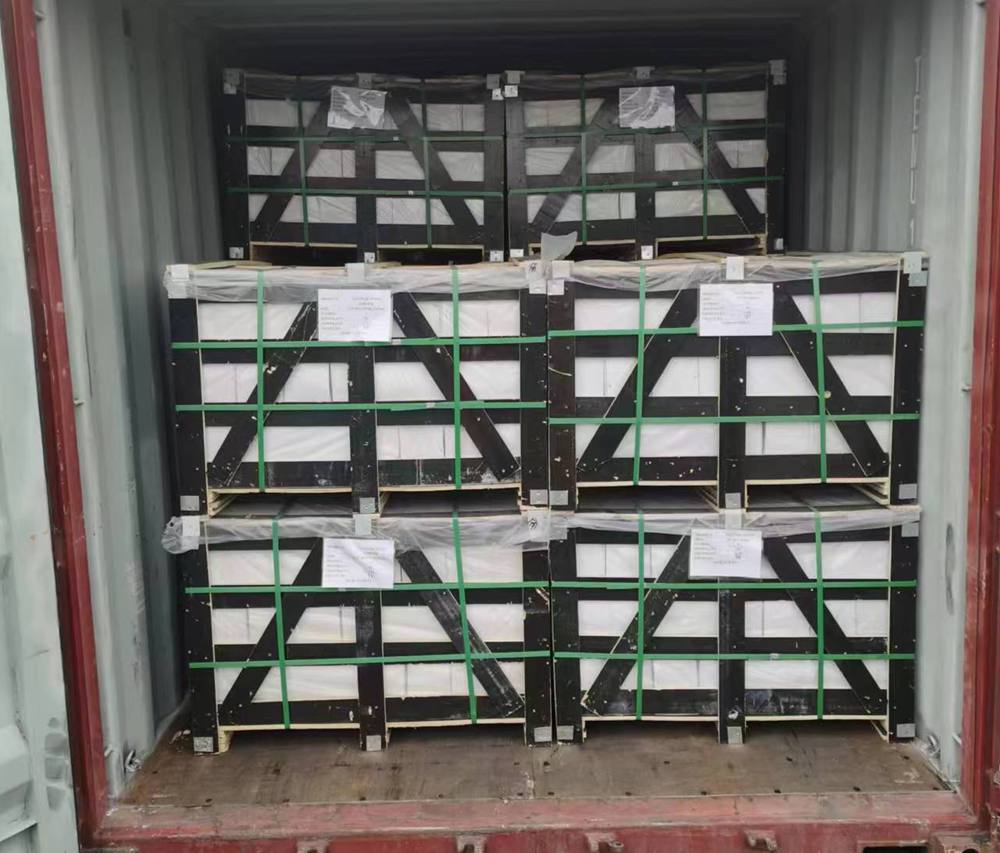
- Plywood Crate Safety: We use fumigation-free plywood crates (110cm x 110cm) that provide the structural integrity needed to stack 20-30 pallets without collapsing, preventing damage-related insurance claims.
Foire aux questions
How do the 2026 tax changes in China affect wholesale stone prices?
Starting April 1, 2026, China will cancel value-added tax (VAT) export rebates for 249 stone products. This policy shift means exporters will lose the current 9% rebate and must absorb the full 11% to 13% input tax. You should expect an upward adjustment in global export pricing for natural stone materials as factories pass these costs through the supply chain. Orders clearing customs before the March 31, 2026 deadline will retain current pricing benefits.
What are the typical shipping costs for a 20-foot container of natural stone?
Ocean freight rates fluctuate significantly based on the specific route and market demand, generally ranging from $275 to $5,500. While the 10-year historical average for container shipping sits near $2,756, recent volatility has pushed benchmarks as high as $3,664 per container. For stone shipments specifically, remember that fuel surcharges and port congestion at major hubs like Los Angeles or Rotterdam can cause rapid price spikes.
Why is freight for natural stacked stone more expensive than other materials?
The high density and extreme weight of natural stone drive up logistics costs. Our standard stacked stone panels weigh between 30-40kg per square meter, while rough-hewn panels reach 55kg per square meter. This weight requires heavy-load capacity vehicles and reinforced packaging. Additionally, the multi-stage transportation process—moving raw blocks from the quarry to the slabbing facility, then to the port—adds layers of handling fees that lighter building materials avoid.
How do you calculate the total landed cost for a stone veneer shipment?
To find the total landed cost, combine the base material price with ocean freight, insurance, and applicable import duties. For US imports, use HS Code 6803.00.90 for Slate or 6802.93.11 for Quartzite to determine specific tariff rates. Finally, add the inland trucking fees from the destination port to your warehouse. We recommend using a customs broker to verify these classifications, as misclassification can lead to unexpected 25% to 30% duty surcharges.
Which packaging method best prevents damage during international transit?
Reinforced plywood crates are the most effective method for sea freight. These crates provide the necessary structural integrity to hold pallets weighing 900kg to 1000kg without collapsing. Plywood also bypasses fumigation requirements, which reduces regulatory delays at the port. Inside the crates, we use 5-ply reinforced export-grade cartons with polythene lining to protect the stone surface from moisture and abrasion during the journey.
Can I order custom packaging or private labeling for my wholesale order?
Yes. We provide full OEM services for B2B partners. This includes custom-printed export-grade cartons featuring your company logo, branding, and specific SKU information. To access private labeling and custom box services, we require a minimum order quantity (MOQ) of 300 square meters. This allows us to maintain production efficiency while helping you build brand equity in your local market.
Does Top Source Stone sell directly to end-users or homeowners?
No. Top Source Stone operates strictly as a B2B manufacturer and source factory. We exclusively serve wholesalers, retailers, and professional dealers. This policy ensures we do not compete with our own customers and allows us to protect the profit margins and regional territories of our professional partners.
Final Thoughts
Chasing the lowest factory invoice often leads to margin erosion through hidden logistics surcharges and customs penalties. Sourcing directly from our quarry and adhering to the 17.5-ton USA port standard ensures your landed cost remains predictable and competitive. This proactive supply chain management protects your resale profits against the volatility of 2026 freight and duty shifts.
Eliminate the uncertainty in your next procurement cycle by requesting our “Big 10” inventory catalog or a physical sample kit. We provide high-definition visual verification of your finished crates before you release the balance payment. Contact our logistics team to calculate a precise landed cost quote for your specific warehouse location.
