

Stone backing systems dictate the structural reliability and long-term warranty exposure of natural stone installations. Selecting an incompatible assembly often results in delamination or failure to comply with 2026 NFPA 285 non-combustible standards, triggering costly callbacks and insurance disputes for contractors and engineers.
This technical comparison benchmarks meshless and cement-backed panels using ASTM C1583 bond strength criteria. We examine how CNC diamond-blade precision and the 8-12 lbs/sq.ft weight profile enable seamless interlocking transitions while maintaining 95% hue uniformity across large-scale commercial facades.
The Structural Evolution of Stacked Stone Backing Systems
Modern systems replaced heavy wet-set masonry with 8-12 lbs/sq.ft CNC-machined panels, utilizing high-strength epoxy to eliminate structural footings while ensuring seamless architectural joints.
Transition from Traditional Masonry to Modular Panel Systems
Architectural requirements moved away from heavy individual stone settings that demanded specialized masonry crews and expensive structural wall reinforcements. We now focus on engineered modularity that allows for rapid installation on lighter substrates without sacrificing the 100% natural stone aesthetic.
- Unit Format: Lightweight 6″ x24″ (150x600mm) panelized units.
- Substrate Compatibility: Direct installation on standard cement board or OSB, removing the need for reinforced grade beams or footings.
- Moisture Management: Integration of weather-resistive barriers (WRB) and lath systems to protect the building envelope in exterior applications.
Precision CNC Interlocking and High-Strength Epoxy Adhesion
Current engineering at the factory level ensures panels fit with tighter tolerances than traditional hand-cut stone. We use diamond-blade precision to create interlocking geometries that hide the installation substrate and prevent the “stepped” look common in lower-quality products.
- Interlocking Geometry: CNC-cut Z-shape and S-shape “male-female” connections that camouflage vertical joints.
- Bonding Technology: Application of industrial-grade high-strength epoxy resin to create a permanent bond between the stone and the panel base.
- Durability Standards: Seamless technology shields the substrate from UV exposure and moisture, significantly reducing the risk of freeze-thaw delamination.


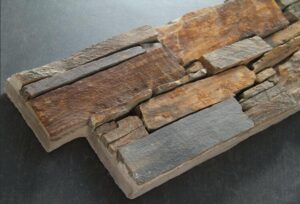
Are Glue-Joined (Meshless) Stone Panels Strong Enough for Vertical Walls?
Meshless panels use high-strength epoxy to bond natural stones, staying under the 15 lbs/sq.ft weight limit. This makes them structurally safe for most vertical walls without mechanical footings.
Structural Load Limits and Adhesive Shear Strength
Standard building codes require mechanical fasteners for any cladding that exceeds 15 pounds per square foot. Meshless systems are designed to bypass this requirement by reducing the overall panel thickness while maintaining the stone’s natural face. The safety of the installation relies on the adhesive’s ability to resist gravity-induced shear stress over several decades.
- Weight Profile: Natural stacked stone panels typically weigh between 8-12 lbs/sq.ft (30-40kg/m²), remaining well within vertical safety margins.
- Shear Performance: Bond strength depends on the total surface contact area between the individual stone strips and the wall substrate.
- Sag Resistance: Vertical adhesives must feature high initial grab to prevent the panel from slipping before the epoxy reaches full cure.
- Attachment Threshold: Any panel exceeding the 15 lbs/sq.ft limit requires secondary mechanical wire or pins for safety.

High-Strength Epoxy Bonding and CNC Fit Accuracy
Top Source Stone manufactures meshless panels using a specific engineering process that ensures the bond is stronger than the stone itself. We use CNC diamond-blade technology to create perfectly flat joining surfaces. This precision maximizes the resin’s contact area, which effectively turns a collection of small stones into a single structural unit.
- Bonding Agent: We use high-strength epoxy resin formulated to create a permanent chemical bond between natural minerals.
- CNC Precision: Diamond-blade edges ensure stones fit tightly, which reduces internal stress and prevents moisture from weakening the adhesive.
- Load Distribution: The Z-shape interlocking design transfers a portion of the vertical weight to adjacent panels, creating a unified structural grid.
- Climate Durability: Our freeze-thaw resistant bonding ensures the epoxy remains flexible enough to handle thermal expansion without becoming brittle.
Scale Your Business with Premium Stacked Stone
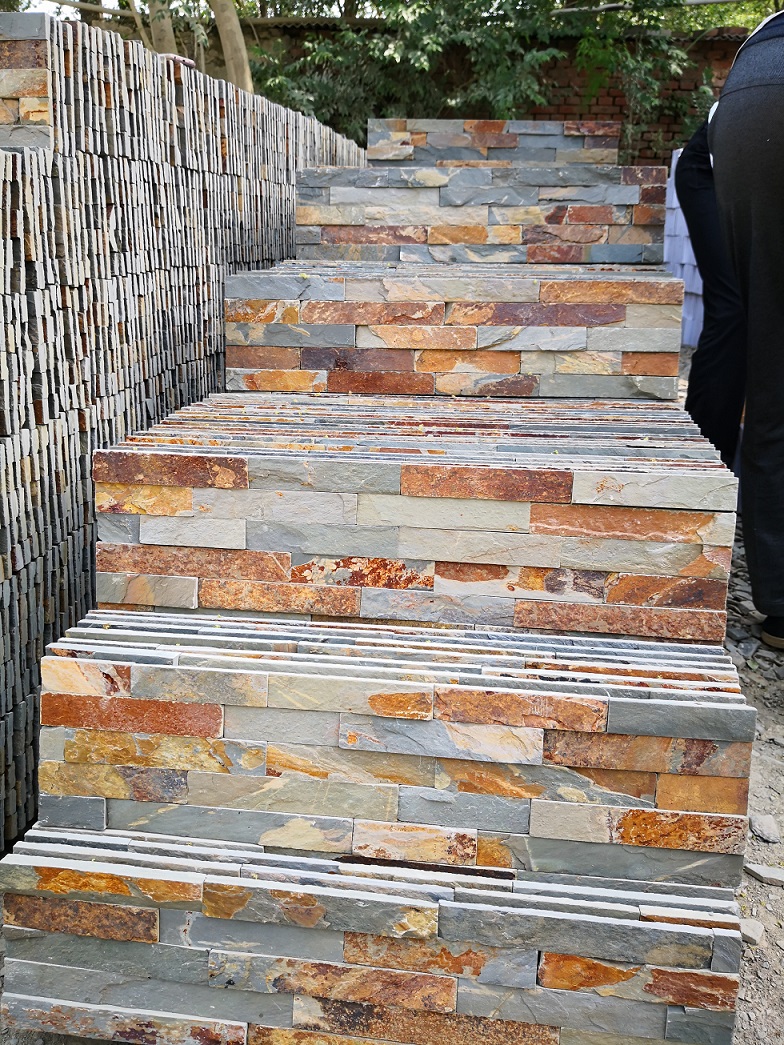
When is Cement-Backed Heavy Duty Cladding Mandatory for Your Safety?
In 2026, cement-backed cladding is required for high-rise commercial structures and high-risk fire zones to meet NFPA 285 and ASTM E136 non-combustible safety standards.
Compliance with NFPA 285 and Non-Combustible Building Codes
Tightening regulations for high-rise developments and commercial zones now dictate strict non-combustible requirements for exterior cladding. Reliance on adhesive-only systems creates a safety liability that modern building codes no longer permit in vertical urban environments.
- ICC Standards: International Code Council requirements for high-rise developments mandate materials that prevent vertical flame spread.
- NFPA 285 Testing: Assembly passage is mandatory for cladding used in non-combustible construction zones to ensure fire containment.
- Fire-Rated Classifications: Mandatory use of Class A/Group 1 fire-rated materials in designated bushfire-prone geographic regions.
- Municipal Exemptions: Certified fiber-cement and stone assemblies often bypass additional fire blocking requirements in cities with rigorous safety codes.
ASTM-Standard Durability for High-Salinity and Extreme Climates
Structural integrity defines heavy-duty performance. We engineer our cement-backed panels to withstand harsh environments where standard veneers delaminate. This durability ensures the facade remains secure under intense wind loads and extreme temperature fluctuations common in coastal and desert regions.
- Inherent Stability: Utilization of 100% natural stone minerals (Slate, Quartzite, Granite) for permanent UV stability and zero flame spread.
- Freeze-Thaw Resistance: ASTM-standard testing ensures panel integrity throughout the 2026 extreme weather cycles without cracking or bond failure.
- Corrosion Resistance: High salinity and humidity resistance designed for Gulf regions and coastal commercial facades.
- Wind Load Performance: Heavy-weight panels (up to 55kg/m²) provide the structural mass required to withstand high wind pressures on vertical commercial walls.

Why the Interlocking Z-Shape Design is the Future of Seamless Install
The Z-shape design uses a male-female interlocking system to eliminate visible vertical joints and distribute stone weight, significantly reducing manual alignment needs and on-site labor costs.
Eliminating Joint Visibility through Geometric Interlocking
Traditional straight-edge panels often leave “stepped” gaps that catch the eye and ruin the architectural flow. The Z-shape geometry solves this by staggering the connection points. This layout camouflages vertical seams and creates a continuous surface that looks like hand-laid dry-stack stone.
- Staggered Geometry: Offset connection points hide vertical lines and prevent visible gaps between panels.
- Hidden Fasteners: The interlocking lip ensures mounting hardware and the substrate remain completely invisible.
- Structural Rigidity: Interlocking panels distribute load more effectively than linear designs, increasing overall wall stability.
CNC Diamond-Blade Precision for Tight Male-Female Connections
Achieving a professional finish with natural stone requires tight tolerances. We use CNC diamond-blade edges to ensure every panel fits perfectly with the next. This precision eliminates the need for on-site chipping or grinding, which keeps the job site clean and the installation moving fast.
- Panel Dimensions: Standard 55 x 20cm sizing maintained with high-precision cutting for modular compatibility.
- Batch Uniformity: Precision edges facilitate a tight fit that maintains 95% hue uniformity across architectural projects.
- Rapid Assembly: The male-female connection system allows for mortarless installation without specialized masonry expertise.
This engineering approach moves the complexity from the field to the factory. By choosing precision-cut interlocking panels, dealers provide a product that reduces labor hours while delivering the high-end, seamless look that commercial and residential clients demand.

How to Evaluate Tensile Bond Strength for Large-Scale Commercial Projects?
Engineers use the ASTM C1583 pull-off test to verify stone adhesion, ensuring panel integrity under 2026 safety standards for high-rise and commercial exteriors.
| Testing Parameter | Requirement (ASTM C1583) |
|---|---|
| Primary Method | Direct Tension Pull-Off Test |
| Core Diameter | 2 to 4 inches (50mm to 100mm) |
| Loading Direction | Perpendicular to the substrate surface |
| Key Documentation | Failure Load & Specific Failure Mode |
ASTM C1583 Pull-Off Testing Protocols and Field Verification
The ASTM C1583 standard provides a quantitative measure of the bond between the Revêtement de pierre and the building substrate. Field teams perform this test in-situ to confirm that site-applied adhesives meet the structural requirements of the project design. This verification detects relative differences in surface preparation quality across large commercial facades.
- Core Drilling: Technicians drill a 2- to 4-inch diameter core through the stone panel and penetrate 1 to 2 inches into the concrete substrate.
- Disc Bonding: Inspectors bond a threaded metal disc to the stone surface using high-performance, rapid-set epoxy.
- Tensile Loading: A calibrated pull-off tester applies a perpendicular tensile load until the material fails.
- Failure Analysis: Data reveals if the break occurred in the stone, the adhesive interface, or the substrate, determining if preparation meets 2026 safety codes.
Factory-Engineered Adhesion and Same-Batch Mineral Consistency
While field testing confirms on-site work, long-term bond reliability starts at the manufacturing level. Pierre de source supérieure minimizes structural risks by controlling the chemical and physical compatibility of the panels before they reach the job site. High-strength resins and precision engineering prevent the common causes of delamination found in cheaper alternatives.
- Specialized Resins: We use high-strength epoxy resin adhesives formulated specifically for natural minerals to ensure maximum chemical bonding.
- Thermal Consistency: Sourcing from the same quarry vein ensures uniform thermal expansion coefficients, preventing bond fatigue during temperature shifts.
- Z-Shape Stability: The interlocking male-female connection system reduces vertical joint stress and provides a stable modular base for tensile loads.
- Environmental Durability: ASTM-standard freeze-thaw resistance prevents moisture infiltration from degrading the bond during extreme 2026 climate cycles.
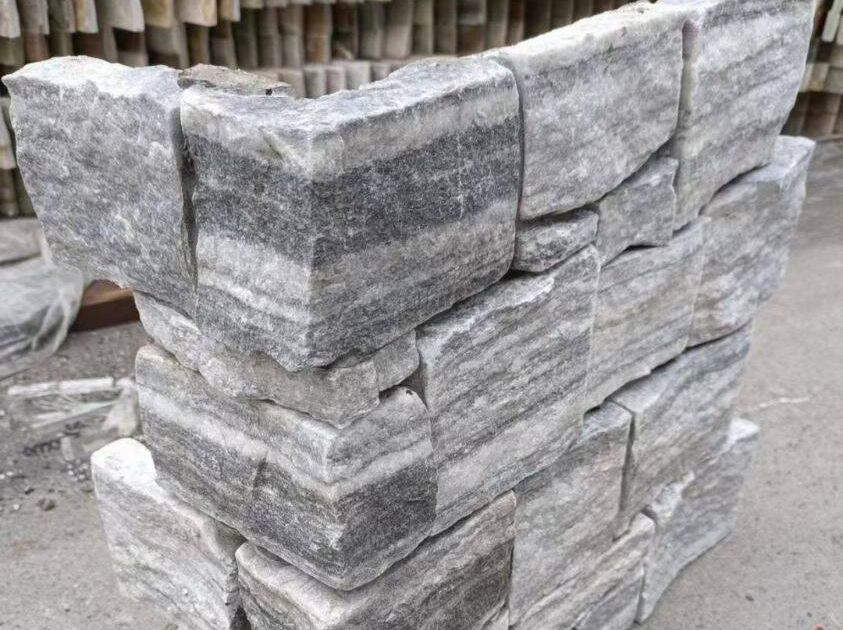
Final Thoughts
Choosing between mesh-backed and interlocking systems is a decision between immediate savings and long-term structural liability. Our CNC-machined Z-shape panels eliminate the “stepped” gaps of cheaper straight-edge alternatives while maintaining a safe 8-12 lbs/sq.ft profile for vertical walls. Relying on same-batch quarry consistency safeguards your professional reputation against the patchy, inconsistent finishes common in unmanaged supply chains.
Verify our diamond-blade precision by requesting a sample kit or starting a 300-square-meter trial order from our “Big 10” inventory. We protect your margins by refusing all direct-to-consumer sales and providing high-definition video verification of your actual crates before the balance payment. Reach out to our team today to secure your territory and discuss private label packaging for your next project.
Foire aux questions
Do stone panels need a mesh back?
Not necessarily. While traditional panels used plastic or wire mesh, modern engineering favors meshless (glue-joined) systems for panels under 15 lbs/sq.ft. By using high-strength epoxy resin and CNC diamond-blade precision to flatten the bonding surfaces,
What is cement backed stone cladding?
Cement-backed cladding consists of natural stone strips permanently bonded to a high-density fiber-cement board. This system is a “heavy-duty” solution designed for high-exposure environments. It provides an integrated moisture barrier and the structural mass required to meet NFPA 285 non-combustible standards, making it the mandatory choice for high-rise commercial structures and fire-prone zones.
Why are my stone panels falling apart (delaminating)?
Cheaper panels use low-grade adhesives that become brittle. We mitigate this by using specialized high-strength epoxy and same-batch quarry sourcing. Sourcing from the same vein ensures all stones in the panel have the same thermal expansion coefficient, preventing them from “pushing” each other off the backing during temperature shifts.
Is glue-joined (meshless) stone safe for exterior use?
Yes, provided the panel stays within the 8-12 lbs/sq.ft weight range and utilizes a Z-shape interlocking design. The interlocking geometry helps distribute the vertical load across the wall assembly. For 2026 exterior standards, we recommend using these panels in conjunction with a high-quality weather-resistive barrier (WRB). However, for heights exceeding certain municipal codes, a cement-backed system may be required for secondary mechanical fastening.
What is the best backing system for high-rise stone installations?
For high-rise applications, cement-backed systems are superior. They provide the necessary fire-resistance ratings (Class A) and can withstand higher wind loads. More importantly, cement-backed panels allow for the use of mechanical clips or anchors, which are often required by building codes for any cladding installed above the second floor to prevent catastrophic failure during seismic events or extreme storms.
