
Z-Panel Adhesion failure remains the primary cause of delamination in heavy exterior cladding. Using sub-standard adhesives for 80kg/sq.m stone systems triggers vertical sag and structural failure, resulting in expensive warranty claims and damaged reputations.
Our evaluation benchmarks industrial mortars against the ANSI A118.15 standard for cement-backed modular systems. We focus on maximizing surface area contact and thermal expansion resistance to ensure bond stability in environments ranging from -30C to +50C.
Bonding Strength: How Interlocking Teeth Affect Mortar Needs?
Interlocking Z-panels use a male-female modular system to maximize surface area, ensuring a high-strength mechanical bond while reducing mortar consumption and hiding vertical joints.
The interlocking Z-shape isn’t just a design choice to hide seams; it serves a specific structural purpose. By replacing traditional straight lines with a nested “Interlocking Modular Blueprint,” we increase the physical contact points between the panel and the wall substrate.
This geometry creates a mechanical keying effect. When installers apply thin-set, the mortar fills the recesses of the teeth, locking the panel into place and preventing sagging—a common issue with heavy Revêtement de pierre on large-scale exterior walls.
Mechanical Adhesion and Surface Interlock Geometry
Traditional straight-cut stones rely almost entirely on the chemical bond of the adhesive. In contrast, Z-shape and S-shape edges provide physical support against gravity. This nested design distributes the load of the stone panels—which weigh between 68kg and 80kg per square meter—more evenly across the vertical surface.
- Mechanical Keying: Modular edges create a physical lock that prevents shifting during the curing process.
- Surface Area Expansion: The “teeth” increase the total bonding surface compared to linear edges.
- Self-Alignment: The precision geometry ensures panels sit flush, reducing the need for excess mortar to correct alignment gaps.
Cement-Backed Substrates and High-Strength Epoxy Bonding
Top Source Stone utilizes a cement-backed panel system engineered for high compatibility with standard thin-set mortars. This creates a “cement-to-cement” bond, which is significantly more reliable than bonding raw stone directly to a substrate in high-humidity or high-salinity environments.
We use high-strength epoxy resin to fuse the natural stone pieces to the cement substrate at the factory. This ensures the integrity of the panel remains intact even under extreme temperature fluctuations ranging from -30°C to +50°C, typical in North American and Middle Eastern climates.
- Mortar Compatibility: Cement backing integrates seamlessly with ANSI A118.15 high-performance mortars.
- CNC-Diamond Precision Edging: Precision blades ensure a tight fit, which minimizes the volume of mortar required to fill voids.
- Epoxy Engineering: Industrial-grade resins bond individual stone slips to the cement plate, preventing delamination.
By utilizing these interlocking systems, B2B wholesalers can offer a product that reduces on-site labor costs. The modular fit eliminates the time-consuming process of hand-sorting and buttering individual stones to hide gaps, protecting the project’s bottom line.

ANSI A118.15: The Standard for Professional Z-Panel Install
ANSI A118.15 defines high-performance mortars for heavy cladding, ensuring bond strength and flexibility to handle thermal expansion in demanding 2026 architectural projects.
| Requirement | ANSI A118.1 | ANSI A118.15 |
|---|---|---|
| Primary Use | Basic interior tiling | Heavy Revêtement de pierre |
| Shear Strength | Standard | Improved/High-Performance |
| Freeze-Thaw | Not tested | Mandatory Cycle Testing |
| Substrate Sag | Moderate | High-Tack/Zero-Slip |
Defining High-Performance Bond Strength for Masonry
Standard adhesives often fail when tasked with supporting vertical natural stone over long cycles. ANSI A118.15 represents the “Improved Modified” benchmark, providing shear bond strengths that far exceed traditional A118.1 or even A118.4 modified mortars. This standard ensures the adhesive layer can withstand the weight of heavy stone without mechanical failure at the bond line.
- Shear Bond Strength: A118.15 mortars deliver the highest tested PSI ratings for bonding porcelain, stone, and large-format panels to masonry substrates.
- Environmental Resilience: The standard mandates performance testing in submerged water environments and through rigorous freeze-thaw cycles.
- High-Tack Vertical Grab: These adhesives include specialized polymers that prevent heavy panels from slipping or sagging during the curing window.
Supporting Thermal Expansion and Heavy-Load Stone Panels
For commercial developers and wholesalers, the adhesive choice is a liability decision. Our Pierre de source supérieure cement-backed panels carry significant mass, making standard thin-sets insufficient for large-scale exterior facades. ANSI A118.15 mortars are engineered to act as a shock absorber between the rigid stone and the moving building structure.
- Weight Capacity: A118.15 safely supports our 3-4cm thick panels, which reach weights of approximately 80 kg/sq.m.
- Climate Flexibility: High polymer content allows the bond to manage expansion in extreme climates ranging from -30°C in Northern regions to +50°C in the GCC.
- Salinity Resistance: The formulation provides the chemical stability required for coastal installations where salt spray and high humidity degrade standard mortars.
Engineers working on 2026 tenders should verify that the specified mortar meets this standard to prevent panel delamination. This is particularly critical for the “Interlocking Modular Blueprint” of Z-Shape panels, where precision fit depends on a stable, non-shrinking adhesive bed.
Premium Stacked Stone for Profitable Projects

Back-Buttering Techniques for Maximum Surface Contact
Back-buttering ensures 95% mortar coverage, filling microscopic pores to secure heavy 80kg/sq.m cement-backed panels on vertical walls while eliminating air pockets and moisture-driven delamination risk.
Flat Back Troweling and ANSI A108.5 Standards
Standard installation often fails because mortar only touches the high points of a stone’s textured rear surface. ANSI A108.5 requires 95% coverage for natural stone in exterior or wet environments. Installers achieve this by using the flat side of the trowel to “key” the mortar into the stone, forcing the adhesive into every crevice before setting the panel against the substrate.
- ANSI A108.5 Compliance: Reaching 95% coverage is mandatory to support the mechanical load of natural stone.
- Application Direction: Spread mortar from the center outward to the edges to ensure full corner support and prevent edge lippage.
- Freeze-Thaw Durability: Filling all voids prevents water from pooling behind the stone, which stops panels from popping off during ice expansion.
- Thickness Control: Keep the total mortar bed within the 0.5-inch limit to maintain a flush profile with the wall system.
Securing Heavy Cement-Backed Interlocking Panels
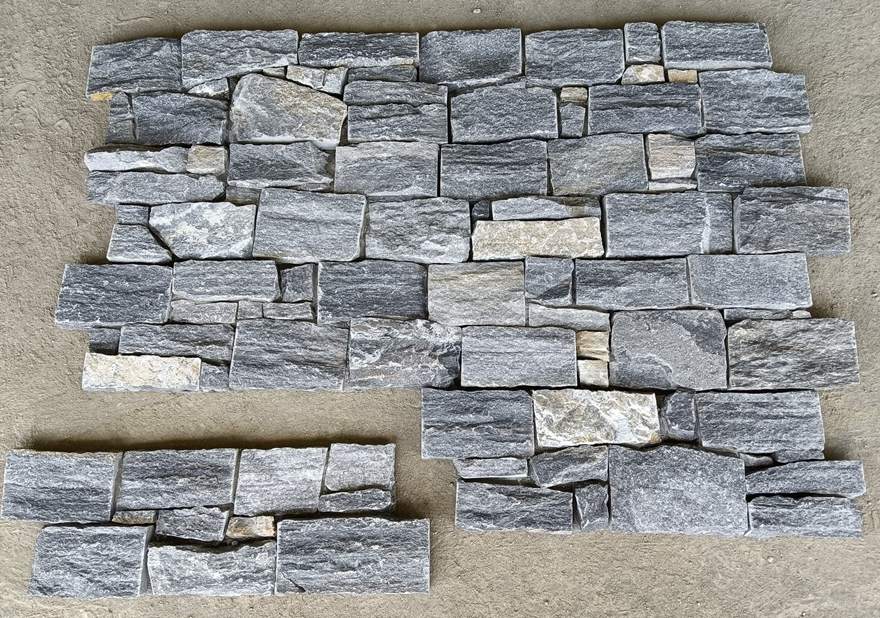
Pierre de source supérieure cement-backed Z-panels weigh approximately 80kg/sq.m for the 3-4cm thickness range. This extreme weight requires a permanent vertical bond that only back-buttering can provide. Applying mortar directly to the cement backing creates a cohesive chemical bond between the panel and the wall, turning the installation into a monolithic structure.
- Load Bearing: Critical for securing 80kg/sq.m panels to ensure they do not sag or shift during the curing process.
- Modular Blueprint: The technique prevents panels from sliding, keeping the interlocking Z-shape tight and the vertical joints invisible.
- Precision Fit: Uniform adhesive coverage supports our CNC-diamond precision edging, allowing for a seamless, gap-free architectural finish.
- Enhanced Adhesion: Applying mortar to both the wall and the panel backing maximizes the surface area contact for heavy-duty commercial cladding.
Preventing “Panel Sag” on Large-Scale Exterior Walls
Preventing panel sag requires combining high-modulus elastic adhesives with rigid panel construction to distribute the 68-80 kg/sq.m weight across the structural substrate while managing thermal expansion.
Managing Vertical Shear and Gravity Loads
Large-scale facades face constant gravity-induced stress. To prevent displacement, engineers must distribute the heavy dead load of natural stone panels—which ranges from 68 kg/sq.m to 80 kg/sq.m depending on thickness—through both the chemical bond and the structural framing.
- High-Modulus Adhesives: Use permanently elastic adhesives that absorb cyclical expansion while maintaining the strength to hold heavy stone loads.
- Diagonal Bracing: Apply steel track framing on cantilevered wall sections to turn rectangular supports into rigid triangles, preventing long-term sagging.
- Structural Spacer Tapes: Use these tapes to ensure a consistent adhesive thickness and provide immediate fixation while the primary bonding agent cures.
Cement-Backed Stability and Thermal Expansion Control
Standard stone panels often warp when exposed to extreme temperature fluctuations. Using cement-backed Z-panels creates a rigid, non-deformable substrate that resists the internal stresses caused by rapid heating and cooling cycles.
- Temperature Resistance: Our cement-backed systems are tested for environments ranging from -30°C to +50°C, ensuring no delamination in harsh climates.
- CNC Diamond Edging: Precision-cut edges ensure a tight modular fit, which significantly reduces the cumulative movement that leads to gaps on large exterior surfaces.
- Uniform Batch Selection: We source stone from the same quarry vein per order to ensure expansion rates and density remain uniform across the entire facade.

Adhesives for High-Heat Fireplace Applications
Natural stone panels require silicate-based cements or high-heat epoxies rated up to 2,000°F (1,090°C) to handle extreme thermal cycling without bond failure.
Thermal Cycling and Non-Combustible Material Compatibility
Standard thin-sets fail in fireplace environments because they cannot handle the rapid temperature spikes between a cold start and a roaring fire. Natural stone absorbs heat quickly, causing standard adhesives to become brittle and eventually snap the bond between the panel and the substrate.
- Recommended Adhesives: Black silicate-based furnace cements or stove gasket adhesives.
- Heat Tolerance: Adhesives must hold a permanent bond at temperatures up to 2,000°F (1,090°C).
- Material Sync: These adhesives work specifically with non-combustible natural slate, quartzite, and granite panels to meet 2026 interior safety standards.
The bond must remain flexible enough to accommodate the microscopic movement of the stone. Without this elasticity, the repetitive expansion and contraction will lead to panel sag or complete detachment over time.
Thermal Expansion Resistant Engineering and Bond Stability
Top Source Stone engineers its Z-panel systems to solve the delamination issues found in lower-grade synthetic stone. We focus on how the panel backing interacts with high-strength mortars under stress.
- Proprietary Tech: Our Thermal Expansion Resistant technology stabilizes panels across fluctuations from extreme cold to intense heat.
- Cement-Backed System: The cement-backed Z-panel design provides a textured, porous surface that high-heat mortars can “bite” into, creating a mechanical and chemical bond.
- Air Quality Safety: Use water-based, non-toxic formulations to ensure no toxic off-gassing occurs when the fireplace reaches peak operating temperatures.
Installers should apply adhesive to both the wall and the back of the panel to ensure 100% coverage. This “back-buttering” technique eliminates air pockets that could expand when heated, which is the primary cause of stone popping off fireplace surrounds.
Foire aux questions
What is the recommended adhesive for exterior Z-panel installation?
Professional installers prioritize high-strength stone adhesives like ARDEX X 7 or Mapei Ultralite that meet ANSI A118.15 standards. These products provide the necessary bond strength for vertical natural stone applications and resist temperature fluctuations from -30°C to +50°C better than traditional mortar.
Is back-buttering required for interlocking stone panels?
Yes, back-buttering is essential for natural stone panels. Applying adhesive to both the substrate and the back of the panel ensures at least 95% coverage, filling natural voids in the stone and preventing the “hollow” spots that lead to delamination.
How do you prevent stone panels from falling off exterior walls?
Success depends on a three-tier approach: proper surface preparation of a clean substrate, using the full-spread adhesive method with a 1/4-inch notched trowel, and implementing mechanical support like stainless steel Z-clips or anchor pins for panels installed at heights exceeding 3 meters.
Are Z-shape stone panels safe for high-heat fireplace surrounds?
Natural stone panels are non-combustible and highly suitable for fireplace applications. We use high-strength epoxy resin to bond the stone to the cement backing, ensuring the system remains stable and resists shedding even when exposed to consistent heat cycles.
Will the color of the slate or quartzite fade over time?
Since our panels consist of 100% natural quarry stone rather than pigmented concrete composites, they possess inherent UV stability. The deep charcoals of Midnight Black and the vibrant tones of Autumn Gold maintain their original appearance through 2026 and beyond without fading.
Can I install Z-panels directly over interior drywall?
We do not recommend installing heavy stone panels directly onto standard gypsum drywall. For interior projects, installers should first secure a cement backer board to the wall studs to provide a rigid, moisture-resistant substrate capable of supporting our 68kg per square meter panels.
