
Rigorous vetting of China manufacturers is the primary defense against the middleman markups and batch inconsistencies that erode B2B margins in the natural stone trade. Sourcing from unverified entities often leads to “patchy” color profiles and unexpected supply chain shutdowns, resulting in rejected project deliveries and lost dealer trust.
We benchmark suppliers against ASTM C170 strength standards and 17.5-ton US-port weight optimization protocols. This checklist evaluates direct Hebei quarry sources to help you secure a stable partnership based on empirical data and pre-shipment visual verification.
Factory vs. Trading Company: Identifying the Source in Hebei
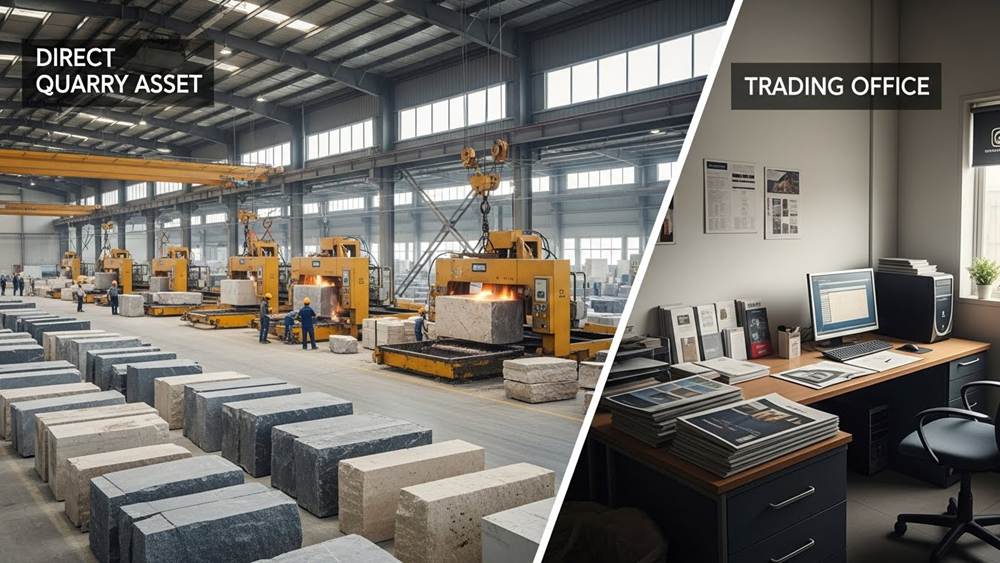
Direct Hebei quarry sources remove middleman markups and maintain batch consistency by controlling material extraction and specialized production equipment.
| Caratteristica | Direct Quarry (Top Source Stone) | Regional Trading Company |
|---|---|---|
| Asset Ownership | Direct control of Hebei slate/quartzite quarries. | Office-based resellers without production assets. |
| Pricing Structure | Wholesale factory pricing for B2B margins. | Marked-up rates with hidden commission layers. |
| Controllo di qualità | Strict batch color sorting and ASTM testing. | Mixed lots from various low-end workshops. |
| Compliance | Meets US/AU weight and environmental codes. | High risk of shutdown during pollution checks. |
Distinguishing Direct Quarry Operators from Regional Middlemen
Hebei utilizes over 7,400 shared regional standards to coordinate supply chains. While these standards help synchronize logistics, they often obscure the difference between a manufacturer and a middleman. Many entities in the region hold generic export licenses but lack the specific quarrying rights required for long-term material stability.
Middlemen typically source from high-pollution, low-end workshops that lack R&D capacity and consistent human capital. These small-scale operations often face temporary closures during environmental regulatory checks in the Beijing-Tianjin-Hebei corridor. A verified factory demonstrates its position through specialized production equipment and a high-volume B2B-only strategy that protects the margins of distributors and contractors.
Direct Quarry Source and Pre-Shipment Visual Verification
A direct quarry source ensures Grade A quality control from the raw slate or quartzite block to the final 6×24 inch panel. We eliminate the information asymmetry common in international trade by providing Pre-Shipment Visual Verification. This includes high-definition photos and videos of the specific batch before you release the 70% balance payment.
Our logistics team handles specialized weight optimization to meet strict international road regulations. By precisely managing container loads, we maximize your shipment value without risking port delays or fines.
- US-Port Weight Optimization: Containers loaded to 17.5 tons for strict North American road compliance.
- Batch Color Consistency: Systematic stone sorting prevents patchy wall finishes during large-scale installation.
- Lead Times: 10–15 days for in-stock core inventory; 20–25 days for custom production.
- Technical Standards: Material selected to meet ASTM C170 (Compressive Strength) and ASTM C97 (Absorption) requirements.
- Core Inventory: Ready-to-ship models include Alaska Gray, Glacier White, Carbon Black, and California Gold.
Trading companies cannot verify production because they do not own the machines. We provide transparency by allowing B2B buyers to verify legal existence and factory status through official Chinese registration databases and site audits. This rigorous vetting ensures your supply chain remains resilient against regulatory shifts and quality drift.
The Yixian Advantage: Sourcing from the Global Hub of Slate
To understand the source, one must understand the geography. Yixian, Hebei, is recognized as the premier global production cluster for natural slate and ledger stone. Sourcing from a factory positioned at the heart of this hub—like Top Source Stone—ensures you are tapping into a mature ecosystem of skilled masonry labor and specialized infrared processing technology. For B2B buyers, this geographic concentration translates into lower internal logistics costs and a “Quarry-to-Container” workflow that is impossible for urban-based trading companies to replicate.
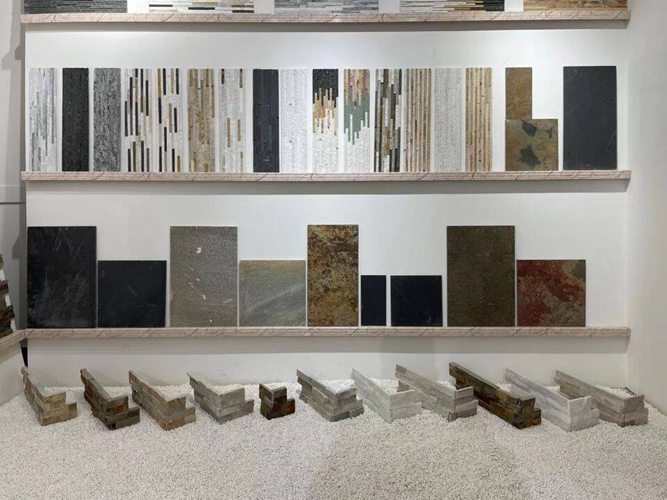
Assessing Production Capacity: Can They Handle 20 Containers/Month?
High-volume fulfillment requires machine utilization between 70% and 85%. Reliable suppliers manage 20 monthly containers through 17.5-ton US-port optimized loads and strict 25-day production cycles.
Verifying Real-World Throughput and Utilization Rates
Scaling to 20 containers monthly isn’t just about factory square footage. It’s about machine uptime and operational maturity. Many manual workshops fail during peak demand because they lack the integrated data needed to predict bottlenecks before they stop production.
- 75% Utilization Benchmark: We analyze machine utilization against this target to ensure the factory has the buffer to handle surge orders.
- GB/T 39116-2020 Maturity: This standard verifies a manufacturer’s ability to use predictive optimization and integrated data across the supply chain.
- Tier 2 Automation: Modern equipment is essential to replace manual labor that often fluctuates during Chinese holiday seasons.
- Three-Shift Consistency: Reliable throughput depends on maintaining output levels across 24-hour operation cycles verified by historical records.
Optimizing 20GP Containers for Regional Logistics
Production capacity means nothing if the logistics aren’t optimized for your local regulations. For B2B wholesalers, the goal is to maximize stone volume without triggering overweight fines at the destination port or during road transport.
- US-Port Weight Optimization: We cap loads at 17.5 tons per 20GP container to meet strict North American road weight limits.
- Production Lead Time: We maintain a 20–25 day cycle for mass production to ensure dealer inventory stays consistent.
- Loading Capacity: A standard 20-pallet configuration delivers between 756 and 864 m2 of natural stacked stone per container.
- FOB History: Leveraging a history of 220+ annual containers ensures reliable space booking at major ports like Tianjin or Qingdao.
Direct quarry control allows for faster raw material procurement, cutting out the 100-day delays often seen in mid-market suppliers during supply chain crunches. By managing the stone from the block to the pallet, we protect your margins and delivery timelines.
The “Quarry Ownership” Multiplier: Price Stability in Volatile Markets
In the natural stone trade, price fluctuations are often driven by raw material scarcity and environmental regulatory shifts. Direct quarry access provides a strategic buffer, offering 15-20% more price stability during seasonal market surges compared to middlemen who must buy from third-party pits. By controlling the extraction layers, we ensure that the “Alaska Gray” or “Carbon Black” you order today remains consistent in both shade and cost for your 2026 project pipeline. This vertical integration mitigates the risk of “batch drift” and protects your retail margins from the sudden price spikes that typically plague unverified supply chains.

Internal Quality Control: The Triple-Inspection Workflow
Our three-stage protocol integrates raw material checks, infrared cutting precision, and pre-shipment visual verification to eliminate batch inconsistencies and ensure 100% project-ready stone panels.
| Inspection Stage | Technical Focus | Standard Applied |
|---|---|---|
| IQC (Incoming) | Raw block density and mineral stability. | ASTM C170 / C97 |
| DUPRO (In-Process) | Infrared cutting accuracy and adhesive strength. | Internal QC Checklist |
| FRI (Final Random) | AQL sampling for major/minor defects. | ISO 2859-1 (AQL 0.65-2.5) |
Applying AQL Standards to the Production Workflow
We manage quality through stage-gated inspections that stop defects before they propagate through the line. This process begins at the quarry source in Hebei, where we select raw stone blocks based on structural integrity. By verifying mineral stability early, we avoid the micro-cracking often found in lower-grade slabs. Our team monitors the high-strength glued system during assembly to ensure every panel maintains its bond in extreme climates.
The final gate relies on statistical sampling. We apply ISO 2859-1 standards to every shipment, setting strict limits on major and minor defects. This data-driven approach ensures that the 6″x24″ panels arriving at your warehouse match the technical specifications required for high-end commercial cladding.
- Compressive Strength: We test to ASTM C170 standards to confirm load-bearing capacity.
- Cutting Precision: Infrared-guided machines maintain dimensional tolerances within ±0.5mm.
- Adhesive System: We use industrial-grade resins to prevent panel delamination in wet or high-heat areas.
Pre-Shipment Visual Verification and Batch Sorting
Color variation is the most common reason for project delays. We eliminate “patchy” wall installations by implementing batch color consistency sorting. After the stone is cut and assembled, our inspectors group panels by tonal range. This sorting ensures that a single container holds a cohesive color profile, which is critical for large-scale commercial facades where visual uniformity is non-negotiable.
To protect your cash flow, we provide full transparency before the balance payment. Our Pre-Shipment Visual Verification protocol includes high-resolution photos and videos of the actual goods and the packed crates. You see the batch quality and the 3-5 ply export cartons before the container is sealed. This removes the risk of “blind” importing and confirms the goods meet your specific project standards.
- Sorting Protocol: Panels are categorized by veining and tone to prevent jarring transitions on-site.
- Documentation: We send digital proof of finished goods, labels, and palletizing before shipment.
- Packaging Integrity: We inspect crate stability to ensure 17.5-ton US-optimized loads arrive without edge damage.
Premium Factory-Direct Stacked Stone Panels
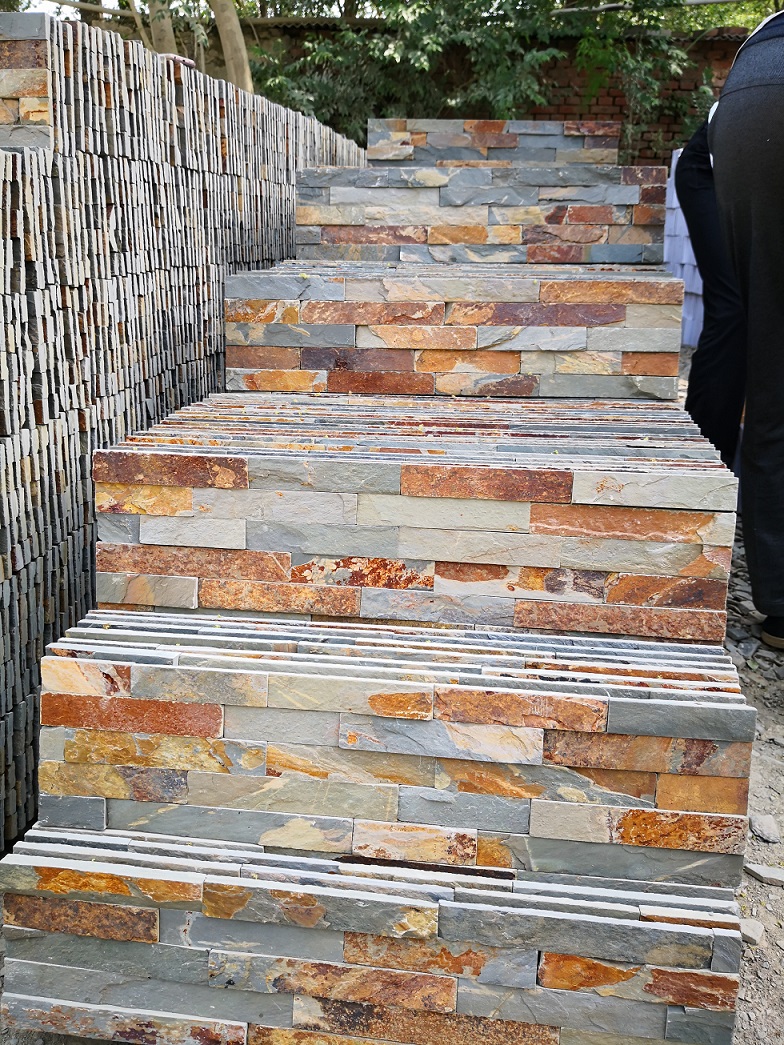
Environmental Compliance & Quarry Licensing Status
Sourcing from licensed Hebei quarries prevents supply chain shutdowns by ensuring compliance with 2026 Mineral Resources Law mandates and strict environmental standards.
Mining Licenses and Environmental Impact Assessments
China’s Ministry of Ecology and Environment now enforces zero-tolerance policies for unlicensed mining. Any factory operating without valid pollutant discharge permits faces immediate suspension and heavy financial penalties. To remain operational through 2026, sites must submit mandatory ecological restoration plans for renewal.
- Regulatory Framework: Mineral Resources Law of China (Articles 31-32).
- Mandatory Assessments: Environmental Impact Assessments (EIAs) focused on dust suppression and groundwater protection.
- Financial Risk: Fines up to RMB 1 million for factories lacking valid discharge permits.
- Restoration Requirement: Post-mining site rehabilitation plans are required for all 2026 site license renewals.
Direct Quarry Source Verification
Direct quarry ownership in Hebei removes the legal volatility associated with middleman traders. We control the extraction from licensed zones to ensure the material meets rigorous physical specifications. This hands-on management prevents the “patchy” appearance often found in mixed-source stone shipments.
- ASTM C170: High compressive strength standards verified within licensed mining zones.
- ASTM C97: Low water absorption rates confirmed for durability in freeze-thaw climates.
- Batch Color Consistency: Manual sorting at the source to prevent color variations between containers.
- Pre-Shipment Verification: Visual confirmation via photos and videos before balance payments.
By integrating these legal and technical benchmarks, Top Source Stone secures the supply chain for international wholesalers. We provide the documentation necessary to prove material origin and compliance, protecting your inventory from sudden regulatory holds at the port or factory level.
Communication Efficiency: 24-Hour Response and Technical Support
Sourcing efficiency requires rapid technical alignment and pre-shipment visual evidence to bypass customs delays and ensure compliance with ASTM and GB standards.
Mitigating Delays through Technical Standard Alignment
Logistics bottlenecks often stem from regulatory misunderstandings rather than manufacturing speed. In the 2026 market, navigating mandatory GB national standards and CCC registration remains a primary hurdle for importers. Incomplete documentation leads to customs rejections that stall cargo at the port for months.
Wholesalers need a partner who coordinates technical documentation before the container leaves the yard. We engage technical committees early in the procurement phase to clarify mandatory requirements. This proactive approach reduces the risk of duplicative testing and ensures smooth port clearance for every shipment.
Transparency via Pre-Shipment Visual Verification
Transparency protects the 70% balance payment. The stone industry frequently suffers from “batch drift,” where the delivered product deviates from the approved showroom sample. We eliminate this risk through a strict communication protocol that provides visual evidence before the final wire transfer.
Buyers receive high-definition photo and video documentation of their specific batch. This real-time factory update confirms the material matches the required engineering specifications.
- Batch Color Consistency: Precise sorting to prevent patchy wall installations and ensure aesthetic uniformity across large orders.
- ASTM Compliance: Verification that physical samples meet ASTM C170 compressive strength and ASTM C97 absorption requirements.
- Dimensional Accuracy: Real-time checks on the 6″ x 24″ standard to ensure seamless Z-shape interlocking.
- Packing Standards: Visual confirmation of 3-5 ply export cartons and heavy-duty pallets optimized for US Port road weight limits (17.5 Tons).
By providing 24-hour feedback and direct visual proof, we remove the information asymmetry that usually plagues international stone sourcing. This ensures dealers receive Grade A quality without the standard industry “surprise” upon container opening.
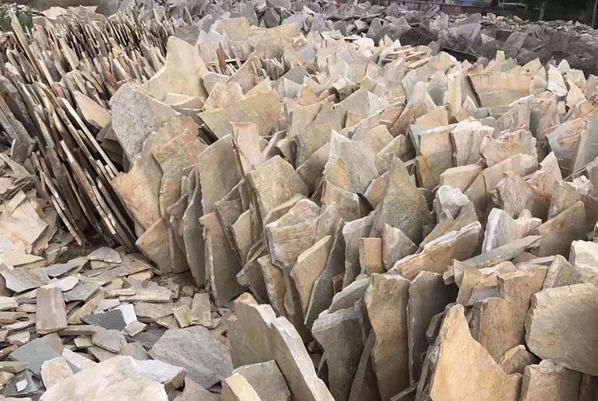
Understanding Incoterms: FOB Tianjin vs. DDP Pricing
FOB Tianjin offers wholesalers transparency and shipping control, whereas DDP provides a hands-off, landed-cost solution with higher risks of customs misclassification.
Cost Allocation and Risk Transfer Under Incoterms 2020
Under FOB Tianjin terms, the factory handles inland transport, export clearance, and terminal handling. Risk shifts to the buyer the moment the stone panels cross the ship’s rail. This allows experienced importers to negotiate their own freight rates and maintain full visibility over the logistics chain.
DDP shifts the entire burden to the seller, including import duties and final delivery to the warehouse. While convenient, it often introduces cost opacity. Seller-managed brokers may misclassify materials to reduce duties, using incorrect HS codes that trigger post-clearance audits. We strictly track the following classifications to ensure compliance:
- Natural Slate: HS Code 6803.00.90
- Natural Quartzite: HS Code 6802.93.11
- Risk Transfer: Ship’s rail (FOB) vs. Buyer’s warehouse (DDP)
US-Port Weight Optimization and Pre-Shipment Verification
Logistics for North American wholesalers depend on weight, not just volume. While a 20GP container can technically carry more, we optimize loads to 17.5 tons. This specific weight limit complies with strict US road regulations, preventing expensive transloading fees or overweight fines during the final inland haul to your distribution center.
Since Pietra naturale color varies by quarry layer, we use a “Pre-Shipment Visual Verification” protocol. Before you send the final 70% T/T balance, we provide high-definition photos and videos of the actual batch being loaded. This ensures the batch color consistency meets Grade A standards before the goods leave Tianjin.
- US Optimized Load: 17.5 Tons per 20GP container
- Heavy Load Capacity: 24–26.5 Tons (Subject to heavy-weight permit)
- Volume Density: 756–864 m2 per shipment
- Payment Terms: 30% deposit, 70% after visual verification
This combination of weight optimization and visual transparency protects your cash flow and ensures that the material arriving at your yard matches the approved sample perfectly.
Logistics Expertise: Handling US/EU Port Requirements
Optimizing weights to 17.5 tons for North American roads and pre-verifying vessel build-origin prevents port clearance delays and avoids unforeseen Section 301 surcharges.
Managing Section 301 Port Fees and Vessel Compliance
International stone logistics now require navigating the USTR Section 301 framework, which targets Chinese-built and operated vessels. Choosing the wrong shipping line can result in immediate cost spikes at the first US port of entry. We monitor vessel build-origin and ownership to protect your landed cost from rotational fees that can reach $50 per net ton.
To maintain smooth customs clearance, we handle pre-arrival declarations and verify vessel eligibility before the container leaves the port. This proactive screening prevents operational delays and denials of port entry that often trap unprepared importers. Our logistics team tracks these regulatory shifts to ensure your shipment isn’t used as a leverage point in bilateral trade disputes.
- USTR Section 301 Fees: Up to $50 per net ton for Chinese-built vessels; $120 per container for foreign-operated Chinese builds.
- Reciprocal Tariffs: Chinese Ministry of Transport fees targeting US-linked vessels, reaching RMB 1,120 by 2028.
- Regulatory Exemptions: We prioritize vessels under 4,000 TEU or those enrolled in US security programs to bypass specific fee rotations.
- Compliance Deadlines: Pre-entry payment and mandatory declarations are required to prevent port clearance denials.
North American Weight Optimization (17.5 Tons)
While a 20GP container can physically handle up to 26 tons, North American road weight regulations make such loads a liability. Overweight penalties and the need for specialized heavy-haul permits quickly erode wholesale margins. We standardize North American shipments at 17.5 tons to ensure the cargo is road-legal from the moment it leaves the terminal.
This 17.5-ton optimization balances material volume with legal safety. We utilize a 20-pallet configuration that maximizes the 756–864 m2 capacity of our natural stacked stone. This specific loading protocol ensures that every shipment meets ASTM C170 and C97 standards for density and strength while remaining within the limits of standard intermodal chassis.
- Container Payload: 17.5 Tons (Optimized for US/Canada road limits) vs. 24–26.5 Tons (Heavy-weight).
- Volume Capacity: 756–864 m2 per 20GP container depending on material thickness.
- Packing Specs: 20 pallets per container, utilizing 3-5 ply export cartons for material integrity.
- Transparency: Pre-shipment visual verification through photos and videos provided before balance payment.
- Material Weight: 8–12 lbs/sqft (30–40kg/m2) for standard flat panels.
We also implement a high-strength glued backing system and secure palletizing to prevent shifting during ocean transit. Our factory-direct control in Hebei allows us to manage these details on-site, ensuring that the stone arriving at your warehouse matches the visual verification provided during the loading process.
Final Thoughts
Choosing regional middlemen often leads to batch drift and expensive overweight fines at the destination port. We eliminate these risks by controlling the Hebei quarry source and optimizing every container to the 17.5-ton North American road limit. This strategy protects your wholesale margins and ensures every 6″x24″ panel meets ASTM C170 durability standards.
Skip the uncertainty of “blind” importing by requesting a physical sample kit of our Alaska Gray or Glacier White inventory. We provide high-definition pre-shipment videos for every order to validate batch consistency before you release the balance payment. Contact our B2B team today to review our 2026 compliance documentation or to finalize your private label packaging.
Domande frequenti
How do I verify a natural stone manufacturer’s legitimacy in China?
Buyers verify legitimacy by checking business licenses and social insurance records through official government databases to confirm the number of actual employees. Reliable factories like Top Source Stone provide ISO 9001 documentation and product test reports aligning with ASTM C170 and ASTM C97 standards to prove material density and durability.
Which regions in China are best for sourcing natural ledgestone?
Fujian, Shandong, and Hebei are the primary production clusters. Sourcing from Hebei-based factories provides direct quarry control, which is essential for maintaining batch color consistency. Working directly with the source factory eliminates middleman markups on slate and quartzite products, protecting wholesale margins.
What is the typical lead time for a 20GP container of stacked stone?
In-stock inventory ships within 10 to 15 days. Custom production orders require 20 to 25 days. For North American wholesalers, we optimize container loading to approximately 17.5 tons to meet strict road weight limits and simplify local logistics.
How do factories manage quality control and defect claims?
Suppliers use Acceptance Quality Limits (AQL) based on ISO 2859-1 standards. A triple-inspection workflow—conducted after cutting, assembly, and before packing—identifies cracks or dimensional deviations early. This process ensures only panels with high-strength glued backing and precise Z-shape interlocking reach the container.
Is it possible to inspect stone quality without visiting the factory?
Pre-shipment visual verification is the standard for remote vetting. We provide high-resolution batch photos and videos before the balance payment is due. Buyers can also hire third-party auditors like SGS or Bureau Veritas to confirm the stone meets absorption and compressive strength requirements.
Can B2B buyers visit the quarry and production facility?
Factory and quarry visits are common in B2B sourcing to audit production lines and slab storage. These visits allow buyers to inspect mechanical indicators like Mohs hardness and density, ensuring the natural stone is suitable for high-traffic commercial cladding or freeze-thaw resistant for northern climates.
