

Stone Texture & Depth sourcing directly impacts design integrity and long-term investment returns. Manufactured stone often lacks the complex textural depth of natural stone, resulting in visible repetition and diminished aesthetic value that can reduce property appeal and increase maintenance costs.
This analysis benchmarks Top Source Stone’s Natural Stacked Stone featuring Same-Batch Quarry Consistency and CNC Diamond-Blade Precision. We assess panel thickness, seamless interlocking designs, and MOQ strategies to help architects and designers secure reliable, scalable natural stone solutions that preserve authentic texture and shadow play.
The “Mold Problem”: Why Faux Stone Looks Repetitive
Faux stone veneer traps moisture behind panels causing mold while uniform molds and seams create repetitive patterns unlike natural stone.
Moisture Intrusion and Mold Growth in Faux Stone
Faux stone panels and mortar are porous, which lets water seep behind the veneer. Once trapped, this moisture cannot drain or dry properly. This creates ideal conditions for mold growth and wood rot that can damage the structure over time. Water intrusion often results from improper installation practices. Thin adhered veneers are especially vulnerable, as moisture can cause panels to lose adhesion and fall off. Mold frequently starts unnoticed under the veneer, later affecting interior walls and posing health risks.
Visible Repetition and Seams in Manufactured Stone Veneer
Manufactured stone veneer panels have uniform edges, which produce an overly regular and artificial look. The limited color variations in production lead to repeated patterns across large surface areas. Seams between panels become more visible as time passes, further revealing the fake appearance. This contrasts sharply with Pietra naturale, which offers unique, non-repeating textures and subtle color shifts that hide joints naturally.

Crystalline Structure: How Real Quartzite and Slate Interact with Light
Quartzite reflects more light for brightness; slate’s layered minerals absorb and scatter light, creating shadows and muted tones.
Understanding the Crystalline Structure of Slate and Quartzite
Slate exhibits a strong crystallographic orientation due to the alignment of phyllosilicate minerals like muscovite and chlorite. These minerals form layered structures tightly aligned by metamorphic stress, resulting in an intense directional crystal arrangement.
Quartzite consists of interlocking quartz crystals, making it dense and capable of reflecting light more effectively. This crystal interlock produces a surface that naturally enhances brightness in architectural applications.
Both slate and quartzite undergo metamorphism, but the processes influence their crystal growth differently. Slate’s layered texture derives from mineral alignment under pressure while quartzite’s texture emerges from recrystallization that fuses quartz grains into a hard mosaic.
Visual Effects of Crystalline Structure on Light Interaction in Top Source Stone Products
Top Source Stone’s quartzite panels take advantage of the stone’s natural reflectivity, making spaces feel open and bright. These panels suit modern architecture that values light transmission and a lively aesthetic.
In contrast, slate panels offer subtler shadow lines through their mineral layering and textural depth. This grounding effect fits rustic or naturalistic designs, providing visual weight without glare.
- Natural cleft and split-face finishes amplify light interaction by creating dimensional surfaces that catch and diffuse light variably.
- Top Source Stone ensures color and texture consistency by sourcing slate and quartzite from the same quarry vein per order, maintaining uniform light behavior across large installations.
This consistent sourcing and finish variety contribute to a dependable architectural look that balances brightness and shadow play, maximizing the aesthetic potential of each stone type.
Premium Stacked Stone Panels for Profit
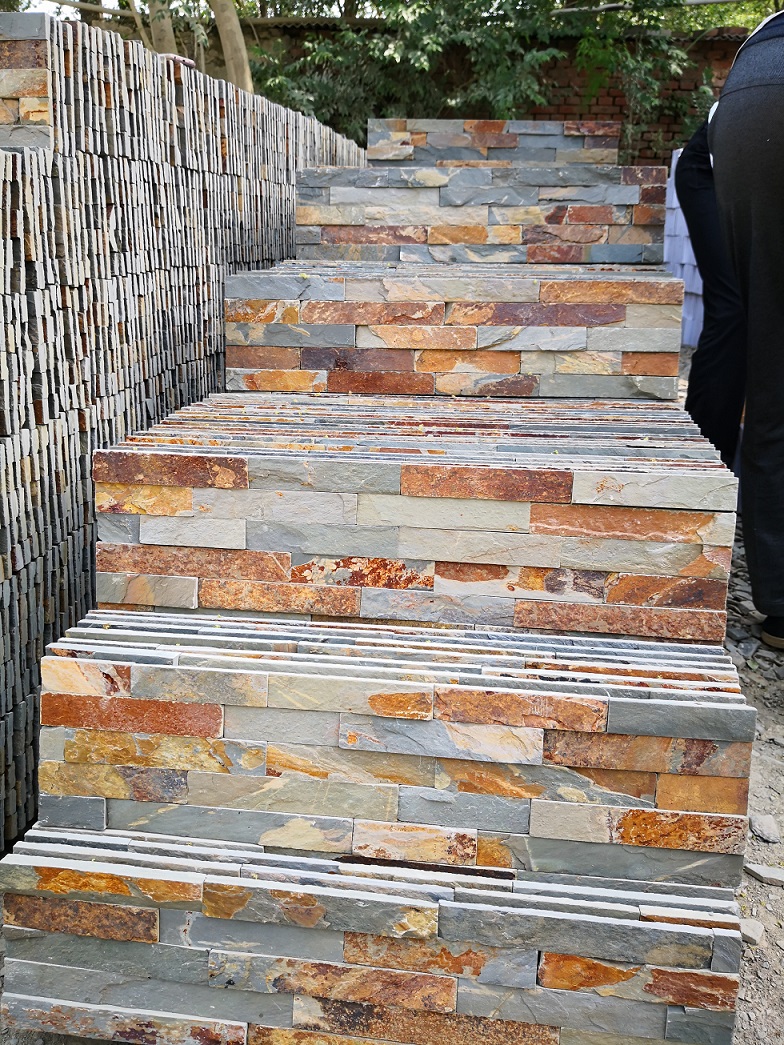
Natural Variation: The Beauty of Non-Repeating Geological Patterns
Natural geological patterns exhibit intricate, non-repeating formations shaped by diverse processes over millions of years.
| Pattern Type | Description | Examples |
|---|---|---|
| Structural Patterns | Formed by geological forces such as compression and fracturing | Folds, faults, basins |
| Surface Patterns | Shaped by weathering and erosion, revealing geological history | Grand Canyon formations, differential erosion profiles |
| Environmental Patterns | Patterns resulting from environmental conditions affecting soil and sediment | Patterned ground, dunes, ice wedge polygons |
Structural Patterns
Structural patterns develop through tectonic stresses that alter rock layers. Folds arise when layers compress and bend, often seen in mountain ranges. Faults occur where rocks fracture and shift, producing distinct forms like fault scarps and rift valleys. Basins form when sedimentary layers subside creating large depressed areas, often rich in deposits.
Surface Patterns
Surface patterns result from erosional forces and weathering over long timescales. For example, the Grand Canyon exposes sequential rock layers shaped by uplift, erosion, and sedimentation. Differential erosion creates unique profiles where harder rocks like volcanic tuff or quartzite schist resist wearing down, forming unusual rock shapes against softer surrounding stones.
Environmental Patterns
Environmental influences like freeze-thaw cycles produce patterned ground in permafrost soils. Thermal contraction creates shrinkage cracks filled with water that freezes and widens gaps forming circles, polygons, or stripes. Similarly, dunes display diverse shapes such as crescents, stars, and longitudinal ridges, dictated by wind and sand dynamics.
Why “Split-Face” Natural Stone Offers Better Shadow Lines
Split-face Pietra naturale has a convex texture that captures light and shadow, making joints and surfaces visually distinct and dynamic.
How Surface Profile and Texture Create Distinct Shadows
Split-face Pietra naturale features a convex or “pillowed” surface profile, formed by hand-pitching the stone faces along scribed lines. This projecting face catches sunlight at varying angles, creating strong shadow lines along the joints that shift with the sun position.
When quarry stone is split, it reveals natural internal texture with multiple layers and uneven planes. This textured relief adds dimensional depth to the stone surface, enhancing shadow contrast as light falls unevenly across the ridges and crevices.
The Role of Color Variation and Consistency from Same-Batch Quarry Stone
Compared to smooth or sawn stone faces, split-face finishes reveal a broader range of natural color variations from the stone’s interior. These subtle shifts in hue occur between adjacent stones and their mortar joints, increasing visual contrast and emphasizing shadow lines.
Pietra sorgente superiore sources from the same quarry batch for each order, ensuring consistent hues and avoiding patchy, mismatched walls. This hue uniformity of approximately 95% within a batch paired with textured surfaces sharpens shadow edges, making them crisper and more prominent than other stone finishes.

Design Comparison: High-End Architecture vs. Mass-Market Faux
Natural stone offers unique geological features and longevity; faux stone mimics look but lacks true depth and durability.
Aesthetic and Material Differences
Natural stone exhibits unrepeatable color variations and grain patterns, all sourced from the same quarry vein to ensure tone harmony. Each piece carries genuine depth, with texture and color permeating through the full thickness.
By contrast, faux stone is made using molds that produce duplicate pieces, leading to visible pattern repetition on close inspection. Its surface depth results mainly from painting and molding techniques, lacking the complex geological structure of real stone.
Performance and Installation Considerations
Natural stone provides exceptional durability; it resists UV fading and withstands extreme weather conditions. With proper maintenance, it lasts a lifetime. Installing natural stone demands masonry skills, mortar application, and structural support, which results in higher labor costs and extended timelines.
Faux stone panels are lighter and easier to install. They generally do not require mortar or heavy substrate preparation, which cuts labor time and cost. While premium faux stone versions resist moisture better than standard ones, they tend to fade or chip over time and typically have a shorter service life compared to Pietra naturale.
FAQ
1. Why does manufactured stone look fake?
The “fake” look stems from repetition and flat mineralogy. Manufactured stone is made from concrete poured into molds. Because a factory only uses a limited number of molds, the same stone shapes repeat across a wall. Furthermore, faux stone relies on surface pigments (paint), while natural stone has a crystalline structure that reflects and scatters light from within the mineral, creating a depth that paint cannot replicate.
2. How many patterns does faux stone have?
Most mass-market faux stone brands use between 20 and 40 different molds per product line. On a large commercial facade or a long interior accent wall, this means the exact same “unique” stone shape will appear dozens of times. In contrast, natural stone offers infinite patterns; since it is quarried from the earth, no two pieces are identical, ensuring zero repetition.
3. Does natural stone look better in photos?
Yes, specifically due to shadow lines and light interaction. In professional real estate or architectural photography, natural stone’s “split-face” convex surface catches directional light, creating deep, dramatic shadows. Manufactured stone tends to have a flatter profile and less mineral “glimmer,” which can make it look like a printed wallpaper or a flat plastic panel under high-resolution lenses.
4. Why is real stone used in luxury hotels?
Luxury hotels specify real stone for prestige and “The Touch Test.” Guests associate the cool temperature, tactile roughness, and unique veining of real quartzite or slate with quality and permanence. Additionally, high-traffic hospitality environments require the durability of natural minerals; if a natural stone is chipped, the color goes all the way through, whereas a chip in faux stone reveals a grey concrete core, immediately ruining the luxury aesthetic.
5. What is the difference in texture between real and faux?
-
Natural Stone: Features a random, sharp, and varied relief. It is formed by millions of years of geological pressure, resulting in jagged planes and mineral inclusions (like mica glimmers) that feel “crisp” to the touch.
-
Faux Stone: Often feels sandy or rounded. Because it is cast in a mold, the sharpest geological details are lost. The texture is often “pillowed” or smoothed out, lacking the aggressive, authentic depth of a natural split-face finish.
6. Can you tell the difference after installation?
An expert can tell immediately, and a layperson will notice it over time. After installation, the most obvious “tells” are the visible seams and the repetitive color blocks. Top Source Stone uses CNC diamond-blade precision to ensure our natural panels have a seamless “male-female” interlock. In faux stone installations, the regular, repeating shapes often create a “grid” pattern that betrays the modular nature of the product.
Final Thoughts
While lower-cost faux stone panels may reduce initial expenses, Top Source Stone’s Direct Quarry Source natural stacked stone guarantees unmatched durability and eliminates mold risks linked to moisture intrusion. Our same-batch quarry consistency and CNC diamond-blade precision ensure a seamless, authentic architectural finish that protects your reputation in demanding projects. Investing in premium natural stone inventory safeguards your business against costly replacements and aesthetic complaints from end clients.
Don’t settle for uncertain quality—verify the difference yourself. We recommend starting with a sample kit to inspect true texture, color, and fitment. Reach out to our team to discuss private label options or to request a detailed catalog tailored for your product line.
