

Architects and contractors must look beyond aesthetics to address the technical demands of natural stone veneers. Installing heavy panels without the correct substrate or safety clearances leads to structural bowing and avoidable fire hazards in commercial or residential projects.
We examine the installation specs required for high-impact areas like fireplace surrounds and kitchen backsplashes. This guide references 2026 building standards to explain why stone panels adding 8 to 13 lbs per square foot require specialized reinforcement, and how IRC R1001.11 mandates a 6-inch minimum clearance from combustible mantels to ensure safe operation.
Fireplace Application: Fire Safety, Heat Resistance, and Clearance Standards
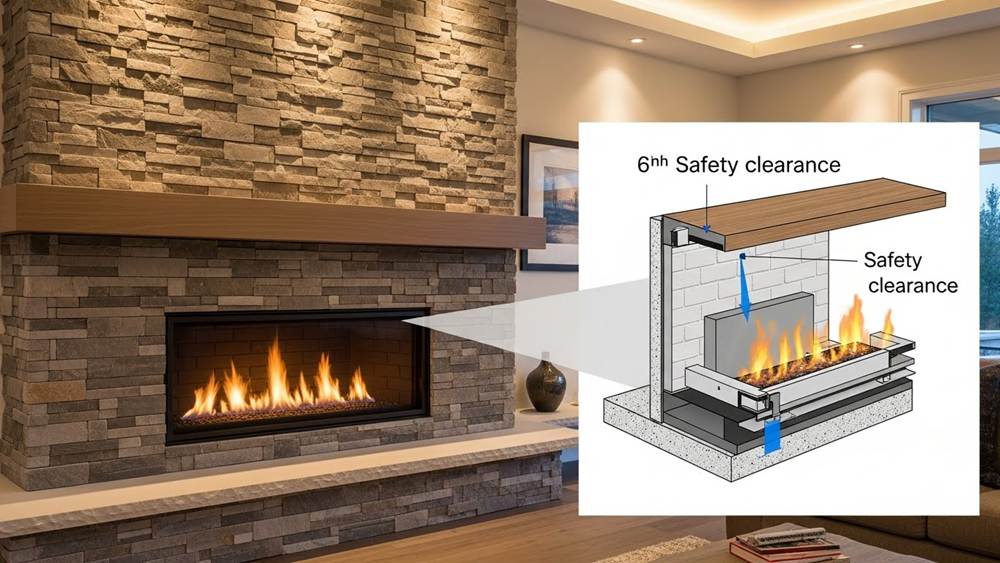
Natural stone panels offer a noncombustible surfacing solution for fireplace surrounds. Safe 2026 installation practices require strict adherence to IRC R1001.11 and UL 127 standards, which specify clearances such as 2 inches from framing and 6 inches from combustible mantels to prevent heat transfer and fire hazards.
| Installation Component | Clearance Requirement | Reference Standard |
|---|---|---|
| Combustible Mantels | 6 inches minimum from opening | IRC R1001.11 |
| Wood Framing (Sides) | 2 inches from fireplace box | IRC R1001.11 |
| Hearth Extension | 16–20 inches front projection | IRC R1001.11 |
| Factory-Built Fireplaces | Varies by manufacturer instructions | UL 127 |
Thermal Performance and Material Safety
Natural stone panels qualify as noncombustible materials, making them suitable for surfacing areas immediately surrounding firebox openings. These stone materials withstand extreme thermal changes without losing structural integrity. Factory-built units tested under UL 127 maintain external surface temperatures within 175°F of the ambient room temperature, even when internal test environments reach 2030°F. This thermal resistance ensures that the stone facade remains stable during prolonged use.
The high density of Pietra naturale provides significant thermal mass, which helps dissipate radiant heat during fireplace operation. When installing these panels, the use of high-strength epoxy adhesives ensures the bond between the stone and the substrate remains permanent. These specialized adhesives are formulated to resist failure during the repeated heating and cooling cycles common in fireplace applications.
Clearance Requirements and Building Codes
The International Residential Code (IRC R1001.11) mandates specific clearances to prevent heat transfer to combustible building components. Installers must maintain a 2-inch clearance from the front and sides of the fireplace box to any wood beams, joists, or studs. The back of the fireplace requires a 4-inch clearance from combustible framing. These gaps prevent conductive heat from reaching structural wood members, which can char over time if placed too close to the heat source.
Building codes also dictate the placement of decorative elements. Combustible mantels and trim must sit at least 6 inches away from the firebox opening. For hearth extensions, fireboxes smaller than 6 square feet require a 16-inch front projection, while larger units mandate a 20-inch projection. When applying stone finish materials directly near the firebox, the underlying masonry must have a minimum thickness of 12 inches to comply with safety standards. Trim projections also follow a specific depth allowance, where every inch of height above the opening permits 1/8 inch of depth.
Kitchen Backsplashes: Moisture Resistance, Stain Protection, and Cleaning Guide
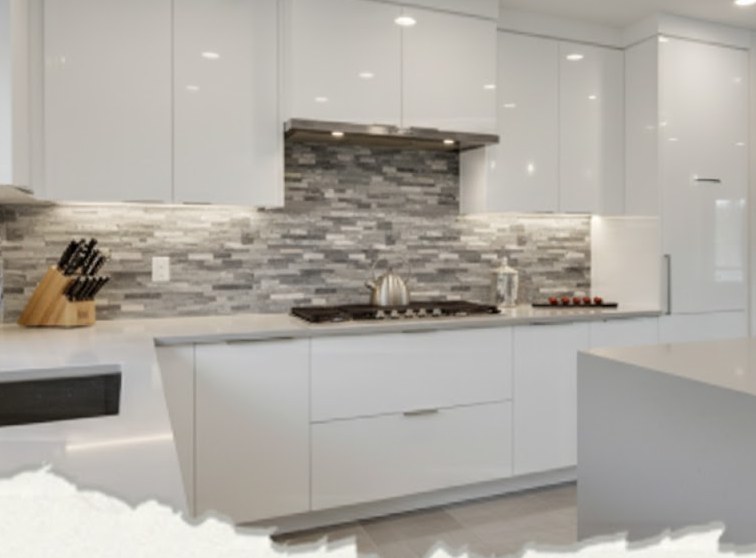
In 2026, high-performance backsplashes rely on non-porous materials like porcelain, quartz, and glass to block moisture. Successful installations use epoxy grout and moisture-resistant backer boards to prevent mold growth, while regular application of pH-neutral cleaners maintains surface integrity without damaging the stone.
| Material Category | Resistenza all'umidità | Maintenance Priority |
|---|---|---|
| Porcelain & Glass | High (Non-porous) | Epoxy grout for joints |
| Stainless Steel | 100% Waterproof | Regular wipe-down |
| Engineered Quartz | Excellent | Edge sealing with silicone |
| Pietra naturale | Moderate (Porous) | Periodic resealing |
Material Selection for Moisture and Steam Barriers
Porcelain and glass tiles provide non-porous surfaces that resist steam and splashes without additional treatment. These materials create a dense barrier against condensation during heavy cooking tasks. Stainless steel and engineered quartz offer 100% water resistance for modern industrial and residential applications, making them ideal for areas near sinks or stovetops.
Installing moisture-resistant drywall or cement-based backer boards provides the necessary structural redundancy behind the stone. These substrates repel incidental leaks that might bypass the primary surface. Applying silicone caulk at changes in plane prevents water from seeping into hidden wall cavities and causing long-term structural issues.
Stain Protection and Maintenance Protocols
Epoxy grout creates an impermeable seal in joints that resists grease, mildew, and cracking better than traditional cement grout. While Pietra naturale options like marble or granite offer aesthetic depth, they require high-quality sealants to prevent liquid penetration into porous textures. Regular sealing ensures that oils and food pigments do not leave permanent marks on the surface.
Daily cleaning with a damp cloth and pH-neutral stone cleaners prevents bacterial buildup in food preparation zones. Professionals recommend avoiding acid-based cleaners or high-pressure sprayers. These harsh methods damage the finish and weaken the adhesive bond of stacked stone panels, potentially leading to delamination or discoloration.
Considerations for Optimal Thickness and Weight for Interior Walls
Optimal interior wall thickness ranges from 100 to 150 mm for standard partitions, while stone panels add 8 to 13 lbs per square foot. Structural designs must align with IBC code minimums of 203 mm for load-bearing masonry to ensure safety and acoustic privacy.
Selecting Wall Thickness for Acoustic Privacy and Function
Standard non-loadbearing partitions typically measure 100 mm to 150 mm to accommodate internal services and acoustic insulation. Metal or timber stud frames usually range from 75 mm to 100 mm, reaching their full width once builders apply boarding to both sides. These dimensions provide a balance between usable floor area and the cavity space needed for electrical and plumbing lines in commercial or residential layouts.
High-performance acoustic walls for meeting rooms, HR offices, or medical clinics require a thicker profile between 125 mm and 200 mm. Designers achieve higher sound transmission class (STC) ratings by using double-layer plasterboard and mineral wool insulation. Double-stud or staggered-stud frames further improve noise control by decoupling sound paths. In contrast, glazed partition systems offer a thinner alternative at 50 mm to 100 mm for modern office environments that prioritize natural light and transparency.
Compliance with Weight Load and Structural Code Minimums
Stacked stone panels add a dead load of 8 lbs to 13 lbs per square foot to the wall assembly. This significant mass requires a rigid substrate to prevent wall deflection or structural cracking over time. Engineers specify 2×4 or 2×6 timber or metal studs to support natural stone panels, which generally range from 0.75 to 1.75 inches in depth. Proper anchoring to these studs ensures the wall maintains its integrity under the constant weight of the stone veneer.
The 2026 building standards follow IBC §2109.2.4.4, which mandates an 8-inch (203 mm) minimum thickness for interior load-bearing masonry walls. While specific local codes, such as those in New York City, may permit bearing walls as thin as 6 inches in one-story buildings, the 8-inch standard remains the primary safety benchmark for larger projects. Designers must verify these structural minimums early in the planning phase to ensure the wall can safely support the intended stone finish and any additional vertical loads.
Elevate Your Projects with Premium Factory-Direct Stacked Stone
Wall Load Analysis: Safely Installing Stacked Stone on Drywall
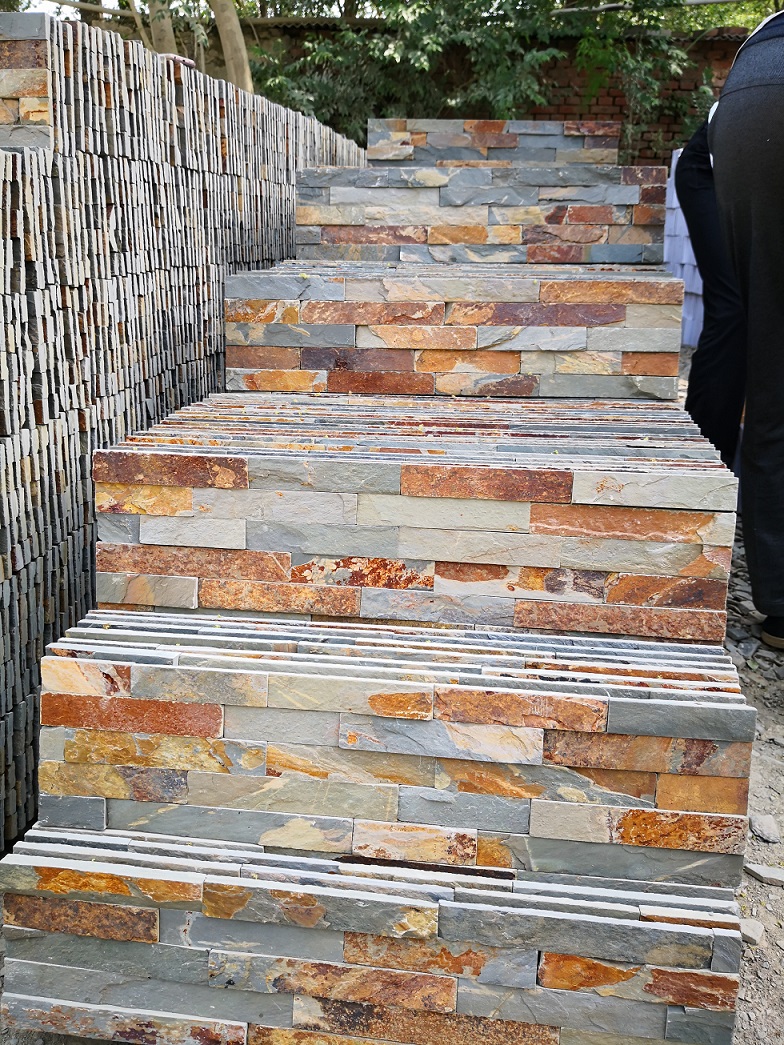
Stacked stone veneers typically weigh between 7 and 15 lbs/ft², which exceeds the safe dead-load capacity of standard drywall. To prevent wall failure or detachment, we install a 1/2-inch cement backer board mechanically fastened to the studs. This method transfers the weight directly to the building’s structural frame rather than relying on the gypsum face.
Weight Capacities and Dead-Load Limitations for Interior Walls
Natural stone panels exert a vertical dead load ranging from 7 to 12.5 lb/ft². Standard gypsum board lacks the internal integrity to support the continuous shear stress of materials in the 12 to 15 lb/ft² range. Engineering these surfaces requires a substrate capable of carrying sustained weight without compromising the wall’s structural profile.
Installing stone directly onto drywall risks cracking or structural bowing as the heavy veneer pulls on the gypsum core over time. Manufacturers and industry technical guides consistently state that drywall is an insufficient substrate for stone. Without proper reinforcement, the sustained weight often leads to panel detachment or permanent deformation of the interior partition.
Substrate Reinforcement and Mortar Bond Specifications
We fasten 1/2-inch fiber-cement backer board directly to the wall studs to create a rigid, load-bearing foundation. This system bypasses the fragile drywall face and secures the stone to the building’s framing members. For stones exceeding one square foot, we apply high-performance mortars meeting ANSI A118.4 or A118.15 standards to ensure high shear capacity and long-term stability.
Installers utilize full back-buttering techniques to achieve 100% mortar coverage. This practice encapsulates the back of each stone and facilitates even weight distribution across the backer board. By selecting mortars that meet ASTM C91 masonry cement requirements, the installation achieves the bond strength necessary to support heavy-duty stacked stone veneers safely.
Interior Design Trends: Popular Colors and Polished/Natural Finish Choices
In 2026, earthy tones like Mocha Mousse and olive green account for 65% of interior color selections. Greige remains a staple in 40% of living spaces, while designers increasingly favor natural matte finishes over high-gloss surfaces to ensure durability and a serenity-focused aesthetic.
Earthy Tones and Muted Neutrals in 2026 Projects
Current interior architecture projects show a significant shift toward grounded palettes, where earthy tones like beige, olive green, and terracotta account for 65% of all paint selections. The adoption of Pantone 17-1230 Mocha Mousse provides a warming brown foundation that works effectively across both residential and commercial spaces. This move reflects a broader preference for organic colors that foster a sense of stability and connection to the natural world.
Greige mixtures dominate 40% of modern living room designs because they bridge the gap between cool grays and warm beiges. These versatile neutrals allow for flexible styling while maintaining a sophisticated atmosphere. Designers also incorporate serenity-focused shades like Dried Hydrangea to create calming indoor environments, prioritizing mental well-being through desaturated and quiet color choices.
Matte and Natural Finishes for High-Traffic Surfaces
Natural matte finishes offer superior performance on high-traffic surfaces by hiding scratches, smudges, and fingerprints better than high-gloss alternatives. This technical preference reduces long-term maintenance requirements and ensures that surfaces retain their aesthetic integrity over time. By eliminating reflective glare, matte textures create a more consistent visual experience in areas with varying light sources.
Material choices like Calacatta Turquoise marble introduce visual complexity through bluish-green hues and warm yellow swirls without the need for high-sheen polishing. Many designers now apply desaturated greens and dusty blues to muri di pietra impilati to evoke depth and texture. These subtle, natural finishes support longevity in mid-traffic zones by maintaining their appearance without the frequent need for professional repolishing or intensive upkeep.

Interior Installation: Techniques to Prevent Wall Damage
Preventing wall damage involves following 2026 building standards like ASTM C840 for substrate installation and maintaining substrate moisture below 4%. Professionals use setting-type compounds for joint integrity and install sacrificial protection systems, such as corner guards and crash rails, to absorb mechanical impacts in high-traffic zones.
Standards-Based Assembly and Joint Integrity
Contractors follow ASTM C1396/C1396M for material quality and ASTM C840 for precise installation of interior gypsum boards. These standards dictate minimum board thicknesses and specific fastening schedules that prevent the cracking or fastener pops that often lead to structural surface failure. Adherence to the 2018 International Residential Code Chapter 7 ensures that all wall coverings possess the required backing and adhesive support to withstand long-term use in residential and light commercial environments.
Installers fill gaps smaller than 1/8 inch (3.2 mm) with setting-type joint compound rather than lightweight ready-mix. This higher-density material maintains structural and fire-rated integrity at the joints, where shifting often causes visible damage. In 1-hour and 2-hour partitions, workers fill all missed screw holes with high-density compound to prevent localized thermal transfer through the wall cavity, ensuring the assembly remains code-compliant and robust against mechanical stress.
Adhesion Requirements and Impact Protection Hardware
Technicians verify substrate moisture levels remain below 4% before applying construction adhesives or wall panels. This specific threshold ensures a permanent bond, as higher moisture content frequently causes delamination or bubbling in protective layers. For specialized assemblies like 2-hour rated walls, maintenance protocols require the complete replacement of shaftliner panels when damage exceeds 100 square inches. This prescriptive repair involves over-cladding the zone with Type C or Type X Fire-Shield board and extending the patch 12 inches beyond the damaged area to restore the original strength of the wall.
Facility managers install rigid PVC or ABS crash rails and corner guards in high-traffic corridors and furniture zones to absorb abrasion and direct impacts. These sacrificial components protect the underlying gypsum or masonry from carts and equipment. Engineers specify Class A rated materials, tested to ASTM E119 or EN 13501-1, to prevent moisture-related softening and deterioration. By combining moisture-controlled substrates with impact-resistant hardware, the installation creates a wall system that resists everyday abuse and maintains long-term structural health.
Final Thoughts
Successful interior stone projects rely on the balance between aesthetic goals and technical compliance. Matching stone selection with specific safety standards, such as IRC clearances for fireplaces or moisture-rated substrates for kitchens, prevents common installation failures. Choosing materials that handle thermal shifts and humidity ensures the finished wall remains both stable and visually striking over time.
Managing the substantial weight of natural stone requires moving beyond standard drywall to reinforced framing and cement backer boards. This structural approach supports the extra load and prevents wall deflection or stone detachment in high-traffic areas. By combining these engineering best practices with grounded, matte-finish design trends, builders create durable interior features that meet modern safety codes and style preferences.
Domande frequenti
What fire safety standards apply to stone fireplace surrounds?
Current 2026 safety standards and IRC Section R1001.11 require a 6-inch minimum clearance from the fireplace opening for combustible materials. Since stacked stone is non-combustible, installers must mount it on a non-combustible substrate like cement board while following specific local codes and manufacturer clearances.
How should grease and stains be removed from a kitchen backsplash?
Use a soft cloth and neutral pH cleaners for daily maintenance. Avoid any products containing acid or bleach, as these chemicals etch the stone surface over time. Wipe the area with warm water and a mild detergent, then rinse and dry the surface to prevent spotting.
Can heavy stacked stone be installed directly onto drywall?
Direct installation on drywall often leads to structural failure. Use a cement backer board mechanically fastened to the studs instead. Keep the stone weight under 15 lb/ft² to meet standard building codes for adhered masonry without needing extra engineered supports.
Does interior stacked stone require a sealant?
Most interior accent walls in dry rooms do not require sealing. For moisture-prone areas like bathrooms, wait at least 30 days for the installation to cure before applying a sealer. This delay prevents trapping moisture within the stone or substrate.
Which adhesive handles the high temperatures of a fireplace best?
High-temperature silicone sealants or sodium silicate-based adhesives provide the best results, as they withstand heat up to 2,000°F. For hearth tiling, select adhesives that maintain bond strength at continuous service temperatures between 70-80°C.
How do stone color and texture affect room lighting?
Light-colored stones have a Light Reflectance Value (LRV) of 40–70% and help brighten spaces. Darker stones with rough textures have lower LRVs of 5–20% and absorb more light. Directional lighting on deep textures creates dramatic shadows but reduces the overall reflected light in the room.
