
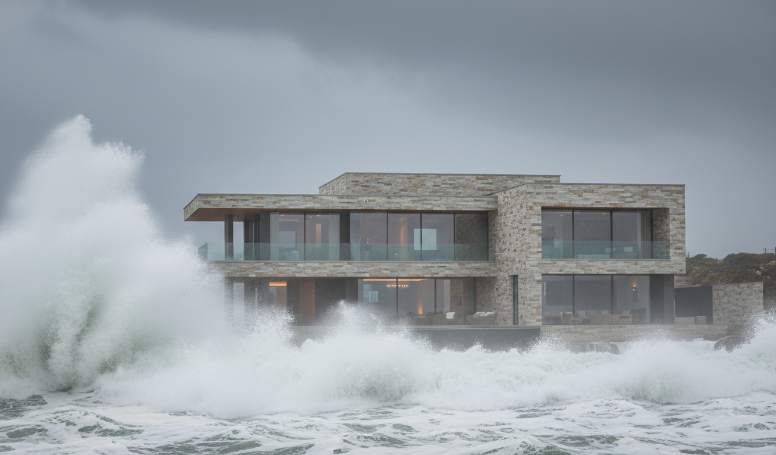
Salt Spray Resistance determines whether a coastal facade retains its structural integrity or suffers from rapid material decay and unforeseen replacement costs. Architects and facility managers risk significant capital losses when salt crystals penetrate natural stone, causing internal pressure that leads to surface spalling and structural failure. Ignoring the chemistry of sea air exposure results in compromised building envelopes and safety liabilities that can halt operations and drain maintenance budgets.
This technical overview analyzes the corrosive impact of sodium chloride and the specific ASTM B117 testing protocols used to measure masonry durability. We compare the performance of quartzite against sandstone and explain how porosity levels dictate a material’s susceptibility to salt prying. Use these data-driven insights to select coastal-safe stones and implement maintenance schedules that protect stone veneers from the relentless demands of saltwater environments.
The Corrosive Effect of Sodium Chloride on Natural Stone
Salt-induced degradation in masonry is a mechanical and chemical process where crystallization pressure within microscopic pores often exceeds the material’s internal tensile strength, leading to irreversible structural failure.
Mechanisms of Salt Crystallization Pressure
Sodium chloride enters the stone matrix through moisture absorption, settling deep within the pores. As environmental conditions shift and water evaporates during drying cycles, these salts crystallize and expand. This expansion exerts an internal physical pressure that frequently surpasses the stone’s ability to hold itself together.
- Repeated crystallization cycles create cumulative mechanical stress, resulting in micro-cracking that weakens the stone from the inside out.
- Subsurface damage often remains hidden from the naked eye until the matrix reaches a critical failure point, making early detection difficult.
- 2026 environmental data suggests that increased humidity fluctuations in coastal regions have accelerated these mechanical expansion rates compared to previous decades.
Chemical Erosion and Ion Migration
Salt damage extends beyond simple physical pressure. Sodium chloride initiates chemical reactions that fundamentally alter the mineral composition of the facade. Salt ions react with specific mineral components, often dissolving the natural binders that provide structural cohesion to materials like sandstone or low-density limestone.
Ion migration facilitates the leaching of essential minerals, which reduces the overall density and load-bearing capacity of the rivestimento in pietra. In regions where acidic rain interacts with high-salinity air, these chemical degradation pathways work in tandem to strip the stone of its structural integrity far faster than standard weathering would suggest.
Surface Manifestations: Efflorescence and Spalling
Visual indicators of salt damage typically follow a predictable progression from cosmetic issues to physical loss of material. Efflorescence—the appearance of white, powdery mineral deposits—occurs when salt-laden moisture evaporates at the surface. While often viewed as a cleaning issue, it serves as a primary warning sign of deeper salt saturation.
- Spalling, or “flaking,” represents a more advanced stage where the outer face of the stone detaches due to intense pressure built up just beneath the surface.
- Bleaching and permanent discoloration indicate a loss of natural mineral pigments, a common symptom of prolonged salt exposure in coastal project sites.
- Edge erosion on split-face or natural cleft stones can compromise the interlocking “male-female” connection system used in modern Z-shape and S-shape panels.
Porosity and Environmental Vulnerability
The rate of decay is directly tied to the material’s absorption capacity. High-porosity stones act like sponges for saline water, making them vulnerable to rapid deterioration. This is why metamorphic stones with superior density, such as quartzite, have become the industry standard for coastal B2B procurement.
Materials with low water absorption rates prevent salt ions from penetrating deep enough to cause significant “salt prying.” Utilizing stones like those in the Big 10 Inventory—specifically dense quartzites like Glacier White or Alaska Gray—minimizes maintenance requirements because these materials naturally resist the capillary action that pulls salt into the stone matrix.
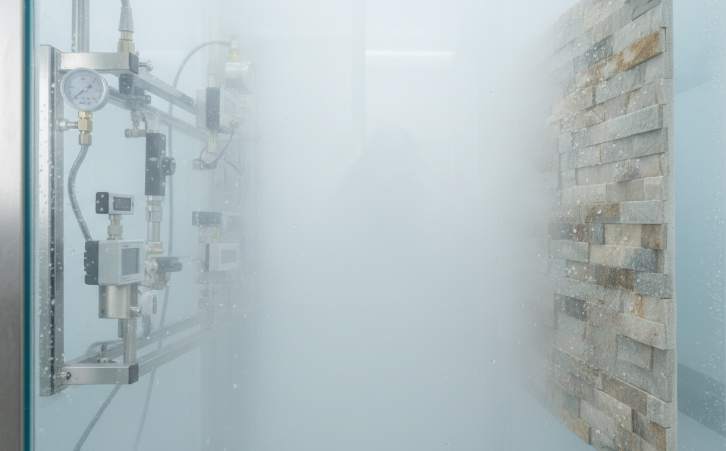
What is the Salt Spray Test (ASTM B117) for Masonry?
ASTM B117 testing provides the empirical data required to certify natural stone veneers for high-salinity coastal environments by simulating years of mineral degradation within controlled, high-intensity saline chambers.
The Accelerated Saline Simulation Environment
Standardized testing via ASTM B117 subjects masonry materials to a continuous 5% sodium chloride fog at a regulated temperature of 35°C. This environment compresses years of coastal atmospheric exposure into specific hourly benchmarks. By creating a standardized corrosive atmosphere, we evaluate how natural stone surfaces and internal structures react to prolonged salt mist without waiting decades for field results.
Testing durations for 2026 coastal construction projects typically range from 24 to over 1,000 hours. These durations provide a comparative baseline to determine if stone veneers maintain their structural integrity when installed on oceanfront properties. This data allows engineers to move beyond anecdotal evidence and select materials based on documented durability.
Durability of High-Strength Epoxy Adhesives
For stacked stone panels, the test measures more than just the stone; it evaluates the stability of specialized epoxy resins used to bond individual stone pieces to the panel substrate. We test the chemical resistance of these adhesives to ensure that salt saturation does not lead to stone fallout or panel delamination, which are common failure points in inferior coastal installations.
| Material Substrate | Porosity Level | 1,000-Hour ASTM B117 Result |
|---|---|---|
| Quartzite (Pietra sorgente superiore) | Very Low | No structural spalling; Zero adhesive failure. |
| High-Density Slate | Basso | Minor surface etching; Stable bond strength. |
| Porous Sandstone | Alto | Visible “salt prying”; High risk of flaking. |
The interlocking system, particularly in Z-Shape and S-Shape models, relies on the permanent bond between the Pietra naturale and the backing material. Testing confirms that our CNC diamond-blade precision edges and adhesive chemistry withstand the chemical stress of high-salinity environments without compromising the “male-female” connection system.
Material Surface Integrity and Mineral Stability
Technicians monitor the physical reaction of different stone types, specifically looking for salt-induced crystallization and pitting. While natural stone panels offer inherent UV stability that outperforms artificial alternatives, the salt spray test targets mineral degradation.
- We inspect for efflorescence, which occurs when salt penetrates the stone and crystallizes near the surface upon drying.
- The process identifies “salt prying,” where growing salt crystals in the stone’s pores generate expansion pressure that exceeds the stone’s tensile strength.
- Tests determine the resistance of metamorphic stones like quartzite compared to sedimentary stones like sandstone in high-moisture zones.
Application to Project Specification Standards
Architects and contractors use ASTM B117 data to select stone veneers that satisfy specific building codes for coastal zones. Results influence the selection of materials for commercial facades and luxury residential exteriors where long-term aesthetic and structural failure is not an option.
The data also helps determine the necessary frequency for applying penetrating sealants. For example, 2026 industry standards prioritize materials that pass extended salt spray durations, allowing for manageable maintenance cycles of 2–3 years in coastal regions rather than reactive repairs every season. By choosing “Coastal-Safe” certified materials, developers protect their investment against the relentless erosion caused by salt air.
Premium Natural Stacked Stone at Factory Prices

Selecting Coastal-Safe Stones: Why Quartzite Beats Sandstone
Quartzite’s metamorphic transformation creates a physical barrier against salt-laden moisture that porous sedimentary stones cannot match, making it the definitive choice for high-salinity architectural projects.
Metamorphic Density vs. Sedimentary Porosity
Quartzite undergoes intense heat and pressure during its geological formation, fusing quartz grains into a dense, nearly non-porous matrix. This metamorphic process eliminates the internal voids typically found in sedimentary rocks. In contrast, sandstone remains a sedimentary rock with visible pore spaces that facilitate capillary action. These microscopic channels pull salt-laden water deep into the stone, where it begins the degradation process.
| Performance Metric | Metamorphic Quartzite | Standard Sandstone |
|---|---|---|
| Geological Density | High (Recrystallized Matrix) | Moderate (Granular/Porous) |
| Moisture Absorption | Very Low (<1%) | High (Capillary Active) |
| Salt Prying Resistance | Superior Tensile Strength | Low (Subject to Spalling) |
Low porosity in quartzite limits the depth to which saltwater can penetrate. By restricting this infiltration, the stone prevents the introduction of corrosive agents into the substrate. This makes quartzite ledgestone particularly effective for sea-facing facades where constant spray and fog would otherwise compromise the structural bond of the veneer.
Resistance to Salt Crystallization and Spalling
Salt spray enters stone pores and expands as it dries, creating internal pressure known as “salt prying.” This cycle of hydration and dehydration causes significant stress on the mineral structure. Because quartzite possesses high tensile strength, it resists this internal expansion, maintaining its structural integrity over decades of exposure.
- Quartzite eliminates the “honeycombing” effect common in softer coastal stones.
- The metamorphic bond prevents surface flaking (spalling) caused by crystal growth.
- Low-porosity minerals prevent salt from migrating behind the rivestimento in pietra and attacking the mortar bed.
Maintenance Requirements for Coastal Projects in 2026
Market data for 2026 shows a clear shift toward quartzite as architects prioritize materials that require minimal chemical sealing. Quartzite retains its color and texture naturally, even without the frequent re-sealing schedules required for sandstone. This reduction in chemical maintenance lowers long-term labor costs for commercial and high-end residential developments.
Beyond salt resistance, quartzite offers inherent UV stability. Coastal installations face intense sunlight that can cause lower-grade materials to fade or degrade. Our quartzite inventory, including Alaska Gray and Glacier White, maintains hue uniformity and structural stability in high-salinity zones, providing a project-ready solution for the most demanding marine environments.
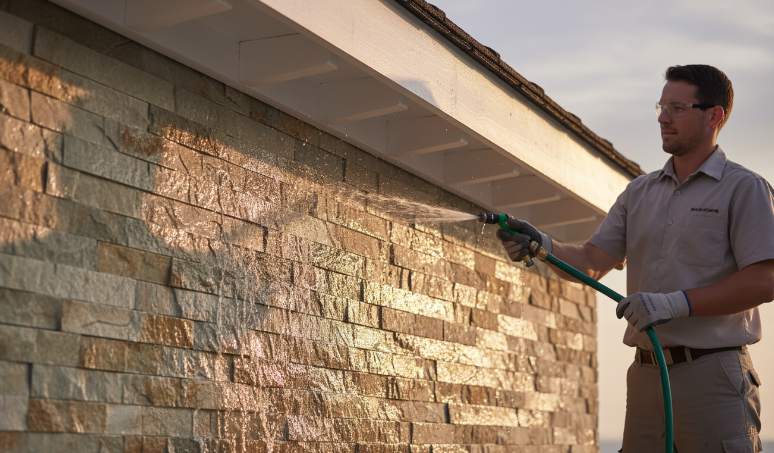
Preventing “Salt Prying”: The Importance of Low Porosity
Salt prying represents an internal structural threat where sub-fluorescence creates pressures that exceed the stone’s tensile strength, making low porosity the primary metric for coastal durability in 2026.
Mechanisms of Salt Crystallization and Stone Decay
Salt prying, technically known as sub-fluorescence, occurs when saline solutions penetrate the stone’s surface and evaporate within the internal pore structure. As the water vanishes, the remaining salt crystals expand. This expansion generates significant physical force against the walls of the pores. If the stone lacks sufficient density, these internal pressures eventually overcome the material’s cohesive strength, leading to “prying” or internal fracturing.
- Salt crystals growing within the pore structure generate enough force to fracture the mineral matrix from the inside out.
- Repeated wetting and drying cycles in 2026 coastal climates accelerate surface spalling and structural weakening.
- High-density stones resist the initial ingress of salt-laden moisture, effectively neutralizing the prying mechanism before it begins.
Density Standards for Coastal Stone Veneer
Selecting materials with low water absorption rates provides a natural defense against corrosive environments. We prioritize metamorphic stones like quartzite and high-grade slate because their formation involves intense heat and pressure, resulting in an interlocking grain structure. Porous sedimentary stones like sandstone often fail in coastal zones because their open capillary network allows salt-heavy air to migrate deep into the substrate, where it remains trapped.
- Quarzite panels demonstrate superior resistance to salt spray compared to porous sedimentary stones like sandstone.
- Low porosity ensures that corrosive agents remain on the surface where rain or basic maintenance can wash them away.
- Architectural specifications for 2026 prioritize stones that maintain a dense, interlocking grain structure to prevent deep-seated salt accumulation.
Manufacturing Protocols to Minimize Material Porosity
Advanced production techniques eliminate the internal voids that house salt deposits. We utilize CNC diamond-blade precision cutting to ensure that every interlocking Z-shape or S-shape panel fits with millimetric accuracy. By minimizing the gaps between stone pieces, we reduce the surface area available for moisture penetration. Furthermore, our use of high-strength, stone-specific epoxy resins creates a non-porous bond that prevents salt from compromising the panel substrate, even in high-salinity Gulf regions.
- Precision infrared cutting ensures tight joints between stone pieces, reducing the surface area available for moisture penetration.
- The use of high-strength, stone-specific epoxy resins creates a non-porous bond that prevents salt from compromising the panel substrate.
- Three-stage quality inspections verify that every panel meets the density requirements necessary for long-term coastal durability.
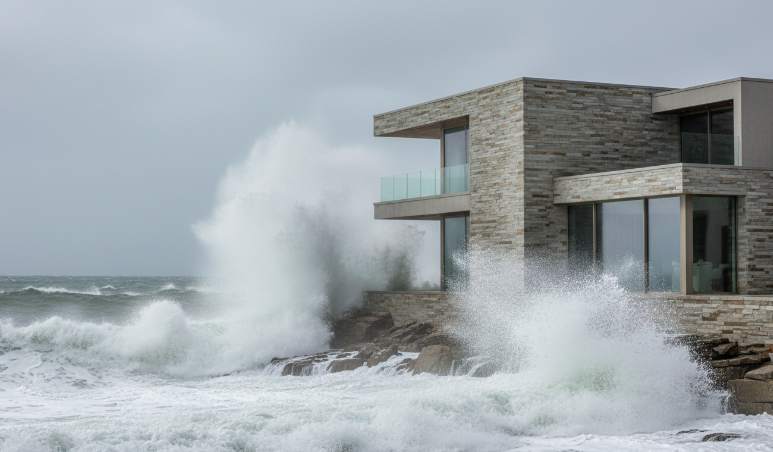
Maintenance Protocols for Stone Facades Near the Ocean
Effective coastal stone maintenance shifts from reactive repair to a systematic, inspection-driven protocol that prioritizes salt crystallization management and moisture vapor permeability.
Coastal environments impose unique mechanical stresses on natural stone through constant salt spray and high humidity. Systematic maintenance ensures that sodium chloride deposits do not transition from surface-level aesthetics to structural “salt prying,” where expanding crystals fracture the internal mineral matrix. Managers of high-end properties must move beyond standard cleaning and adopt marine-specific schedules that account for the aggressive chemistry of seaside air.
Scheduled Fresh Water Rinsing to Eliminate Salt Deposits
Rinsing serves as the first line of defense against the accumulation of corrosive minerals. You must establish a monthly rinsing schedule using low-pressure fresh water to dissolve surface salt crystals before they can migrate into the stone’s pores. Focus specifically on sheltered sections of the facade—such as under eaves or soffits—where natural rainfall cannot reach to wash away airborne salt.
- Use only low-pressure water sources; high-pressure power washers often force salt deeper into the masonry or damage the high-strength epoxy bonds between the stone panels.
- Time the rinsing during cooler parts of the day to prevent rapid evaporation, which can leave behind concentrated mineral streaks.
- Ensure the runoff moves away from the foundation to prevent salt-laden water from being re-absorbed through capillary action at the base of the wall.
Application of Advanced Penetrating Sealants
Modern maintenance in 2026 favors breathable, penetrating sealers over traditional film-forming coatings. Film-forming sealers often trap moisture behind the stone, leading to delamination or “blistering” when the sun draws moisture back toward the surface. High-performance silane or siloxane sealants penetrate the stone surface to create a deep hydrophobic barrier while allowing the stone to “breathe” or vent internal water vapor.
| Maintenance Parameter | Inland Standard | Marine/Coastal Standard |
|---|---|---|
| Rinsing Frequency | Seasonal / Rain-dependent | Monthly (Fresh Water) |
| Re-sealing Interval | 5 – 7 Years | 2 – 3 Years |
| Sealer Certification | General Water Repellent | ASTM B117 (Salt Spray) Rated |
Accelerated Re-sealing Cycles for Marine Environments
Properties located within five miles of the ocean face constant salinity that degrades chemical barriers faster than inland sites. You must plan for professional re-sealing every 2 to 3 years. This shortened cycle accounts for the relentless assault of salt air and UV exposure that compromises the hydrophobic properties of the sealant over time.
Conduct annual performance tests by applying water to the stone surface at various heights. If the water fails to bead and instead darkens the stone, schedule an immediate re-treatment. Documenting these activities is essential for maintaining warranty compliance and tracking the long-term durability of the ledger panels in high-risk zones.
Monitoring Drainage and Joint Integrity
A stone facade’s longevity depends on its ability to shed water and protect the underlying substrate. Quarterly inspections of Z-shape interlocking joints ensure no gaps have formed that could allow salt air to reach the backup wall or the mechanical fasteners. These interlocking systems utilize a “male-female” connection that must remain tight to camouflage vertical joints and block corrosive agents.
- Clear drainage weep holes and flashing regularly to prevent salt-laden water from pooling behind the stone panels.
- Examine matching L-shaped corner pieces for signs of stress or movement caused by aggressive coastal thermal cycles.
- Check the integrity of the substrate’s waterproofing membrane during any joint repairs to ensure the salt-barrier remains intact.
Conclusione
Selecting stone for coastal environments requires prioritizing low porosity and verified salt spray resistance to prevent structural erosion. High-density quartzite and slate provide the necessary durability to withstand the corrosive effects of sea air and salt prying over many decades. These technical standards protect architectural integrity while reducing long-term maintenance costs for shoreline properties.
You can review our current inventory of ASTM-tested quartzite to find materials suited for high-salinity coastal regions. Contact our team to request technical datasheets or physical samples for your project specifications.
Domande frequenti
Is stacked stone good for beach houses?
Stacked stone is a popular aesthetic choice for beach houses, but its performance depends heavily on the stone’s porosity. Because the “stacked” texture creates numerous ledges where salt spray and moisture can settle, it is essential to select low-porosity materials like quartzite or granite. In coastal environments, these installations should always be treated with a high-quality silane-siloxane sealer to prevent salt accumulation and sub-florescence within the joints.
How does salt air affect natural stone veneer?
Salt air affects impiallaccia di pietra naturale through a process called salt crystallization. When saline moisture penetrates the stone’s pores and evaporates, salt crystals expand, exerting internal pressure that causes the stone to flake, bleach, or develop efflorescence. Over time, this ion migration can lead to deeper structural compromise and surface erosion, making the veneer look weathered or pitted if the material is not naturally resistant to sodium chloride.
What is the best stone for coastal environments?
The best stones for coastal environments are high-density, low-porosity igneous and metamorphic rocks. Granite, quartzite, and dense basalt are the industry standards because they have minimal pore space for salt to enter and are chemically resistant to the corrosive effects of sodium chloride. These materials withstand moisture fluctuations and salt spray much more effectively than softer, porous sedimentary stones like limestone or certain sandstones.
Can I use slate near a saltwater pool?
Yes, you can use slate near a saltwater pool, but selection is critical. You must use a high-quality, dense slate with low absorption rates to prevent “delamination,” where the salt crystals grow between the stone’s natural layers and cause them to split. For the best longevity, the slate should be sealed with a breathable, impregnating sealer that blocks salt penetration while allowing the stone to release internal moisture vapor.
Does salt spray cause stone to erode?
Yes, salt spray causes stone erosion through a mechanical and chemical process known as haloclasty. As salt water accumulates on the stone and evaporates, the growing salt crystals generate enough force to break apart the mineral grains of the stone. This results in pitting, crumbling, and loss of surface detail. This degradation is often accelerated by environmental factors like wind and moisture cycles, which repeatedly drive salt deeper into the material.
