
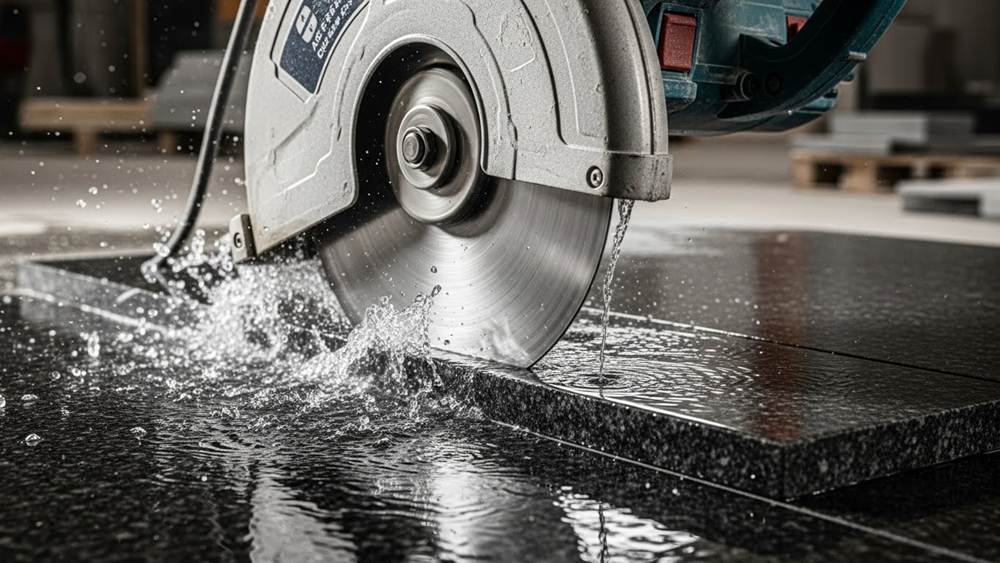
Achieving a clean finish on dense stone requires more than just a steady hand; it demands the right equipment configuration to prevent chipping and ensure long-term joint stability. Commercial masonry teams must navigate the technical differences between wet and dry cutting while keeping material waste rates within the typical 15% to 22% range.
This analysis breaks down the performance metrics of continuous versus segmented diamond blades and the bond requirements for materials like granite, which ranks between 6 and 7 on the Mohs scale. We examine the technical specifications for executing 45-degree mitered corners and implementing 99.5% vacuum dust capture systems to maintain site safety and structural integrity.
Stacked Stone Cutting Tools Comparison: Wet vs. Dry
Wet cutting serves as the professional standard for chip-free results on dense stone, utilizing continuous rim blades and water cooling. Dry cutting provides portability for onsite adjustments but requires specialized 99.5% dust capture systems and segmented blades to manage heat and respirable debris safely.
| Performance Metric | Wet Cutting | Dry Cutting |
|---|---|---|
| Blade Geometry | Continuous Rim Diamond | Segmented Diamond |
| Dust Control | Water Suppression | 99.5% Vacuum Capture |
| Primary Advantage | Chip-free Finish (95% rate) | High Portability |
| Cutting Depth | 1.5 – 2.5 inches (Standard) | Up to 6+ inches (Walk-behind) |
Wet Saw Mechanics and Precision Finishing
Electric tile wet saws utilize 10–15 amp motors to generate the torque necessary for processing dense granite and quartz stacked stone. Continuous rim diamond blades serve as the standard for these applications, facilitating chip-free edges for approximately 95% of cuts. These blades maintain constant contact with the stone surface, which prevents the jagged transitions often seen with segmented alternatives.
Closed-loop water recirculation systems play a critical role in material integrity by reducing thermal stress. By delivering a constant stream of water to the cutting edge, the saw prevents the stone from cracking during long production runs. This method also eliminates respirable dust at the source, which ensures jobsite safety and simplifies compliance with indoor installation protocols.
Dry Cutting Equipment and Dust Extraction Requirements
OSHA-compliant dry masonry saws utilize specialized HEPA filtration to achieve 99.5% dust capture. This level of extraction is mandatory for maintaining jobsite air quality when water suppression is not an option. Segmented diamond blades facilitate faster material removal in these dry environments, though the air gaps between segments increase the risk of surface chipping on delicate stone veneers.
Handheld angle grinders offer a specific advantage for modifications around plumbing fixtures and electrical outlets, providing a cutting depth between 1.5 and 2 inches. While these tools offer superior mobility, they generate significant heat and noise compared to stationary wet saws. For exterior projects involving thicker stone slabs, walk-behind dry saws accommodate larger materials with cutting capacities that often exceed 6 inches.
Optimal Diamond Blade Selection for Stone Type
Select diamond blades based on the inverse relationship between material hardness and bond strength. Harder stones like granite (Mohs 6-7) require soft-bonded segments to maintain diamond exposure, while soft, abrasive stones like sandstone need hard-bonded segments to resist rapid erosion and extend tool life.
Matching Bond Hardness to Stone Mineralogy
Successful diamond cutting relies on the controlled erosion of the metal matrix surrounding the diamond crystals. Dense stones such as basalt and flint, which rank between 8 and 9 on the Mohs scale, require a soft metal bond. This configuration allows the matrix to wear away quickly enough to expose sharp, new diamonds during the grinding process, preventing the blade from becoming dull or “glazed.”
Abrasive stones like sandstone or materials containing manufactured sand demand the opposite approach. These materials generate significant friction and loose, gritty sediment that can prematurely strip away a soft matrix. Using hard metal bonds in these environments protects the diamond crystals and ensures the segment maintains its integrity throughout the project.
Choosing the wrong bond compromise both speed and tool longevity. A bond that is too hard for the stone results in the diamonds rounding off without being replaced, causing the blade to stop cutting. Using a soft bond on highly abrasive materials leads to excessive segment wear, forcing frequent blade changes and increasing operational costs.

Segment Geometry and Aggregate Impact
The rim design of the diamond blade dictates the finish quality and the efficiency of debris removal. Continuous rim blades provide the precision needed for wet-cutting fragile marble and porcelain. This design eliminates the impact shocks found in segmented blades, producing the smooth, chip-free edges required for high-end architectural joints.
Segmented rims with U-shaped gullets offer superior performance for heavy-duty applications. These gaps facilitate cooling and debris clearance when processing thick slabs or stones with high compressive strength exceeding 4,000 PSI. The gullets allow water and slurry to escape the cut, preventing the steel core from overheating and losing its tension during high-RPM operation.
Aggregate size within the stone also influences linear cutting speeds. Large aggregates over 3/8 inch in diameter increase resistance and slow the cutting progress as the diamonds work harder to fracture the larger stones. Smaller components, such as pea gravel, enable the blade to maintain higher linear feet per hour by offering less physical resistance to the diamond segments.
Achieving Flawless 45-Degree Mitered Corners
Professional stone miter joints require two 45-degree complementary cuts to create a clean 90-degree outside corner. By using a carpenter’s square for precise marking and executing 22.5-degree back-cuts, installers preserve the natural factory edge and ensure a flush, high-durability fit without visible seams.
| Technical Specification | Measurement/Requirement | Installation Outcome |
|---|---|---|
| Primary Cut Angle | 45-Degree Complementary | Forms 90-degree outside corner |
| Standard Marking Offset | 3-7/8 Inches | Midpoint for 8-inch stone pieces |
| Soldier Piece Count | 2 Mitered + 1 Half-Stone | Maintains border continuity |
| Advanced Back-Cut | 22.5 Degrees | Preserves factory edge integrity |
Geometric Marking and Layout Requirements
Precise geometric layout prevents cumulative measurement errors during large-scale stone installations. For standard 8-inch pieces, installers mark the halfway point at 3-7/8 inches and draw a 45-degree line to the corner using a carpenter’s square. This mathematical alignment ensures that two complementary cuts meet to form a flush 90-degree angle. Soldier course borders typically require two mitered pieces combined with one half-stone, while sailor or double sailor courses demand four mitered pieces for a complete corner assembly. When installers encounter non-90-degree angles, weaving methods provide a structural alternative to standard miter cutting that maintains the integrity of the corner.

Advanced Cutting Techniques and Joint Finishing
Executing a 22.5-degree back-cut strengthens the corner joint and protects the delicate factory edge from chipping during the fitting process. High-precision wet saws maintain consistent coolant flow during these angled passes to prevent thermal stress and material fractures. Mitered joints offer a superior aesthetic compared to standard butt joints because they hide the internal core of the stone and create visual continuity. Applying specialized stone adhesives to the mitered faces creates a permanent bond that resists thermal expansion in exterior environments. This technical approach ensures the corners remain tight and durable throughout seasonal temperature shifts.
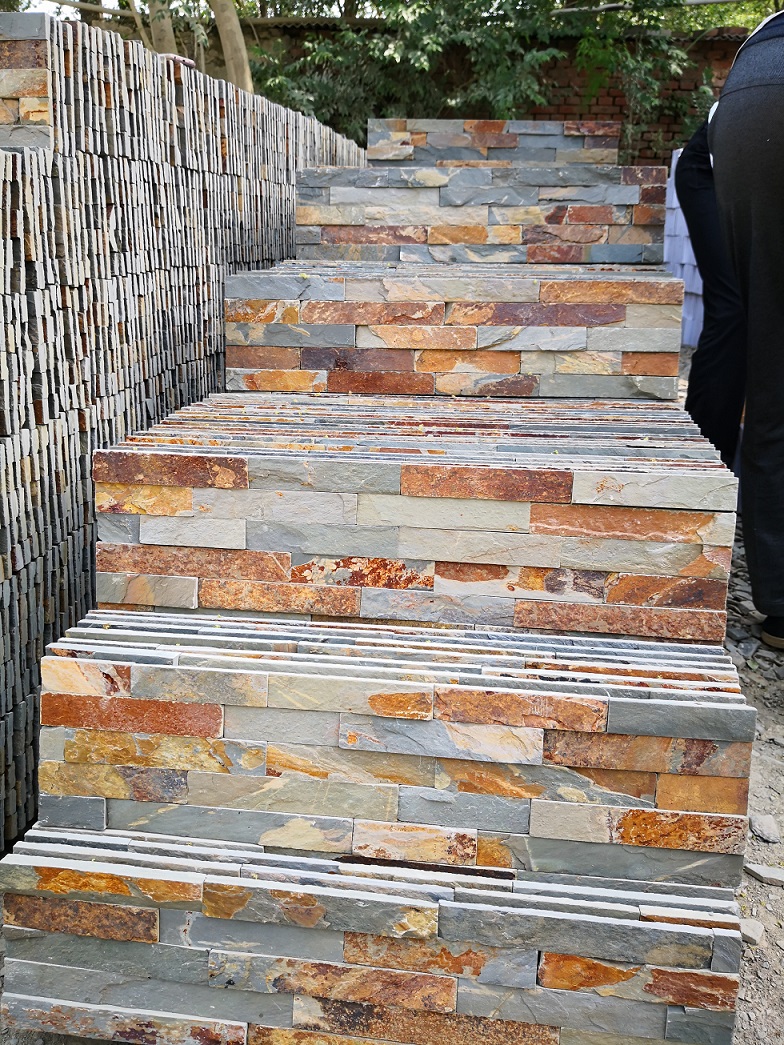
Elevate Your Projects with Factory-Direct Stacked Stone
Avoiding Chipping and Cracking: Controlling Cutting Speed and Coolant
Preventing chips in 2026 stone projects requires balancing peripheral speeds—typically 40-50 m/s for marble—with consistent coolant flow. High-pressure waterjet systems at 3600-4000 bar offer heat-free cutting, while matching motor RPM to stone density minimizes the thermal stress that causes micro-cracking and edge failure.
Impact of Blade Speed and RPM on Edge Stability
Maintaining peripheral cutting speeds between 40-50 m/s prevents heat buildup and thermal cracking in natural stone panels. Operators must calibrate motor rotation speeds between 1400 rpm and 3400 rpm, depending on the power frequency and the diameter of the diamond disc. For specialized CNC cuts, adjusting feed rates to between 50-500 mm/min keeps the kerf width at a narrow 0.8mm. Reducing speed for high-density quartzites minimizes mechanical vibrations that lead to visible edge chipping.
Coolant Management and Pressure Benchmarks
Continuous water flow or specialized fluids lower friction and keep blade temperatures below critical material stress thresholds. Deploying CNC waterjet systems at pressures of 3600-4000 bar allows for heat-free precision cutting on brittle or thin stone layers. These systems achieve precision tolerances of ±0.05mm to ±0.1mm by automating coolant delivery during high-speed feed cycles. Regular breaks and proper ventilation in the cutting area prevent cumulative overheating during long production runs.
Advanced Tips for Cutting Irregular Pieces and Loose Stone
Processing irregular stone in 2026 involves a combination of manual fracture control and digital spatial analysis. Masonry teams use stone busters at 45-60 degree inward angles to shape loose pieces by hand, while high-volume projects utilize 3D laser scanning and multi-wire saws to calculate volumes and slice blocks into precise contours.
Manual Trimming and Fracture Control Techniques
Hand-shaping irregular granite or basalt requires specific force applications to direct fractures along intended lines. Masons apply shearing force perpendicular to the stone bedding plane or grain using tools like stone busters, quarry busters, or trimming hammers. Hitting the stone from the ends maximizes effectiveness when refining edges and ensures the material breaks cleanly without crushing the structure.
Precision tracing on non-uniform surfaces depends on tool positioning. Setting tracing chisels at a 45-60 degree inward angle toward the center of the stone prevents spalling, which is the unintentional breaking of the stone face. For significant size reduction, striking the middle or overhanging sections of loose pieces utilizes bending forces to snap the material along the grain efficiently.
Digital Slicing and Mechanical Precision Standards
Modern workflows for complex stone volumes integrate 3D laser scanning and specialized software to manage irregular geometries. This digital approach generates isometric slices of rockery, allowing teams to calculate total volume by summing slice areas multiplied by thickness. This method handles natural caves and tilts more accurately than traditional voxel-based calculations, providing precise data for engineering and inventory purposes.
Mechanical efficiency in 2026 focuses on minimizing kerf waste during the shaping process. Multi-wire saws equipped with diamond-studded wires produce thin slabs from irregular stock with much higher precision than traditional frame saws. For commercial installations, single-rotor stone edge cutting machines use segmented diamond blades to follow irregular edges and create preset profiles. This automation reduces manual labor while ensuring uniform finishes across large-scale projects.
On-Site Noise and Dust Control Protocols
Contractors must adhere to OSHA 29 CFR 1926.1153 by utilizing wet-cutting methods to reduce silica dust by 90% and maintaining noise levels below 85 decibels. Effective protocols involve continuous water delivery, HEPA-filtered extraction, and mandatory P100 respirators to stay below the 50 µg/m³ exposure limit.
Silica Dust Exposure and Regulatory Standards
OSHA 29 CFR 1926.1153 establishes the safety framework for stone masonry by setting the Permissible Exposure Limit (PEL) at 50 micrograms of respirable crystalline silica per cubic meter of air. Site supervisors utilize NIOSH Method 7500 to monitor air quality and validate the effectiveness of engineering controls throughout 8-hour work shifts. These standards protect workers from the cumulative respiratory damage caused by fine dust particles generated during stone shaping.
Wet-cutting serves as the primary suppression strategy for 2026 installation projects. This method reduces airborne hazardous particles by up to 90% compared to traditional dry cutting. By suppressing dust at the point of contact, contractors ensure that silica levels remain well below federal limits and prevent the spread of contaminants across the job site.

Engineering Controls and Hearing Conservation
Wet-saw systems must deliver a minimum flow rate of 1 pint per minute to the interface between the blade and the stone. This continuous water stream captures dust particles before they become airborne. When electrical risks or freezing weather prevent the use of water, crews deploy HEPA-filtered vacuums with a 99.97% efficiency rating. These vacuums connect to tool-mounted dust shrouds to provide high-level extraction for dry-cutting alternatives.
Acoustic safety is managed through strict hearing conservation protocols. Noise levels exceeding 85 decibels trigger mandatory protections under 29 CFR 1910.95, including the use of earplugs and periodic audiometric testing. For high-grinding tasks where engineering controls might be insufficient, workers must wear P100 half-face or full-face respirators to maintain a safe working environment and meet the UK HSE target of 0.1 mg/m³ for crystalline silica exposure.
Final Thoughts
Choosing between wet and dry cutting depends on the specific project environment and the required finish quality. Wet saws produce the cleanest edges for interior stone veneers, while dry cutting with HEPA vacuum systems allows for fast adjustments on active jobsites. Matching the diamond blade’s metal bond to the stone’s hardness prevents tool glazing and ensures steady progress through dense materials like granite and basalt.
Success in stone masonry relies on technical accuracy during the miter process and strict adherence to dust control protocols. Using 22.5-degree back-cuts protects the stone’s factory edge and creates seamless 90-degree corners that resist cracking. Following silica safety standards keeps the workspace healthy while delivering a durable finish that stands up to seasonal shifts and environmental stress.
Domande frequenti
Which diamond blade works best for cutting quartzite stacked stone?
Quartzite requires a diamond blade with high diamond concentration and a hard bond or turbo rim. These specialized industrial-grade blades handle the extreme hardness of the stone to maintain sharpness and prevent chipping during the cutting processo.
What is the typical material waste rate for stone cutting projects?
Practical stone cutting waste generally ranges from 15% to 22%, though total material loss including appendages and defects can reach 30%. Installation waste factors vary by joint type, with tight joints often requiring 20% to 30% extra material compared to 15% to 20% for medium joints.
How can I verify the accuracy of a 45-degree mitered corner on-site?
Place a 90-degree square against the joint to check the fit. If a gap appears at the base while the outside corner touches, the blade angle exceeds 45 degrees; if the inside corner touches but the outside has a gap, the angle is under 45 degrees. Keeping tolerances within ±0.5 degrees ensures a flush finish.
Does dry cutting change the appearance or color of the stone?
Dry cutting can cause heat buildup that leads to surface discoloration and cracking. Wet cutting is the preferred method because the water coolant prevents thermal damage and preserves the stone’s natural color and finish quality.
Which tools are recommended for refining rough stone edges?
Professionals use diamond profiling routers and pneumatic edge profiling machines equipped with grinding or polishing wheels. These water-cooled systems, often operating at speeds up to 9,000 rpm, allow for precise chamfering and smoothing of rough edges after the initial cut.
How much extra material should be ordered to account for cutting loss?
Manufacturers recommend purchasing 10% to 15% more material than the measured square footage. This surplus covers inevitable cutting loss, potential breakage during handling, and natural variations inherent in materials like marble, slate, and travertine.
