

Scaling a stacked stone distribution business requires more than just a wide product range; it demands operational efficiency and a reliable supply chain. Many regional partners struggle to balance the costs of carrying heavy inventory with the market pressure for faster shipping and lower overhead. Success in this sector depends on how well a company integrates automation and manages logistics to stay ahead of rising contractor expectations.
We analyze real-world case studies from partners like SMC Corporation, who achieved a 93% same-day shipping rate through high-density storage systems. This article explains the financial benchmarks for territorial exclusivity, including the $50,000 quarterly purchase minimum, and outlines the operational steps and digital strategies needed to gain market share or secure placement in major home improvement retailers.
Successful Distributor Case Studies (North America, Europe, Australia)
Successful distributors prioritize high-density automation and lean inventory systems to meet 2026 operational benchmarks. North American leaders achieve 93% same-day shipping through million-square-foot facilities, while Australian partners reduce inventory by 40% and reach one-day lead times using integrated supply chain technology.
| Distributor & Region | Primary Strategy | Operational Gains |
|---|---|---|
| SMC Corporation (North America) | High-density AutoStore system | 93% Same-day shipping |
| SCHÜTZ DSL (Australia) | Lean process integration | 40% Inventory reduction |
| Gerrie Electric (North America) | Small-scale automation | 3-year ROI achieved |
| Smurfit Kappa (Europe) | TMS expansion | Reduced freight costs |
Automation and Scalability in North American Distribution
SMC Corporation doubled picking speed by utilizing a 1.1 million-square-foot facility equipped with high-density storage. This infrastructure supports a 93% same-day shipping rate. Companies like MSC Industrial Supply and Hercules maintain next-day delivery standards by positioning automated fulfillment centers near major logistics hubs like UPS Worldport. Gerrie Electric successfully implemented small-scale automation in three months, demonstrating that targeted technology investments can secure a rapid return on investment for smaller distributors.
Lean Systems and Logistics Integration in Europe and Australia
SCHÜTZ DSL increased its output per shift by 50% and cut finished goods inventory by 30% through lean process improvements. These efficiency gains reduced lead times to one day for most products. In Europe, Smurfit Kappa uses expanded Transport Management Systems (TMS) to improve visibility across its network and lower freight expenses. Australia Post and New Aim focus on last-mile optimization to provide accurate ETAs even during parcel surges, ensuring supply chain reliability for e-commerce growth.

Value and Terms of Territorial Exclusive Distribution Agreements
Exclusive agreements secure market rights for distributors in specific regions. Partners must meet a US$50,000 quarterly purchase minimum and a US$200,000 annual target to maintain these rights. Contracts mandate USD prepayment and use Incoterms to manage risk transfer between the factory and the partner.
| Performance Metric | Financial Target | Contractual Impact |
|---|---|---|
| Quarterly Purchase Minimum | US$50,000 | Maintains current exclusivity status |
| Annual Purchase Threshold | US$200,000 | Qualifies partner for annual renewal |
| Payment Protocol | 100% USD Prepayment | Prerequisite for production and shipping |
| Risk Allocation | Standard Incoterms | Defines transfer of title and liability |
Territory Definitions and Exclusivity Tiers
Territories encompass specific nations, regions, or individual accounts explicitly listed in contract attachments. Exclusive distribution models prevent the supplier from selling directly or appointing other partners within the designated area. Sole distribution models allow the supplier to keep limited direct sales rights while blocking other third-party distributors. Selective distribution utilizes non-exclusive agreements based on specific performance and branding criteria.
Performance Thresholds and Financial Terms
Distributors must reach a US$50,000 minimum quarterly sales volume to retain their exclusive status. Renewal for subsequent years requires meeting a US$200,000 annual purchase threshold. Partners prepay all orders in US dollars before shipment to ensure production and logistics stability. Incoterms establish the specific point where product title and risk transfer from the manufacturer to the distributor. Contract termination triggers include failure to meet sales minima or unauthorized changes in distributor management.
Strategies to Win Market Share from Competitors
By 2026, winning market share relies on combining high-performance SEO with streamlined B2B procurement. Data shows that integrating keyword clusters can drive a 183% traffic increase, while shifting 80% of order volume to digital portals reduces manual errors and increases repeat purchase rates by 110%.
Digital Visibility and SEO Growth Frameworks
Deploying keyword cluster frameworks allows businesses to target high-intent B2B search terms effectively. This strategy drives the 183% traffic growth observed in successful industrial case studies. Updating site content at least six times more frequently improves search rankings and secures a 29-spot lead over competitors in core category terms. Interactive digital tools bridge the gap between awareness and conversion, which raises sales efficacy ratings from 3.8 to 4.2 on a 5-point scale.
Operational Speed and Automated Procurement Portals
Transitioning 83% of order volume to self-service headless commerce portals automates 15% of manual order touches. This shift increases operational efficiency and improves the buyer experience. Promoting materials with a lightweight profile of 8-13 lbs/sqft to contractors eliminates footing requirements and doubles installation speed compared to traditional masonry. ERP-integrated checkout systems automate reseller revenue distribution, resulting in a 59% growth in transaction volume without increasing administrative overhead.
Elevate Every Project with Authentic Factory-Direct Stacked Stone
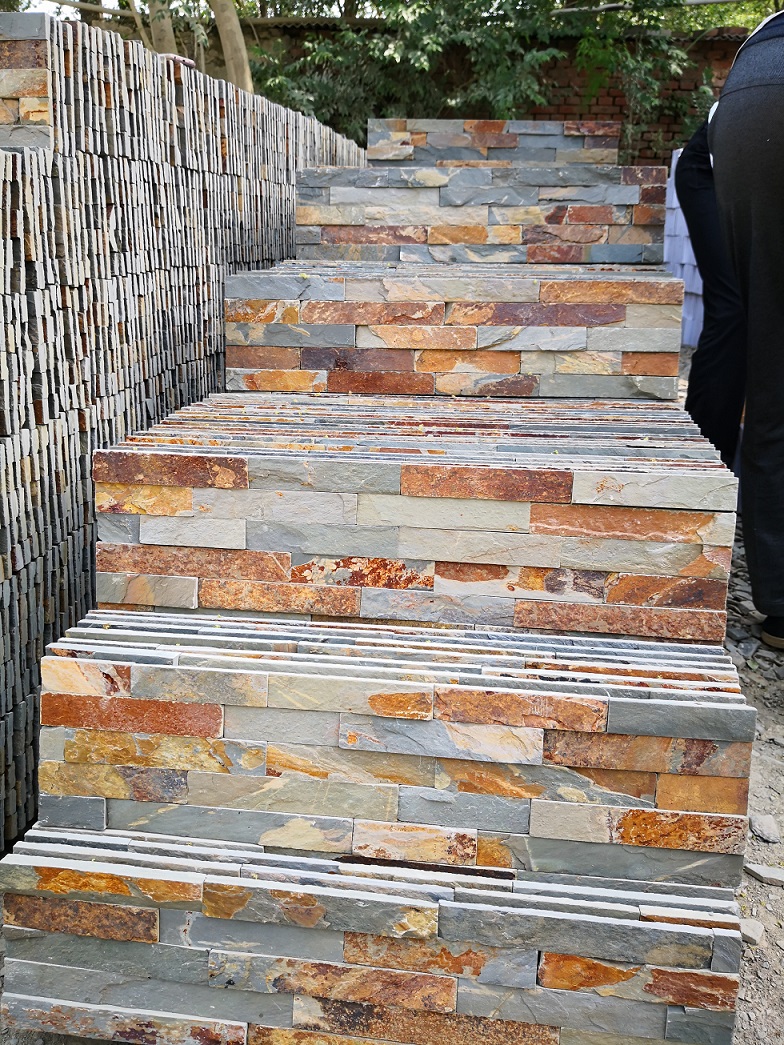
Marketing Support: Factory-Provided Photos, Collateral, and Showroom Design Support
Manufacturers supply high-resolution photos and stage-specific sales materials to accelerate the sales cycle. These resources help distributors move buyers from awareness to decision by providing technical specs on weight, installation speed, and material durability, ensuring a consistent brand experience across digital and physical touchpoints.
Strategic Sales Collateral and High-Resolution Visuals
Factories maintain a library of high-resolution project photography showcasing the Flat, Rough, and Pencil series in diverse architectural settings. These assets allow distributors to create professional marketing campaigns and help clients visualize final results. Along with visual assets, the factory provides stage-specific collateral including line cards, data sheets, and competitor comparison guides updated for the 2026 market landscape.
Technical sell sheets assist sales teams by documenting the specific physical advantages of the product, such as the 8-13 lbs/sqft weight profile and the efficiency of the Z-shaped interlocking system. Digital product training materials further support this by comparing the longevity and technical benefits of natural stone against man-made concrete alternatives.
Physical Showroom Displays and Private Label Support
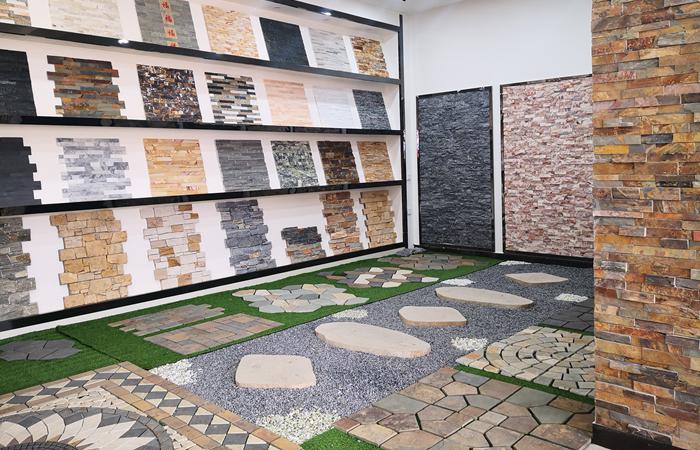
Point-of-sale (POS) displays feature 6” x 24” panel samples and matching L-shaped corner pieces, giving customers a tangible experience with the material. Showroom layouts incorporate physical mounting systems that demonstrate the no-footing-required installation process, illustrating the practical labor savings for contractors and builders.
Distributors can leverage OEM branding solutions to build local market equity. The factory supports this through custom-printed boxes and crates that feature the distributor’s logo and contact information. To facilitate the decision-making process, manufacturers provide comprehensive sample kits containing various materials like slate, quartzite, and royal white marble for hands-on evaluation.
Retail Channel Expansion: Shared Experience Entering Home Depot or Lowe’s
Entering major retailers requires meeting strict operational benchmarks. Suppliers must provide proof of $1 million liability insurance, pass RESA audits, and integrate EDI systems for automated purchasing. Most brands begin with online-only fulfillment or regional tests to demonstrate supply chain reliability before scaling to national physical store placement.
Vendor Onboarding and Financial Compliance Standards
Lowe’s mandates Commercial General Liability insurance of $1 million per occurrence and $2 million aggregate, listing Lowe’s Companies, Inc. and its subsidiaries as additional insured parties. This documentation must be submitted via a Certificate of Insurance during the registration phase. Suppliers validate their legal and financial standing through the Vendor Gateway, which requires banking details, W-9 or W-8BEN-E forms, and a valid DUNS number.
Home Depot requires prospective suppliers to submit a Non-Merch Supplier Template to their procurement team for initial review. Both retailers often require a RESA audit to verify social responsibility and ethical manufacturing practices. Most brands initiate their partnership through Direct Fulfillment Centers (DFCs). This online-only model allows retailers to evaluate shipping speed and demand accuracy without the risk of committing physical shelf space to unproven products.
EDI Integration and Operational Performance Tracking
Operational success depends on mandatory Electronic Data Interchange (EDI) integration. This system handles critical transaction types, including 850 Purchase Orders, 856 Advance Ship Notices, and 810 Invoices. Retailers recommend using certified providers like SPS Commerce, TrueCommerce, or Cleo to ensure data flows remain seamless and compliant with their specific backend protocols.
Retailers monitor supplier health through automated scorecards in the Vendor Portal. These metrics track fulfillment accuracy and fill rates, as missed windows or shipping errors frequently trigger financial deductions or purchase order cancellations. Many suppliers use RangeMe as a discovery tool to reach category buyers. Additionally, building a sales history through regional discounters or one-time closeout deals provides the empirical evidence necessary to negotiate national placement with major home improvement chains.
Final Thoughts
Successful distribution networks grow by combining logistics technology with clear performance standards. Companies investing in automation and digital portals see higher returns and better buyer retention. Exclusivity agreements protect these local investments, ensuring both the factory and the partner stay committed to shared growth.
Entering major retail or securing an exclusive territory requires operational readiness. Partners need to meet financial targets and adopt digital systems like EDI to stay competitive. Using factory marketing support and visual assets helps bridge the gap between initial interest and a final sale. These strategies position distributors to capture a larger share of the stone and surfacing market.
Domande frequenti
What is the minimum annual purchase volume for territorial exclusivity?
Minimum purchase requirements range from $60,000 to $15,000,000 annually. These thresholds depend on the specific market size and the terms of the distribution agreement. Failing to meet these targets often results in the loss of exclusive rights.
How do contracts prevent manufacturers from selling directly in an exclusive territory?
Exclusivity clauses explicitly prohibit the manufacturer from selling products to other parties or directly to customers within your defined region. These restrictions typically remain in effect for 12 to 36 months and include performance metrics to protect the partnership.
Which inventory and logistics models do successful distributors use?
Partners use real-time tracking, Vendor-Managed Inventory (VMI), and Customer-Managed Inventory (CMI). Since stockouts cause 40% of lost sales, 2026 projections show an increased reliance on automated replenishment systems and cloud-based visibility to sync stock across multiple warehouses.
What design support does the factory provide for new showrooms?
The factory provides 3D layout previews, custom modular counters, and BIM models. These services help visualize the ledger stone displays before installation, ensuring the fixtures fit the specific dimensions and branding of the retail space.
What marketing support is available for new distribution partners?
We provide sales training, co-branded marketing materials, and lead generation support. Partners also access SPIFF programs that reward sales teams for reaching specific volume targets, helping build a consistent sales pipeline.
How are renewal negotiations handled when an agreement expires?
Most agreements use semiautomatic renewal provisions. The contract extends for an additional year unless one party provides a 60-day notice before the term ends, allowing both sides to evaluate market conditions and performance metrics.
