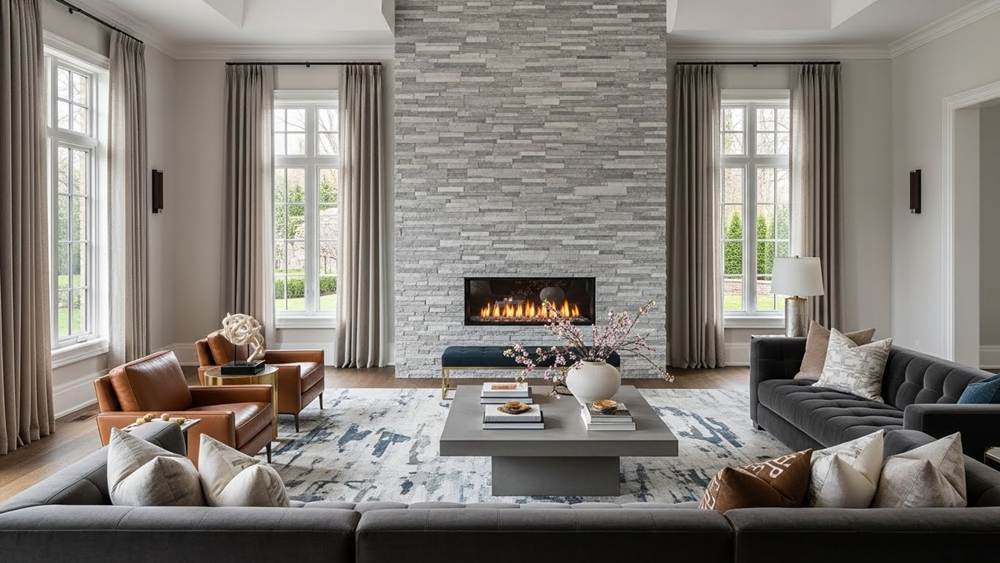
Specifying a **Stacked Stone Fireplace** for high-heat applications requires balancing architectural aesthetics with strict non-combustible safety. Selecting materials that fail thermal shock thresholds leads to surface crazing and project rejections, directly eroding wholesaler margins and contractor reputations.
We benchmark high-density quartzite and slate against ASTM E84 Class A fire ratings and ASTM C170 compressive strength. This data ensures 6″x24″ Z-shape panels meet North American building codes while optimizing 17.5-ton container logistics for maximum shipping value.
Why Stacked Stone is the #1 Choice for Modern Fireplaces
Natural stacked stone panels lead 2026 fireplace trends by combining 100% non-combustible safety with modular Z-shape installation that cuts labor costs while protecting wholesaler margins.
Authentic Natural Textures and Architectural Depth
Architectural standards for 2026 prioritize 100% natural materials over painted concrete composites. Synthetic “faux” stones often suffer from surface crazing and pigment fading when exposed to intermittent thermal stress. Pietra sorgente superiore utilizes raw quartzite, slate, and marble that provide permanent color stability and high-relief depth.
- Material Selection: Direct quarry-sourced slate (HS 6803.00.90) and quartzite (HS 6802.93.11).
- Visual Impact: The Rough Series creates rugged character and dramatic shadow lines across feature walls.
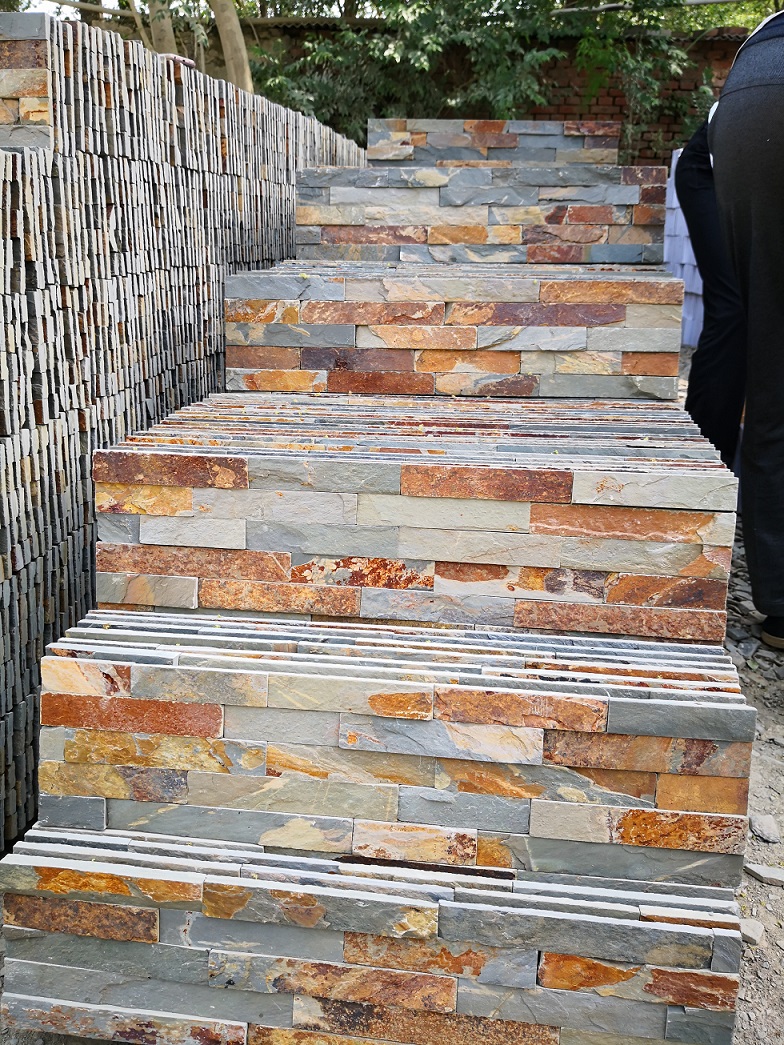
- Core Inventory: High-demand models include Alaska Gray, Glacier White, and Carbon Black Midnight Slate.
- Batch Consistency: High-level factory sorting prevents the “patchy” appearance common in lower-grade bulk shipments.
Non-Combustible Engineering and Z-Shape Interlocking Systems
Safety compliance drives the fireplace market. Natural stone is inherently non-combustible and aligns with NFPA 211 and IRC building codes. We engineer our 6″x24″ ledger panels with a high-strength glued backing system designed specifically for the high-density requirements of slate and quartzite.
- Modular Format: 6″ x 24″ (150mm x 600mm) panels with seamless Z-shape interlocking joints.
- Technical Standards: Stone selection meets ASTM C170 for compressive strength and ASTM C97 for low absorption.
- Installation Weight: Panels range from 8–12 lbs/sqft, suitable for adhered veneer applications over cement board.
- Wholesale Logistics: We optimize 20GP containers at 17.5 tons specifically for US port road weight limits to maximize shipping value.
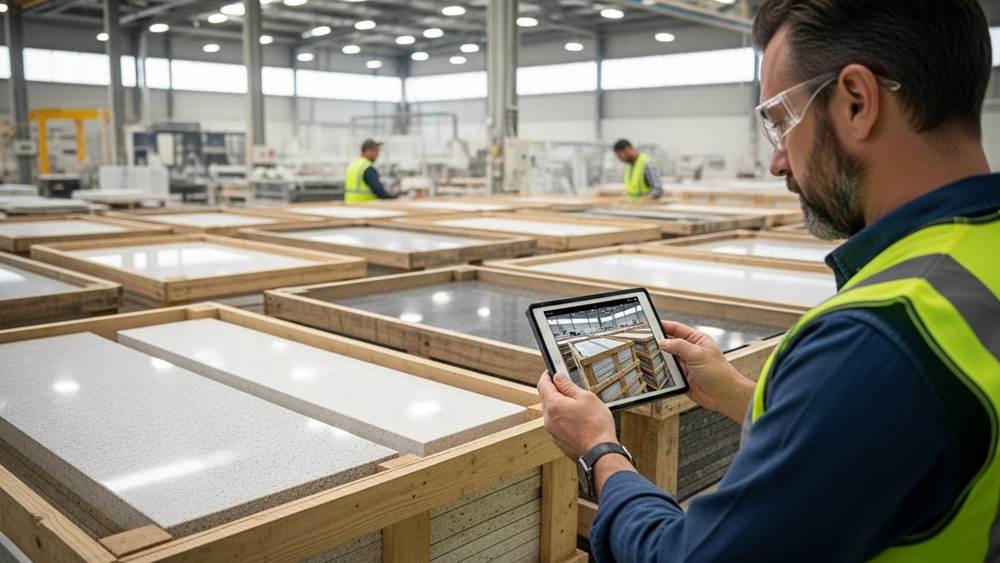
Our direct-from-factory model removes middleman markups, ensuring B2B dealers maintain healthy profit protection. By providing pre-shipment visual verification through photos and videos, we eliminate quality disputes before the product leaves the quarry, ensuring the stone meets architectural specifications for every project.
Thermal Resistance of Quartzite vs. Slate in High-Heat Areas
Quartzite and slate both withstand 300°F. Quartzite (Mohs 7-8) offers superior thermal shock resistance in high-convection zones compared to slate’s layered structure.
| Technical Property | Quartzite (Alaska Gray) | Slate (Carbon Black) |
|---|---|---|
| Mohs Hardness | 7–8 | 2.5–4 |
| HS Code | 6802.93.11 | 6803.00.90 |
| Direct Heat Limit | ~300°F (150°C) | ~300°F (150°C) |
| Structure | Granular/Dense | Foliated (Layered) |
Heat Tolerance Thresholds and Thermal Shock Risks
High-convection environments like fireplace surrounds demand materials that handle rapid temperature swings. Both quartzite and slate maintain structural integrity during intermittent direct heat exposure up to 300°F. Problems arise not from the temperature itself, but from the speed of the change. This thermal shock causes lower-density slabs to develop surface micro-cracks over repeated cycles.
Quartzite provides a distinct advantage in these zones. Its granular, dense composition resists the expansion stresses that often cause sedimentary stones to flake. Slate remains stable in most interior applications, but its layered (foliated) structure makes it more susceptible to edge degradation when extreme heat combines with moisture or weathering.
- Alaska Gray Quartzite: High-density mineral structure for superior thermal shock resistance.
- Carbon Black Slate: Deep aesthetic appeal with stable heat tolerance for standard fireplace cladding.
- Thermal Limit: Both materials sustain 300°F (150°C) without ignition or structural collapse.
High-Density Material Selection and ASTM Compliance
B2B procurement for large-scale projects requires adherence to measurable standards rather than marketing claims. We select stone units that meet or exceed specific technical benchmarks to ensure longevity near hearths and chimneys. Using ASTM-compliant stone prevents the “patchy” expansion issues common in lower-grade bulk orders.
- ASTM C170: High compressive strength ensures the panels support their own weight under heat-induced stress.
- ASTM C97: Low absorption rates protect against sealant degradation and soot penetration.
- Inventory Focus: Glacier White and California Gold models utilize high-strength glue systems to maintain panel stability during thermal expansion.
- Batch Consistency: High-level sorting prevents uneven heat absorption across large fireplace facades.
Wholesalers should prioritize quartzite for projects involving high-output gas inserts or wood-burning stoves. The Mohs hardness of 7-8 significantly reduces the risk of mechanical damage and surface wear in high-traffic commercial lounges. Slate remains a reliable, cost-effective alternative for standard residential surrounds where thermal loads are consistent and controlled.
Non-Combustibility Standards for Natural Stone Cladding
Natural stone achieves Class A fire ratings under ASTM E84 with zero flame spread. These materials meet EN 13501-1 (Class A1) standards for zero fuel contribution in high-heat environments.
| Standard | Rating / Index | Primary Application |
|---|---|---|
| ASTM E84 | 0 Flame Spread / 5 Smoke Index | Residential Fireplace Surrounds |
| EN 13501-1 | Class A1 (Non-combustible) | Commercial Building Facades |
| ASTM C170 | High Compressive Strength | Load-Bearing Veneer Safety |
Global Fire Safety Ratings (ASTM E84 and EN 13501-1)
Natural stone provides a reliable safety baseline because it does not contribute to the building’s fire load. Building codes and engineering firms rely on specific international benchmarks to verify this performance in high-convection areas.
- ASTM E84 Compliance: 100% Pietra naturale reaches a Flame Spread Index of 0 and a Smoke Development Index of 5, the highest possible safety tier.
- EN 13501-1 Class A1: UK and European cladding mandates require this certification to ensure zero contribution to fire spread in tall building envelopes.
- ICC IBC Chapter 14: Natural stone veneers meet the requirements for non-combustible assemblies when installed over fire-resistance-rated masonry or backer boards.
Heat Resistance of 100% Natural Slate and Quartzite
We select materials like Carbon Black Slate and Glacier White Quartzite because they do not ignite, melt, or release toxic gases when exposed to open flames. These stones maintain structural integrity in extreme environments where manufactured alternatives often fail.
- Material Stability: Quartzite (HS 6802.93.11) and Slate (HS 6803.00.90) remain thermally stable up to 300°F, preventing surface crazing or edge chipping near firebox openings.
- Density Requirements: Our stone selection meets density standards equivalent to ASTM C97, which reduces the risk of thermal shock cracking in chimneys and hearths.
- Low Smoke Contribution: Under prolonged intense flame, stone may flake superficially but does not add fuel to the fire, keeping smoke indices at a minimum.
Wholesalers and dealers benefit from our direct quarry control in Hebei, which ensures batch color consistency and Grade A material density. We offer pre-shipment visual verification through photos and videos to guarantee that every container meets these high-density safety specs before balance payment.
Premium Factory-Direct Stacked Stone Ledger Panels
Design Trends: Floor-to-Ceiling vs. Accent Surround
Floor-to-ceiling layouts create vertical focus while accent surrounds suit traditional mantels. Lightweight 8-12 lbs/sqft panels enable both without needing reinforced structural footings.
Spatial Dynamics and Proportions in Fireplace Design
The choice between full-height and accent layouts depends on the room’s vertical volume and the fireplace insert style. Modern linear gas inserts generally perform better with floor-to-ceiling stone to emphasize a contemporary, clean-lined aesthetic.
- Full-Height Proportions: Best suited for great rooms with 9–18 foot ceilings to create a dramatic focal point.
- Accent Heights: Typically terminate 4–6 feet from the floor or 6–12 inches above a decorative mantel.
- Visual Alignment: Installers must coordinate stone termination lines with TV mounting heights and existing crown molding.
- Dead Load Management: Tall vertical spans require specific substrate prep to handle cumulative weight without shear risk.
Architects often use full-height stone to bridge the gap between floors in open-concept designs. If the stone stops mid-wall, a heavy mantel or a transition trim is necessary to prevent the top edge from looking unfinished or collecting dust.
Seamless Verticality with Z-Shape Interlocking Systems
Wholesalers and contractors prefer modular panels that simplify the installation of tall feature walls. Traditional rectangular panels often leave visible horizontal seams that ruin the “solid stone” illusion on high-impact surfaces.
- Seamless Z-Shape: Top Source Stone panels use an interlocking Z-design to hide joints on floor-to-ceiling runs.
- Weight Specification: The 8–12 lbs/sqft physical profile allows for cladding over non-combustible backer board without a concrete foundation footing.
- Color Uniformity: Direct quarry sourcing ensures batch color consistency across 20-pallet container orders, preventing “patchy” appearances.
- L-Shaped Corners: Pre-fabricated corner units eliminate miter cuts, ensuring clean transitions on chimney breasts.
Consistency is the primary technical hurdle for large-scale vertical projects. We utilize pre-shipment visual verification to ensure that color ranges stay within tight tolerances before the material leaves the factory, protecting dealer margins from job-site rejections.
Corner Solutions: Seamless L-Shaped Pieces vs. Butt Joints
Pre-formed L-shaped corners wrap the fireplace edge to conceal cut cores and resist thermal stress, while cheaper butt joints often reveal visible seams and risk hairline cracking.
Aesthetic Impact and Structural Risks of Butt Jointing
Butt joints force two flat panels to meet at a sharp 90-degree angle. This technique creates a vertical seam that interrupts the staggered stone pattern and exposes the interior core of the material. In rough-textured quartzite or slate, these exposed edges look unnatural and break the illusion of solid masonry.
Beyond aesthetics, butt joints concentrate mechanical stress at the corner. During the thermal cycling of a fireplace, this stress often leads to hairline cracks or gaps. Inaccurate manual field cuts exacerbate the problem, producing “telegraphed” seams that make the veneer look like a budget installation rather than a professional architectural feature.
- Thermal Cycling: Heat expansion causes butt joints to open, revealing the substrate.
- Pattern Disruption: Field-cut pieces often fail to align with the interlocking Z-shape of the flat panels.
- Core Exposure: The sawn edge of the stone typically lacks the color and texture of the natural face.
Factory-Fabricated L-Corners with High-Strength Glued Systems
Top Source Stone manufactures pre-formed L-shaped units that wrap the stone around the corner 90 degrees. These factory-made pieces maintain the 6-inch height standard of our Alaska Gray or Midnight Slate models, ensuring 1:1 row alignment across the entire chimney breast. This eliminates the need for time-consuming on-site miter cuts.
These corner units utilize a high-strength glue backing specifically formulated for high-convection heat. The integrated design transitions from the corner return leg to the field panels without requiring grout, maintaining the preferred dry-stack appearance of premium ledgestone.
- Standard Heights: 6-inch modules match 6″ x 24″ flat panels for perfect coursing.
- Return Legs: Factory returns (typically 3″ to 12″) provide a large bonding surface to prevent delamination.
- Material Strength: High-density quartzite and slate meet ASTM C170 compressive strength standards for long-term durability.
- Z-Shape Interlock: The corners include the same interlocking geometry as our flat panels for a flush finish.
For B2B wholesalers and installers, pre-formed corners reduce labor costs and eliminate the high breakage rates associated with manual field mitering. This factory-direct approach ensures batch color consistency between the flat panels and the corner units, protecting dealer margins and project quality.

Color Selection: Soot Resistance in Black vs. White Stone
White quartzite highlights soot buildup, while darker stones like Carbon Black slate mask carbon deposits. Sealing every 12-24 months prevents permanent discoloration in porous crevices.
Visual Impacts of Soot Accumulation on Porous Textures
Glacier White and Alaska Gray quartzite panels provide a high-end architectural finish, but their light mineral base shows carbon staining immediately. Soot and creosote from wood smoke or gas exhaust penetrate deep into porous split-face surfaces. This causes visible darkening near the firebox within months of regular use.
High-relief textures in our Rough Series create deep crevices where particulate matter settles during convection cycles. Repeated heat cycling causes unsealed stone surfaces to absorb carbon compounds irreversibly. For wholesalers and developers, specifying early prevention through sealing is necessary to maintain the visual value of light-toned stones.
High-Density Quartzite and Slate Selection for Low Porosity
Material density is the primary defense against soot penetration. We select natural stones that meet ASTM C97 absorption standards to ensure high density. Darker models, such as Carbon Black and Midnight Slate, offer a natural aesthetic that masks initial soot buildup much better than Glacier White or other light-toned quartzite options.
Our factory-direct sorting process ensures batch color consistency. This prevents patchy walls where soot might otherwise highlight mineral variations across the fireplace face. Applying a professional-grade, breathable penetrating sealer to low-porosity quartzite maintains the stone’s original color through the 2026 winter usage period and beyond.
Bulk Order Customization for Multi-Unit Residential Projects
Multi-unit developers maximize margins by syncing container-level shipments (864 sqm) with US road weight limits (17.5 tons), unlocking private label branding for projects exceeding 300 sqm.
Container Logistics and Port Weight Optimization
Shipping Pietra naturale to North American ports requires a specific approach to avoid overweight penalties. We cap 20GP container loads at approximately 17.5 tons to stay within US road weight regulations while providing maximum material coverage for high-density projects.
- Payload Volume: 756 to 864 square meters of stone per 20GP shipment.
- Pallet Capacity: 20 pallets per container, typically 48–60 cartons per pallet.
- Compliance Standard: US-Port weight optimization at 17.5 tons per load.
Batch sorting is the only way to prevent a patchy aesthetic in large developments. We pull all material from a single quarry source to maintain color consistency across hundreds of residential units, ensuring the architectural vision stays unified from the first floor to the last.
OEM Private Labeling and Custom Box Specifications
Wholesalers and developers ordering over 300 square meters can access full private label services. Custom-branded packaging protects dealer margins and maintains project branding throughout extensive construction phases.
- MOQ: 300 square meters for custom boxes, private label, or trial orders.
- QA Protocol: Pre-shipment visual verification via high-resolution photos and videos.
- Precision Cutting: Infrared technology for custom panel formats tailored to blueprints.
Infrared cutting technology allows us to produce custom formats that match specific architectural blueprints exactly. We provide a full visual verification before the final 70% balance payment, giving developers total transparency on the batch quality before the container leaves the factory.
The Commercial Verdict
Selecting ASTM-compliant quartzite or slate over synthetic composites prevents thermal shock claims and structural degradation near high-output burners. We protect your wholesale margins by sourcing directly from our factory, eliminating middlemen while maintaining strict batch color consistency across every pallet. High-density inventory like Alaska Gray or Carbon Black ensures long-term project safety and secures your reputation with architectural clients.
Secure Your Inventory
Start with a 300m² trial order or request a sample kit to verify our Z-shape interlocking precision and material density firsthand. We provide full pre-shipment visual verification through high-resolution photos and videos to guarantee quality before your container leaves the quarry. Contact our team to optimize your next shipment for US port weight limits and maximize your landed value.
Domande frequenti
Is natural stacked stone fire-resistant for fireplace surrounds?
Natural stones like slate and quartzite are inherently non-combustible. We select materials that meet high-density standards equivalent to ASTM C170, allowing them to handle intense heat without the thermal instability or cracking common in limestone and manufactured veneers.
Can I install stone panels directly over an existing brick fireplace?
Installation works on clean, sound brick using a bonding agent and Type S mortar. If the brick is painted or sealed, you must apply a metal lath and scratch coat or a cement backer board first. This provides the mechanical bond necessary for the stone panels to adhere to the substrate safely.
Does fireplace stone require sealing after the installation?
Applying a breathable, penetrating sealer protects the stone from soot, smoke, and oils. We recommend a siloxane-based sealer to maintain the material’s appearance while allowing moisture vapor to escape. This prevents long-term surface degradation in high-convection environments.
What is the best way to remove soot from white stacked stone?
Start with a soft brush and vacuum to clear loose soot. For deeper stains, use a pH-neutral stone cleaner and a plastic bristle brush. Avoid acidic chemicals and wire brushes, as they etch the stone surface and can cause rust spots on light-colored quartzite models like Glacier White or Arctic Golden.
Where should I begin the stone installation on a fireplace wall?
Start at the bottom row. Use a laser level to ensure the first course is perfectly straight. This prevents cumulative errors that lead to wavy joints or gaps as you progress toward the mantel or ceiling. Staggering vertical joints is also necessary for a natural look and better interlock.
Do these stone panels require additional structural reinforcement?
Our standard panels weigh between 8 and 12 lbs/sqft. This weight typically falls within the load-bearing capacity of existing masonry and cement board walls. This eliminates the need for specialized footings or heavy-duty wall ties required for full-thickness stone installations.
