
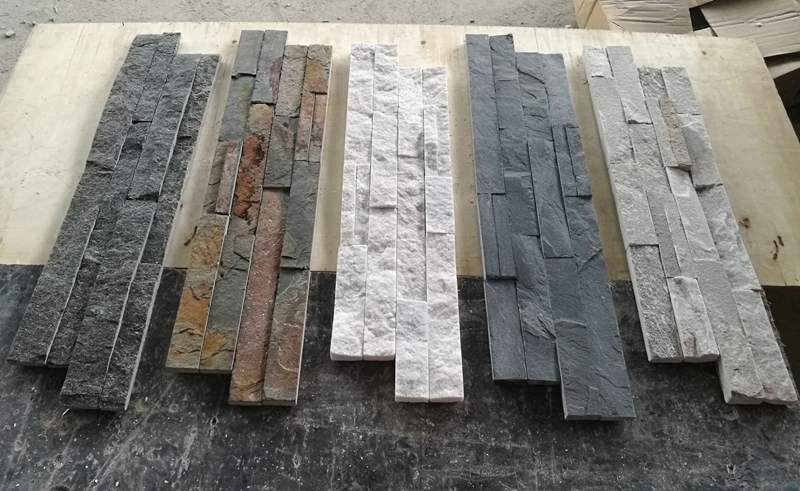
Freeze-Thaw Testing is the essential technical barrier against facade delamination and the extreme liability costs associated with winter stone failure. Materials that cannot withstand internal pore pressure typically result in spalling and expensive site remediations that threaten developer margins.
We evaluate stone performance using ASTM C67 and ASTM C666 benchmarks to secure long-term structural stability. This analysis focuses on how infrared cutting and high-strength epoxy resin systems eliminate the latent micro-fissures that compromise exterior stone integrity.
The Physics of Pore Pressure and Ice Lens Formation in Exterior Stone
Freezing water creates internal pressure through ice-lens formation. Using high-strength epoxy and low-porosity natural stone maintains structural integrity by resisting these internal tensile forces.
Thermodynamics of Geometrical Supercooling in Porous Stone
Capillary action pulls liquid water into the stone’s internal pore network before freezing cycles begin. As temperatures drop, geometrical supercooling provides the specific energy required for this water to reorganize into discrete ice lenses rather than freezing in a uniform, harmless pattern.
These ice lenses act as internal wedges, exerting significant outward pressure on the surrounding mineral matrix. In a closed-system freeze, where water cannot escape, internal stress reaches its peak at the base of the ice lens. This pressure often exceeds the natural tensile strength of lower-quality materials, leading to cracks or surface flaking.
Resin-Bonded Systems and Material Cohesion Limits
The stone’s survival in extreme climates depends on its structural cohesion and the precision of its assembly. Modern manufacturing focuses on high-density materials and chemical bonding to counteract thermodynamic expansion.
- Adhesive Strength: High-strength epoxy resin provides the necessary cohesion to resist the internal tensile forces of expanding ice.
- Precision Engineering: Infrared cutting produces exact dimensions that eliminate the large void spaces where water typically collects.
- Material Density: Natural slate and quartzite panels offer higher density and lower absorption rates than porous concrete substitutes.
- Quality Validation: Three-stage quality checks ensure the epoxy bond remains permanent under the pressure dynamics required by 2026 environmental standards.
Selecting stones with low absorption rates effectively starves the ice-lens process of the moisture it needs to grow. Dense stones like granite or slate perform better because their interconnected pore networks are too small to allow significant water penetration, preventing the hydraulic pressure buildup that destroys weaker masonry.

Interpreting ASTM C67 and ASTM C666 for Facade Engineering
Engineers use ASTM C67 for masonry and ASTM C666 for assemblies to prevent stone delamination. 50-cycle testing validates structural integrity and epoxy bond strength under rapid thermal shifts.
Comparing Freeze-Thaw Methodologies for Natural Stone Units
ASTM C67 Method A dictates the evaluation of building code compliance through an extended 12-week testing window. This timeline allows for a detailed analysis of saturation coefficients and flexural strength under sustained environmental stress.
Engineers analyze the modulus of rupture before and after 50 freeze-thaw cycles to predict the stone’s long-term durability. These benchmarks ensure the material maintains its structural load-bearing capacity without yielding to internal hydraulic pressure.
- Testing Duration: 12-week window required for ASTM C67 Method A.
- Cycle Count: 50 cycles to determine modulus of rupture retention.
- Deformation Limits: Monitoring for warpage and length changes during temperature shifts.
Ensuring Bond Strength with High-Performance Resin Adhesives
High-strength epoxy resin adhesives create a permanent bond between the stone and the panel substrate. This chemical connection prevents stone fallout during the aggressive rapid cycles defined in ASTM C666 testing protocols.
The interlocking Z-shape system manages thermal stress by spreading pressure across the entire facade surface. This geometry reduces localized pressure on individual units, preventing the micro-cracking that often leads to surface failure.
- Adhesive Type: High-performance epoxy resin for moisture-heavy environments.
- Structural Design: Interlocking Z-shape distribution for thermal stress relief.
- Wet Weight Tolerance: Specialized adhesives maintain grip at 8-13 lbs per square foot.
Premium Stacked Stone for High-Margin Projects
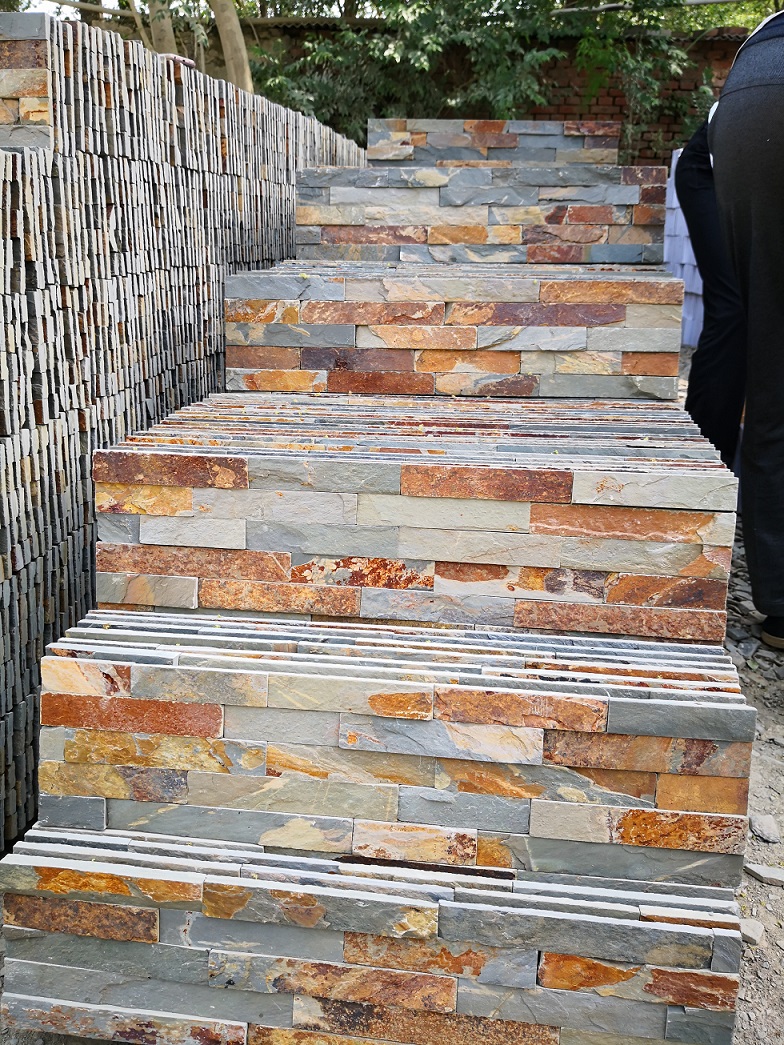
How Manufacturing Precision Eliminates Latent Micro-Fissures
Precision manufacturing removes internal voids and microscopic cracks, preventing water collection and ice expansion that lead to stone delamination and freeze-thaw failure by 2026.
| Technical Variable | Produzione di precisione | Standard Processing |
|---|---|---|
| Cutting Accuracy | Infrared Laser Guided | Mechanical Blade Only |
| Internal Stress | Minimal / Controlled | High (Aggressive Vibration) |
| Moisture Barrier | Epoxy-Resin Unified | Natural Porosity Exposed |
Structural Integrity and the Prevention of Internal Micro-Cracks
Internal fissures often originate during the quarrying process. Aggressive extraction or low-precision cutting tools cause mechanical shocks that vibrate through the stone’s mineral structure. These vibrations create latent micro-fissures—cracks too small for the eye to see but large enough to host water molecules.
The damage mechanism centers on ice crystallization. When moisture trapped inside these micro-voids freezes, it expands by approximately 9%. This expansion generates thousands of pounds of pressure per square inch against the stone’s internal walls. This hydraulic force acts as a wedge, forcing the cracks to widen during every cold cycle.
Structural defects accelerate stone breakdown during rapid temperature shifts. Every freeze-thaw event deepens the existing cracks, allowing more water to penetrate in the next thaw. This progression eventually leads to spalling, where the face of the stone flakes off in layers, compromising both the aesthetic and the safety of the facade.
Infrared Precision Cutting and Three-Stage Quality Protocols
We use infrared cutting equipment to achieve exact dimensional accuracy. This technology minimizes the physical impact on the stone panel during production. By reducing mechanical stress, the internal structural bonds remain intact, ensuring no new weaknesses are introduced before the product leaves the facility.
Producers implement multi-stage inspection protocols to identify panels with surface or internal irregularities. These systems catch defects that standard visual checks miss:
- Stage 1: Raw material ultrasonic scanning for density consistency.
- Stage 2: Infrared dimensional verification post-cutting.
- Stage 3: Surface integrity check before epoxy application.
High-strength epoxy resin bonding creates a unified substrate that blocks moisture seepage. This resin fills any existing surface pores and creates a waterproof barrier. By sealing the back and sides of the stone, the system prevents water from entering the internal voids, effectively neutralizing the risk of freeze-thaw delamination.

Long-Term Performance: The Economic Case for Rigorous Quality Control
Quality control reduces overall costs by 10-25% and prevents expensive downstream defects, protecting profit margins and long-term brand equity through consistent manufacturing standards.
Direct Cost Mitigation and Revenue Enhancement Strategies
Tightening quality management translates directly into financial stability. We find that companies prioritizing these systems move beyond simple defect tracking to active margin protection. This shift allows for more predictable project bidding and higher retention among wholesale partners who cannot afford the delays associated with material failure.
- Cost Reduction: Manufacturers achieve 10-25% savings by decreasing scrap rates and eliminating repetitive rework.
- Risk Prevention: Early detection stops high-impact expenses like warranty claims, refund processing, and legal non-compliance penalties.
- Pricing Power: Consistent material quality enables products to command market premiums over generic competitors.
- Customer Value: Improved satisfaction drives repeat purchase behavior, increasing the lifetime value of B2B accounts.
Three-Phase Inspection Protocols and Material Bonding Integrity
Structural durability in stone products relies on technical precision during the fabrication phase. By standardizing the inspection timeline and the chemical bonding agents used, we eliminate the variables that typically lead to delamination or dimensional drift in the field.
- Inspection Stages: We execute formal checks after the initial cut, immediately following assembly, and once more before the product enters final packaging.
- Cutting Precision: Advanced infrared equipment ensures exact dimensional accuracy, facilitating perfect interlocking for large-scale installations.
- Adhesion Standards: We utilize high-strength epoxy resin adhesives formulated specifically for permanent bonding between stone and substrate.
- Supply Chain: Total control from the quarry source to the shipping dock ensures material consistency across multi-phase projects.
Domande frequenti
How does the freeze-thaw cycle damage natural stone?
Moisture trapped in stone pores expands by roughly 9% when it freezes. This expansion generates thousands of pounds of internal pressure per square inch, forcing the material to develop micro-cracks. As these cycles repeat, the cracks widen and allow more water to enter, which leads to surface flaking, crumbling, or complete structural failure.
Why is the water absorption rate critical for stone selection?
Absorption rates determine how well a stone resists staining and environmental decay. High absorption makes the material vulnerable to freeze-thaw cycles and chemical penetration. For exterior projects in cold climates, selecting stone with low absorption rates prevents efflorescence and ensures long-term durability.
Which stone types are most susceptible to winter damage?
Porous materials like limestone, travertine, and certain sandstones absorb moisture easily, making them highly vulnerable to winter conditions. Denser stones like granite provide significantly better resistance. Applying a professional sealer every 24 to 36 months helps protect porous materials by reducing deep moisture penetration.
How does manufacturing precision impact ASTM test performance?
Manufacturing precision reduces material variability, making ASTM test results repeatable and reliable. By using calibrated equipment and standardized production processes, manufacturers maintain consistent material properties that meet strict ASTM confidence intervals. This provides engineers with the accurate data required for structural comparisons.
