
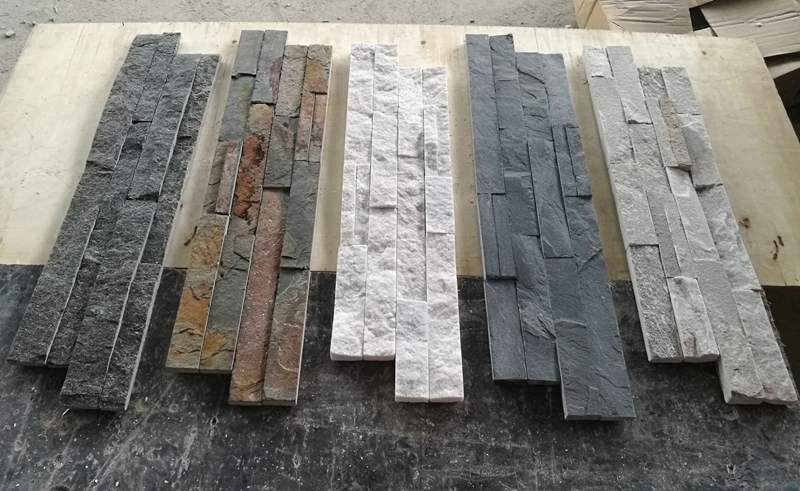
Managing B2B Lead Times & MOQ remains the primary hurdle between a successful project delivery and a site shut down by logistics failures. When sourcing natural or engineered stone, an oversight in production timing or order thresholds creates a cascade of delays that erode profit margins. Professional procurement teams must treat these variables as critical metrics to avoid the high costs of project stagnation and liquidated damages.
This guide details the stone production cycle from raw quarry extraction to final container packing. We analyze the specific logic behind Economic Order Quantity (EOQ) calculations and explain why custom fabrication shifts delivery schedules compared to standard stock. These sections serve as a technical standard for logistics managers to synchronize seasonal demand with factory capacity and quality control milestones.
Understanding the Production Cycle: From Quarry Extraction to Packing.
Controlling the stone production cycle from the managed quarry vein to the final reinforced crate ensures that 2026 commercial projects maintain color consistency and structural integrity across large-scale installations.
Raw Material Selection and Stone Grading
The production process starts at our managed quarries, where we select high-quality slate, quartzite, and marble to ensure material consistency. We source raw materials directly from our own quarry layers to maintain full control over color and texture variations. By bypassing middlemen, we secure the most stable veins of stone, which is critical for maintaining high B2B quality standards.
- Production teams grade the stone by hand before processing begins, ensuring that large orders for 2026 projects maintain a harmonious appearance.
- Strict selection criteria help minimize waste and ensure only durable, weather-resistant stone enters the cutting phase.
- Sourcing from the same quarry vein per order achieves a hue uniformity of 95% within a single batch.
Precision Infrared Cutting and Panel Assembly
Advanced machinery and specialized assembly techniques transform raw stone into easy-to-install interlocking panels. We use infrared cutting equipment and CNC diamond blades to achieve precise dimensions, which allows panels to fit together tightly during installation. This precision is what differentiates factory-direct stone from generic alternatives that often suffer from irregular edges and gaps.
| Production Stage | Technical Requirement | B2B Quality Standard |
|---|---|---|
| Material Sourcing | Direct Quarry Extraction | 95% Hue Batch Consistency |
| Panel Fabrication | CNC Diamond-Blade Cutting | Seamless Z-Shape Interlock |
| Structural Load | Weight Calibration | 8-12 lbs/sq.ft (No Footing) |
The Z-shape panel design eliminates visible vertical seams, creating a natural, continuous look on the finished wall. Our assembly process maintains specific weight standards, typically between 8 and 13 pounds per square foot, to remove the need for structural footings. This engineering approach reduces on-site labor costs and simplifies the installation process for large-scale developments.
Structural Bonding and Quality Control Protocols
A multi-stage inspection and specialized bonding process ensure the long-term durability of every stacked stone panel. We apply high-strength epoxy resin formulated specifically for Pietra naturale to create a permanent bond between the stone pieces and the panel backing. This chemical bond resists UV degradation and extreme temperature shifts, preventing delamination in harsh climates.
- The bonding occurs under controlled temperature and pressure conditions to prevent stones from falling off after installation.
- Inspectors perform three distinct quality checks: immediately after cutting, following panel assembly, and right before the final packing stage.
- Each panel is tested for freeze-thaw resistance, ensuring ASTM-standard durability for North American and European markets.
Export-Grade Packaging and Logistics Management
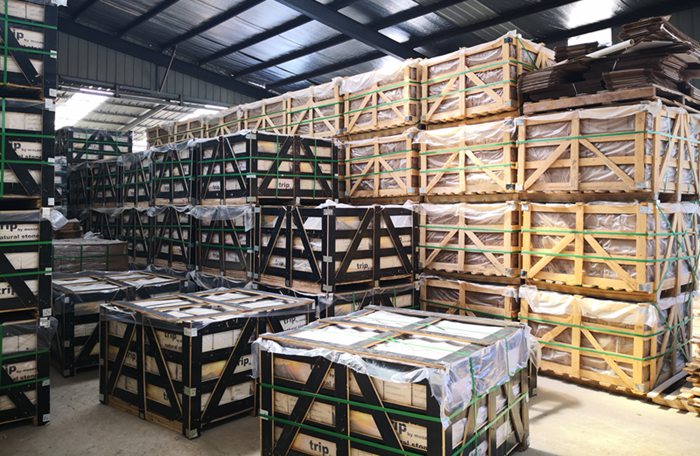
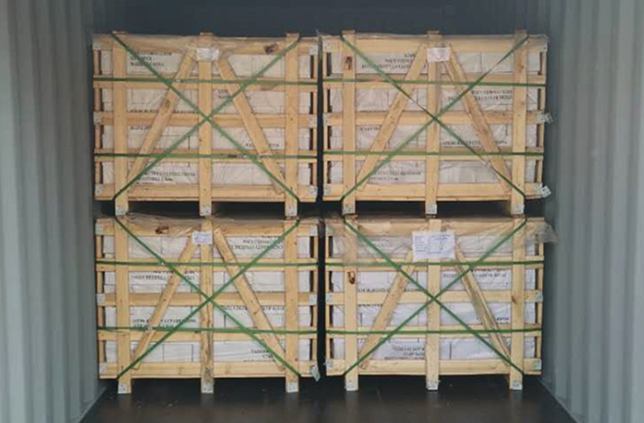
Our final production step focuses on protecting the product for international transit and optimizing shipping efficiency. We pack panels into reinforced 5-ply cartons and secure them in fumigated wooden crates designed to withstand the rigors of sea freight. Logistics teams strategically load over 220 containers annually to maximize space and reduce the risk of material shifting during transport.
Each shipment includes detailed labeling to help distributors manage inventory and provide clear product information to end-users. We also provide pre-shipment visual verification through high-definition photos and videos of the actual finished crates. This transparency allows wholesalers and dealers to confirm order accuracy before the balance payment is made, protecting cash flow and ensuring project timelines remain on track.

Why Do Custom OEM Orders Have Longer Lead Times Than Stock Items?
Custom stone production shifts the supply chain from a parallel process to a sequential one, where machine scheduling and quarry-vein matching take priority over immediate dispatch.
Stock items and OEM orders operate on fundamentally different timelines. While we maintain a steady inventory for standard series like Alaska Gray Quartzite or Midnight Slate to support immediate project needs, custom orders require us to initiate the entire manufacturing process from the moment of receipt. This on-demand approach means your order must compete for machine time on our infrared cutting equipment, which we calibrate for specific dimensional requirements.
On-Demand Production Scheduling and Resource Allocation
Effective resource allocation starts at the source. Unlike standardized inventory, custom projects demand that our production teams pull specific raw materials from precise quarry layers. We do this to ensure the stone batch matches your custom color profile with 95% hue uniformity.
- We prioritize “The Big 10 Inventory” for rapid shipping, but OEM orders require dedicated quarry extraction slots.
- Infrared cutting equipment requires specialized setup to handle unique height or thickness specifications beyond standard 6″ x 24″ panels.
- Scheduling must account for existing factory load to maintain CNC diamond-blade precision across all bespoke cuts.
Design Validation and Custom Branding Protocols
Private label and OEM orders involve extra steps to verify branding and product formats before the first stone is cut. We work with distributors to finalize logo placement and technical data on our 5-ply reinforced export-grade cartons. This validation phase ensures every custom specification aligns with our structural standards, preventing costly errors during high-volume manufacturing.
- Our design team coordinates with your logistics department to approve custom-printed shipping boxes and branding.
- We configure specialized production lines for non-standard Z-shape or S-shape panel formats.
- Material testing confirms that unique stone finishes meet our UV stability and freeze-thaw resistance benchmarks.
Sequential Quality Gate Checks for Bespoke Specifications
Quality control for bespoke orders is a tailored process that verifies unique project requirements at every stage. We use high-strength epoxy resins for specialized bonding, which requires monitored curing times that cannot be rushed without compromising structural integrity. Each custom order passes through three distinct inspection gates focused on the tolerances defined in your OEM contract.
- We perform inspections at the cutting, bonding, and final assembly stages to ensure 100% compliance with custom specs.
- Curing times for custom stone combinations are strictly enforced to prevent delamination in high-salinity or high-humidity environments.
- Logistics teams develop custom loading plans for non-standard plywood crates to minimize shifting risks during international transit.
Premium Factory-Direct Stacked Stone Ledger Panels

How to Calculate the Most Efficient Economic Order Quantity (EOQ).
Optimizing inventory for natural stone requires balancing the high cost of heavy-weight sea freight against the capital-intensive nature of stocking premium ledgestone batches.
Success in stone distribution starts with precise variable identification. We calculate annual demand by merging 2026 sales projections with historical data across our “Big 10” inventory. This demand directly dictates how often we pull from the quarry to maintain supply chain fluidity. Ordering costs extend far beyond the invoice price. We include administrative hours, customs clearance fees for specific HS codes like 6802.93.11, and terminal handling charges at destination ports.
Holding costs for stacked stone remain higher than many other building materials due to physical density. A standard crate weighs approximately 1,000kg, which demands reinforced warehouse flooring and specialized forklift equipment. Calculating these costs involves accounting for warehouse square footage, insurance premiums, and the interest on capital tied up in heavy stacked stone stock.
Balancing Ordering Costs Against Warehouse Holding Fees
We find the most efficient ordering frequency at the intersection where total logistics expenditure meets minimal inventory carrying costs. Heavy material like our Midnight Slate or Alaska Gray forces a trade-off: fewer shipments reduce freight setup fees, but excessive stock locks up liquidity and complicates warehouse management. We assess storage limitations based on the 17.5-ton USA port standard for weight-limited containers versus heavy-weight 26-ton approvals.
| Logistics Factor | Standard Panels (Flat) | Rough Stacked Panels |
|---|---|---|
| Average Weight | 30-40 kg/m² | 55 kg/m² |
| Max Coverage (20GP) | 750 – 860 m² | 480 – 540 m² |
| Inventory Impact | High Volume / Lower Turn | Lower Volume / Higher Value |
We leverage our 220-container annual volume to achieve economies of scale, yet we avoid overstocking slow-moving series like specific Marble or Pencil styles. By focusing on high-turnover models like Golden Honey or Glacier White, we maintain a 20-25 day production cycle that allows for leaner inventory levels. This strategy prevents the accumulation of “dead stock” and ensures that the stone remains part of a consistent color batch from the same quarry vein.
Leveraging Real-Time Data and Automation in 2026
Modern supply chains have moved past static spreadsheets. We integrate inventory software that tracks real-time sales of Flat and Rough series to adjust EOQ calculations automatically. These systems monitor lead times from the quarry to the warehouse, ensuring the ordering cycle accounts for manufacturing phases and port transit times. Digital dashboards provide visibility into stock levels, allowing dealers to trigger reorders exactly when needed Mount.
Automated demand forecasting helps maintain lean inventory without risking stockouts on high-demand architectural projects. By replacing manual tracking with these data-driven insights, we help our partners protect their cash flow. This shift from reactive to proactive ordering ensures that high-margin items are always available, while capital remains free for business expansion rather than sitting idle in a warehouse.
Managing Seasonal Demand: When is the Best Time to Place Your Orders?
Strategic procurement in 2026 shifts the competitive advantage to distributors who secure production capacity 60 to 90 days before peak regional installation windows.
Capitalizing on Early 2026 Low-Season Production Windows
January and February represent the most strategic window for placing bulk inventory orders. During these months, factory schedules are typically less congested, which allows the manufacturing team to provide maximum focus on precision cutting and assembly. At Pietra sorgente superiore, we utilize this period to process the “Big 10” best-selling colors with even higher levels of hue uniformity, as we can select and cut from the same quarry vein without the pressure of a high-season backlog.
- Early-year orders effectively bypass the typical manufacturing bottlenecks that occur when the global construction industry ramps up in the second quarter.
- Securing raw quartzite and slate materials during the winter months stabilizes your pricing before high-demand spring cycles begin.
- Quiet production windows lead to shorter lead times, often reducing the standard 20-25 day production cycle.
Aligning Inventory with Spring and Summer Construction Peaks
March and April are critical stock-up months as contractors and designers begin outdoor facade and landscaping projects. To meet this surge, distributors need a full inventory of the Rough and Flat series by late March. Given that production and shipping to major markets like the USA or Australia requires a combined window of roughly 60 days, orders for spring stock should be finalized no later than January.
- Matching order volumes to historical sales data from previous spring cycles helps prevent stockouts during the year’s busiest installation window.
- Planning for a 60-day total lead time ensures stone panels arrive on-site exactly when the ground thaws and masonry work becomes feasible.
- Prioritizing the Rough series ensures you have the 3.5cm thick premium panels ready for high-end exterior cladding requests.
Accounting for International Logistics and Shipping Buffers
Global shipping dynamics in 2026 require a proactive approach to transit times and port processing. While ocean freight from China to the US West Coast typically takes 18 days, inland transport and customs clearance can add significant variability. We recommend that logistics teams add a four-week buffer to standard shipping estimates to account for potential maritime congestion or port delays.
- Ordering in bulk during the mid-year helps consolidate shipments, which lowers the per-square-foot landing cost for heavy natural stone products.
- Maintaining a consistent flow of incoming containers avoids the risk of relying on a single large shipment that might face an unexpected customs hold.
- Fast container services can reduce transit to 11-12 days for urgent West Coast deliveries, though proactive planning remains the most cost-effective strategy.
Securing Stock for Q4 Interior and Commercial Finishing Projects
Interior design projects, such as luxury fireplace surrounds and hotel lobby feature walls, often reach the installation phase toward the end of the year. Placing orders for the Pencil and Marble series by August ensures these premium materials are available for high-end interior completions. Commercial contractors often require large quantities of consistent color batches for year-end handovers, making early reservation of quarry stock essential.
- Pre-ordering for the autumn season prevents the common year-end rush where shipping availability becomes scarce and more expensive.
- Early orders for the Pencil series ensure the delicate 1cm thick panels are handled with the necessary care during the peak shipping season.
- Securing stock in Q3 protects your margins against the freight rate hikes often seen in November and December.
Pro Tips for Speeding Up Factory Production and Quality Gate Checks
Optimizing stacked stone throughput requires a shift from manual sorting to CNC-driven precision and automated curing environments to ensure 2026 delivery schedules stay on track.
Effective factory management hinges on reducing the “rework loop.” In natural stone production, especially for complex Z-shape interlocking panels, every millimeter of error at the cutting stage compounds into hours of wasted labor during assembly. We focus on upstream technical accuracy to ensure the assembly line moves without interruption.
Utilize Infrared Cutting for Dimension Precision
We use CNC diamond-blade machinery equipped with infrared sensors to ensure every piece of natural slate or quartzite meets exact dimensions. This precision is vital for our 6” x 24” panel format. When the edges are cut to sub-millimeter tolerances, the “male-female” interlocking system fits together naturally, eliminating the need for workers to manually trim pieces during the bonding process.
- Infrared cutting ensures the modular Z-shape pieces align perfectly for a seamless architectural finish.
- Standardized dimensions allow for a steady flow from raw stone extraction to the assembly station.
- Precision edging minimizes the visible “stepped” gaps that often plague lower-quality wholesale stone.
Standardize a Three-Stage Quality Inspection
Quality control is not a final step; it is a continuous process. By establishing specific quality gates, we prevent faulty material from consuming further production resources. This is especially important for maintaining the 95% hue uniformity required for large-scale B2B projects in the US and European markets.
| Inspection Phase | Technical Parameter | Performance Benchmark |
|---|---|---|
| Raw Material Gate | Quarry Vein Consistency | 95% Hue Uniformity per Batch |
| Assembly Gate | Interlocking Joint Fit | Zero Substrate Visibility |
| Final Packing Gate | Crate & Carton Integrity | 5-Ply Reinforced Export Grade |
Optimize Epoxy Bonding and Curing Environments
The adhesive stage is often a production bottleneck. We apply high-strength epoxy resin specifically formulated for Pietra naturale to guarantee a permanent bond between the stone strips and the back substrate. To accelerate this without compromising structural integrity, we maintain a controlled environment where temperature and pressure are monitored in real-time.
We test the bond strength regularly during the mid-production cycle. This proactive testing prevents mass defects that could delay a 20GP container shipment. For regions with high humidity or extreme freeze-thaw cycles, such as Canada or the GCC, ensuring the epoxy is fully cured before packing is a non-negotiable step for long-term durability.
Integrate Logistics with Real-Time Production Data
Efficient factory throughput requires a tight link between the packing department and the shipping schedule. We sync our production data with logistics planning to move finished panels directly into fumigated wooden crates or plywood crates. This prevents floor congestion and reduces the risk of damage from excessive handling.
- We use strategic loading plans for our 220+ annual containers to maximize space and respect weight limits like the 17.5-ton USA port standard.
- Maintaining an organized inventory of matching L-shaped corners ensures complete project kits ship together, avoiding costly secondary logistics.
- We provide pre-shipment visual verification, including high-definition videos of the crates, so B2B buyers can confirm order accuracy before the balance payment.
Conclusione
Aligning order cycles with factory production timelines allows you to maintain consistent stock levels and avoid the pitfalls of seasonal shortages. Controlling these logistics helps protect your business margins and ensures that every batch meets the strict color consistency required for large-scale architectural projects. Precise supply chain management transforms stone sourcing from a variable risk into a predictable asset for your distribution network.
Review our Big 10 Inventory to identify high-demand colors currently ready for immediate dispatch. You can also contact our team to discuss specific MOQ requirements or to request a technical catalog for your upcoming project.
Domande frequenti
What is the lead time for a container of stone?
The standard lead time for a full container of stone is approximately 2 to 4 weeks. This duration covers the entire production cycle, including quarry extraction, precision cutting via wire saws, surface finishing (polishing or honing), and final quality control inspections before packing.
What is the minimum order for wholesale stone?
For wholesale distribution, the standard minimum order quantity (MOQ) is one 20-foot container. This volume optimizes logistics costs and ensures that the material is packed securely to maintain product integrity during international transit.
Can I mix different colors in one container?
Yes, you can mix different colors and material types within a single container. Most wholesale orders allow for 3 to 5 different variations, provided the materials are sourced from the same regional processing center to maintain efficient logistics and consolidated shipping.
How long does shipping from China to the US take?
Shipping transit times vary by destination: West Coast ports (e.g., Los Angeles/Long Beach) typically take 18 to 25 days, while East Coast ports (e.g., Savannah/New York) require 35 to 45 days. These timelines include port handling and typical customs clearance windows.
How to track my stone order status?
Order status is tracked through two primary methods: during production, you will receive weekly progress reports and photos from the facility. Once the container is loaded, you can track the shipment in real-time using the Bill of Lading (BOL) number on the ocean carrier’s official tracking portal.
