

ASTM C666 (Freeze-Thaw) testing is the primary defense against structural delamination and the 220 MPa of internal pressure that destroys exterior stone veneers. Ignoring these results leads to immediate warranty claims when porous materials expand by 9% during the first winter freeze.
Top Source Stone secures project integrity by sourcing high-density Quartzite and Slate from the same quarry vein to ensure 95% hue uniformity. Our CNC diamond-blade edges and interlocking Z-shape designs meet the 300-cycle standard, protecting B2B margins against harsh North American climate shifts.
What is the ASTM C666 Freeze-Thaw Test?
ASTM C666 measures stone durability by subjecting specimens to 300 rapid cycles of freezing and thawing to identify potential internal cracking or structural failure in cold climates.
The Mechanics of Laboratory Weathering Cycles
Laboratory technicians use this test to compress years of winter exposure into a few weeks. They place stone specimens into a controlled chamber that forces rapid temperature swings, exposing any hidden structural weaknesses or porous zones that might trap water. This process identifies exactly how a material handles the 9% volume expansion that occurs when water turns to ice within its pores.
- Cycle Range: Shifts internal specimen temperatures between 40°F and 0°F (-18°C to 4°C).
- Procedure A: The lab submerges specimens in water for both the freezing and thawing phases.
- Procedure B: Technicians freeze specimens in air and thaw them in water.
- Test Duration: Most protocols require 300 cycles to certify a material as freeze-thaw resistant.
- Damage Assessment: Periodic acoustic readings measure the “Relative Dynamic Modulus of Elasticity” to detect internal micro-cracks before they become visible.
ASTM Freeze-Thaw Resistance in Natural Stone Panels
Top Source Stone manufactures stacked stone panels specifically to withstand the brutal freeze-thaw cycles found in the US and Canada. We focus on mineral density and bonding chemistry to ensure our panels remain intact while many “faux” products or low-grade sedimentary stones begin to scale or delaminate after their first winter.
- Quartzite and Slate Composition: We use high-density minerals from our “Big 10 Inventory” like Alaska Gray and Midnight Slate, which naturally resist water absorption.
- Industrial Epoxy Bonding: Our panels utilize high-strength resin that maintains a rigid bond between stones even when substrate moisture exerts outward pressure.
- Thermal Stability: Unlike cement-based imitations, our 100% natural minerals do not shrink or expand at different rates than the stone itself, preventing internal stress.
- Precision Engineering: CNC diamond-blade edges ensure tight fits in our Z-Shape models, reducing the surface area where ice can penetrate the joints.
For B2B buyers, these technical specs are not just numbers. They represent a guarantee against costly warranty claims and structural failures. We provide certified lab reports and pre-shipment visual verification to ensure every crate meets these architectural standards before it leaves our factory.
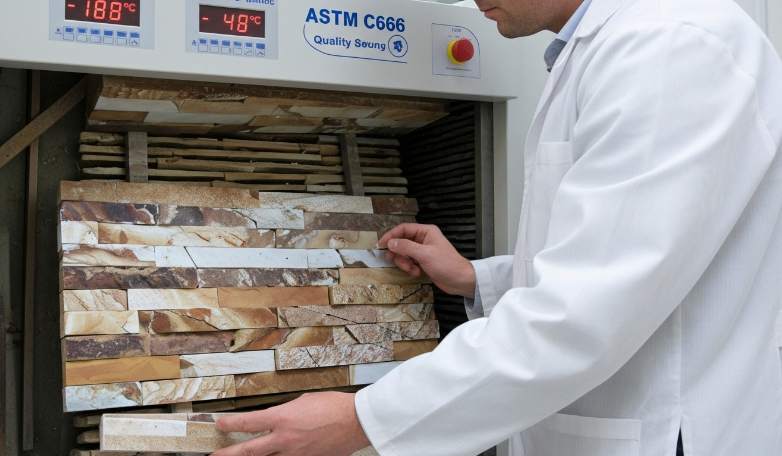
Why Do Some Stones Crack in Winter While Others Don’t?
Water expands 9% when frozen, creating 220 MPa of internal pressure. Dense quartzite and slate resist this structural fatigue, while porous sedimentary stones often delaminate and crack.
Internal Pore Structure and the Expansion of Frozen Water
The physics of winter stone failure is simple but destructive. Water enters the material through microscopic cracks and capillary channels. When the temperature drops, this trapped moisture undergoes a phase change that generates immense physical force from within the stone’s own structure.
- Volumetric Expansion: Freezing water expands by 9% in volume, creating internal tensile stress.
- Pressure Threshold: Ice formation generates over 220 MPa of pressure, which exceeds the internal strength of many stone types.
- Sedimentary Vulnerability: Limestone and sandstone absorb high levels of water and typically delaminate along visible bedding planes.
- Cycle Fatigue: Erratic temperature swings in regions like the northern United States and Canada accelerate micro-cracking and structural failure.
Freeze-Thaw Resistant Quartzite and Crystalline Integrity
At トップソースストーン, we mitigate winter damage by controlling the mineralogy of our exports. By selecting specific high-density materials, we provide a product that survives repeated freeze-thaw cycles without the scaling or bond failure common in inferior alternatives.
- Mineral Density: We utilize 100% natural Quartzite and Slate with dense crystalline structures that limit water entry pathways.
- ASTM Compliance: Our inventory meets ASTM durability standards specifically required for North American and Northern European climates.
- Quarry Consistency: We source from the same quarry vein per order to prevent patchy density variations that cause uneven thermal expansion.
- Structural Integrity: High-density minerals resist ice pressure significantly better than porous “faux” stone or sedimentary products.
For B2B buyers in cold climates, choosing a stone with low water absorption is the only way to avoid costly warranty claims. Our Quartzite and Slate panels are engineered to handle these environmental stresses, ensuring long-term performance on exterior facades and retaining walls。
Premium Factory-Direct Stacked Stone Ledger Panels
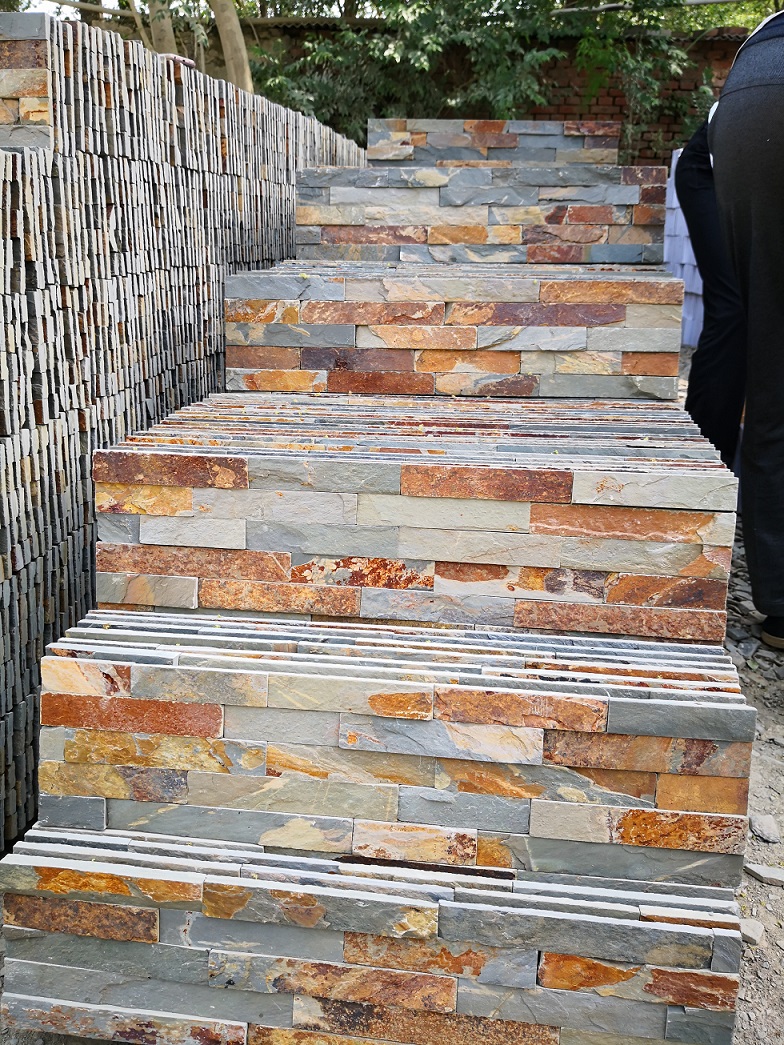
How Many Cycles are Required for North American Building Codes?
North American codes mandate 300 rapid freeze-thaw cycles under ASTM C666 for high-exposure materials, while ASTM C67 requires 50 cycles for masonry units to ensure long-term structural integrity。
ASTM C666 and ASTM C67 Cycle Benchmarks
Engineers use these standardized tests to predict how materials handle the expansion of freezing water. ASTM C666 is the more aggressive protocol, simulating extreme rapid temperature swings that occur in the northern United States and Canada. ASTM C67 focuses specifically on the endurance of masonry and brick units over a longer duration per cycle.
- ASTM C666: Requires 300 rapid cycles fluctuating between 40°F and 0°F within 2 to 4-hour intervals.
- ASTM C67: Specifies 50 cycles for masonry, involving 20 hours of freezing followed by 4 hours of thawing.
- Testing Procedures: Procedure A tests materials submerged in water, while Procedure B uses air-freezing and water-thawing to simulate varying exposures.
- Success Metrics: Labs measure mass loss and the relative dynamic modulus of elasticity to identify internal structural decay.
Durable Natural Stone Performance for Northern Climates
For B2B distributors and developers in cold-weather markets, material density is the only real defense against the 9% volume expansion of freezing water. Top Source Stone selects specific quarry veins to ensure our stacked stone panels meet the rigorous durability requirements of 2026 building codes.
- Inherent Resistance: Our quartzite and slate selections, such as Glacier White and Midnight Slate, feature a dense crystalline structure that blocks water infiltration.
- Anti-Delamination: High-grade metamorphic stone prevents the “flaking” or layer separation seen in high-porosity sedimentary stones.
- Environmental Stability: These materials maintain their bond and appearance even in high-salinity coastal regions or areas where deicing salts are used heavily.
- Structural Integrity: By meeting ASTM standards, these stones ensure exterior veneers do not crack or shift during repeated seasonal temperature swings.

Comparing Slate and Quartzite Freeze-Thaw Performance
Quartzite offers a higher safety margin for extreme northern climates due to massive compressive strength, while slate remains reliable if you manage its natural cleavage planes.
| Feature | Natural Slate | Natural Quartzite |
|---|---|---|
| Compressive Strength | High (Standard Density) | Extreme (20,000–40,000+ PSI) |
| Water Absorption | Minimal (Non-absorptive) | Near Zero (Ultra-dense) |
| HS Code | 6803.00.90 | 6802.93.11 |
| Primary Risk | Cleavage flaking in saturation | Internal stress resistance |
How Mineral Density Prevents Internal Expansion
Freeze-thaw damage happens when trapped water expands by 9% in volume, creating enough pressure to crack porous materials. Quartzite uses its extreme density and massive compressive strength, often exceeding 40,000 PSI, to resist these internal forces. It provides a structural buffer that makes it nearly immune to the erratic temperature cycles predicted for 2026 winters.
Slate relies on its non-absorptive structure to keep water out entirely. While it works well in most cold regions, it has a directional weakness along its natural cleavage planes. If the stone becomes saturated in a heavy-freeze environment, it can flake or split along those layers. Quartzite lacks these bedding planes, so it maintains more uniform strength under pressure.
ASTM C666 Standards in the Big 10 Inventory
We subject our トップソースストーン inventory to rigorous testing to ensure zero delamination in harsh northern climates. While the industry often uses ASTM C666 as a benchmark, our focus remains on quarry-direct consistency to protect your project margins. By sourcing from the same quarry vein, we maintain 95% hue uniformity and consistent density across every panel.
- High-Traffic Quartzite: Glacier White and Alaska Gray models provide the best durability for areas with high freeze-thaw exposure and foot traffic.
- Reliable Slate: Carbon Black and Midnight Slate models serve as time-tested solutions for vertical wall applications where standard drainage is present.
- Batch Consistency: We source 100% natural stone from the same layer to prevent the patchy appearance often seen in lower-grade mixed batches.
- Wholesale Protection: As a B2B factory, we ensure these specifications meet North American building codes for dealers and retailers.
Proper installation remains critical even for the strongest stone. Using CNC diamond-blade edges ensures our Z-Shape and S-Shape panels interlock tightly, which minimizes the space for water to collect between joints and freeze. This precision reduces the risk of veneer cracking or bond failure over time.

Why B2B Buyers Should Demand Certified Lab Reports?
Certified ASTM C666 reports prove stone panels withstand freeze-thaw cycles. These documents serve as critical risk-mitigation tools to verify performance before bulk inventory leaves our factory.
Validating Material Performance Through Standardized Testing
The ASTM C666 standard serves as the technical benchmark for infrastructure safety. This test exposes stone specimens to extreme thermal stress to predict long-term durability in volatile environments. Instead of relying on visual assessments, engineers use this data to confirm structural integrity before installation begins.
- Thermal Stress Cycling: Testing subjects specimens to 300 rapid cycles from -18°C to 4°C to simulate the harshest winter conditions.
- Durability Factor (DF): Certified reports calculate the DF to measure how well the internal structure resists cracking or scaling.
- Internal Pressure Control: Lab data verifies the air-void spacing required to prevent internal pressure build-up during ice expansion.
Verifying Freeze-Thaw Resistance for Northern Climates
For importers in the United States and Canada, freeze-thaw resistance is a non-negotiable requirement. Top Source Stone materials meet these specific standards to ensure stacked stone panels do not delaminate when exposed to heavy snow or deicing salts. These reports bridge the gap between quarry extraction and site-ready performance.
- Regional Compliance: Reports confirm materials meet the high salinity and humidity resistance necessary for coastal and high-snow regions.
- Batch Consistency: We source from the same quarry vein to ensure that tested performance applies to the entire order.
- Visual Verification: We pair technical certifications with high-definition photos and videos of the actual batch before you pay the balance.
Demanding these reports protects your margins and reduces liability. By verifying stone density and absorption rates at the factory level, B2B buyers prevent the costly failures often seen in lower-grade porous materials。
よくある質問
Is ASTM C666 the correct standard for testing natural stone?
ASTM C666 was designed for concrete durability using rapid temperature cycles. While the stone industry used it as a proxy for years, it fails to account for the unique geological composition of natural minerals. Modern testing now shifts toward standards like WK81245, which provide specific grading for flaking and discoloration rather than a simple pass-fail result. ASTM actually withdrew the C666 standard in 2024, reinforcing the need for stone-specific protocols.
Does freezing weather cause stacked stone to crack?
Freezing temperatures only cause damage if moisture is present within the stone. Water expands by approximately 9% when it turns to ice, creating internal pressure that leads to flaking and structural weakening. We recommend high-density materials like Quartzite or Slate for northern climates because their low porosity ensures they absorb very little water, effectively neutralizing the risk of expansion-related cracks.
Why does stone veneer sometimes peel away from exterior walls in winter?
This usually results from water infiltration behind the panel. If a drainage plane or weep screed is missing, trapped moisture undergoes freeze-thaw cycles that break the mortar bond. To prevent this, Top Source Stone uses CNC diamond-blade edges to ensure a precision fit and tight interlocking, which minimizes water entry points. Proper installation with rainscreen systems ensures that any incidental moisture can drain away before it freezes.
How many freeze-thaw cycles should stone panels withstand in Canada?
Standard Canadian CSA-A231.1 regulations require 50 cycles with no more than 1% mass loss. For commercial projects in extreme climates, we test our materials against the more stringent 300-cycle benchmark. This higher standard provides better assurance that the stone will maintain its structural integrity through decades of harsh North American winters where deicing salts are frequently used.
What is the most durable stone for outdoor walls in cold climates?
Granite and Quartzite are the top performers for frost resistance. Their high density and virtually zero water absorption rates make them naturally resistant to the expansion pressures of ice. Materials from our core inventory, such as Glacier White or Alaska Gray Quartzite, remain stable across extreme temperature ranges from -40°F to 176°F without the UV fading or structural breakdown common in manufactured “faux” stone.
Final Thoughts
Choosing low-cost, porous stone for northern projects creates an immediate risk of delamination and expensive warranty claims. Our “Big 10” Quartzite and Slate inventory utilizes high-density minerals that withstand the 220 MPa of internal pressure generated by freezing water. Investing in direct quarry consistency is the only reliable way to protect your project margins and dealer reputation against harsh winter cycles.
Stop gambling on unverified materials and demand technical transparency. We provide certified lab reports and pre-shipment visual verification so you can inspect the density and finish of your specific batch before paying the balance. Contact our team today to request a sample kit or discuss a 300-square-meter trial order for your next cold-region development.
