

Stone over brick installations often fail due to poor substrate assessment, resulting in costly delamination and structural liability. Overlooking painted surfaces or improper load calculations destroys project margins and damages professional reputations.
We verify the stability of 8-12 lbs/sq.ft natural stone panels using same-batch quarry consistency to prevent patchy aesthetics. This methodology utilizes CNC diamond-blade precision and high-strength polyurethane adhesives to ensure structural integrity for large-scale remodeling projects.
Can You Install Stacked Stone Directly Over Brick?
Yes, provided the brick is structurally sound. Unpainted surfaces need a masonry skim coat, while painted brick requires paint removal or a metal lath and scratch coat to bond.
Assessing Substrate Integrity and Surface Preparation
Before starting the installation, you must verify that the existing brick can support the additional load. A stable foundation is mandatory to prevent delamination or structural failure over time.
- Structural Inspection: Check the wall for structural cracks, spalling, or loose mortar joints that could compromise the bond.
- Unpainted Brick: Apply a masonry skim coat (brown coat) to fill gaps and create a plumb, level substrate for the stone panels。
- Painted Brick: Strip the paint entirely or install cement board using mechanical fasteners drilled directly into the masonry to create a fresh bonding surface.
- Contaminant Removal: Clear the surface of all dust, oils, and debris to facilitate a permanent chemical bond with the thin-set mortar.
Eliminating Structural Footings with Lightweight Natural Panels
Most existing brick walls are not designed to carry the weight of full-bed stone. Utilizing engineered natural stone panels allows for a masonry upgrade without the cost and labor of adding new structural footings or wall reinforcements.
- Panel Weight: トップソースストーン panels weigh between 8-12 lbs/sq.ft (30-40kg/m²), making them compatible with standard brick substrates.
- Precision Fit: CNC diamond-blade edges ensure tight tolerances, minimizing visible joints even when the underlying brick texture is irregular.
- Visual Consistency: We source materials from the same quarry vein per batch to ensure 95% hue uniformity across the entire installation.
- Adhesion Protocol: Use the back-buttering technique on 100% natural stone panels to achieve full coverage and eliminate moisture gaps behind the stone.
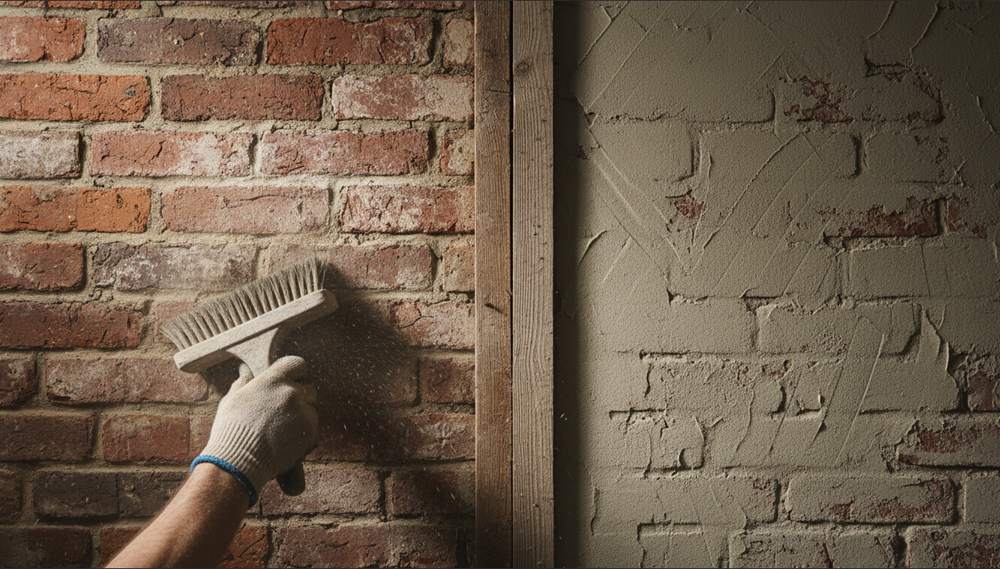
Preparing the Surface: Cleaning and Etching Old Brick
Clean brick with 100-400 psi water or chemical etching. Pre-wetting prevents acid burn, ensuring the substrate bonds permanently with adhesives required for 8-12 lbs/sq.ft natural stone panels。
Installing heavy natural stone over old brick requires more than a simple rinse. You are building a foundation for a high-load vertical installation. If the brick surface remains slick, dirty, or chemically reactive, the adhesive bond will fail regardless of the mortar quality.
Masonry Cleaning and Chemical Etching Protocols
Standard surface preparation relies on mechanical and chemical methods to expose the brick’s pores. High-pressure washing is often too aggressive for older masonry, so we focus on controlled rinsing and saturation protocols。
- Pressure Limits: Use low-pressure rinsing between 100 and 400 psi. This removes surface grime without etching the mortar joints or fracturing the brick face.
- Pre-Wetting: Saturate the brick surface with clean water before applying cleaners. Dry brick acts like a sponge; pre-wetting prevents the brick from absorbing chemicals too deeply, which avoids “acid burn” and permanent staining.
- Chemical Application: Apply alkaline degreasers for carbon soiling or mild acidic solutions for paint residues.
- Tool Selection: Use only soft-bristled or nylon brushes. Avoid metallic brushes because they leave microscopic steel particles that cause rust spots behind the stone finish。
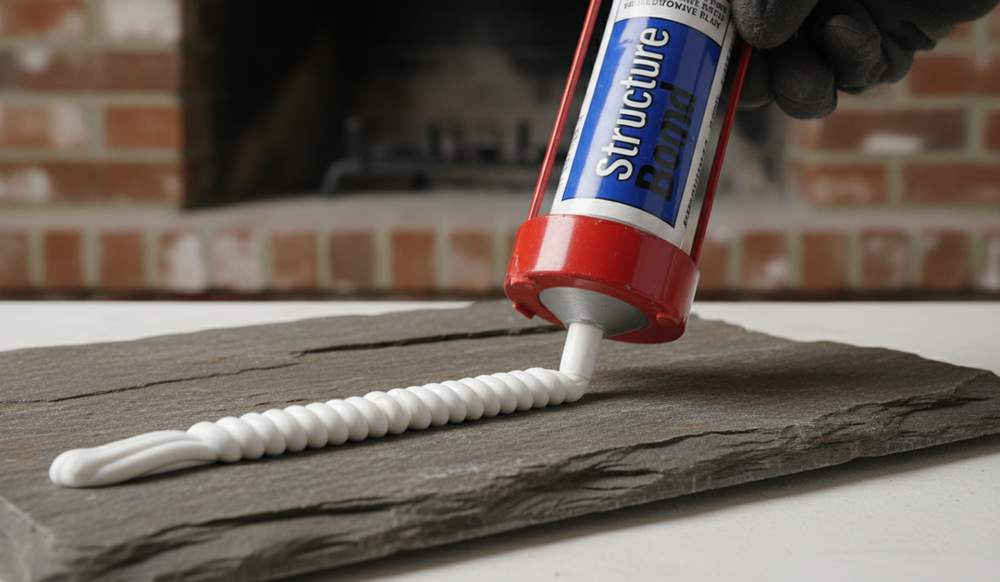
Substrate Integrity for Heavy Natural Stone Loads
Top Source Stone panels consist of 100% natural minerals, making them significantly heavier than manufactured “faux” veneers. You must verify that the existing brick can handle the dead load of genuine slate or quartzite without pulling away from the structure.
- Load Capacity: Confirm the cleaned brick supports 8–12 lbs/sq.ft (30-40kg/m²), the standard weight for flat natural stone panels。
- Contaminant Removal: Strip all efflorescence and salts. These minerals migrate to the surface and break the high-strength epoxy resin or polymer-modified thin-set bond.
- Depth Requirements: Check that the brick vein is stable enough to accommodate premium profiles ranging from 1cm to 3.5cm in thickness.
- pH Neutralization: Rinse the surface thoroughly after any chemical etching to return the brick to a neutral pH. Residual acid reacts poorly with stone adhesives and can lead to delamination.
Premium Stacked Stone for Professional Projects
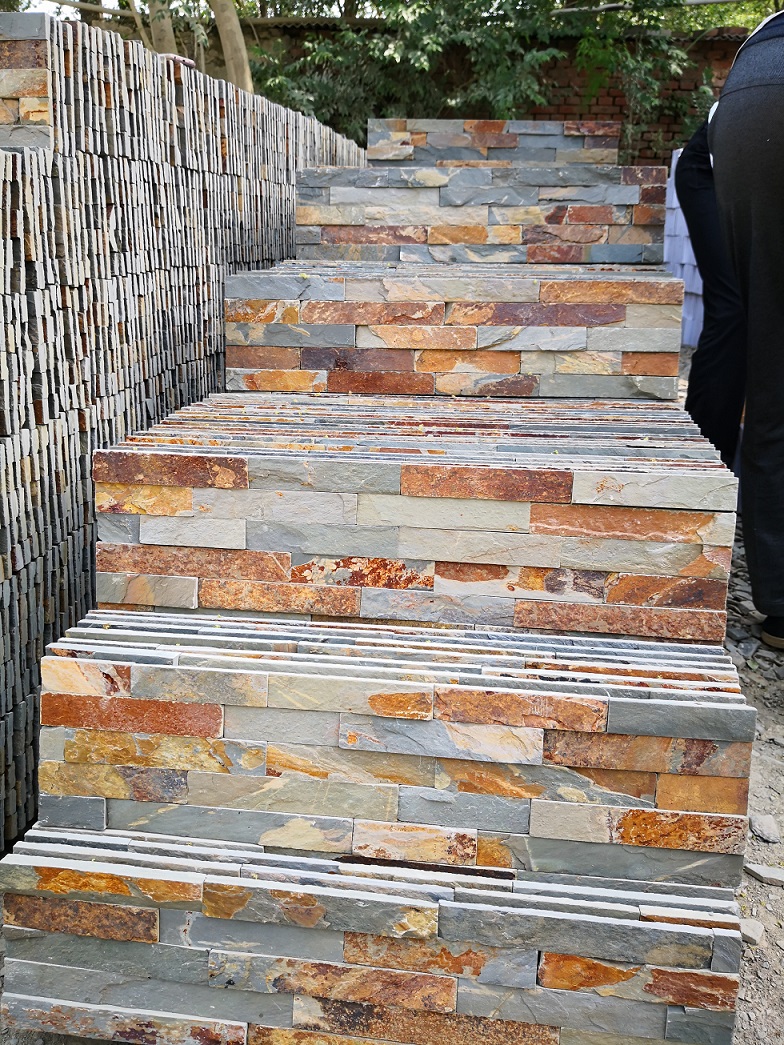
Do You Need a Scratch Coat or Metal Lath?
Porous, unpainted brick supports direct stone installation. If the surface is painted, sealed, or smooth, you must install metal lath and a scratch coat to ensure mechanical bonding.
Substrate Conditions that Mandate Mechanical Bonding
Metal lath acts as a mechanical base that transfers the stone load directly to the structural framing. You need this system whenever the brick surface is too smooth or contaminated for a chemical bond. Standard Type S masonry cement requires a porous, open-cell surface to grab; painted or sealed masonry blocks this entry, making mechanical reinforcement the only safe option。
- Scratch Coat Thickness: 1/2 inch to 3/4 inch.
- Adhesion Method: Mechanical interlock via scored mortar grooves.
- Required Substrates: Painted brick, glazed tile, or smooth-poured concrete.
For B2B projects where structural liability is a priority, skipping the lath on questionable surfaces often leads to bond failure. The scratch coat provides the necessary texture that a smooth brick wall lacks, creating a predictable and level surface for the final panel application.
Supporting the Weight of Real Stone Panel Systems
Natural stone is dense and heavy. While thin veneer alternatives are lighter, our 100% natural quartzite and slate panels place significant shear stress on the wall. A properly prepared substrate must handle the specific gravitational pull of these minerals without sagging or pulling away from the brick.
- Standard Panel Weight: 30-40kg/m² (Approx. 8-12 lbs/sq.ft).
- Rough Series Weight: 55kg/m² for premium 3.5cm thickness models.
- Material Composition: 100% Natural Slate or Quartzite.
In regions subject to extreme temperature cycles, such as the US and Canada, a mechanical interlock is vital for freeze-thaw resistance. The scratch coat prevents delamination caused by moisture expansion behind the stone. By following these preparation standards, you ensure the installation meets 2026 durability requirements and protects the long-term integrity of the architectural finish.
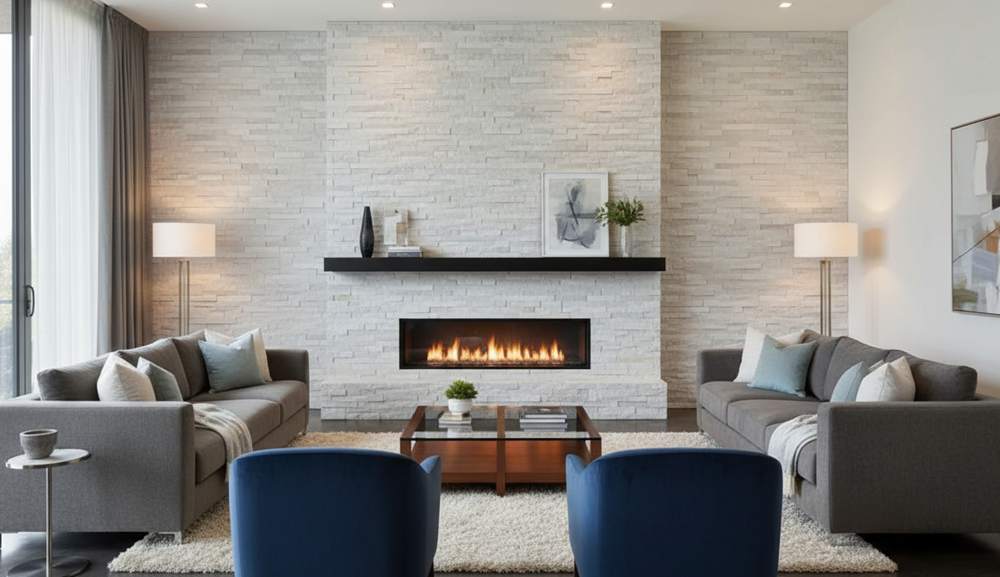
Selecting the Best Adhesive for Brick-to-Stone Bonding
Polyurethane adhesives and high-strength epoxy resin systems provide superior flexibility and weather resistance compared to traditional mortar, ensuring structural integrity for natural stone applied over brick substrates.
| Adhesive Type | Primary Benefit | Set/Cure Time |
|---|---|---|
| SB-20 Flex-Bond | High-leverage strength for heavy walls | 24-hour full cure |
| SB-15 Rapid Set | Works on frozen or wet surfaces | 15-minute initial set |
| Structure Bond | Acid and caustic resistance | 8-minute initial set |
| Loctite PL 500 | Bridges gaps on irregular brick | 24-hour full cure |
In 2026, installers prefer polyurethane-based construction adhesives like SB-20 or Structure Bond for brick-to-stone projects. These adhesives provide superior flexibility, weather resistance, and faster cure times than traditional mortar. Using panels with factory-applied high-strength epoxy resin backings further prevents stone delamination in extreme climates.
Performance Standards for Polyurethane Masonry Adhesives
Polyurethane formulas like SB-20 Flex-Bond offer the leverage required for heavy natural stone walls. These adhesives apply with a standard caulk gun and bond effectively to both wet and dry surfaces, making them a staple for large-scale landscaping and exterior cladding。
- SB-15 Rapid Set: Reaches a secure bond in 15 minutes, allowing for fast installation on frozen or wet brick substrates.
- Structure Bond Technology: Provides maximum resistance to dilute acids and caustic solutions found in outdoor commercial environments.
- Gap Bridging: Options like Loctite PL 500 fill voids on irregular or aging brick surfaces to maintain a flat installation plane.
For any brick-to-stone project, apply the adhesive in a continuous bead to one surface. Press the materials together firmly to ensure contact and allow 24 hours of curing before applying any load or foot traffic.
High-Strength Epoxy Resin for Enhanced Panel Integrity
トップソースストーン utilizes proprietary high-strength epoxy resin adhesives to bond individual stones to the panel backing. This industrial-grade system ensures a permanent connection that resists high salinity and humidity, which is critical for coastal projects or regions like the GCC.
- Freeze-Thaw Resistance: Our resin properties prevent the stone from separating from the panel during the extreme temperature shifts projected for 2026.
- Precision Fit: CNC diamond-blade edges work with high-strength resins to provide a tight-fitting, modular installation.
- Substrate Compatibility: The epoxy backing creates a stable interface that accommodates the different thermal expansion rates of natural stone and brick.
We focus on Same-Batch Quarry Consistency to ensure that the chemical bond and the visual aesthetic remain uniform across the entire project. This factory-controlled approach eliminates the risks associated with mixing traditional mortars on-site.
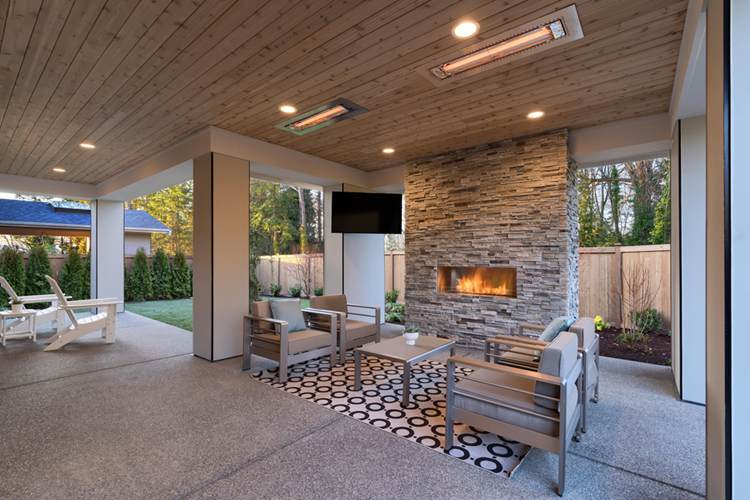
Handling the Extra Thickness at Corners and Mantels
Pre-fabricated L-corners and 180-degree panel rotation eliminate vertical seams, while a 0.75-inch non-combustible depth ensures a flush, fire-safe mantel interface.
Structural Alignment for Mantel Headers and Corners
Managing stone depth at transition points requires specific physical installation techniques to maintain a natural look and structural safety. For external corners, installers must avoid creating a “stair-step” effect by varying the orientation of the panels. Fireplace interfaces demand even stricter adherence to thickness standards to meet local fire codes and ensure the mantel sits flush against the stone facing。
- Corner Rotation: Rotate corner pieces 180 degrees between each row to hide vertical seams and maintain the natural stone pattern.
- Material Waste: Allocate an additional 10% material buffer for corners to account for precise cuts and adjustments.
- Firebox Interface: Ensure non-combustible facing panels reach a minimum 0.75-inch thickness to extend behind the mantel edges.
- Header Leveling: Use shims to level mantel legs and headers before applying high-strength construction adhesive to compensate for stone thickness variations.
Seamless Transitions Using Factory-Matched L-Corners
At Top Source Stone, we eliminate the need for difficult onsite miter cuts by providing pre-fabricated 90-degree L-corners for every model in our inventory. These pieces ensure that the texture and color remain synchronized as the stone wraps around a wall or fireplace column, maintaining the “Direct Quarry Source” quality throughout the installation.
- CNC Precision: Every L-corner uses CNC diamond-blade edges to provide a consistent fit for panels ranging from 1cm to 3.5cm in thickness.
- Labor Reduction: Our “Project-Ready Full Solution” uses these corners to hide the underlying substrate from side views, significantly reducing onsite labor hours.
- Adhesion Protocol: Back-butter each L-corner and the wall surface with thin-set mortar to fill all voids in rough-textured stone models。
- Visual Synchronization: We source corner components from the same quarry layer as the flat panels to ensure 95% hue uniformity across the entire batch.
Using these factory-engineered corners allows wholesalers and contractors to deliver a professional finish that eliminates visible gaps. This system ensures the stone appears as a solid, structural element rather than a thin veneer, which is essential for high-end B2B projects in the North American and Australian markets.
よくある質問
Can you install stacked stone over brick without using a metal lath?
Direct installation works if the brick is structurally sound, clean, and unpainted. You should apply a masonry skim coat to level the surface for a better bond. If the brick is painted, deteriorating, or contaminated, you must install a metal lath with galvanized fasteners to create a stable substrate capable of supporting the weight of natural stone panels。
What is the best adhesive for bonding natural stone to brick surfaces?
Polymer-modified thinset mortars are the standard for this application because they offer higher bond strength than traditional Type N or S mortars. Engineered systems, such as Laticrete MVIS, provide the necessary flexibility to handle thermal expansion and the freeze-thaw cycles required for 2026 climate standards in North America and Europe.
Is it necessary to remove the original brick before starting the installation?
No, you can skip the demolition process and install directly over existing brick to save time and labor costs. Simply clean the surface with a wire brush to remove loose debris and ensure it is dry before applying a scratch coat or adhesive. This preserves the structural integrity of the wall while updating the aesthetic.
How should painted brick be treated before applying stone veneer?
Paint prevents mortar from bonding to the brick, so you should remove it via sandblasting or mechanical stripping. If the paint cannot be removed effectively, overlay the brick with cement board or metal lath. This provides a clean, porous surface that ensures the stone adhesive can achieve a permanent mechanical bond.
How do you finish the edges when the stone is thicker than the brick substrate?
Using a masonry skim coat helps plumb the wall before you begin. To manage visible transitions, Top Source Stone provides matching L-shaped corners for all series. These pre-fabricated 90-degree pieces wrap around the edges, concealing the thickness of the panel and the underlying brick substrate for a clean, architectural finish.
Final Thoughts
Sourcing from a direct quarry factory eliminates the visual inconsistencies and bond risks often found in middleman-supplied stone. Top Source Stone ensures 95% hue uniformity per batch, protecting your project from patchy finishes and the high labor costs of onsite sorting. Precision CNC-cut edges and our “same-vein” sourcing protocol provide a professional-grade interlock that secures your reputation and your profit margins.
Request a sample of our “Big 10” best-sellers to verify the stone density and interlocking precision firsthand. We support new dealers with trial orders starting at 300 square meters, allowing you to test market demand with minimal risk. Contact our team to discuss private label options or to secure your inventory of freeze-thaw resistant quartzite and slate today.
