

Integrating Corner Units (L-Shaped) into your procurement strategy is the only way to avoid the 20% material waste trap common in manual field mitering. Relying on on-site cuts inflates labor costs and creates installation bottlenecks that directly erode project margins for construction managers and wholesalers.
Our factory-engineered solution utilizes CNC diamond-blade precision to ensure 95% hue uniformity across every 90-degree transition. By sourcing same-batch quarry stone with calibrated thicknesses up to 3.5cm, we provide a project-ready system that slashes installation timelines by 50% while protecting your bottom line.
The Outside Corner Dilemma: Why Manual Mitering is a Cost Trap
Manual mitering creates a 20% waste trap and inflates labor costs. Prefabricated L-corners slash installation time by 50% while ensuring 95% color uniformity and factory-precision transitions.
Financial Impact of Manual Labor and Stone Waste
Traditional on-site mitered edges look clean when executed perfectly, but the math rarely works for the bottom line. Fabricators often charge upwards of $3,500 in labor alone for precision mitered edges on standard residential applications. This high overhead stems from the extreme skill required to calculate angles and execute back-cuts without shattering the natural stone。
- Material Loss: Field cutting typically results in 20% material waste due to breakage, edge grain mismatching, and calculation errors.
- Labor Bottlenecks: Reliance on highly skilled stone masons limits your ability to scale large-scale 2026 construction projects.
- Variable Quality: On-site results depend entirely on individual craftsperson expertise, leading to inconsistent finishes across different job sites。
Prefabricated L-Corner Units as a Project-Ready Solution
We eliminate the “corner dilemma” by supplying factory-engineered L-shaped units that wrap around 90-degree transitions. These units function as a plug-and-play solution, removing the need for specialized diamond-blade cutting in the field. By shifting the precision work from the job site to our CNC-equipped facility, we help dealers protect their project margins.
- Color Consistency: Top Source Stone provides matching L-corners for every series, ensuring 95% hue uniformity by sourcing from the same quarry vein per batch.
- CNC Precision: Every unit features factory-calibrated 90-degree transitions, eliminating the “zipper effect” common in manual installations.
- Timeline Efficiency: Integrating factory corners reduces total project installation timelines by 50% compared to traditional field mitering.
- Technical Specs: Available in 6″ ×24″ or 6″ ×22″ configurations with thicknesses ranging from 1cm to 3.5cm to match flat panels.
Choosing prefabricated corners is an operational decision. It shifts the focus from managing onsite errors to maintaining high production rates. For wholesalers and brand owners, this consistency ensures that the architectural intent is met without the risk of field installation variability.
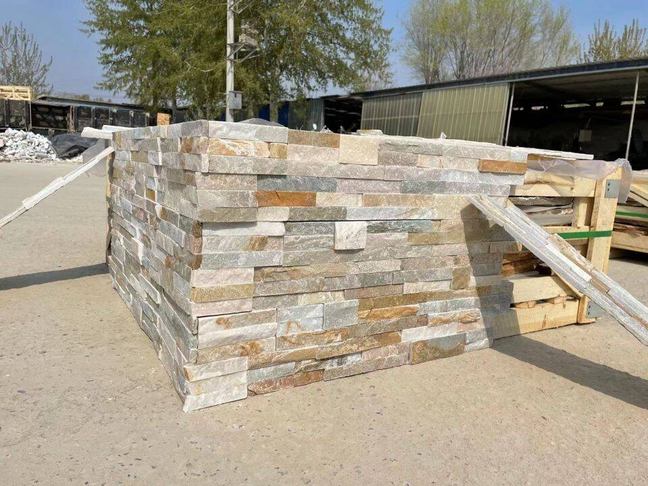
What Exactly are Prefabricated L-Shaped Corner Units and How Do They Work?
These pre-assembled 90-degree stone components wrap external wall corners to eliminate manual on-site mitering, reducing installation time by 50% while ensuring texture continuity.
Engineering the 90-Degree Interlocking Joint
Manual mitering on-site is a cost trap. Field-mitered corners demand high installer expertise and often result in 20% material waste from cutting errors. Prefabricated L-shaped units solve this by providing a fixed 90-degree structure that mimics the appearance of full-bed structural masonry without the weight or labor overhead.
These units function as a structural wrap for external wall transitions. By utilizing a specific physical configuration, they remove the “zipper effect” where vertical gaps become visible at the corner seams. Installers set these corner pieces first, allowing the rest of the wall to move outward with perfect alignment.
- Interlocking Connection: Utilizes a “male-female” system to integrate with standard Z-shape or S-shape flat panels。
- Natural Staggering: Provides a staggered edge that conceals the installation substrate and eliminates “stepped” gaps.
- Substrate Compatibility: Fits standard wall types including cement board, brick, and concrete without extra footings.

Texture Synchronization and Quarry Batch Consistency
Color shifting is a common failure point in large-scale commercial stone projects. If corners are sourced separately from flat panels, the wall looks patchy. We solve this by sourcing corner units from the same quarry vein as the main panels, ensuring 95% hue uniformity across the transition.
Precision is maintained through CNC diamond-blade cutting. This engineering approach ensures that the depth of the corner unit matches the adjacent ledgestone panels exactly. For high-volume 2026 commercial bids, this consistency allows for faster procurement and predictable architectural results across every square foot。
- Same-Batch Sourcing: Minimizes natural color shifts by pulling material from identical quarry layers.
- CNC Precision: Ensures clean architectural lines and a tight fit for every model in our Big 10 Inventory.
- Calibrated Depth: Maintains a thickness of 1cm to 3.5cm, aligning perfectly with standard and rough-cut flat panels。
Boost Profitability with Fast-Installing Stone Panels
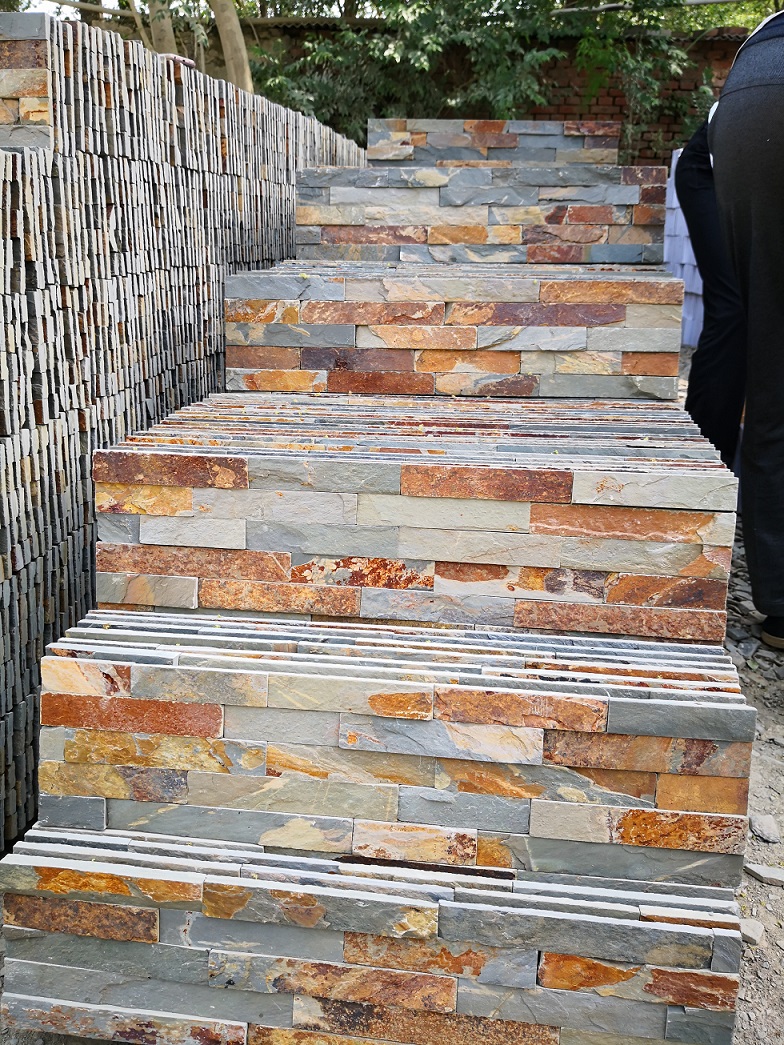
Mitered Cuts vs. Prefab Corners: A Labor and Cost ROI Analysis
Prefabricated L-shaped corners outperform manual mitered cuts in ROI by slashing installation time by 70%. Reduced skilled labor costs and material waste more than offset the unit price。
| Feature | Manual Field Mitering | Top Source Prefab Corners |
|---|---|---|
| Installation Speed | Slow (Requires 2-stage cutting) | Fast (Plug-and-play installation) |
| Labor Requirement | High-cost master mason | Standard installation crew |
| Material Waste | ~20% (Scrap from mis-cuts) | Zero waste at corners |
| Edge Quality | Variable (Risk of jagged edges) | CNC diamond-blade precision |
Productivity Gains and Labor Skill Requirements
Manual mitering creates a scalability bottleneck for large-scale projects. When installers cut corners on-site, they must perform a two-stage process: a straight cut followed by a 45-degree back-cut. This is time-consuming and leaves no room for error. We see many projects where field-mitered joints delaminate because the bond surface is too thin or the glue fails under thermal expansion.
- Efficiency: Field labor hours drop from hours to minutes when crews use modular interlocking pieces instead of manual trimming.
- Skill Gap: Prefab units arrive pre-assembled, allowing crews with standard experience to maintain high production rates without the risk of jagged edges.
- Precision: Manual cuts often require selective stone trimming to align textures, whereas L-corners provide an immediate textural match.
- Risk Mitigation: Eliminating on-site mitering removes the common “zipper effect” and misaligned joints that lead to expensive re-work.
CNC Diamond-Blade Precision and Project-Ready Solutions
Top Source Stone manufactures L-shaped corners using CNC diamond-blade technology. This ensures every piece meets at a perfect 90-degree angle with a seamless wrap-around finish. For wholesalers and dealers, this level of factory control means fewer complaints about visual “patchiness” on high-visibility wall transitions.
- Hue Uniformity: We source corner units from the same quarry vein as the flat panels to guarantee 95% color consistency.
- Structural Integrity: One-piece L-corners eliminate the weak glue joints found in field miters, making them ideal for freeze-thaw climates。
- Waste Reduction: Our Project-Ready Full Solution eliminates the 20% material scrap usually generated by wet-saw setups on-site.
- Interlocking Design: Every model in our “Big 10” inventory has matching corners that utilize a male-female connection to hide vertical seams。
B2B buyers should prioritize these pre-fabricated units to protect their margins. While the unit price of a corner piece is higher than a flat panel, the total installed cost is significantly lower. You save on specialized labor and avoid the hidden costs of broken stone and slow project timelines.

How Do You Achieve a Flawless Seamless Transition on 90-Degree Corners?
Achieve seamless 90-degree transitions using prefabricated L-shaped units for 95% hue uniformity or precision miter cuts to maintain natural stone vein continuity across wall joints.
Manual Miter Cutting and On-Site Alignment
Traditional corner construction relies on the installer’s ability to manipulate raw panels into a clean joint. Field mitering is often necessary for non-standard wall angles, but it requires extreme precision to avoid the “zipper effect” where stone patterns fail to align. We recommend sourcing material from the same quarry vein to ensure the natural quartzite or slate texture remains consistent as it wraps the corner.
- Cutting Technique: Perform 45-degree miter cuts using a wet saw equipped with a diamond blade to prevent edge chipping.
- Vein Matching: Select adjacent pieces from the same batch to ensure the visual flow of the stone continues naturally。
- Dry Fitting: Execute a full dry fit of all components to verify 90-degree alignment before applying high-strength epoxy adhesive.
- Substrate Adjustment: Use relief cuts for non-standard wall angles to accommodate slight variations in the wall surface.
Prefabricated L-Shaped Corners and CNC Precision
Manual mitering is a cost trap that increases labor expenses and material waste by up to 20%. To protect project margins, Top Source Stone provides a “Project-Ready Full Solution” using factory-engineered L-shaped corners. These units eliminate visible vertical joints and ensure that the corner is the strongest point of the installation rather than the most vulnerable.
- CNC Accuracy: We utilize CNC diamond-blade edges to achieve 95% hue uniformity within a single production batch.
- Labor Efficiency: Prefabricated units reduce on-site installation time by 50% compared to field-cutting.
- Structural Design: Interlocking Z-shape corner pieces camouflage the installation substrate and maintain structural integrity.
- Batch Bundling: We bundle matching corners with standard panels to ensure thickness consistency across the entire elevation.
By moving corner fabrication from the job site to our factory, we remove the scalability bottleneck for B2B distributors. These prefabricated components allow installers of all experience levels to deliver a high-end architectural finish without the risk of field errors or material scrap.
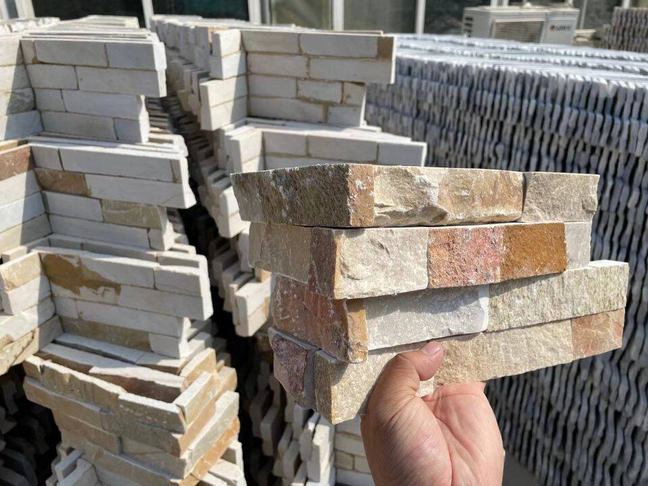
Strategic Sourcing: Why You Should Always Bundle Corners with Panels
Bundling panels and pre-fabricated corners eliminates on-site miter cutting, ensures 95% hue uniformity from the same quarry vein, and slashes installation labor by 50%.
Supply Chain Risk and Material Color Synchronization
Ordering panels and corners separately creates mismatched walls. Different quarry layers or extraction times result in noticeable color shifts that ruin an architectural finish. We see better results when buyers consolidate shipments into a single unit. This approach removes the risk of fragmented delivery schedules and ensures all modular components arrive at the job site simultaneously.
Wholesalers benefit from simplified inventory management. By matching L-corner stock levels directly to panel coverage requirements, you avoid the dead stock issue where you have plenty of flats but no matching corners to complete the sale. This synchronization protects your cash flow and ensures every project is ready for immediate installation.
- Color Risk: Sourcing from different batches leads to “patchy” wall transitions.
- Logistics: Consolidated shipments reduce freight costs and prevent partial-order delays.
- Inventory: Proportional ordering ensures corner stock matches flat panel square footage.
Same-Batch Quarry Consistency for Project-Ready Solutions
We maintain 95% hue uniformity across every project by sourcing both panels and matching L-corners from the same quarry vein per order. This is a strict technical standard. Every series in our Big 10 inventory includes pre-fabricated 90-degree corners. This hardware-ready approach stops the need for expensive third-party corner fabrication or manual miter cuts on-site.
Manual mitering is a cost trap. Fabricators often face 20% material waste and double the labor hours when trying to hand-cut natural stone corners. Our factory-produced L-corners utilize CNC diamond-blade edges to ensure a precision fit. You can verify the match before the container leaves; our pre-shipment visual verification process provides high-definition media of the actual batch before you make the final payment.
- Efficiency: Pre-fabricated corners reduce on-site installation time by 50%.
- Quality: Factory L-corners eliminate the “zipper effect” and visible vertical seams.
- Verification: High-definition photos of finished crates confirm color synchronization pre-dispatch.
よくある質問
How do I install outside corners for a seamless appearance?
Set the L-shaped corner units first, beginning at the base and working upward. You should alternate the long and short returns on every course to create an interlocking pattern that avoids the ‘zipper effect’ of vertical seams. Apply polymer-modified thinset to the back of the piece and press it firmly into place before adding the adjacent flat panels.
Are prefabricated corner pieces required for 2026 architectural projects?
They are not strictly required, but we highly recommend them over manual mitering. Prefabricated units eliminate the need for precision 45-degree cuts on-site, which significantly reduces labor costs. They also ensure a consistent texture and color match that is difficult to achieve when hand-cutting standard panels to form corners.
How are stacked stone corners priced and packaged for wholesale?
Corners are typically sold by the linear foot (LF) rather than by square footage. For 2026 bulk orders, Top Source Stone packages these in 5-ply reinforced export-grade cartons. Depending on the stone type, they are available in crates of 75 LF to accommodate large-scale commercial distribution and logistics requirements.
Does the Z-shape interlocking system apply to corner transitions?
Yes. Our CNC diamond-blade precision ensures that corner units utilize a ‘male-female’ connection similar to the flat panels. This technology camouflages the installation substrate and prevents visible gaps at the 90-degree transition, resulting in a tight, modular fit that looks like hand-laid natural stone。
What maintenance do natural stone corners require in exterior applications?
Natural quartzite and slate are freeze-thaw resistant and UV-stable, meaning they will not fade by 2026 or beyond. For exterior walls, we recommend applying a pH-neutral stone sealer after installation to prevent staining and facilitate easy cleaning with a soft brush and water.
