
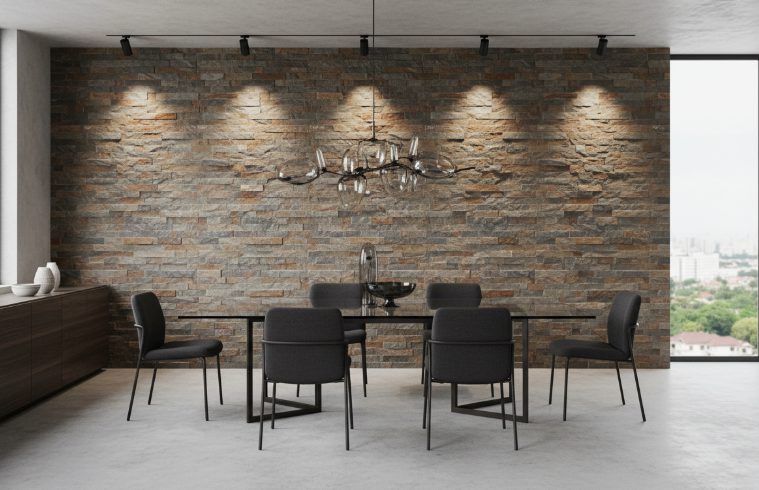
Choosing between Rustic vs. Modern stacked stone dictates whether a fireplace acts as a permanent architectural anchor or a dated liability that erodes property equity. Sourcing inconsistent materials for large projects leads to patchy color shifts and visible seams, forcing professionals to compromise between natural character and structural precision.
We eliminate this risk by sourcing from the same quarry vein to ensure 95% hue uniformity per batch. Using CNC diamond-blade precision and Z-shape interlocking panels, トップソースストーン delivers a seamless architectural finish that removes the installation gaps typical of hand-cut alternatives.
Defining the Rustic Aesthetic with Natural Ledgestone
Natural ledgestone creates a rustic foundation through stacked horizontal layering and rugged split-face textures that mimic authentic geological formations for modern architectural and design projects.
Structural Authenticity Through Textural Variation
Authentic rustic design relies on physical depth rather than just color. Natural ledgestone achieves this through pronounced three-dimensional effects where uneven natural edges and varying stone heights create a surface that changes appearance based on the lighting. By emphasizing horizontal linear definition, these panels provide a dry-stacked look that hides the installation substrate without requiring visible mortar joints.
We source these materials from genuine geological formations to ensure the final installation retains an organic character. Unlike manufactured imitations, natural stone features non-repeating patterns and inherent mineral variations. トップソースストーン prioritizes several primary mineral bases for this aesthetic:
- Natural Slate: Provides deep, earthy tones with excellent split-face layering.
- Quartzite: Offers high durability and subtle crystalline shimmer for a “refined rustic” look.
- Sandstone: Delivers warm, tactile surfaces with soft color transitions.
Enhancing Shadows with the Rough Series Specification
The visual impact of a rustic wall depends heavily on shadow lines. Our Rough Series specification increases the thickness range from the standard 1cm up to 3.5cm. This extra depth produces dramatic, high-contrast shadows that define rugged wall profiles, making the stone a primary architectural feature rather than a flat background element.
Maintaining consistency across large-scale B2B projects is critical for commercial value. We implement strict quarry-level controls to ensure that every order originates from the same quarry vein. This process prevents the “patchy” color shifts often found in lower-tier sourcing and maintains 95% hue uniformity across the entire batch.
- Split-Face Finish: Retains the raw, textured surface of the stone while ensuring structural integrity.
- UV Stability: 100% natural stone minerals will not fade under direct sunlight.
- Environmental Resistance: 高い resistance to salinity and humidity makes these panels suitable for coastal or high-moisture environments.
- Precision Engineering: CNC diamond-blade edges ensure that even the roughest textures fit tightly for a professional finish.
For wholesalers and dealers, this combination of raw aesthetic and technical precision provides a high-margin alternative to faux-stone products. By using real stone, projects gain longevity and a tactile quality that synthetic materials cannot replicate.
The Hallmarks of Modern Interior Stone Design
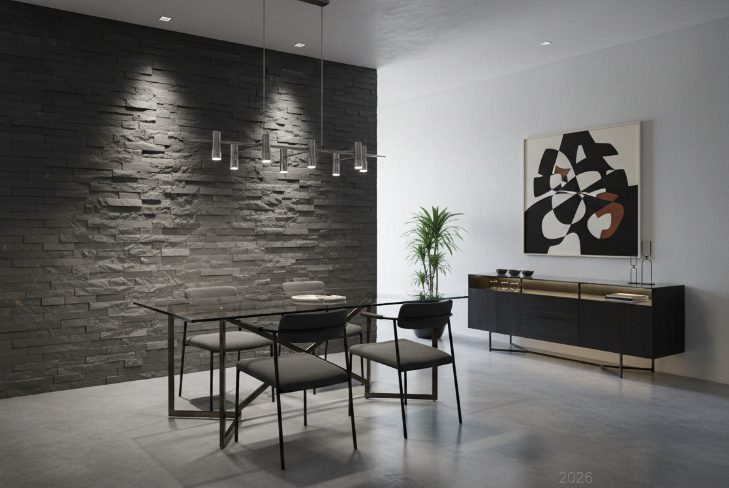
2026 design focuses on linear geometry, neutral tones, and seamless surfaces. We utilize CNC-cut quartzite like the Flat Series to create precise, minimalist architectural focal points.
Linear Forms and Monochromatic Palettes in 2026
Light gray and white quartzite tones, specifically our Alaska Gray and Glacier White models, define the modern palette. These selections maintain bright, airy interior environments while providing the organic texture only natural stone offers. Designers are increasingly moving away from the rugged irregularity of traditional rustic styles to achieve a more sophisticated, architectural finish.
The shift in 2026 positions stone as a central design statement rather than a mere utilitarian material. High-impact accent walls now utilize rectangular and linear stone shapes to provide the consistent patterns required for minimalist architectural styles. This approach ensures the stone enhances the room’s geometry without cluttering the visual field.
- Dominant Palettes: Light gray and white quartzite to maintain bright, open spaces.
- Geometric Precision: Rectangular and linear shapes for consistent minimalist patterns.
- Design Evolution: Transitioning stone from secondary cladding to central focal points on high-impact walls.
CNC Diamond-Blade Precision and the Flat Series Specification
Modern interior outcomes depend on technical manufacturing precision. The Flat Series provides a low-profile texture with a consistent thickness range of 0.75 to 1.25 inches. This calibration is critical for interior installers who require a predictable surface for matching transitions to cabinetry or trim work.
We utilize CNC diamond-blade edges to ensure the dimensional accuracy needed for tight, professional-grade joints. This precision removes the uneven “stepped” look found in hand-cut products. Our Z-shape interlocking panels further this efficiency by utilizing a male-female connection system that effectively hides vertical seams across wide surfaces.
- Thickness Calibration: Low-profile texture ranging from 0.75 to 1.25 inches (1.9cm – 3.2cm).
- Cutting Standards: CNC diamond-blade edges for high-precision modular fit。
- Seam Management: Z-shape interlocking panels with a male-female system to camouflage joints.
- Corner Solutions: Matching pre-fabricated L-corners to maintain texture synchronization at transitions.
By focusing on these technical specifications, we provide wholesalers and project managers with a product that reduces on-site labor. The result is a clean, seamless architectural finish that meets the high-performance expectations of contemporary commercial and luxury residential interiors.
Premium Natural Stone for High-Impact Projects
How Architecture Dictates Your Stone Style Choice?
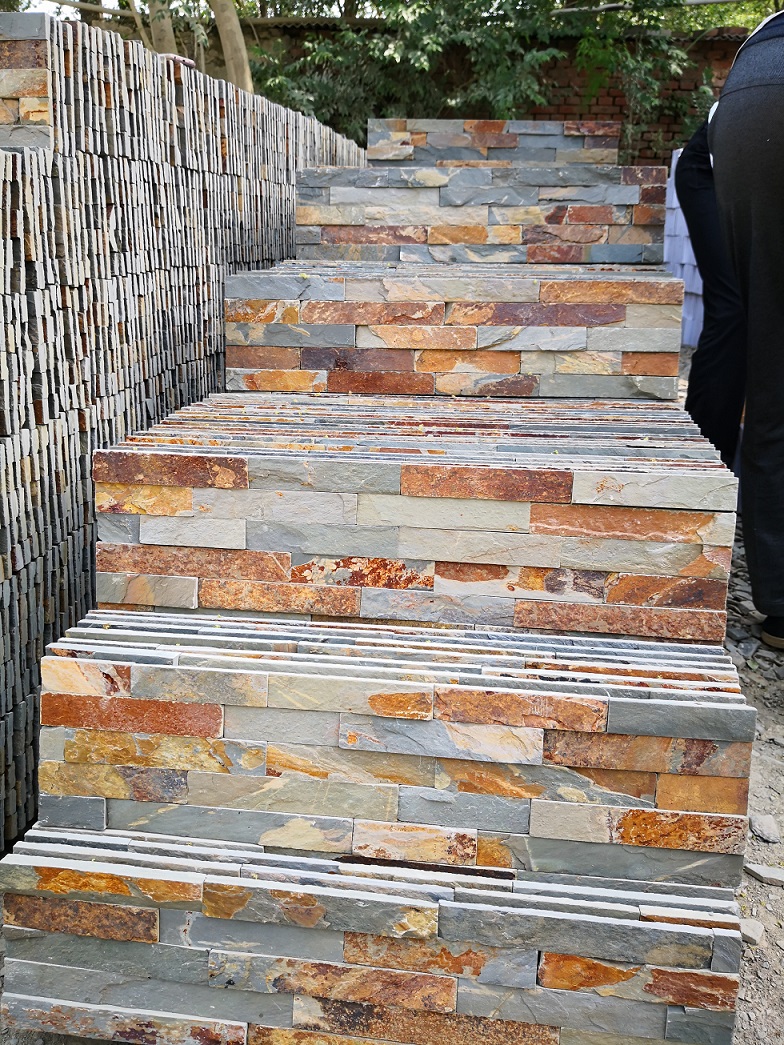
Architecture sets the rules for stone selection by defining the texture and scale needed for visual harmony. Selecting the correct profile ensures the facade enhances the original design intent.
| Architectural Style | Stone Profile | Visual Outcome |
|---|---|---|
| Craftsman / Prairie | Horizontal Ledgestone | Grounded, linear foundation |
| Modern / Industrial | Flat Panel Slate/Quartzite | Monochromatic minimalism |
| Tuscan / English Country | Rugged Fieldstone | Weathered, organic character |
| Mountain Lodge | Rough Series (Up to 3.5cm) | High-contrast shadow lines |
Aligning Stone Profiles with Historical Design Styles
Historical design languages demand specific stone geometries to maintain authenticity. When a building’s architecture leans into a specific period, the stone must act as a structural anchor rather than a decorative afterthought. We source materials from specific quarry veins to ensure the hue uniformity required for these large-scale historical applications.
- Craftsman and Prairie Style: These homes rely on horizontal ledgestone profiles. The stacked, rectangular arrangement creates the grounded appearance necessary for foundation bases and window accents.
- Traditional Estates: Tuscan and English Country designs require rugged, random-shaped fieldstone. This profile provides the weathered, “old-world” character that hand-cut stones historically offered.
- Contemporary Aesthetics: Modern and Industrial spaces utilize fine-grained stones like Carbon Black or Midnight Slate. Cool grays and deep blacks support streamlined designs without adding visual clutter.
Selecting Panel Textures for Specific Architectural Finishes
The technical specification of the stone surface—whether it is a flat finish or a rough-hewn split face—directly impacts the building’s final texture. Our manufacturing process uses CNC diamond-blade edges to ensure that even the most rugged textures maintain a tight fit during installation.
- The Flat Series: これら panels offer consistent textures and clean lines. They are the standard for contemporary interiors and high-end commercial facades where precision is the primary design goal.
- The Rough Series: Utilizing stones with depths up to 3.5cm, this series creates dramatic shadows. These are essential for rustic mountain lodges and large-scale farmhouse exteriors that require tactile depth.
- Z-Shape Interlocking Systems: To ensure a seamless architectural finish, our Z-shape modular pieces use a male-female connection. This system camouflages vertical joints and eliminates visible “stepped” gaps on the wall.
Mixing Styles: The Contemporary Rustic Trend for 2026
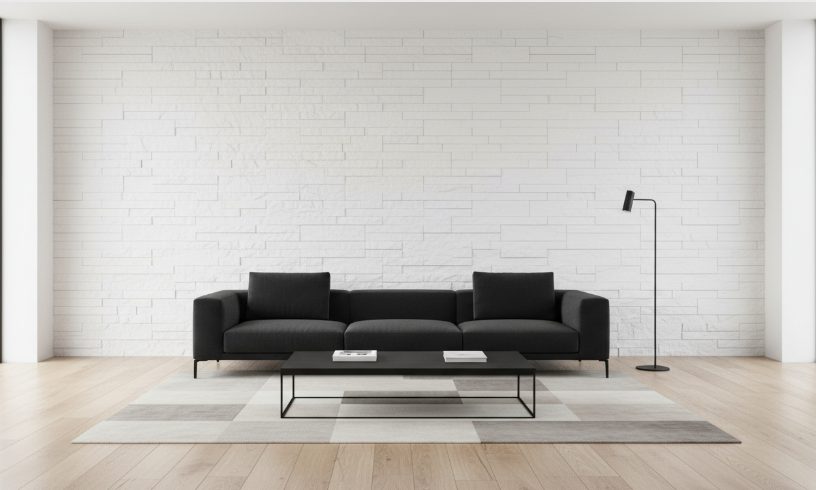
The 2026 ‘Rustic Modern Revival’ pairs high-texture natural stone with sleek minimalist lines, creating organic spaces that remain architecturally refined through deliberate material contrast.
Material Sincerity and the Rustic Modern Revival
Designers are shifting toward “Rustic Vogue” for 2026. This aesthetic layers heavy textures, specifically split-face stone, against smooth drywall or industrial stainless steel. This creates a visual tension that prevents rustic elements from feeling dated or overly nostalgic.
Color palettes are evolving. We no longer see a reliance on pale, weathered tones. Instead, the market is moving toward saturated earth tones and muted, distressed finishes that offer more character. Softened architecture, including biomorphic shapes and rounded corners, helps bridge the gap between raw stone and modern structural lines.
- Core Materials: Natural limestone, quartzite, travertine, and slate.
- Tactile Fabrics: Chunky knit throws, hand-tufted wool, sisal, jute, and natural linen.
- Accent Finishes: Polished concrete, marble surfaces, and matte black hardware.
Precision Engineering for the Rough Series Texture
Our Rough Series delivers the deep textures and dramatic shadows essential for the 2026 rustic look. While the surface appears rugged and hand-crafted, the engineering behind the panels ensures they meet the demands of modern modular installation.
High-dimension split-face panels require extreme precision to avoid installation gaps. We apply specific manufacturing standards to ensure these materials function as a seamless architectural finish rather than a series of disconnected tiles.
- CNC Diamond-Blade Precision: Ensures clean, modular lines even on high-relief textures, allowing for a tight fit across large-scale walls.
- Z-Shape Interlocking: Utilizes a male-female connection system to camouflage vertical joints and eliminate visible “stepped” gaps.
- Same-Batch Quarry Consistency: Sourcing from the same quarry vein prevents patchy color shifts in contemporary open-plan environments。
- Technical Specs: Standard 6″ ×24″ panels with thicknesses reaching 3.5cm for the Rough Series to maximize shadow depth.
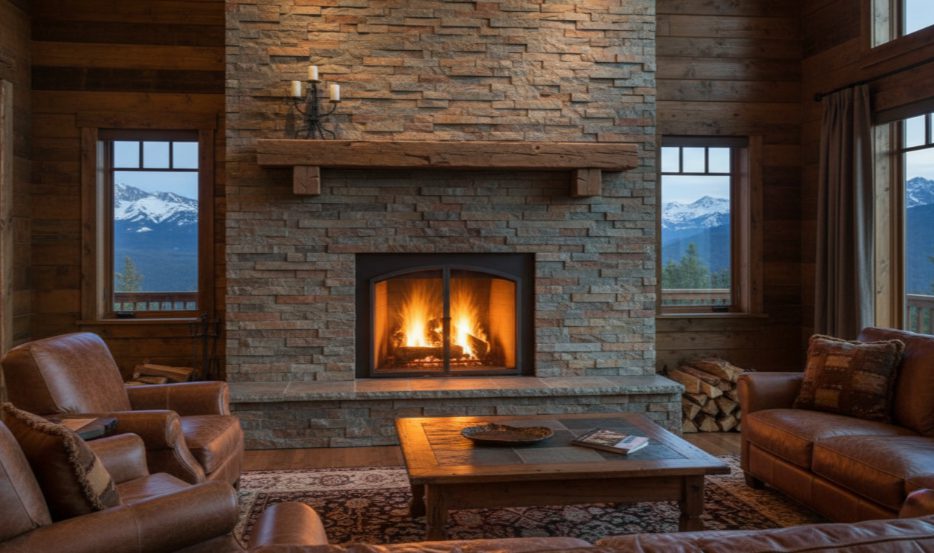
Resale Value: Which Style Appeals Most to Modern Buyers?
Hybrid modern-rustic designs drive peak resale value for 2026. Using 100% natural stone from the Big 10 Inventory adds a 10% pricing premium over manufactured imitations.
Market Trends: The Shift Toward Modern-Rustic Hybrids
Equity growth in 2026 depends on architectural versatility. Modern buyers are moving away from heavy, themed aesthetics toward a “Rustic Modern Revival” that blends organic warmth with minimalist lines. This fusion captures the widest demographic by offering the character of tradition without the clutter of dated styles.
- Modern Farmhouse & Mountain-Modern: These hybrid styles currently sell for approximately 10% more than expected across major North American markets.
- Clean-Lined Facades: Urban professionals and luxury buyers drove a 44% appreciation rate for properties featuring streamlined 石のクラッディング since 2020.
- Traditional Stability: Classic designs remain a low-risk hedge against trend volatility, maintaining consistent demand among families and retirees.
Our projections for 2026 indicate that properties successfully combining rustic 積み重ねられた石 textures with modern functional layouts will dominate the high-end resale sector. This balance appeals to the buyer’s desire for both cozy authenticity and contemporary sophistication.
Real Stone, Real Value: Protecting Equity with Natural Materials
Material choice is a primary signal of property quality to real estate appraisers. While “faux” or concrete-based imitations lose value through fading and delamination, 100% natural minerals serve as a permanent architectural asset that justifies a higher asking price.
- Big 10 Inventory Alignment: Best-selling models like Alaska Gray and Glacier White match the neutral palettes preferred by modern appraisal standards.
- Material Durability: Sourcing authentic Slate, Quartzite, and Marble ensures inherent UV stability, preventing the “patchy” appearance common in artificial stones。
- The Marble Series: Upgrading to natural marble series is recognized as a direct property improvement, increasing perceived luxury and marketability.
We focus on “Real Stone, Real Value” to protect our B2B partners’ margins. By supplying direct quarry source materials that maintain 95% hue uniformity per batch, we ensure that large-scale installations provide the visual consistency that high-end buyers demand during walkthroughs.
よくある質問
Is natural rustic stacked stone still a popular choice for 2026 home designs?
Rustic stone remains a staple in 2026 as part of the organic modern movement. Designers now use materials like slate and quartzite to add history and craftsmanship to minimalist spaces. The trend has shifted away from heavy lodge themes toward balanced, textured finishes that feel grounded and authentic rather than purely decorative.
What defines the visual and technical difference between rustic and modern ledgestone?
Rustic stone features natural cleft surfaces, irregular shapes, and earthy tones like brown or rust. Modern stone focuses on honed or polished finishes and monochromatic palettes. Technically, modern systems like our Z-Shape panels utilize CNC diamond-blade precision and a male-female interlocking system to camouflage vertical joints, ensuring a seamless architectural finish in contemporary settings.
Is it possible to integrate modern stone panels into a traditional or heritage home?
Transitional design allows modern stone to complement traditional architecture perfectly. Using sleek ledgestone for specific focal points—such as a fireplace or accent wall—adds contemporary texture without disrupting the home’s original scale. Matching the stone color to existing masonry helps maintain aesthetic harmony across the property.
Which natural stone species works best for a classic farmhouse fireplace?
Limestone is often preferred for farmhouse aesthetics due to its soft, neutral palette. However, for a more rugged or cabin-inspired look, natural slate and quartzite provide excellent heat resistance and a variety of shades. Our inventory includes options like Midnight Slate and Sierra Blue Quartzite, which offer the durability and color consistency required for high-traffic fireplace surrounds.
How can an existing rustic stone wall be updated for a more contemporary look?
Updating a rustic wall involves balancing old-world texture with modern elements. You can modernize the space by repointing joints with clean, light-colored mortar or installing integrated LED lighting to highlight stone depth. Contrasting the rough stone with minimalist materials like steel, glass, or smooth wood also helps bridge the gap between traditional and modern styles.
