
A rigorous Pre-Shipment Inspection (PSI) serves as the primary safeguard against financial risk before you release the 70% balance payment. For stone wholesalers, failing to verify quality at the source results in receiving patchy, inconsistent batches that trigger expensive labor corrections and destroy project margins. Securing the supply chain at the factory floor prevents the logistical nightmare of discovering structural defects only after the material reaches the destination port.
This protocol outlines the technical standards for verifying 95% hue uniformity and CNC diamond-blade edge precision in natural 積み重ねられた石. We focus on remote verification of same-batch quarry consistency and the structural integrity of 5-ply reinforced export cartons to ensure every order meets strict international weight limits and seamless architectural requirements.
Why PSI is Mandatory for Global Stone Importers?
PSI mitigates financial risk by verifying material quality and technical compliance before the final 70% balance payment, preventing project delays and substandard imports.
Risk Mitigation and Regulatory Compliance in Stone Logistics
Most stone wholesalers operate on a 30/70 T/T payment structure. Releasing that final 70% balance without verification is a massive gamble. Pre-Shipment Inspection (PSI) locks in quality before the crates ever hit a container, preventing costly project delays caused by structural defects or color mismatches.
- Customs Verification: Matches quantity and value to destination requirements using specific codes like 6803.00.90 for slate or 6802.93.11 for quartzite to ensure smooth clearance.
- Technical Validation: Tests physical properties like water absorption, hardness, and wear resistance against ASTM durability standards.
- Financial Security: Protects capital by ensuring the finished product matches the proforma invoice specifications before the final 70% payment release.
- Regulatory Adherence: Confirms the use of ISPM 15 compliant packaging, such as fumigation-free plywood crates, to avoid port detentions。
Pre-Shipment Visual Verification and Batch Uniformity Standards
Natural stone carries inherent variation. Without a remote check, you risk receiving a “patchy” wall that ruins a project’s architectural intent. トップソースストーン uses a visual protocol so importers see exactly what they bought before it leaves the factory floor.
- Remote Documentation: High-definition photo and video verification provides crate-by-crate transparency for remote buyers.
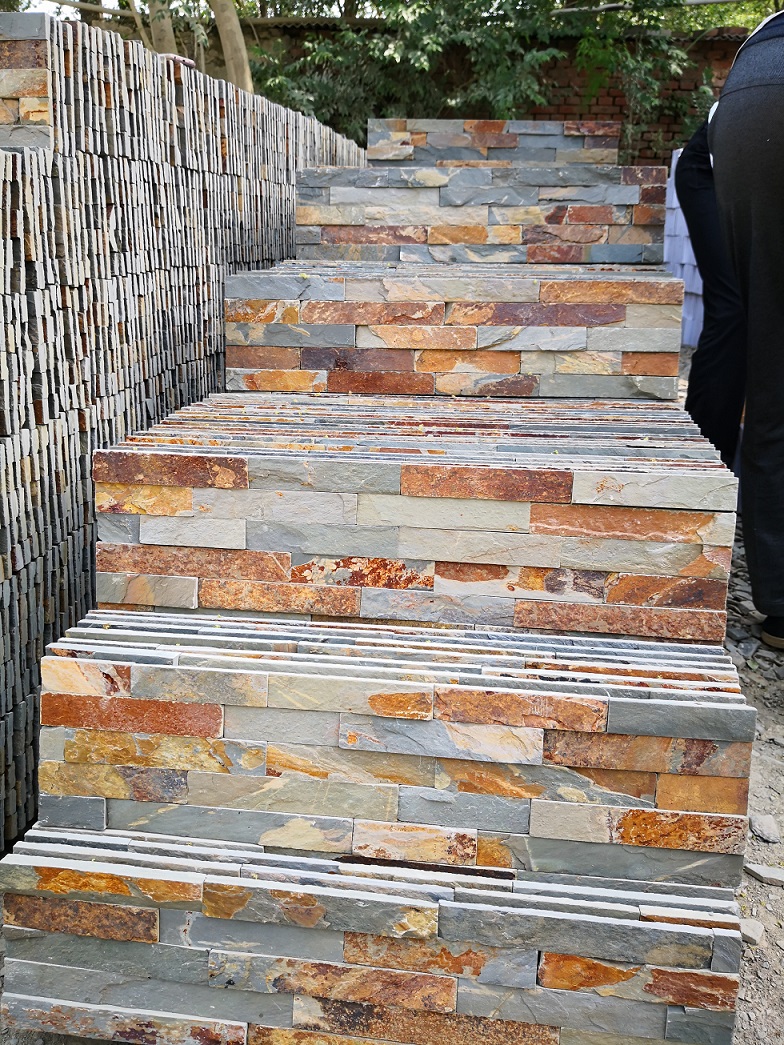
- Same-Batch Consistency: Targets a 95% hue uniformity by sourcing from the same quarry vein per order to prevent unsightly color shifts.
- Edge Precision: Verification of CNC diamond-blade edges on Z-shape and S-shape panels to ensure modular pieces fit tightly for a seamless finish.
- Structural Integrity: Inspection of 5-ply reinforced export grade cartons to ensure the stone survives heavy-weight logistics.

How to Conduct a Remote QC Check via Live Video and Photos?
Use real-time video and high-res photos to verify stone quality and batch consistency. This ensures transparency and spec compliance before you settle the final balance payment.
| Inspection Point | トップソースストーン Standard | Remote Verification Method |
|---|---|---|
| Batch Consistency | 95% Hue Uniformity (Same Vein) | Live video pan across multiple open crates |
| Joint Precision | CNC Diamond-Blade Edges (Z-Shape) | High-res macro zoom of interlocking seams |
| Packaging | 5-Ply Carton + Plywood Crate | Live flashlight check of structural integrity |
| Traceability | GPS & Timecoded Photo Reports | Digital audit trail shared via secure link |
Establishing the Real-Time Digital Inspection Environment
Setting up a remote stone audit requires more than a simple video call. We establish a peer-to-peer connection that allows you to direct factory technicians to specific areas of the production floor or warehouse. This level of interaction mimics an in-person visit without the travel costs.
- Live Video Guidance: Guide onsite technicians to open specific pallets or random crates within your batch.
- High-Resolution Capture: Save high-definition photos directly from the live stream to serve as permanent quality records.
- Remote Controls: Use camera zoom and flashlight activation to inspect stone clefts, textures, and edge precision.
- Live Annotations: Apply on-screen markings during the call to highlight areas of concern for immediate correction.
Top Source Stone Pre-Shipment Visual Verification Protocol
Our final inspection protocol focuses on the variables that matter most to your bottom line: consistency and durability. We use these digital tools to prove that the goods in the container match the samples you approved. This process creates the necessary documentation to release the final 70% balance payment with confidence.
- Hue Uniformity Check: We verify 95% color consistency by comparing stone panels from different crates within the same quarry vein batch.
- Packaging Integrity: Inspect our 5-ply reinforced export cartons and plywood crates to ensure they can withstand international transit.
- CNC Precision Audit: Review the diamond-blade edges on Z-shape panels to ensure the “male-female” connection system provides a seamless fit.
- Digital Evidence: Review GPS-tracked and timecoded photo reports of the finished goods before they are dispatched to Xingang port.
Premium Natural Stone Panels for Professionals
Top 5 Red Flags to Look for During a Final Stone Inspection
Inspections must flag hue shifts, misaligned joints, surface damage, poor packaging, and paperwork errors to ensure batches meet 95% hue uniformity and CNC precision standards.
Material Integrity and Surface Finishing Defects
Surface defects and structural misalignment ruin the aesthetic of a high-end architectural project. When natural stone panels arrive with physical anomalies, the on-site labor costs explode as installers attempt to correct factory-level errors. Importers must prioritize the physical “face” of the stone to maintain project timelines.
- Surface Residue: Check for visible scratches, dents, or excessive epoxy residue on split-face and natural cleft surfaces that compromise the “real stone” texture。
- Structural Alignment: Identify misaligned stone strips that create “stepped” gaps or crooked lines in interlocking Z-shape panels. These gaps expose the substrate and destroy the seamless finish.
- Thickness Variance: Flag any panels falling outside the 1cm – 2.5cm standard. Significant thickness shifts complicate dry-stack installations and lead to uneven wall surfaces.
Catching these physical defects before the container is sealed prevents the nightmare of receiving unsellable inventory. High-quality production utilizes CNC diamond-blade edges to ensure these modular pieces fit tightly from the start.
Quarry-Level Batch Consistency and Technical Specs
The Role of the Packing List and Batch Coding in Quality Verification
Batch coding and detailed packing lists ensure 95% hue uniformity by tracking stone panels to their original quarry vein, allowing for rapid defect resolution.
Traceability and Root Cause Analysis through Lot Identification
Batch codes, or lot numbers, function as the primary link between a finished crate and its production history. Instead of viewing a shipment as a single bulk delivery, we treat each lot as a distinct group produced during a specific cycle. This granular tracking allows importers to manage inventory with precision and address discrepancies without stopping their entire supply chain.
- Lot Identification: Every unique identifier represents a specific group of stacked stone cut and assembled in a single production run.
- Production Linking: Tracking systems connect each crate to its production date, the specific machinery used, and the assembly operators involved.
- Trend Analysis: Dealers use this data to identify patterns in defects or texture shifts, facilitating targeted adjustments rather than broad, costly rejections.
- Targeted Resolution: If a quality issue appears, documentation pinpoints the exact raw material source, enabling a surgical recall of only the affected batch.
Same-Batch Quarry Consistency and Visual Verification
Maintaining visual integrity in natural stone requires more than just sorting by color. We source material from the same quarry vein for every individual order to minimize the natural shifts inherent in slate and quartzite. This technical approach guarantees that large-scale architectural walls maintain a cohesive look across hundreds of square meters.
- Hue Uniformity: Sourcing from a single vein ensures 95% color consistency within a batch, preventing the “patchy” appearance common in lower-tier sourcing.
- Visual Proof: Our pre-shipment protocol includes high-definition photos and videos of the actual finished crates, ensuring importers verify the goods before the balance payment.
- Logistical Detail: Packing lists specify carton quantities (7-8 pieces per box) and weight strategies designed to meet strict port limits, such as the 17.5-ton USA standard.
- Inventory Management: We label reinforced 5-ply export cartons and plywood crates with clear batch data to support FIFO (First-In-First-Out) warehouse systems.
These documentation systems transform a simple shipping list into a quality insurance policy. By anchoring every crate to a specific data point, we protect the profit margins of our B2B partners and ensure the material arriving at the job site matches the approved pre-shipment samples.

How Top Source Stone Handles Third-Party Audits (SGS/BV)?
We provide SGS and BV full access to production and warehouses, verifying batch consistency and CNC precision through quarry-source tracking and on-site random sampling.
Professional stone importers often utilize Pre-Shipment Inspections (PSI) to mitigate project risks and ensure compliance with destination country regulations. We facilitate these audits by opening our manufacturing facility and warehouses to international agencies, ensuring every crate meets the specific requirements of the purchase order before the balance payment is settled.
Coordination Protocols for On-Site International Inspectors
Our logistics team manages the scheduling for SGS and Bureau Veritas (BV) representatives to ensure they are present during critical production and loading phases. We provide a transparent environment for auditors to conduct unbiased evaluations of the inventory destined for North American, European, and Australian markets.
- Full Facility Access: We allow inspectors into the manufacturing floor and warehouse for random sampling and container loading supervision.
- Traceability Documentation: Auditors receive quarry-source logs to verify that materials originate from the same stone vein, maintaining batch consistency.
- Logistics Verification: We provide necessary documentation, including HS Codes (Slate: 6803.00.90 | Quartzite: 6802.93.11), to streamline customs clearance audits.
- Packaging Audit: Inspectors verify the use of 5-ply reinforced export-grade cartons and the structural integrity of fumigated plywood crates。
By coordinating these visits during the final packing stage, we ensure that the inspection report accurately reflects the exact goods that enter the 20GP container, preventing any “bait-and-switch” concerns for the buyer.
Verifying CNC Precision and Same-Batch Quarry Consistency
Technical audits focus on the mechanical tolerances and aesthetic uniformity of the stacked stone. We align our internal quality control standards with external auditor requirements to guarantee that the modular pieces perform correctly during on-site installation.
- 95% Hue Uniformity: Auditors compare samples across multiple pallets within a single production batch to ensure minimal color shifts.
- CNC Dimensional Checks: Inspectors use digital calipers to confirm that CNC diamond-blade edges meet tolerances for Z-shape and S-shape interlocking panels。
- Visual Verification: We generate high-definition photos and videos of finished crates as supplementary evidence for the official third-party audit report.
- ASTM Standard Durability: For 2026 shipments, auditors verify material density and freeze-thaw resistance parameters required for northern climates.
These rigorous verification steps ensure that the “male-female” connection systems of our premium interlocking series camouflage vertical joints effectively, providing a seamless architectural finish for high-end B2B projects.
Final Thoughts
Cheap sourcing often hides the massive costs of on-site labor corrections and rejected shipments. Utilizing our same-vein quarry sourcing and CNC diamond-blade precision safeguards your 70% balance payment against the risk of patchy, unusable inventory. This level of verification protects your margins and ensures your projects meet the strict aesthetic standards your clients demand.
Verify our standards for yourself by requesting a sample kit or exploring our “Big 10” best-sellers. We facilitate live digital inspections and third-party audits to remove the guesswork from your international supply chain. Contact our team today to discuss your private label requirements or to schedule a real-time production walkthrough of our latest batches.
よくある質問
How do I verify the quality of natural stacked stone before it leaves the factory?
Buyers should implement a Pre-Shipment Inspection (PSI) that covers dimensional accuracy, surface defects, and CNC cutting precision. We provide high-definition photos and videos of the actual finished crates before you make the balance payment. You should also verify ISO 9001 certifications and ensure the material is sourced from the same quarry vein to maintain 95% color consistency across the batch.
Can I hire a third-party agency like SGS or Bureau Veritas for stone inspections?
Yes, we fully support third-party audits. Independent inspectors can evaluate the stone at the quarry stage, during manufacturing, or during the final loading process. These specialists check for structural integrity, moisture resistance, and compliance with ASTM standards, ensuring the product meets specific requirements for 2026 architectural projects.
What are the common signs of a poor-quality stone batch?
Frequent issues include significant thickness variations, surface impurities like large stains, and poor edge finishes. For interlocking Z-shape panels, a major red flag is a loose “male-female” connection that creates visible gaps on the wall. Always check for a Mohs hardness of 7 or higher and verify that CNC-cut panels do not warp or show edge chipping.
How do you ensure stone panels are protected during international transit?
We use 5-ply reinforced export-grade cartons and fumigation-free plywood crates designed for sea freight. Our logistics team adheres to strict weight limits, such as the 17.5-ton standard for USA ports, to avoid transit delays. Every crate is packed with internal bracing and protective wrapping to prevent shifting and breakage during the journey.
