
Specifying exterior stacked stone for commercial facades requires balancing high-end aesthetics with rigid engineering standards to prevent bond failure and environmental degradation. Architects and developers face the challenge of selecting materials that meet strict IBC weight limits of 15 lb/ft² while surviving intense UV exposure and winter weather cycles. Choosing between natural stone and manufactured alternatives often determines whether a building envelope remains pristine for 50 years or begins to show surface chalking and fading within a decade.
This guide examines the technical performance of exterior cladding, focusing on ASTM testing for freeze-thaw resilience and the mineralogical advantages of through-body stone. We analyze the installation physics of drainage planes and rainscreen systems, including the use of polymer-modified mortars and carbon-fiber reinforced panels. By reviewing specific metrics like the 19,000 psi compressive strength of natural stone and the necessity of L/720 deflection limits for substrates, this analysis provides the data needed to secure long-term structural integrity for 2026 projects.
The Role of Exterior Stacked Stone in Commercial Facades
Exterior stacked stone serves as a non-structural veneer that balances aesthetic value with strict building code compliance. Modern commercial facades rely on lightweight panelized systems to meet weight limits of 15 lb/ft² while utilizing rainscreen technology to manage moisture and thermal expansion in high-traffic environments.
Engineering Compliance for Adhered Veneer Systems
Adhered natural stone units must stay within specific physical parameters to comply with IBC and IRC standards. Each unit cannot exceed a maximum weight of 15 lb/ft² (73 kg/m²) or a surface area of 720 in². These restrictions ensure that the stone remains compatible with standard commercial sheathing and framing without requiring secondary structural support. For direct-adhered applications, the stone typically maintains a maximum thickness of 1/2 inch to stay under these weight thresholds.
The substrate supporting the stone must meet high stiffness requirements to prevent cracking or delamination. While the IBC allows a deflection limit of L/240 for brittle finishes, the Natural Stone Institute recommends a stricter limit of L/720 for metal-stud walls carrying natural stone veneers. This rigidity prevents the substrate from flexing under wind loads or thermal stress, which would otherwise compromise the bond between the mortar and the stone surface.
Proper installation also requires dedicated movement joints according to TCNA EJ171 guidelines. Commercial assemblies use ASTM C920 Class 25 sealants to accommodate thermal expansion and contraction. In the case of manufactured stone alternatives, materials must maintain a compressive strength greater than 2100 psi per ASTM C1670. These concrete-based veneers often arrive at a nominal 1.5-inch thickness, providing a deep profile while remaining light enough to meet saturated weight limits for exterior wall coverings.
High-Performance Rainscreen and Panelized Applications
Advanced panelized systems offer a significant technical upgrade over traditional hand-laid masonry. Systems like Elemex Stonitex use 3/8-inch thick granite panels reinforced with carbon-fiber mesh backing. This engineering allows the panels to reach ten times the flexural strength of traditional 30 mm stone slabs. By reducing the thickness and reinforcing the core, these systems lower the total facade weight by roughly 60% compared to conventional granite cladding, enabling larger panel sizes up to 4 ft by 8 ft.
Engineered rear-ventilated rainscreens manage environmental stressors better than closed systems. These assemblies facilitate pressure equalization and drainage, which prevents moisture from becoming trapped behind the stone. This ventilation is vital for the longevity of the building envelope, as it mitigates the risk of mold growth and freeze-thaw damage in the backup wall. By allowing air to circulate, the system also reduces thermal transfer into the building interior.
Standardized interlocking panels simplify the installation process while maintaining a high-end look. Products from manufacturers like Norstone or Architessa utilize Z-shaped panels, often in 6-inch by 24-inch formats, to eliminate visible vertical grout lines. These panels provide seamless coverage and are frequently used for exterior feature walls, columns, and signage. Because the panels are precision-cut, they ensure a consistent 1 square foot of coverage per unit, speeding up construction timelines on large-scale commercial projects.
Freeze-Thaw Resilience: ASTM Testing for Northern Climates
Exterior stone in northern climates must undergo cyclic lab testing to simulate winter conditions. Key standards like ASTM C67 and C1026 involve saturating specimens and subjecting them to repeated freezing and thawing cycles to ensure the material remains structurally sound and visually intact without cracking or spalling.
| Testing Standard | Cycle Count & Conditions | Primary Application |
|---|---|---|
| ASTM C67 | 50 Cycles (20hr freeze / 4.5hr soak) | Veneer units and unit masonry |
| ASTM C1026 | 15 Cycles (Frozen to 0°F / -18°C) | Stone and ceramic tile frost resistance |
| ISO 10545-12 | 100 Cycles (Extreme exposure) | International stone/tile benchmarks |
| ASTM C666 | Up to 300 Cycles | Concrete-backed stone and severe exposure |
Core Standards for Evaluating Frost Resistance
ASTM C67 serves as a common benchmark for verifying the durability of stacked stone veneer. This protocol subjects stone units to 50 freeze-thaw cycles, where specimens undergo freezing for 20 hours followed by water saturation at room temperature. Laboratory technicians inspect the units every 5 cycles to identify fissures or structural degradation that could lead to failure in the field.
ASTM C1026 provides a specialized look at frost resistance for stone and ceramic tiles. In this test, 10 saturated specimens face rapid temperature drops to 0°F (-18°C) and subsequent heating in water. While the standard baseline involves 15 cycles, international benchmarks such as ISO 10545-12 extend this rigor to 100 cycles to qualify materials for the most extreme environmental exposures.
The ASTM Committee C18 is currently refining new standards, specifically WK84902 and WK81245. These focus on tracking the loss of flexural and compressive strength after rapid cycling. This shift ensures that materials are not only visually intact but also retain their mechanical integrity when exposed to fresh or salt water in cold regions.
Technical Performance Metrics for 2026 Projects
Selecting natural stone units for exterior use requires analyzing water absorption rates. Materials with absorption levels below 3% typically perform better because they minimize internal pressure during ice crystal formation. For concrete-backed stone systems, ASTM C666 represents the highest durability tier, requiring specimens to survive up to 300 cycles without structural failure.
Chemical exposure often accompanies freezing temperatures in urban environments. ASTM C672 measures resistance to de-icing salts, providing a surface scaling rating from 0 to 5. A rating of 0 indicates no scaling, which is the preferred target for pedestrian-level veneers or areas adjacent to salted walkways.
Current industry practice for 2026 specifications focuses on stones that pass at least 50 cycles of ASTM C67-style testing with zero cracking under magnification. Combining these cyclic results with baseline mechanical properties like the modulus of rupture allows specifiers to minimize liability and prevent spalling in northern climate installations.
UV Stability: Why Natural Stone Outperforms Manufactured Faux Stone
Natural stone panels maintain their appearance for 50+ years because their color comes from mineralogical composition throughout the material. Conversely, manufactured stone often uses surface-applied pigments in a concrete or polymer matrix that degrades, leading to visible fading and surface chalking within 8–10 years of solar exposure.
| Performance Metric | Natural Stone Panels | Manufactured Faux Stone |
|---|---|---|
| UV Resistance (Fading) | Excellent; minimal fading over 20+ years | Noticeable fading in 8–10 years |
| Color Distribution | Through-body mineral composition | Surface-applied pigments or thin layers |
| Thermal Expansion (in/in/°F) | 0.0000025 – 0.0000055 | Significantly higher; prone to warping |
| Expected Service Life | 50+ Years | 20–30 Years |
Mineral Composition and Through-Body Color Consistency
Natural stone derives its color from internal mineral phases like iron oxides and micas distributed through the full thickness of the panel. This geological makeup ensures that the aesthetic remains stable even when the surface faces intense solar radiation. Unlike manufactured stone, which relies on a thin surface layer of pigment, natural stone has no discrete film for UV radiation to bleach off. This through-body consistency prevents the patchy appearance often found in aged synthetic products.
Field reviews of over 50 commercial installations show that natural stone maintains its original appearance for 20+ years in intense-sun climates like Southern California. The mineralogical stability of slate, quartzite, and granite resists the chemical breakdown that occurs in organic binders. Manufactured stone veneer typically starts to show noticeable color loss within 10–15 years because the photodegradation of its synthetic pigments and binders leads to surface chalking and loss of saturation.
Thermal Expansion and Surface Longevity Metrics
Natural stone panels feature a low coefficient of thermal expansion, ranging from 0.0000025 to 0.0000055 in/in/°F. This dimensional stability prevents warping or cracking during the extreme heat cycles predicted for coming summer seasons. Because the stone expands and contracts minimally, the bond to the substrate remains secure and the surface does not develop the micro-fissures common in cementitious matrices exposed to rapid temperature shifts.
Accelerated salt-spray and UV exposure tests show manufactured stone suffers significant surface deterioration by the 12-year equivalent mark. In contrast, light-colored natural stones achieve a high Solar Reflectance Index (SRI), which reduces surface temperatures and lowers thermal stress on the entire building assembly. While natural stone facades achieve a 50+ year service life, the average lifespan for manufactured alternatives is 20–30 years before visual degradation requires full replacement.
Premium Stacked Stone for Architectural Excellence
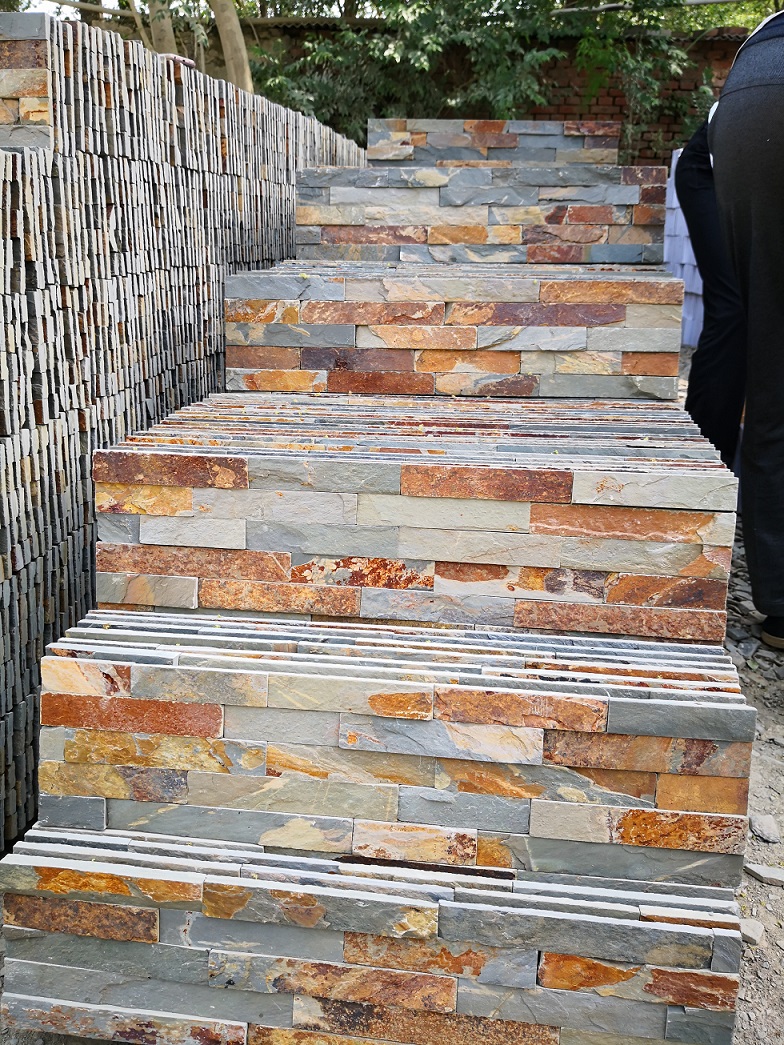
Managing Water Penetration and Drainage Planes
Proper water management for stacked stone requires a redundant drainage plane. This involves a double-layer water-resistive barrier complying with ASTM E2556, a 3/16-inch to 1-inch ventilated air gap, and integrated corrosion-resistant flashing to direct bulk water away from the wall cavity and foundation.
Multi-Layer Drainage Plane Assemblies
Exterior stacked stone systems rely on a redundant barrier approach to prevent substrate wetting. Install two separate layers of Water Resistive Barrier (WRB) that meet Grade D and ASTM E2556 standards. This configuration is particularly vital for commercial projects where moisture loads are higher. The double-layer system ensures that if water bypasses the outer stone veneer through joints or gaps, the secondary layer protects the structural sheathing.
A ventilated air space is necessary to facilitate drying and drainage. Use rainscreen mats or entangled mesh to create a gap between 3/16-inch and 1-inch. This physical separation prevents capillary action from pulling moisture into the wall. When installing the WRB, maintain horizontal overlaps of at least 2 inches and vertical overlaps of 6 inches. Arrange these in a shingle-fashion layout, starting from the bottom, so water naturally sheds outward. For corners, extend the outer WRB layer 16 inches past both inside and outside corners to ensure continuous protection at high-stress transition points.
Installation Physics and Component Standards
The structural bond depends on the quality of the lath and mortar application. Secure 2.5 or 3.4 lbs galvanized metal lath over studs spaced 16 inches on center. This provide a rigid matrix for the scratch coat. We use polymer-modified mortar meeting ANSI A118.4 or ANSI A118.15 standards to handle the weight and environmental exposure of dry-stacked stone. Apply full back-buttering to each stone piece to eliminate internal voids where water can collect and freeze. Avoiding the “dot and dab” method prevents water pockets that lead to efflorescence or bond failure.
Proper termination at the foundation prevents moisture from wicking up into the wall. Integrate corrosion-resistant weep screeds that sit at least 2 inches above paved surfaces and 4 inches above the soil grade. These screeds must be integrated with the WRB layers to allow gravity-fed drainage to exit the system. Space fasteners every 6 to 12 inches vertically along the studs. This frequency secures the assembly against wind loads while minimizing the total number of penetrations through the moisture barriers, maintaining the integrity of the drainage plane.
Preventing Efflorescence on Exterior Natural Stone
Efflorescence prevention relies on managing moisture and salt migration through ASTM C1400 standards. Key strategies include installing through-wall flashing within 10 inches of grade, creating drainage cavities, and applying pre-installation 5-side or 6-side contaminant blockers like FILA PW10 to stop capillary rise.
Moisture Management Detailing and Drainage Cavities
Architectural integrity for exterior stone facades begins with rigorous adherence to ASTM C1400 guidelines. These standards dictate the design of air spaces and drainage planes to ensure that moisture does not bridge the gap between backup masonry and the stone face. By isolating the exterior wythe, installers prevent soluble salts found in backup materials from migrating to the visible stone surface.
Specific base-of-wall detailing is required to block capillary rise. Following Brick Industry Association Technical Note 23A, crews must install through-wall flashing within 10 inches (250 mm) of the finished grade. This placement effectively severs the path for soil-borne salts. Additionally, applying waterproof membranes to the soil-side of masonry and using bituminous dampproofing on below-grade stone faces provides a secondary barrier against groundwater wicking.
Low-Salt Adhesives and Pre-Installation Protective Barriers
Selecting the right chemical bond is vital for reducing free lime availability. We use polymer-fortified thin-set mortars such as 254 Platinum and calcium aluminate-based grouts like the PERMACOLOR series. These materials are formulated to minimize the salt content within the mortar bed itself, addressing the problem at the chemical source. Unlike standard Portland cement, these specialized binders lower the risk of salt deposits forming during the curing process.
Before the stone reaches the wall, we apply FILA PW10 as a 5-side or 6-side contaminant blocker. This treatment covers the back and edges to stop the upward migration of moisture while maintaining vapor permeability. The application requires a specific drying window of 12 hours at temperatures between 20–40 °C to ensure the barrier fully forms before installation. For horizontal surfaces like copings and treads, silane-siloxane water repellents or specialized sealers such as Serveon NS200 provide a final defense against rainwater and runoff intrusion.
Impact Resistance for High-Traffic Ground Level Walls
Natural stacked stone provides superior impact resistance for high-traffic areas, utilizing a high modulus of rupture (min 1,500 psi) and compressive strength (min 19,000 psi) to withstand vehicle debris and pedestrian wear, significantly outperforming manufactured veneers in 2026 commercial standards.
Structural Integrity and Load Bearing Capacity
Natural stone panels maintain a Modulus of Rupture per ASTM C99 of at least 1,500 psi. This rating ensures the material resists point-load impacts, such as stones kicked up by vehicle tires or accidental contact with heavy equipment. Unlike manufactured alternatives, the dense mineral structure prevents the surface from shattering under sudden physical stress.
Flexural Strength standards under ASTM C880 require a minimum of 1,200 psi. This benchmark ensures that the stone does not fail across spans in ground-level facades when subjected to bending forces. Engineers must also account for the physical weight of natural stone, which typically ranges between 15 and 25 lbs/sq ft. Projects exceeding 15 feet in height require specific structural support to manage these loads safely.
Surface Hardness and Wear Standards
Abrasion Resistance measured by ASTM C1353 determines how well the stone handles constant contact. A higher Ha value indicates better suitability for heavy-traffic ground level areas where pedestrian contact or equipment scuffing is frequent. For public transit hubs and retail entries, a Compressive Strength of 19,000 psi per ASTM C170 protects the facade against crushing forces and long-term wear.
Advanced composite systems like StonePly offer enhanced protection by providing 60 times the impact strength of solid granite. These systems meet large missile impact tests at 50 ft/s, making them ideal for high-security or extreme-weather environments. For standard installations, using Type S or N mortar with a scratch coat between 3/8″ and 5/8″ thick ensures the bond remains intact during thermal expansion and physical impact.
Sourcing Exterior Stone: Slate vs. Quartzite Performance
Quartzite offers superior durability for high-traffic exteriors due to its Mohs hardness of 6–7 and high silica content. While slate provides a distinct rustic aesthetic and low porosity, it remains softer and more susceptible to surface scratching compared to the robust profile of quartzite.
Material Hardness and Abrasion Resistance
Quartzite features a Mohs hardness of 6–7, which roughly doubles the 3–4 rating found in most slate varieties. This physical strength provides quartzite with granite-level resistance to wind-blown grit and environmental abrasion, making it an ideal choice for exposed facades. ASTM C616 standards require architectural quartzite to contain 95% or more free silica, ensuring a dense, interlocked grain structure that resists impact better than softer metamorphic stones.
Slate possesses a unique micaceous layering that creates its signature cleft appearance. While this texture is aesthetically desirable for rustic designs, the foliation planes increase the risk of edge chipping in high-traffic commercial zones. Designers often prioritize quartzite for ground-level applications where mechanical wear and physical contact are frequent, reserving slate for roofing or vertical cladding in areas with moderate exposure.
Thermal Stability and Lightweight Veneer Options
Both materials manage thermal mass effectively and share nearly identical specific heat capacities. Slate sits at 0.76 kJ/kg·K and quartzite at 0.75 kJ/kg·K, meaning their reaction to solar heat gain depends more on the stone’s color and thickness than its mineral composition. For modern 2026 builds, thin-stone technology such as SlimLite™ utilizes a 0.8 mm natural stone face bonded to specialized backing sheets. This format reduces the structural load on exterior facades while maintaining the authentic performance characteristics of the stone.
Current finishing standards for these stones generally exclude polishing for exterior use. Fabricators utilize natural cleft, honed, or sanded surfaces to minimize glare and improve grip on walking surfaces. These textures also hide micro-scratches and weathering patterns more effectively than a smooth finish. By selecting the appropriate mechanical finish, specifiers can ensure long-term appearance retention even in regions subject to harsh freeze-thaw cycles or heavy UV exposure.
Final Thoughts
Success with exterior stacked stone depends on matching the material’s physical properties to the specific environmental demands of the site. Natural stone options like quartzite and granite provide the highest level of resistance against UV degradation and freeze-thaw cycles, maintaining their structural integrity long after manufactured alternatives begin to show wear. By following ASTM testing standards and ensuring units stay within the 15 lb/ft² weight limit, builders create facades that meet code while offering lasting protection against the elements.
The longevity of these installations relies as much on the drainage system as the stone itself. Using a multi-layer water-resistive barrier and a ventilated air gap prevents moisture buildup and salt migration, which are the primary causes of efflorescence and bond failure. When crews combine these moisture management techniques with high-performance, polymer-modified mortars, the result is a stable, impact-resistant exterior that handles both pedestrian traffic and extreme weather for decades.
Veelgestelde vragen
Are stacked stone panels suitable for exterior use in 2026?
Natural stone panels work well for exterior facades when they meet frost-resistance standards. Natural stacked stone typically weighs 15–25 lb/ft² and provides a service life exceeding 50 years, while manufactured alternatives must pass ASTM C1690 freeze-thaw testing with ≤1.5% weight loss over 50 cycles.
Do exterior stone veneers require sealing?
Building codes do not mandate sealing, but technical guides suggest applying a breathable, silane-based penetrating sealer in high-moisture or coastal zones. Installers should wait at least 28 days for the mortar to cure before applying the first coat of sealer.
How do you prevent stone panels from falling off exterior walls?
Safety relies on proper anchoring and mortar coverage. For anchored systems, each metal anchor must resist at least twice the weight of the stone panel in both compression and tension per ASTM C1242. Adhered systems require near-100% mortar coverage and specific clearances, such as 4 inches above grade.
Which stone types perform best in freezing climates?
Granite serves as the industry standard for northern climates because of its low porosity. It withstands 50 freeze-thaw cycles during ASTM C67 testing, which involves 4.5-hour water soaks followed by 20-hour freeze periods.
Does natural stone fade under direct UV exposure?
Natural stone retains color better than manufactured options, though varieties like limestone and sandstone may experience subtle shifts over many years. pH-neutral cleaners and UV-resistant sealers help protect the original quarry pigments against photochemical reactions.
What is the proper method for cleaning exterior stacked stone?
Use a soft nylon-bristle brush with a mixture of water and mild detergent. Avoid pressure washing or harsh acids that erode the surface. To maintain efficiency and prevent streaking, replace the cleaning solution every 100 square feet of wall area.
SEO
Title: Exterior Stacked Stone Cladding: Durability & Weather Testing
Description: Exterior stacked stone requires precise engineering and ASTM testing to ensure durability against UV exposure and freeze-thaw cycles on facades.
URL: exterior-stacked-stone-commercial-facades-guide
Keywords: exterior stacked stone
