Distributor margins are shrinking as the market for manufactured stone becomes oversaturated with mass-produced products that look identical to the competition. Many wholesalers face a race to the bottom where price is the only lever left to pull, forcing businesses to accept thinner returns on high-volume inventory. This shift toward commoditization risks turning a core product line into a liability that cannot sustain the rising costs of logistics and storage.
This guide outlines the technical and economic advantages of shifting focus toward natural stone categories to reclaim lost profitability. We analyze the specific reasons why homeowners pay a premium for real materials and how these products lower the frequency of post-sale reliability claims. By following these inventory strategies, distributors can move away from volatile faux stone pricing and establish a specialist brand backed by exclusive, high-margin product lines.
The Commodity Trap: Why Faux Stone Prices are Crashing
The collapse of faux stone pricing is a direct consequence of manufacturing efficiency overshooting market demand, leaving natural stone as the only category capable of sustaining B2B margins in 2026.
Automated production cycles have stripped away the price floor for synthetic materials. Factories now churn out concrete-based panels using high-speed curing and casting technologies that require minimal human oversight. This manufacturing efficiency creates a massive surplus of inventory. Suppliers find themselves forced to lower prices simply to move stock, effectively turning what was once a premium design alternative into a generic building commodity.
Manufacturing Automation and Cost Reduction
Advancements in high-speed casting allow manufacturers to minimize energy required for synthetic stone production. Precision engineering has reduced material waste to near-zero levels, but this efficiency backfires for the distributor. When production costs drop across the entire industry, the market experiences a downward spiral in pricing. Precision-cut synthetic panels are no longer a specialized product; they are a utility item sold on volume rather than value.
| Performance Metric | Mass-Produced Faux Stone | Top Source Natural Stone |
|---|---|---|
| Production Origin | Automated Chemical Casting | Direct Quarry Extraction |
| Aesthetic Exclusivity | Homogenized Digital Patterns | Unique Same-Batch Veining |
| B2B Margin Protection | Low (Market Saturation) | High (Strictly No D2C) |
| Long-Term Stability | Subject to UV Fading | Inherent UV/Freeze-Thaw Stability |
Design Homogenization and Market Saturation
The proliferation of digital printing means multiple brands now offer nearly identical aesthetics. This lack of unique character makes it difficult for contractors or specialty retailers to justify higher price points. When a homeowner can find the same pattern at a big-box retailer and a boutique showroom, the perceived luxury of the synthetic alternative vanishes. The market is saturated with “good enough” imitations, eroding the exclusivity that once drove high-ticket sales.
- Digital patterns lead to repetitive “pattern fatigue” on large-scale installations.
- Widespread availability through discount channels destroys retail price protection.
- Mass-produced panels fail to offer the CNC diamond-blade precision found in premium interlocking natuursteen.
Price-Driven Competition in Synthetic Markets
Synthetic stone has entered a mature phase where manufacturers compete almost exclusively on cost. Margin compression affects every player in the supply chain. Distributors face shrinking profits as value-oriented segments prioritize the lowest possible bid. This shift toward utility over aesthetic luxury makes faux stone a basic building material, whereas Topbron steen maintains 100% natural mineral integrity to protect the specialist brand. Retailers who stay tied to synthetic lines risk being caught in a race to the bottom where only the highest volume players survive.
Positioning Natural Stone as a Premium, High-Margin Category
Strategic positioning of natuursteen decouples retailer margins from the price-crashing volatility of the synthetic market by offering irreplaceable geological authenticity and long-term asset appreciation.
Sales teams increase closing rates by emphasizing that every panel consists of 100% quarried stone. This ensures a one-of-a-kind finish for high-end architectural projects that synthetic alternatives cannot replicate. Unlike pigmented concrete substitutes, natuursteen possesses inherent UV stability. It does not fade under heavy solar exposure, protecting the client’s investment for decades. Using real stone serves as a recognized property upgrade, directly increasing the market value of residential and commercial assets.
Maximizing Profitability Through Manufacturing Precision
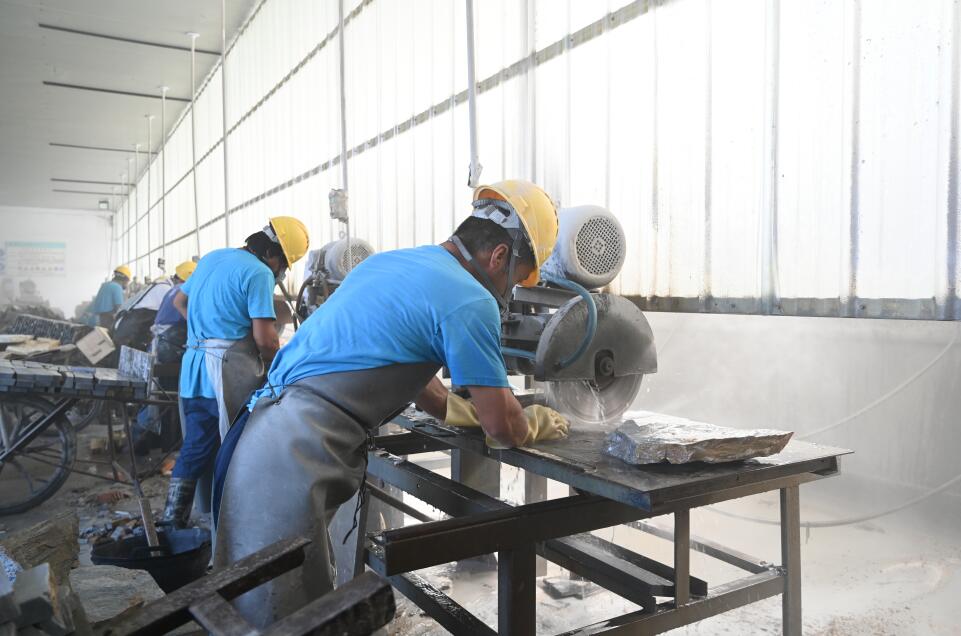
Advanced production techniques reduce waste and installation errors, allowing distributors to maintain higher margins than commodity-grade materials. We utilize infrared cutting technology and CNC diamond blades to ensure precise dimensions. This results in a perfect interlock that eliminates visible vertical joints and reduces on-site labor costs.
| Performance Metric | Top Source Natural Stone | Faux / Engineered Stone |
|---|---|---|
| Color Fastness | Permanent UV Stability (No Fading) | Subject to Pigment Oxidation |
| Visual Pattern | 100% Unique / Non-Repeating | Repeating Mold Patterns |
| Structural Integrity | Freeze-Thaw Resistant (ASTM Standard) | Risk of Delamination/Cracking |
| Retail Margin Potential | High (Specialist/Luxury Tier) | Low (Commodity Price War) |
Our rigorous three-stage inspection process—conducted after cutting, during assembly, and before packing—minimizes defects and post-sale claims. We use proprietary high-strength epoxy resins to ensure a permanent bond between the stone and the panel substrate. This prevents stone fallout and the high repair costs associated with lower-quality imports.
Capturing Luxury Segments with Specialized Product Collections
Curated series allow partners to target elite design niches that prioritize aesthetics over base material costs. For example, the Pencil Series provides a sophisticated, linear aesthetic for modern luxury interiors and commercial reception areas. The Marble Series offers timeless elegance for high-impact feature walls in premium retail and residential bathrooms.
- The Pencil Series targets modern architectural firms seeking clean, minimalist lines for high-traffic commercial zones.
- The Marble Series captures the residential bathroom and feature wall market where high-gloss and natural vein patterns command price premiums.
- Customizable formats and private-label packaging options help B2B partners build exclusive brands that are insulated from price-driven competition.
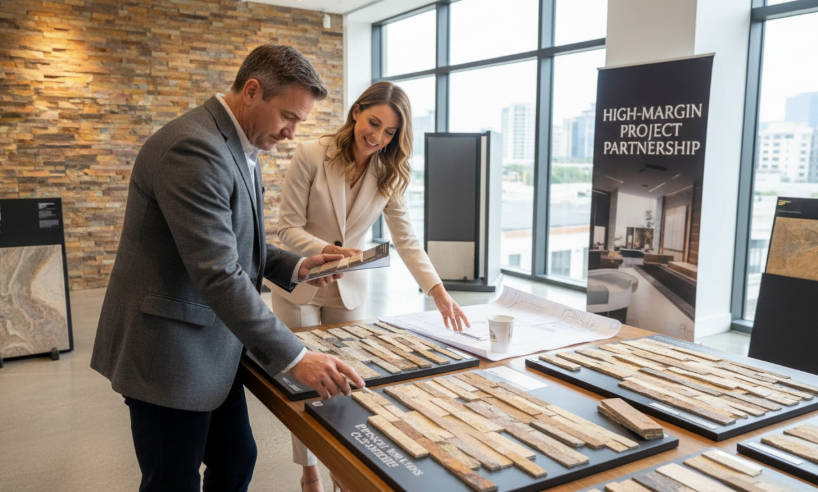
Authentic Stacked Stone for High-Margin Projects

Why Homeowners are Willing to Pay a 30% Premium for Real Stone
Homeowners in 2026 view natuursteen not as a luxury expense, but as a strategic asset that stabilizes property value while eliminating the recurring replacement and maintenance costs associated with synthetic imitations.
Long-Term Property Value and ROI
Current real estate market trends confirm that properties featuring 100% natural stone command higher appraisal values and faster sales cycles. Buyers consistently prioritize authentic materials because they represent a permanent structural upgrade rather than a cosmetic surface treatment. By choosing quarried materials like the Top Source Stone Quartzite or Slate series, homeowners transform a standard renovation into a high-ROI capital improvement that increases the home’s equity.
Minimal Maintenance and Structural Longevity
The physical resilience of real stone significantly reduces the total cost of ownership over time. Unlike synthetic products that use chemical pigments prone to UV degradation, natural stacked stone maintains its color and integrity for decades. We engineer our ledgestone to meet strict ASTM standards for freeze-thaw resistance, ensuring the material will not crack or delaminate in extreme northern climates.
- High salinity and humidity resistance makes real stone the only viable choice for coastal or high-moisture environments.
- Natural mineral hardness resists impact and scratching far better than cement-based faux alternatives.
- Occasional cleaning is the only requirement to keep the stone in pristine, original condition for the life of the structure.
Perceived Luxury and Design Timelessness
Authentic stone provides a visual prestige that manufacturing processes simply cannot replicate. Every panel sourced from our quarries contains unique mineral variations and textures that ensure no two walls look identical. This organic variation prevents the “pattern repeat” common in mass-produced faux stone, which often looks artificial under direct sunlight. Natural materials offer a timeless aesthetic that resists design obsolescence, keeping a home relevant and high-end regardless of shifting architectural trends.
Sustainability and Environmental Appeal
Modern homeowners increasingly favor building materials that align with eco-conscious standards. Natural stone is a 100% authentic mineral product that avoids the high-carbon footprint and toxic chemical resins found in manufactured stone production. Because we source directly from the quarry, we provide a transparent supply chain that satisfies the demand for earth-mined, non-toxic materials. This connection to nature resonates with discerning buyers who prioritize a health-conscious and sustainable living environment.
Reducing Post-Sale Claims: The Reliability of Natural Materials
Architectural liability in 2026 hinges on material authenticity, as natural mineral structures eliminate the delamination and UV-bleaching risks that trigger the majority of post-sale claims in faux-stone installations.
Color Stability and UV Resistance in 2026 Standards
Natural materials provide permanent color fastness that survives intense UV exposure in modern exterior projects. Unlike concrete-based faux stone, which relies on surface-level pigments and synthetic dyes, natural slate and quartzite possess through-body mineral coloration. We source material from the same quarry vein for every order to ensure 95% hue uniformity, preventing the patchy, mismatched appearance that often leads to homeowner dissatisfaction and costly re-installations.
| Performance Metric | Top Source Natural Stone | Faux/Engineered Alternatives |
|---|---|---|
| UV Fading Resistance | High (Inherent Mineral Stability) | Moderate to Low (Pigment Degradation) |
| Structural Integrity | Freeze-Thaw Resistant ASTM Standard | Variable (Prone to Efflorescence) |
| Surface Wear | Natural Cleft (Self-Healing Texture) | Painted Surface (Shows Chips/Scratches) |
By opting for 100% natural minerals, retailers bypass the litigation risks associated with misleading “natural” claims currently being scrutinized by regulatory bodies. These panels retain their original textures for decades, even in high-salinity or high-humidity environments like the Gulf regions or coastal North America. This durability ensures that the project looks as intended ten years after the sale, protecting the distributor’s reputation and bottom line.
Bonding Integrity via High-Strength Industrial Resins
Adhesion failure is a primary cause for post-sale claims in the stacked stone industry. We solve this by using high-strength epoxy resin specifically formulated for natuursteen substrates. This specialized chemical bonding creates a permanent grip between the individual stone pieces and the backing panel, significantly lowering the risk of stone delamination or pieces falling off after installation.
- We apply adhesives under controlled industrial temperature and pressure to ensure maximum penetration into the stone pores.
- Industrial-grade resins resist the thermal expansion and contraction cycles that typically loosen stones on exterior walls.
- Our bonding protocols eliminate “callback” costs for contractors, fostering long-term B2B loyalty for the supplier.
Precision Manufacturing to Reduce Installation Errors
Strict dimensional controls prevent gaps that lead to moisture intrusion and structural issues. We utilize CNC diamond-blade cutting equipment to maintain exact tolerances for every 6” x 24” panel. This precision allows for a seamless architectural finish that obscures the substrate and hides vertical joints, which are the most common points of failure in low-grade stone imports.
Our three-stage inspection process—conducted after cutting, after assembly, and before final packing—identifies structural or aesthetic defects before the product reaches the job site. The interlocking Z-shape design enables contractors to achieve professional results without visible grout lines or the need for excessive site-modified cuts. By delivering project-ready solutions, including matching L-shaped corners for every series, we reduce on-site labor errors and ensure the structural reliability of the finished wall.
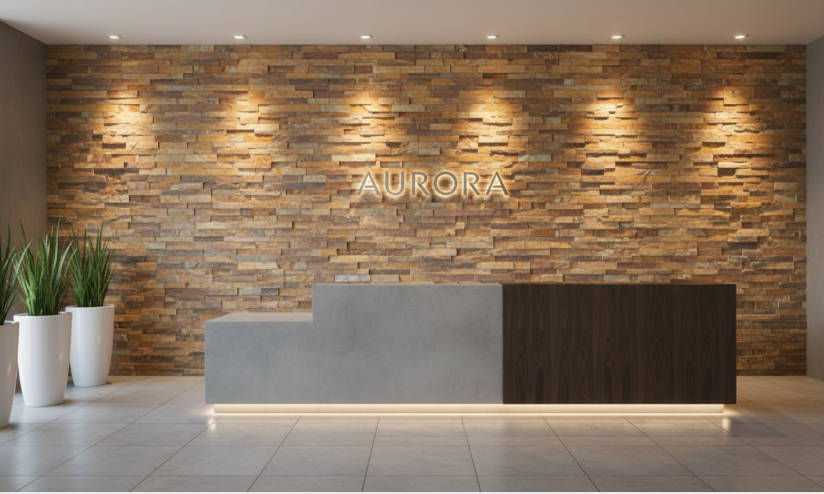
Building a “Specialist” Brand with Exclusive Natural Stone Lines
Distributors who pivot from commodity-grade faux products to curated natural stone collections capture higher per-unit margins by offering material exclusivity and technical performance that artificial alternatives cannot replicate.
Differentiating Through Curated Stone Collections
Specialist brands distance themselves from the race-to-the-bottom pricing of the artificial stone market by offering textures and mineral variations unique to natural formations. By focusing on niche lines such as the Pencil Series and Marble Series, retailers attract high-end residential and commercial projects where architectural integrity outweighs initial cost. These authentic variations serve as luxury assets, increasing property resale value more effectively than pigment-based faux products that degrade over time.
To meet diverse architectural demands by 2026, we position unique finishes—ranging from the smooth, contemporary Flat Series to the high-dimension, rugged Rough Series. This variety ensures that a brand can provide the specific aesthetic required for any project, from sleek interior feature walls to brutalist exterior facades, while maintaining a 95% hue uniformity within single batches to prevent the “patchy” look common in lower-tier supplies.
Leveraging Factory-Direct Quality Control
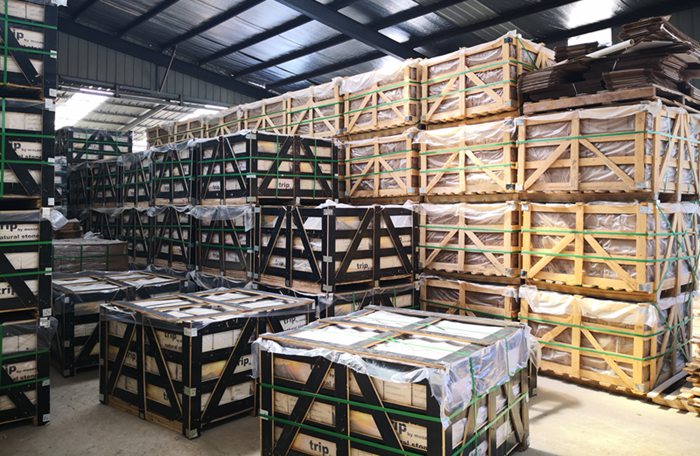
Controlling the supply chain from the quarry vein to the final crate establishes a brand as a technical authority rather than just a reseller. We utilize advanced infrared cutting and three-stage inspection protocols to ensure every panel interlocks perfectly on-site. We verify the use of high-strength epoxy resins during assembly, creating a permanent bond between the stone and the backing that prevents stone fallout—a frequent failure point in mass-market alternatives.
| Performance Metric | Generic Commodity Stone | Specialist Natuursteen |
|---|---|---|
| Edge Precision | Manual rough cuts (visible joints) | CNC Diamond-Blade (Seamless interlock) |
| UV Stability | Fades/Chalks (Pigment-based) | 100% Inherent (No fading) |
| Structural Load | Varies (Unreliable specs) | 8-13 lbs/sqft (No footings required) |
Sourcing from a manufacturer that manages over 220 containers annually ensures supply chain stability and material consistency. By sourcing from the same quarry layer per order, we minimize color shifts and provide the reliability required for large-scale B2B contracts. This factory-direct model eliminates middlemen, protecting the profit margins of our specialist partners.
Establishing Authority with Technical Solution Kits
A specialist brand provides the components needed for a professional finish, not just the raw material. Including matching L-shaped corner pieces in product lines eliminates the need for complex miter cuts on-site, significantly reducing labor costs for contractors. This “system-based” approach turns a product sale into a project solution, making it harder for customers to switch to cheaper, incomplete alternatives.
- Supply matching L-Corners for every series to ensure texture synchronization at wall transitions.
- Educate installers on the lightweight nature of 8-13 lbs/sqft panels, removing the need for wall ties.
- Specify pH-neutral sealants and moisture barriers to maintain stone integrity in high-humidity zones.
Strategic Branding via OEM and Private Labeling
Distributors build market equity by shipping premium stone under their own corporate identity. We offer custom-printed 5-ply reinforced boxes and branding on factory shipments to maintain a professional image in the local market. Transitioning from a general distributor to a specialty stone house involves securing exclusive regional rights to specific quarry outputs, such as our “Big 10” best-selling North American colors.
For large-scale B2B orders, we offer bespoke panel sizes and formats to meet specific project requirements. This level of customization, combined with our strict policy against selling directly to end-users (C-end), ensures that our partners can build a brand without competing against their own supplier. By leveraging OEM capabilities, distributors transform a global mineral resource into a local luxury brand.
Conclusion
Wholesalers escape the low-margin commodity trap by offering natural materials that command higher prices and significantly fewer performance claims than faux alternatives. Genuine stone provides the UV stability and structural integrity required for high-end architectural projects, helping you build a resilient brand focused on quality. Relying on direct quarry sourcing ensures the batch consistency needed for large installations while securing your position as a premium supplier in a crowded market.
Review the Big 10 inventory to identify which best-selling colors align with your current regional demand. You can message our team to request a sample of the Z-Shape interlocking panels or to discuss exclusive B2B pricing for your next container.
Veelgestelde vragen
Is natural stone more profitable for retailers?
Yes, natuursteen typically yields higher profit margins for retailers compared to engineered or artificial alternatives. While the synthetic market faces intense commoditization and price compression due to mass-production efficiencies, natural stone retains its value as a premium, non-commoditized product. This allows retailers to maintain higher price points and avoid the “race to the bottom” pricing often seen in the value-oriented synthetic segment.
What is the typical markup on stacked stone?
In the current market, the typical retail markup for stacked stone ranges from 40% to 60% for standard inventory. However, for premium natural stone selections that offer unique colors or textures, markups often exceed 100%. Because natural stone is perceived as a specialty architectural product rather than a commodity, retailers have significantly more leverage in pricing compared to standardized building materials.
Why do customers prefer real stone over faux?
Customers prefer real stone primarily for its authenticity and the absence of repeating patterns found in manufactured molds. Natural stone offers superior longevity, extreme weather resistance, and a high-end tactile feel that synthetic resins cannot replicate. Furthermore, real stone is viewed as a permanent investment that increases a property’s resale value, whereas faux products are often seen as temporary decorative solutions.
How to market natural stone as a luxury item?
To market natural stone as a luxury item, focus on “uniqueness” and “geological history.” Emphasize that every slab or tile is a one-of-a-kind masterpiece formed over millions of years, positioning it as “nature’s art.” Highlight its eco-friendly credentials—being free from the plastics and chemicals found in engineered stone—and use high-quality architectural photography that showcases the stone in bespoke, high-end residential or commercial applications.
Can I get exclusive territory rights?
Yes, exclusive territory rights are available for established retailers and distributors who demonstrate a commitment to the brand. These agreements are generally structured based on geographic regions and require the partner to meet specific annual sales volumes or maintain a dedicated showroom display. Exclusivity protects your marketing investment by ensuring you are the sole provider of specific premium stone collections in your local market.
