
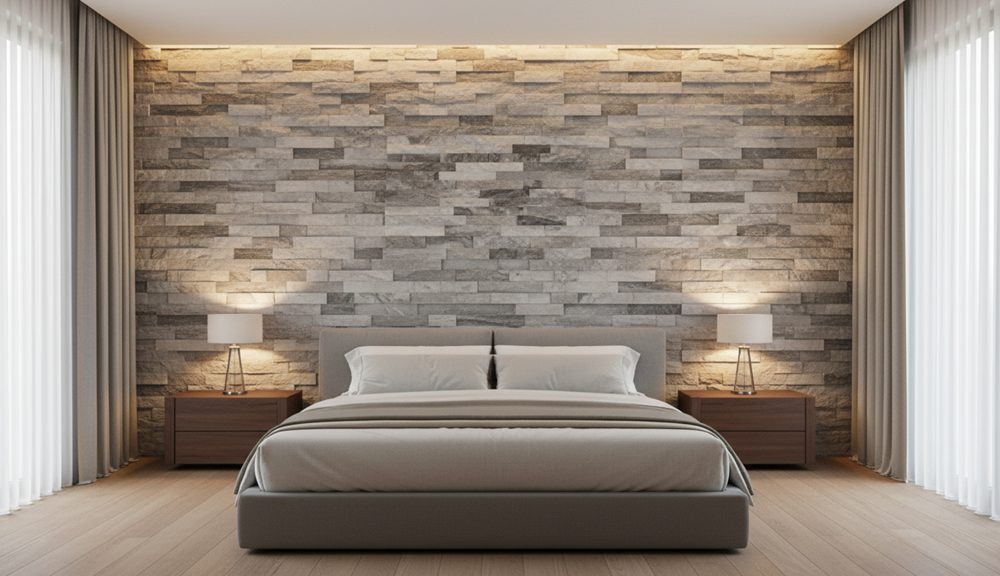
Specifying Stone Accent Walls requires balancing aesthetic impact with structural safety. Many installations fail because standard drywall cannot support the 8-13 lbs per square foot load, leading to costly structural repairs and project delays.
We provide a framework for selecting materials with 95% hue uniformity and CNC diamond-blade precision. By prioritizing same-vein sourcing and Z-shape interlocking designs, dealers eliminate the visual gaps and patchy colors that compromise high-end interior projects.
Where Should You Use a Stone Accent Wall in Your Home?
Stone accent walls deliver maximum impact in living rooms, bedrooms, and entryways. Using natural panels adds texture and serves as a durable, high-value design feature for 2026 interiors.
| Room Placement | Specific Application | Design Impact |
|---|---|---|
| Living Room | Behind fireplaces or TV units | Creates a unified gallery focal point |
| Bedroom | Full-width headboard wall | Achieves a boutique hotel atmosphere |
| Entryway | Floor-to-ceiling foyer walls | Distinguishes property character immediately |
| Kitchen | Back side of kitchen islands | Protects surfaces with architectural interest |
High-Impact Interior Placements for Focal Points
Selecting the right wall determines whether the stone elevates the room or overwhelms it. Most designers focus on walls that naturally draw the eye upon entering a space. In the living room, this is typically the area housing the fireplace or the main entertainment center. Extending stone across the entire width of these walls creates a dramatic backdrop that feels like a permanent architectural element rather than a temporary decoration.
Bedrooms benefit from a full-height installation behind the bed. This provides a rich textural contrast against soft bedding and linens, mimicking the look of high-end luxury suites. For entryways, floor-to-ceiling stone flanking the front door signals quality to guests the moment they step inside. This placement works well in open-concept homes where you need to define the foyer without building new partition walls.
- Living Rooms: Position stone behind fireplaces to frame the heat source and complement the warmth of the flames.
- Bedrooms: Install stone panels across the main headboard wall to add depth and sound diffusion.
- Entryways: Use vertical stone stacks to welcome visitors and establish a premium property identity.
- Kitchen Islands: Apply stone to the side facing the dining area to shield drywall from scuffs and kicks.
Achieving Seamless Transitions with Interlocking Z-Shape Panels
The success of an interior stone wall depends on the manufacturing quality. At Topbron steen, we focus on engineering panels that eliminate the “DIY look.” Standard rectangular panels often leave visible vertical lines that ruin the illusion of a solid stone wall. So we utilize a precision interlocking design that hides joints and ensures a continuous flow across large surfaces.
Consistency is another major hurdle for large projects. If stone comes from different parts of a quarry, the wall will look patchy. We solve this by sourcing from the same quarry vein for every order, maintaining 95% hue uniformity. This is vital for dining rooms and entryways where lighting is often bright and reveals every imperfection.
- Interlocking Z-Shape Design: Our panels feature a “male-female” connection system to camouflage vertical joints on large walls.
- CNC Diamond-Blade Precision: We use high-precision cutting to ensure modular pieces fit tightly without stepped gaps.
- Matching L-Corners: Pre-fabricated 90-degree corners are available for every series to ensure a professional wrap-around finish.
- Same-Batch Quarry Consistency: Sourcing from a single vein prevents color clashes in high-visibility living areas.
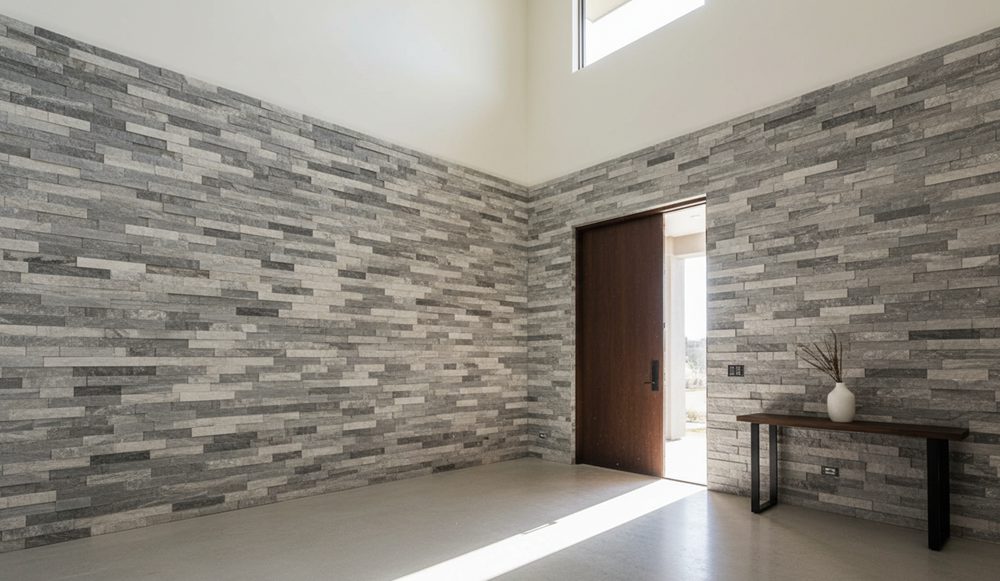
Creating a Focal Point: The Best Wall for Stone Placement
Focus on high-impact zones like fireplaces and kitchen islands using seamless interlocking panels to anchor a room’s layout and eliminate visible joints across large surfaces.
Identifying Primary Architectural Anchors for Stone Accents
Strategic placement determines whether a stone installation looks like an afterthought or a core architectural feature. Dealers should guide contractors to select “anchor walls”—surfaces that naturally draw the eye upon entering a room. Choosing one dominant wall prevents the texture from overwhelming the space while maximizing the property’s appraised value.
- Fireplace Surrounds: Floor-to-ceiling installations frame the hearth, commanding attention even when the fire is not active.
- Kitchen Island Backs: Facing living areas, these surfaces transform functional structures into decorative features while protecting drywall from scuffs.
- Dining Room Backdrops: Stone provides visual definition in open-concept floor plans, acting as a “soft partition” without physical barriers.
- Entryway Alcoves: Framing the front door or an alcove establishes immediate character and a high-end first impression for visitors.
Enhancing Focal Points with Seamless Z-Shape Technology
For large-scale focal points, visual continuity is the benchmark of professional work. Top Source Stone utilizes specific engineering to ensure that the natural texture remains the focus, rather than the installation grid. We use CNC diamond-blade precision to create tight tolerances that traditional hand-cut stone cannot match.
- Precision Edges: CNC diamond-blade cutting creates tight “male-female” connections that effectively camouflage vertical joints.
- Interlocking Design: Z-shape and S-shape panels eliminate the visible “stepped” gaps often found on wide feature walls in living areas.
- Matching L-Corners: Pre-fabricated 90-degree corners ensure texture and color synchronization at wall transitions for wrap-around projects.
- Same-Vein Sourcing: We pull material from the same quarry vein per order, ensuring 95% hue uniformity to prevent patchy color shifts on large accent walls.
By combining these technical features with smart placement, installers reduce on-site labor while delivering a seamless, architectural finish that meets the high expectations of B2B clients and luxury homeowners.
Premium Natural Stone for Architectural Projects
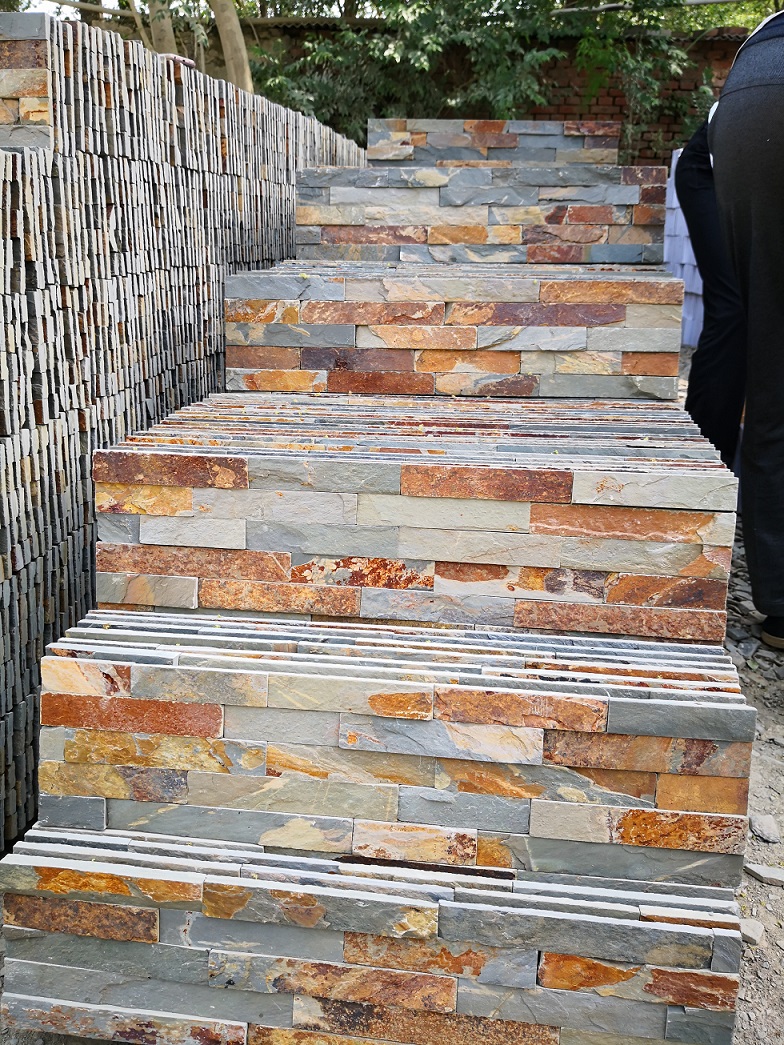
Is Stacked Stone Too Heavy for Standard Interior Walls?
Natural stacked stone weighs 8–13 lbs per square foot. This exceeds standard drywall capacity, requiring cement backer board or masonry substrates for a safe, permanent installation.
Structural Load Limits for Drywall and Metal Studs
Standard 1/2-inch drywall is engineered for lightweight finishes like paint or wallpaper. It lacks the shear strength to support the 1,000-pound load typical of a 100-square-foot stone feature. Natural stone panels exert a constant downward pull. Over time, this stress causes drywall paper to peel or fasteners to pull through the gypsum core, leading to structural failure.
Vertical installations exceeding 15 feet require a professional structural assessment. At these heights, the cumulative weight places significant stress on the wall framing, specifically the bottom plates and stud connections. We recommend ensuring the framing handles the vertical load before starting the stone application.
Weight Specifications for 8-13 lb/sq.ft Natural Panels
Top Source Stone manufactures panels that fall into the lightweight natural stone category. While they are significantly lighter than full-bed masonry, they still require specific substrate preparation to ensure the bond holds for decades. Our engineering team focuses on weight distribution through precision-cut interlocking designs.
- Flat Series Weight: Approximately 8-12 lbs/sq.ft (30-40kg/m²).
- Rough Series Weight: Reaches up to 13 lbs/sq.ft (55kg/m²) for premium textured profiles.
- Substrate Requirement: Install 1/2-inch cement backer board screwed directly into wood or metal studs to provide a rigid, moisture-resistant bond.
- Weight Distribution: Our CNC-cut Z-shape interlocking design spreads the vertical load evenly across the wall surface, preventing stress concentration on individual joints.
Because these panels stay under 15 lbs/sq.ft, they do not require the expensive structural footings or wall ties used in traditional heavy masonry. This makes them a high-value option for interior retrofits where the original foundation wasn’t designed for Stenen bekleding.

Acoustic Benefits: How Stone Diffuses Sound in Open Areas
Natural stone scatters sound waves via textured surfaces, reducing echo and reverberation. This diffusion softens auditory environments in large spaces, making conversations clearer and rooms feel more intimate.
Sound Scattering and Wave Diffusion
Parallel walls in open-plan designs often trap sound, creating a “ping-pong” effect where noise bounces repeatedly between flat surfaces. Natural stone disrupts this cycle through irregular surface geometry. When sound waves hit a textured stone wall, the uneven face breaks the waves apart rather than reflecting them in a single, sharp direction.
Strategic placement in high-traffic areas like atriums, stairwells, or large dining halls helps control this reverberation. Honed and natural cleft finishes are particularly effective because they scatter reflections into softer tones. This allows a space to maintain its energy and “life” without the harsh, directional noise typical of polished marble or standard drywall.
Rough Series Panels and Natural Cleft Finishes
The physical depth of the stone profile determines how effectively it can disrupt sound waves. While thin veneers offer aesthetic value, acoustic performance relies on the “peaks and valleys” found in more substantial stone cuts. Top Source Stone engineered the Rough Series specifically to address these architectural requirements.
- Profile Depth: Rough Series panels feature 1″ to 1.75″ depth variations to maximize sound wave disruption across the wall surface.
- Premium Thickness: We provide 3.5cm thick options that offer greater surface relief, significantly enhancing the stone’s ability to soften environmental noise compared to standard 1cm panels.
- Material Selection: 100% natural minerals like Quartzite and Slate provide the necessary density and mass required for stable acoustic performance in commercial and high-end residential projects.
- Surface Texture: Natural Cleft and Split-Face finishes provide the irregular roughness essential for effective acoustic diffusion in open-concept layouts.

Coordinating Stone with Flooring and Furniture
Select natural stone as your design anchor. Match undertones between stone and flooring, then use contrast to create depth against cabinetry and furniture styles.
Balancing Color Undertones and Material Textures
Treat the stacked stone wall as the primary focal point and build neutral supporting elements around it. This strategy prevents visual clutter and allows the natural minerals to define the room’s character. When the stone serves as the anchor, every other material in the space should respond to its specific hue and depth.
Pair warm-toned stones like Golden Honey or California Gold with natural wood finishes to enhance organic warmth. If the goal is a high-contrast, modern aesthetic, place cool-toned quartzite like Glacier White against dark walnut flooring. This creates visual depth that makes the architectural features pop without feeling disconnected.
Texture plays a critical role in furniture selection. When using highly textured “Rough Series” panels, keep furniture patterns understated. Smooth leathers and solid-colored fabrics balance the heavy dimensional quality of the stone, ensuring the room feels grounded rather than overwhelming.
Ensuring Visual Unity via Same-Batch Quarry Consistency
Large-scale wall transitions require strict material control to avoid patchy, inconsistent finishes. We source materials from the same quarry vein per order to ensure 95% hue uniformity across the entire installation. This consistency allows the stone to act as a continuous backdrop for high-end furniture and cabinetry.
Coordinating stone with trending interior palettes requires specific inventory standards. We utilize the Big 10 inventory models to match stone colors with North American flooring palettes projected through 2026. This alignment ensures that stones like Alaska Gray or Sierra Blue integrate naturally with modern tile and hardwood selections.
- Hue Uniformity: 95% consistency within a single batch via same-vein sourcing.
- Wall Transitions: Pre-fabricated L-shaped corners for color synchronization at 90-degree turns.
- Edge Precision: CNC diamond-blade cutting for seamless Z-shape interlocking.
- Material Standards: 100% natural slate, quartzite, and granite with inherent UV stability.
Precision engineering simplifies the coordination process. Our interlocking “male-female” connection system, used in the Z-Shape and S-Shape series, camouflages vertical joints. This creates a clean, architectural finish that mimics a custom-carved slab, providing a sophisticated foundation for minimalist or rustic interior designs.
Veelgestelde vragen
Can I install natural stacked stone directly onto drywall?
No. Natural stone panels are too heavy for standard drywall. Our standard panels weigh between 8 and 12 pounds per square foot, which exceeds what sheetrock can safely support. You must install a 1/2-inch cement backer board secured directly to the wall studs to provide a stable, moisture-resistant substrate that can handle the load.
Will a stone accent wall make a small room feel too crowded?
Not if you use it strategically. Applying stone to a single focal point, like a fireplace surround or a bathroom vanity wall, adds depth. Choosing lighter tones from our Big 10 inventory, such as Alaska Gray or Glacier White, helps maintain a sense of openness in compact spaces without overwhelming the room.
Do I need to seal interior stone walls?
We highly recommend sealing stone in moisture-prone areas like bathrooms or kitchen backsplashes to prevent food stains and humidity absorption. Use a penetrating sealer rather than a topical one. This protects the stone while allowing it to breathe and maintaining its natural, matte appearance.
How do I maintain and clean the textured surface of the stone?
Regular maintenance involves removing dust from the natural crevices using a vacuum with a soft-bristled brush attachment. For deeper cleaning, use a soft sponge with warm water and a mild, pH-neutral detergent. Avoid all acidic cleaners, bleach, or pressure washers, which can erode the stone surface and damage pigments.
What is the best location for a stone accent wall in a living room?
The most effective placements are walls that serve as natural focal points, such as the area behind a fireplace, an entertainment center, or a sofa. These locations highlight the stone’s texture and create a grounding architectural element that anchors the entire room design.
Final Thoughts
Professional interior stone installations rely on technical precision to move beyond a “DIY” appearance. Utilizing CNC diamond-blade Z-shape panels ensures a seamless architectural finish that camouflages vertical joints and eliminates visible gaps. Sourcing from a single quarry vein maintains 95% hue uniformity, preventing the patchy, inconsistent look typical of low-tier inventory.
Protect your margins and project reputation by integrating our Big 10 inventory of trend-aligned colors into your upcoming designs. We provide pre-shipment visual verification through high-definition photos of your specific crates to ensure the material matches your expectations. Request a sample kit or a full digital catalog today to evaluate our interlocking tolerances and natural finishes firsthand.
