
Integrating 15. ESG & Green Branding into your stone supply chain is a prerequisite for securing high-margin luxury contracts. Wholesalers failing to document lifecycle carbon metrics risk project rejection as 2026 design standards shift toward strict LEED requirements and biophilic ethics.
We provide a direct quarry source solution ensuring 95% hue uniformity and zero-VOC mineral purity. This analysis details how CNC diamond-blade precision and same-batch consistency reduce material waste, protecting dealer margins through verifiable supply chain transparency.
The Green Shift: Why Eco-Friendly Stone Branding is Winning?
2026 luxury design favors authenticity. Eco-friendly branding succeeds because clients demand chemical-free, natural materials that offer superior durability and deep connections to nature over synthetic imitations.
Luxury Market Alignment with Biophilic Ethics
High-end interiors for 2026 reject mass-produced synthetic finishes. Designers now prioritize authentic textures that create a direct connection to nature, satisfying the surge in biophilic design movements.
Premium value is no longer just about the visual. Luxury clients judge materials by ethical sourcing and supply chain responsibility. Natural stone provides a transparent narrative that synthetic alternatives cannot replicate.
Technical Performance of 100% Natural Stone Minerals
Natural minerals outperform faux alternatives in demanding environments. Unlike synthetic products that rely on chemical resins and artificial pigments, 100% natuursteen maintains structural integrity through inherent physical properties.
- UV Stability: Quartzite and Slate provide inherent resistance to fading, whereas pigmented faux stones often discolor under direct sunlight.
- Indoor Air Quality: Pure mineral composition eliminates VOC emissions, supporting healthier environments for high-end residential projects.
- Climate Resilience: High freeze-thaw resistance ensures long-term integrity in varied climates without the use of synthetic binders or resins.
Wholesalers benefit from stocking materials that meet these technical benchmarks. Our direct quarry source quartzite and slate provide the durability required for exterior facades and high-traffic interior walls.
Documenting the Carbon Footprint of Your Stone Supply Chain
Tracking stone carbon footprints involves a cradle-to-site lifecycle assessment (LCA). It measures extraction energy, transport fuel, and fabrication waste to meet 2026 sustainability standards and LEED® requirements.
| LCA Stage | Core Metrics | TSS Implementation |
|---|---|---|
| Extraction (A1) | Fuel & Electricity per Raw Block | Direct Quarry Source control |
| Processing (A3) | CNC Energy & Water Recycle Rate | CNC Diamond-Blade precision |
| Transport (A2) | kgCO2e per Tonne-Kilometer | Weight-optimized 20GP loading |
Lifecycle Assessment Stages for Stone Extraction and Processing
Calculating the environmental impact of natuursteen requires a breakdown of specific stages, starting at the quarry. Stage A1 focuses on raw extraction. We track the total diesel and electricity required to pull blocks from the mountain. This data provides the baseline for embodied carbon before any refinement begins.
Stage A3 involves the factory fabrication process. We document energy consumption from CNC diamond-blade cutting and surface finishing. These high-precision tools reduce energy waste compared to manual splitting. Measuring processing residues like stone cut-offs is also necessary. These residues determine the net embodied carbon per finished tonne of product.
- Energy Benchmarking: We compare local grid electricity mixes to ensure emission factors accurately reflect our Chinese facilities.
- Waste Documentation: Tracking the percentage of material repurposed as road base or landscaping stone to lower net waste.
- Standardized Metrics: Using ISO 14064-1 frameworks for third-party verification.
Direct Quarry Source Management and Transport Efficiency
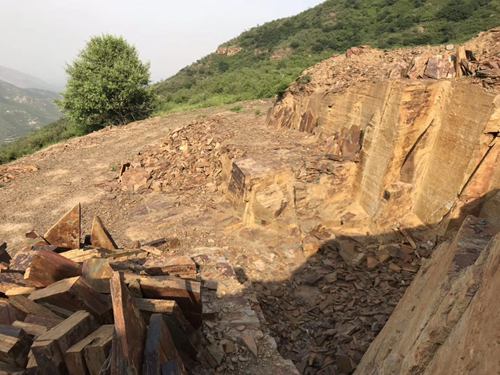
Top Source Stone operates as a direct quarry source factory. This model removes middleman logistics, which often involve multiple truck legs between independent quarries and separate processing plants. By consolidating extraction and fabrication at one site, we cut down on carbon-heavy transit during the early supply chain stages.
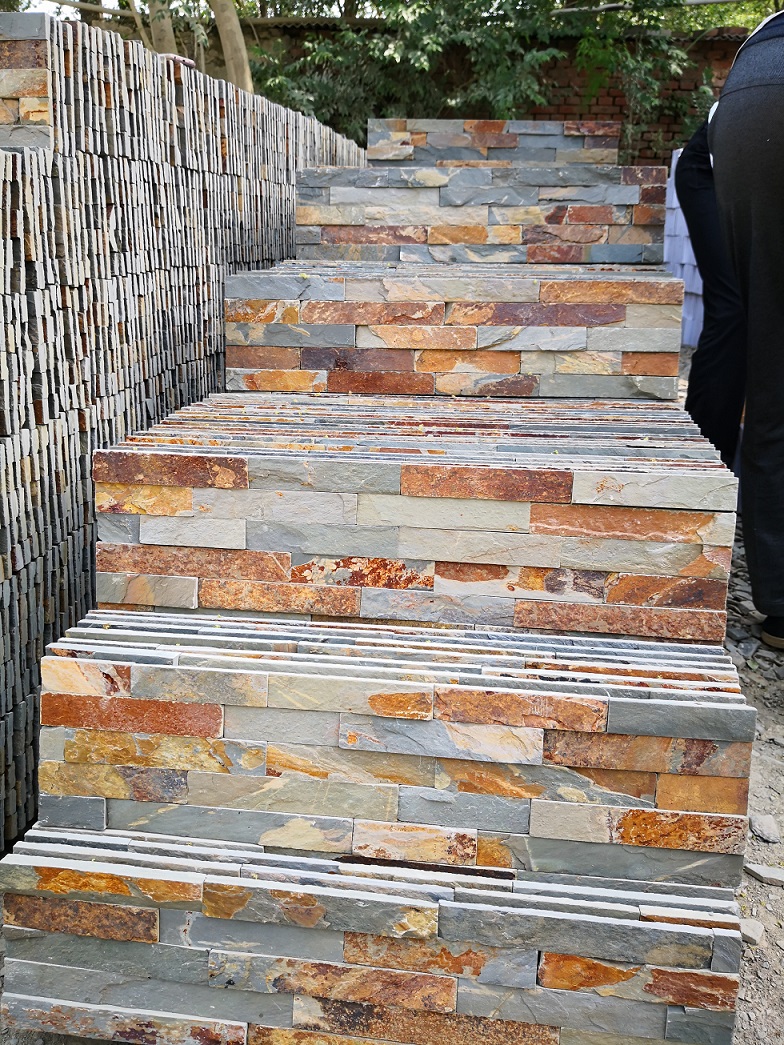
Consistency in the material also impacts sustainability. We source from the same quarry vein per order to maintain 95% hue uniformity. This level of consistency prevents project waste on-site, as installers do not need to reject “patchy” or mismatched panels that would otherwise end up in a landfill.
- Weight Strategy (USA Ports): We cap loading at 17.5 tons for strict weight-limit regions to optimize fuel efficiency per pallet.
- Heavy-Weight Standard: We utilize 24 – 26.5 ton loading for destination ports with higher thresholds, reducing the number of total shipments needed.
- Transport Modes: We apply specific emission factors (kgCO2e/t·km) across ship, rail, and truck legs to provide a transparent cradle-to-site report.
Controlling the supply chain from the mountain to the shipping crate allows us to provide the data dealers need for green building certifications. We supply these metrics to help architects and wholesalers meet the increasing demand for ESG-compliant materials in North American and European markets.
Premium Natural Stone Panels for Profitable Projects
Ethical Sourcing: Ensuring Social Responsibility in the Quarry
Ethical sourcing ensures fair labor and strict environmental protection. Leading suppliers prioritize supply chain transparency and community development to protect both workers and local ecosystems.
Responsible stone extraction relies on measurable standards that protect both the workforce and the land. In the current B2B landscape, professional buyers demand suppliers who treat environmental stewardship as an operational requirement rather than a marketing claim. This shift ensures that luxury stone products meet the rising ESG (Environmental, Social, and Governance) expectations of global architecture firms and developers.
Core Pillars of Labor Welfare and Ecological Protection
Ethical quarrying operations focus on the intersection of human rights and resource management. These pillars define how natural stone moves from a raw mineral to a commercially viable building material without compromising the well-being of the local environment or population.
- Workforce Protection: Operations require strict safety protocols and fair wage structures for all quarry personnel to ensure humane working conditions.
- Human Rights Standards: Strict zero-tolerance policies prevent forced or child labor throughout the extraction and processing phases.
- Ecological Stewardship: Active land rehabilitation and water recycling systems mitigate the long-term environmental impact of quarrying activities.
- Regional Development: Direct support for local infrastructure and community education programs ensures sustainable regional growth beyond the life of the quarry.
Verifiable Transparency via Direct Quarry Source Management
Opaque supply chains often hide ethical risks and inflate costs. Topbron steen utilizes a direct-from-quarry model to provide wholesalers and dealers with full visibility into the material’s origin. This control ensures that every batch meets both quality and ethical benchmarks.
- Middleman-Free Oversight: The direct-from-quarry model removes opaque intermediaries, providing a clear line of sight from the mountain to the crate.
- Pre-Shipment Visual Verification: High-definition photo and video documentation of finished batches allows for inspection before final payment, ensuring full transparency.
- Same-Batch Quarry Consistency: Sourcing from specific quarry veins maximizes material efficiency and reduces industrial waste by ensuring color uniformity.
- B2B Profit Protection: A strict B2B-only distribution model protects the commercial interests of regional partners while maintaining ethical supply chain integrity.
Zero-VOC and Natural Mineral Marketing for Healthy Homes
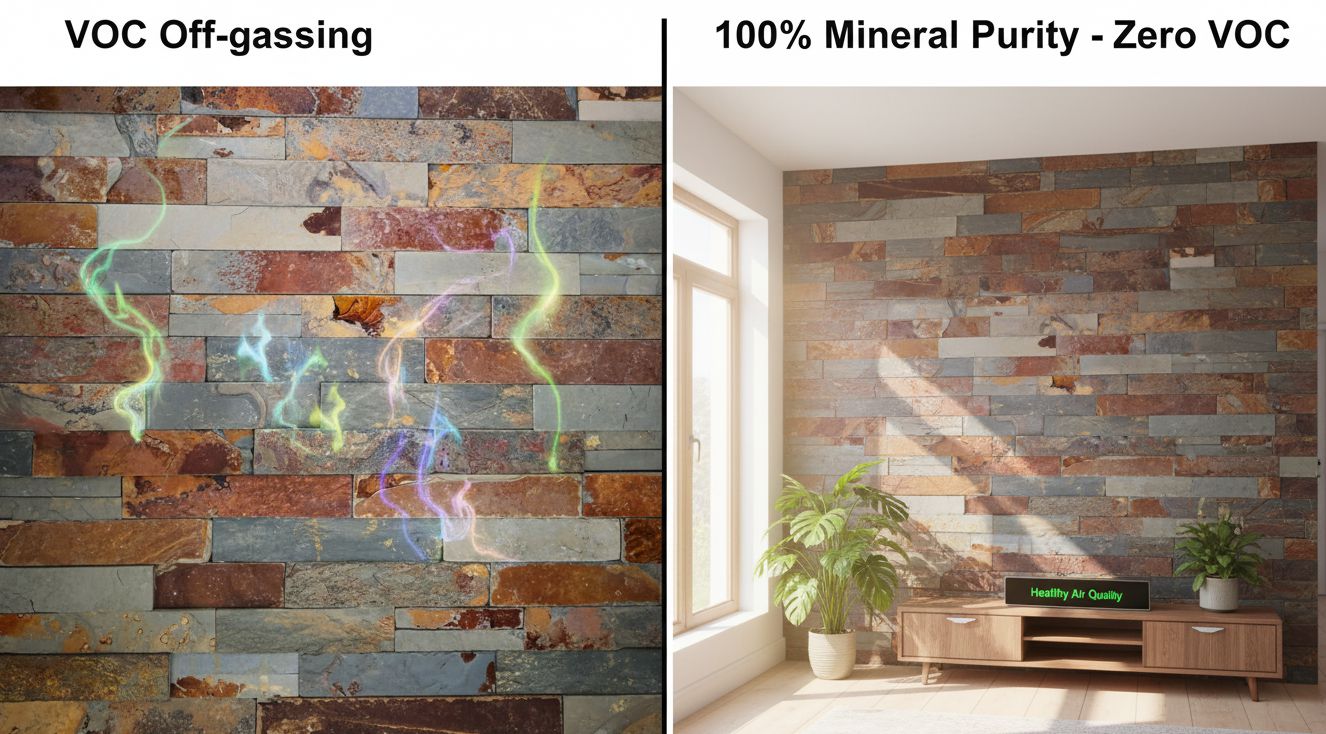
2026 healthy home marketing prioritizes air quality. Mineral materials and 100% natural stone eliminate off-gassing, providing non-toxic, mold-resistant solutions that meet strict residential and commercial health standards.
Healthy home marketing has moved from a niche luxury preference to a baseline technical requirement. For wholesalers and dealers, the focus for 2026 rests on indoor air safety and the elimination of chemical off-gassing. Mineral-based materials provide a measurable path to meeting these demands without sacrificing the architectural performance expected in high-end projects.
High-Performance Mineral Finishes and Indoor Air Safety
Traditional finishes often rely on plastic binders that release volatile organic compounds over time. Mineral-based silicate products solve this by using natural binders like potassium silicate or organic clay. These formulations create a breathable surface that actively supports a non-toxic indoor environment.
- Carbon Impact: Mineral silicate products emit 44% less CO2 on average compared to materials using synthetic plastic binders.
- Chemical Safety: Zero-VOC formulations prevent the release of hazardous air pollutants (HAPs), making them ideal for projects targeting families with chemical sensitivities.
- Biological Resistance: Natural mineral materials provide inherent mold resistance and odorless application, reducing the need for toxic biocides.
Leveraging 100% Natural Stone for Chemical-Free Interior Design
Top Source Stone provides a direct quarry solution for architects and dealers who require 100% mineral-based cladding. Unlike “faux” stone or engineered composites, natural stone panels contain no synthetic resins or chemical stabilizers that might compromise indoor air quality or degrade under environmental stress.
- Mineral Composition: Every panel consists of 100% natural Slate, Quartzite, or Marble, ensuring naturally zero-VOC content.
- Resin-Free Engineering: We avoid the synthetic binders used in imitation products, which often release toxins as they age or face heat.
- Material Performance: Inherent UV stability and high salinity resistance allow these minerals to maintain structural integrity and color without toxic chemical coatings.
- Sourcing Control: Sourcing from the same quarry vein ensures batch consistency while maintaining the biological purity of the stone.
By focusing on the geological reality of the product—100% natural minerals with no chemical additives—dealers can position their inventory as the ultimate health investment for 2026. This approach satisfies both the aesthetic demands of luxury design and the rigorous air quality standards of modern green building certifications.
How Sustainable Packaging Enhances Your Brand Value?
Eco-friendly packaging builds buyer trust, boosts organic social media visibility through unboxing, and increases customer lifetime value while meeting 2026 regulatory standards for stone distributors.
Strengthening Consumer Loyalty and Organic Social Media Visibility
Sustainability has shifted from a niche preference to a core expectation in the luxury stone market. When a dealer uses eco-friendly materials, the packaging acts as a silent salesperson. It transforms a standard delivery into a high-value brand signal that resonates with architects and high-end designers who prioritize authenticity.
- Referral Power: 70% of consumers recommend brands utilizing sustainable practices, turning every crate into a word-of-mouth marketing tool.
- Customer Value: Emotional alignment through shared environmental values can increase customer lifetime value by 306%.
- Free Reach: 40% of buyers share unboxing photos on social media when materials are thoughtful and eco-friendly, generating organic referral traffic.
Custom Branding on Reinforced Export Grade Stone Packaging
Top Source Stone provides B2B-specific packaging that balances structural integrity with brand exposure. Moving beyond generic crates allows distributors to claim their territory and showcase environmental commitment right at the job site. This approach secures the supply chain while reinforcing the dealer’s market position.
- Custom Box OEM: Available for orders starting at 300 square meters, allowing dealers to print logos and environmental claims directly on the cartons.
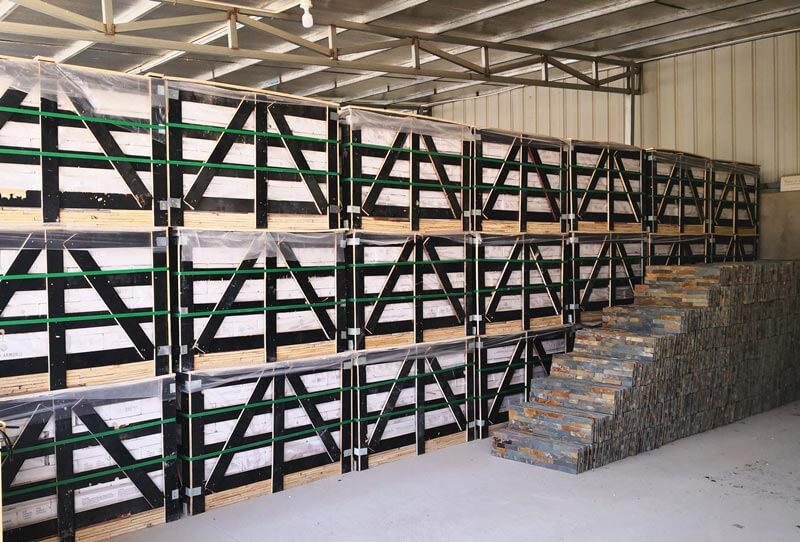
- Material Efficiency: 5-Ply Reinforced Export Grade Cartons (61x15x13cm) protect natural stacked stone while minimizing material waste from transit damage.
- Emission Reduction: Strategic pallet loading for 20GP containers (25-30 pallets) reduces carbon emissions per unit during heavy-weight shipping to global ports.
Veelgestelde vragen
Is natural stone brandable as an eco-friendly material?
Natural stone aligns with eco-friendly branding through the ANSI/NSC 373 certification standard. This framework verifies sustainable production practices, including water recycling, land reclamation, and waste management. Because natuursteen has low embodied carbon and high durability, it serves as a credible sustainable option for 2026 architecture projects.
How can I obtain LEED data for private label stone products?
To secure LEED credentials, you must pursue ANSI/NSC 373 certification and obtain third-party verified Environmental Product Declarations (EPDs). These documents disclose the environmental impact of the stone throughout its life cycle. Stone products contribute to LEED points in categories like Materials & Resources and Indoor Environmental Quality due to their zero-VOC nature.
What defines a sustainable stone quarrying process?
Sustainable quarrying integrates site selection that protects biodiversity with operational efficiency. We implement water recycling systems to filter and reuse water from stone cutting. Managing overburden and repurposing stone off-cuts for road base or landscaping ensures a circular economy while reducing the ecological footprint of the extraction site.
Does the packaging utilize recycled materials?
Our logistics strategy uses reinforced 5-ply export-grade cartons and plywood crates to ensure product safety. In line with 2026 sustainability goals, the industry uses recycled cardboard and thin-gauge materials to reduce plastic waste. These choices lower the carbon emissions associated with shipping and protect the product during international transit.
What are the best strategies to market stone to eco-conscious homeowners?
Focus on quantifiable metrics, such as how eco-friendly stone panels reduce environmental impact by 60% compared to traditional masonry. Highlight that homes featuring certified sustainable materials often see a 4-7% increase in resale value. Use messaging that emphasizes energy efficiency, LEED contributions, and the absence of synthetic chemicals or VOCs.
Final Thoughts
Selecting synthetic imitations or middleman-sourced stone risks project rejection through UV fading and inconsistent, “patchy” textures. We eliminate these liabilities by controlling the supply chain from the mountain to the crate, ensuring 95% hue uniformity and 100% mineral purity. This direct quarry model safeguards your dealer reputation and secures the premium margins associated with ESG-compliant architecture.
Shift your inventory toward certified sustainability by requesting our “Big 10” inventory guide today. We support your brand growth with 300-square-meter trial orders and private label packaging options to establish your market presence. Contact our sales department to review high-definition production videos and secure your territory.
