
Implementing 15. Repair Science is the most effective way to safeguard project margins against the high cost of unnecessary stone replacement. Inaccurate damage assessment by QC inspectors often triggers expensive teardowns that delay delivery and erode dealer profitability.
This guide establishes a technical standard for restoration using same-batch quarry consistency and CNC diamond-blade precision. We analyze how to maintain 95% hue uniformity and secure Z-shape interlocking joints to produce invisible, factory-grade repairs on-site.
Repair vs. Replace: Making the Right Decision for Minor Damage
Decide based on damage depth. Minor surface chips in 100% natural stone repair easily with resins, while structural cracks require replacing panels to maintain wall safety.
Evaluating Damage Severity and Restoration Costs
Before tearing out stone, inspect the failure point. Most cosmetic issues on natural ledgestone are surface-level and don’t require full panel removal. We recommend a systematic check of the stone’s physical state to protect your project margins.
- Damage Depth: Determine if the impact only affects the natural cleft surface or penetrates the epoxy adhesive bond holding the stones together.
- The 50% Rule: Repair is the smarter choice if restoration labor costs stay below half the price of a new panel and its installation.
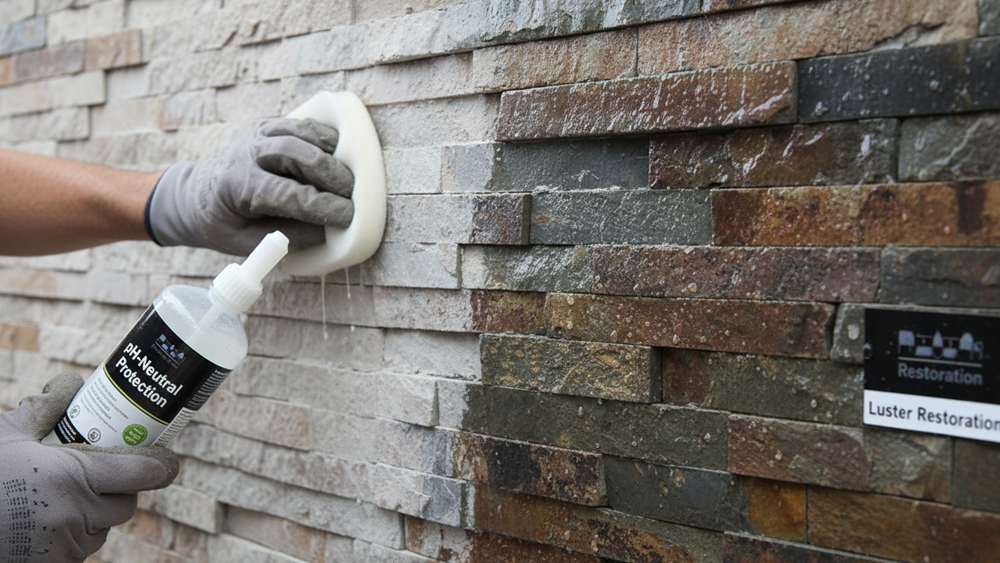
- Surface Cleaning: Light scuffs or mortar haze often respond to pH-neutral cleaners and mineral-based fillers, making replacement unnecessary.
- Structural Red Flags: Vertical cracks running across multiple stone layers indicate substrate movement. These require immediate panel replacement to ensure long-term safety.
Leveraging Same-Batch Quarry Consistency for Repairs
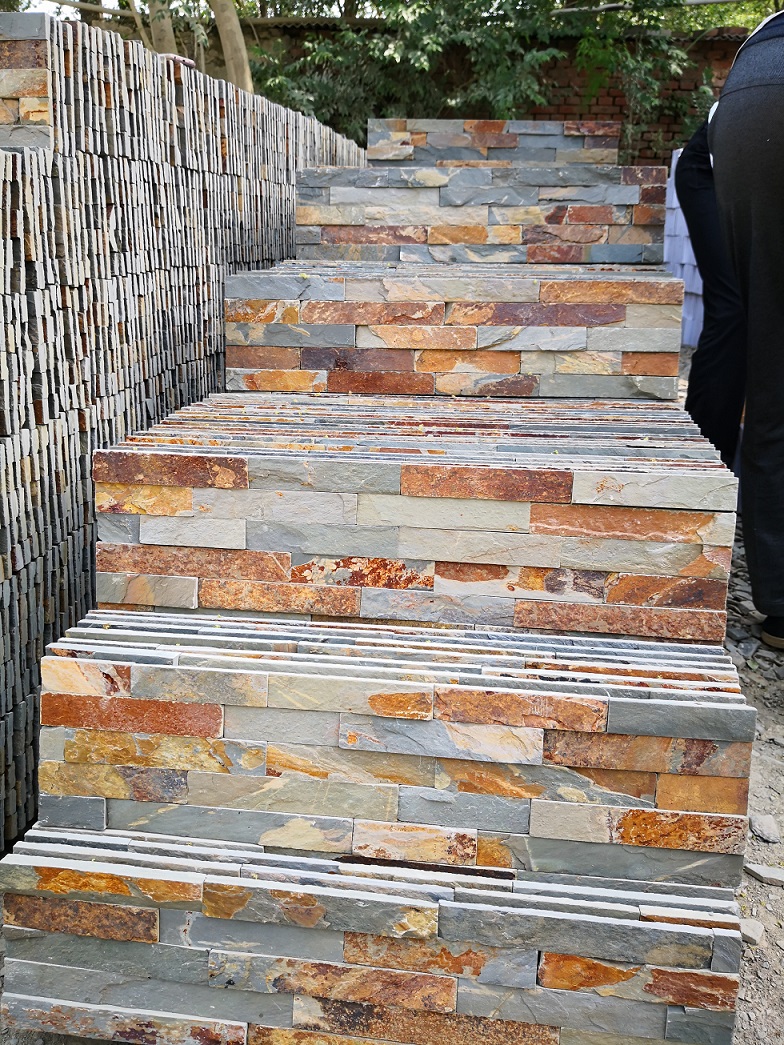
The biggest risk in replacing panels is a visual mismatch. Because Top Source Stone controls the supply chain from the mountain to the crate, we solve this problem at the source. Our standards simplify the “repair vs. replace” math for contractors.
- Batch Uniformity: We utilize same-batch quarry consistency (95% hue uniformity) so replacement panels match the existing mineral veining of the original install.
- Material Integrity: 100% natural slate and quartzite are through-color. You can sand or buff these materials without losing pigment, unlike manufactured “faux” stone.
- Corner Solutions: Use matching L-corners for corner repairs. Patching complex 90-degree joints with fillers often fails visually; a pre-fabricated corner preserves the architectural flow.
- UV Stability: Natural minerals prevent the “patchy” look. New panels integrated into older installations won’t fade at different rates because the stone is UV-stable.
What Belongs in a Professional Stone Repair Toolkit?
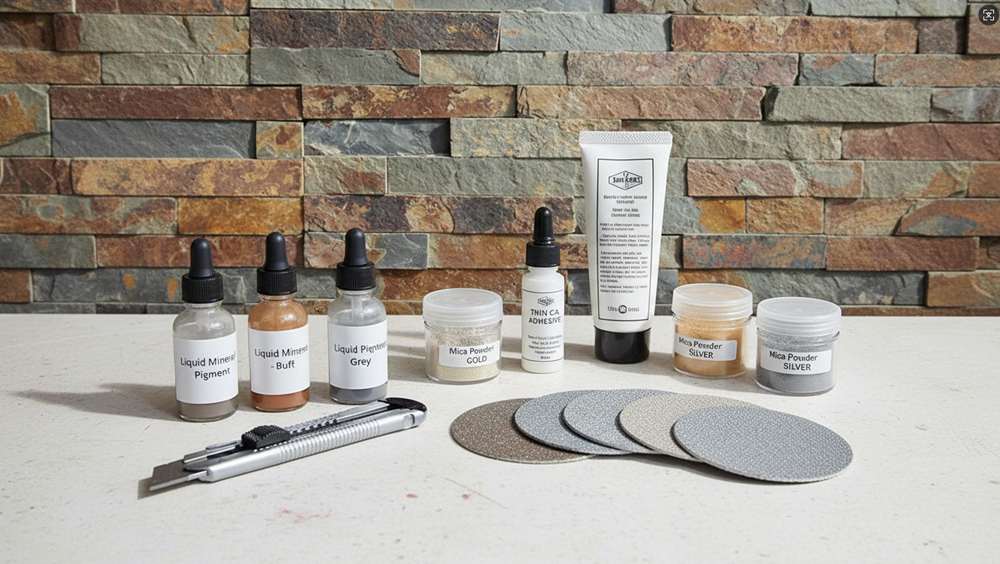
Pro toolkits require fast-curing CA adhesives, UV-stable fillers, and mineral tints. High-precision repairs use CNC-grade diamond blades and industrial epoxies to ensure structural and aesthetic continuity.
Essential Bonding Agents and Color-Matching Pigments
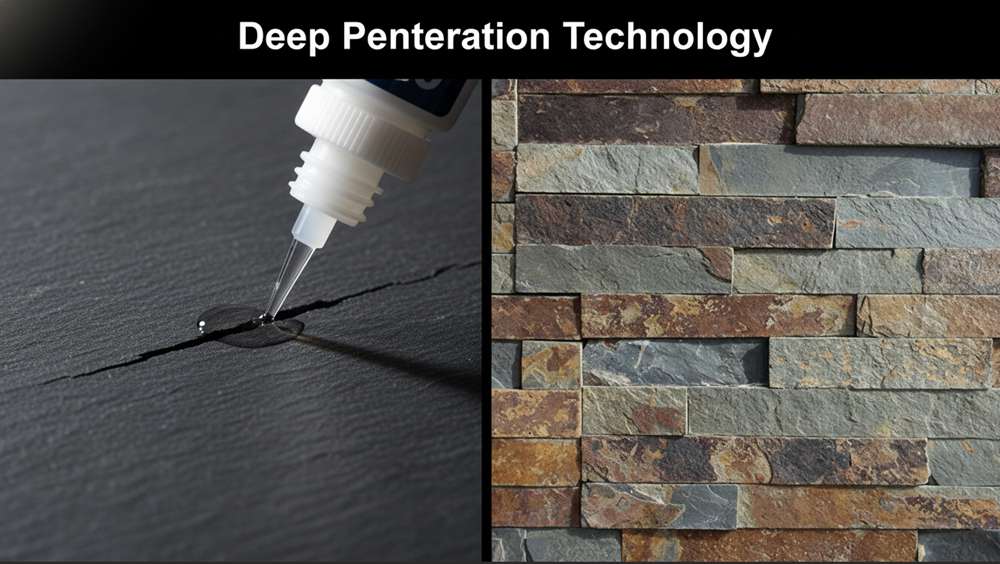
Successful stone restoration relies on chemical compatibility. Technicians use cyanoacrylate (CA) adhesives in both thin and gel viscosities to address different types of damage. Thin liquids penetrate deep into narrow slate or quartzite fissures, while gels allow for controlled application on vertical split-face surfaces without dripping.
- CA Adhesives: Gel and thin formulations for rapid crack penetration and bonding.
- Last Patch Gel: A UV-stable filler designed for larger chips in both indoor and outdoor environments.
- Mineral Liquid Tints: Pigments in buff, rust, and brown shades to replicate the natural color shifts of quartzite and slate.
- Application Supplies: Mixing cups, sticks, and industrial razor blades for cleaning excess resin off the surface.
Mineral tints provide the flexibility needed to match the 95% hue uniformity we maintain in our factory batches. By mixing small amounts of buff or rust into the resin, a technician can blend the repair into the stone’s existing vein patterns, making the patch virtually invisible to the naked eye.
Professional Precision via CNC-Standard Cutting and Industrial Resins
Field repairs must mimic the precision of Top Source Stone’s manufacturing. We use CNC diamond-blade edges to ensure every Z-shape or S-shape panel fits tightly. When technicians perform on-site patching, they must use similar high-spec diamond tooling to prepare edges for a professional fit that hides the installation substrate.
- Diamond Tooling: Angle grinders equipped with CNC-standard diamond discs for clean, non-chipped edges.
- Industrial Epoxies: High-strength resins formulated specifically for naturstein to create permanent structural bonds.
- Matching L-Corners: Pre-fabricated 90-degree transitions used to simplify wall wraps and reduce on-site cutting.
- pH-Neutral Polish: Specialized stone cleaners and polishes to restore the natural cleft or split-face luster after the repair cures.
Using industrial-grade resins ensures the repair survives extreme weather. Our stone is tested for high salinity and freeze-thaw resistance, so the bonding agents in your kit must meet those same durability standards. Finishing the repair with a pH-neutral stone polish prevents etching and protects the mineral surface from mortar haze or cleaning chemicals.
Premium Natural Stone Panels at Factory-Direct Pricing
Color-Matching Techniques Using Mineral Powders and Resins
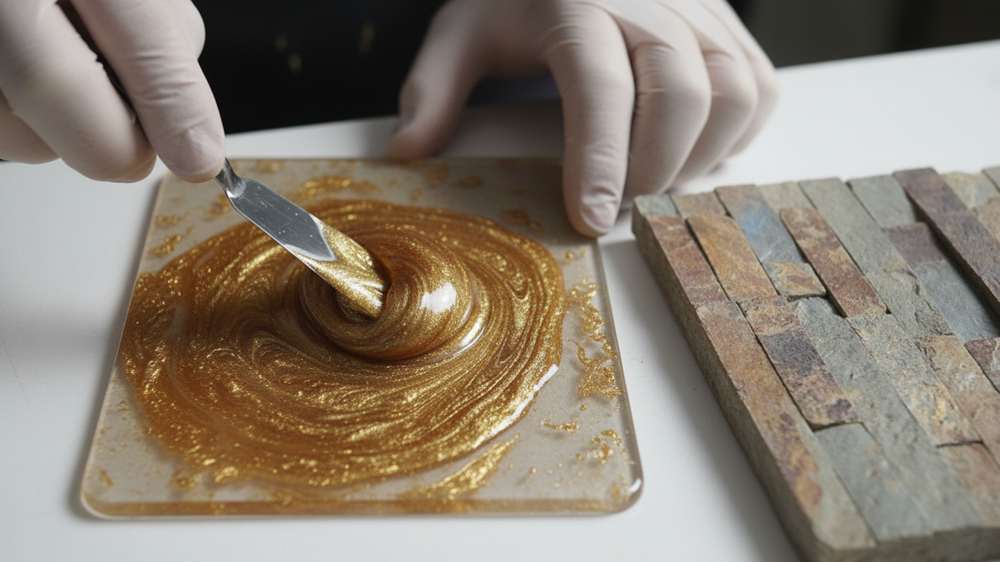
Technicians achieve invisible repairs by blending mica and pigment powders into high-strength resins, matching the exact mineral opacity and quarry-vein hue of the original naturstein.
| Additive Type | Visual Property | Stone Application |
|---|---|---|
| Mica Powder | Pearlescent/Shimmer | Kvartsitt & Mica-rich Schist |
| Liquid Pigment | Saturated Hue | Solid-toned Slate & Granitt |
| Mineral Dust | Matte Opacity | Sandstein & Travertine |
Pigment Blending and Mineral Opacity Control
Technicians replicate the aesthetic properties of natural stone by manipulating the ratio of mineral additives within the resin carrier. For quartzite panels, mixing finely ground mica powders into clear epoxy allows the repair to catch light at the same angles as the surrounding natural minerals. This shimmer prevents the “dead spot” look common in standard repairs.
Controlling the translucency of the patch is critical for materials like Glacier White or Arctic Golden. By varying the pigment concentration, the repair mimics the depth of naturstein rather than sitting on the surface as a flat color block.
- Additive Incorporation: Stir powders gradually to prevent particle clumping or “muddy” visual artifacts.
- Opacity Targets: High pigment loads for slate (opaque); low loads for quartzite (translucent).
- Reflective Qualities: Metallic gold, silver, and vibrant blue mica powders for pearlescent finishes.
Quarry-Vein Consistency in Resin Repairs
Accurate on-site color matching begins at the source. At Toppkildestein, we source material from the same quarry vein for each batch to ensure 95% hue uniformity. This consistency means technicians can rely on established base pigment profiles when working with our “Big 10 Inventory” standards, such as California Gold or Sierra Blue.
Using high-strength, two-part epoxy resins ensures a permanent bond with natural minerals like slate and granite. These resins accept mineral tints without losing structural integrity, allowing for a repair that is as durable as the original stone face.
- Hue Uniformity: 95% consistency achieved by pulling stone from identical quarry layers.
- Adhesive Standard: 4,000 PSI tensile strength two-part epoxy for structural bonding.
- Color Standards: Pre-calibrated tints for Alaska Gray, Midnight Slate, and Golden Honey profiles.
How to Remove Mortar Haze Without Damaging the Stone Surface?
Use pH-neutral cleaners and soft agitation to remove mortar residue. Avoid acids like vinegar to prevent permanent etching. Pre-wetting stone ensures chemicals stay on the surface for easy rinsing.
Safe pH-Neutral Cleaning Protocols for Natural Stone
Naturstein surfaces like quartzite and slate react poorly to acidity. Using acidic grout removers or household vinegar causes immediate, irreversible etching. Professionals rely on pH-neutral or alkaline cleaners specifically formulated for mineral surfaces to maintain the stone’s original luster.
- Pore Saturation: Pre-wet the wall with clean water before applying any cleaner. This fills the stone’s pores, keeping the cleaning solution on the surface where the mortar sits.
- Manual Agitation: Use white nylon pads or soft-bristle brushes. Work in short, straight strokes to lift the haze without scratching the stone face.
- Two-Bucket Method: Use one bucket for the cleaning solution and a second bucket of clean water for rinsing the sponge. This prevents the redeposition of dissolved mortar back onto the panels.
- Chemical Selection: Only use products labeled safe for naturstein. Alkaline cleaners work best for breaking down cementitious bonds without dulling the finish.
Preserving the Integrity of Natural Cleft and Split-Face Finishes
Stacked stone panels, particularly those with Natural Cleft or Split-Face finishes, require specific care to protect their rugged aesthetic. Aggressive mechanical tools like grinders or metal scrapers destroy the authentic texture and can compromise the 100% natural mineral structure of the quartzite or slate.
- Texture Protection: Avoid aggressive scrubbing that could flake the natural layers of slate. Preserving these textures ensures the stone retains its inherent UV stability.
- Precision Edge Care: Clear residue from CNC diamond-blade edges promptly. Clean edges are vital for the Z-Shape and S-Shape interlocking systems to create a seamless architectural finish.
- Recess Management: Textured “Rough Series” panels have deep recesses that easily trap mortar. Use a focused rinse to ensure no cementitious material dries in these crevices, which can lead to white ghosting later.
- Modular Fit: Ensure the “male-female” connection points of interlocking panels stay free of debris during the cleaning process to maintain a tight, professional joint.
Achieving Seamless Visual Flow During On-Site Patching
Invisible patches require matching grain direction, using same-batch quarry material, and utilizing precision CNC edges to eliminate shadow lines and visible joints on the stone wall.
Aligning Natural Stone Grain and Cleft Patterns
Visual continuity depends on how the installer manages light and shadow across the stone surface. Naturstein carries a distinct “face” created by its sedimentary history. If a patch ignores this orientation, it creates a visual break that no color-matching resin can fix.
- Surface Orientation: Installers must orient natural cleft surfaces to mimic existing shadow lines, ensuring the patch does not catch light differently than the surrounding wall.
- Series-Specific Texture: Repairs must follow the specific horizontal flow of “The Pencil Series” or the rugged, varied depth of “The Rough Series” to maintain the architectural intent.
- Sedimentary Layering: Mimicking the original stone’s sedimentary layers eliminates vertical “stepped” gaps that typically signal a repaired section.
Utilizing Same-Batch Material and CNC Precision Edges
Manufacturing standards directly dictate the success of on-site patching. Using off-the-shelf stones from different production runs often results in hue shifts that become obvious under sunlight or high-intensity interior lighting.
- Quarry Vein Sourcing: We source repair stone from the exact same quarry vein to maintain 95% hue uniformity, preventing the “patchwork” look common in lower-grade supplies.
- CNC Diamond-Blade Edges: Precision-cut edges allow for a tight “male-female” interlocking fit. This mechanical precision ensures the patch inserts into the wall without wide mortar joints.
- Structural Bonding: Applying high-strength epoxy resin consistent with our factory-grade 6″ x 24″ panel assembly ensures the patch remains stable and does not shift over time.
ofte stilte spørsmål
Can I repair cracked natural stone panels on-site?
Yes, you can repair cracked stone using a two-part epoxy resin. Clean the crack with rubbing alcohol, apply a color-matched epoxy mixture to slightly overfill the gap, and allow it to cure overnight. Once hardened, sand the area with 400-600 grit sandpaper to level the surface with the surrounding natural texture.
What is the safest way to remove dried mortar from the stone face?
Professional mortar dissolvers are the safest option as they use enzymes to break down residue without harming the stone. For heavy buildup, apply a diluted 5% muriatic acid solution to a pre-wetted surface, let it sit for 30 minutes, and rinse thoroughly. Always test a small area first to ensure the acid does not etch the specific mineral surface.
How do I hide scratches on dark slate or quartzite panels?
Minor white scratches on dark panels like Carbon Black or Sierra Blue can be masked with color-matching stone markers. For a more permanent fix, buff the area with #0000 steel wool or use a fine-grit diamond polishing pad to smooth the surface and blend the scratch into the stone’s natural cleft.
Is it better to use paint or epoxy resin for color matching repairs?
Epoxy resin mixed with mineral powder pigments is superior for stone repairs because it mimics the depth and translucency of natural minerals. While masonry paint works for surface-level cosmetic updates, epoxy provides a structural bond and allows you to recreate the specific veining found in materials like Golden Honey or Glacier White.
Can repair adhesives withstand the heat of a fireplace surround?
Standard epoxies often fail under high heat, so you must use specialized high-heat epoxy for fireplace repairs. Look for products rated for continuous exposure up to 500°F. Since natural stacked stone is non-combustible, using a thermal-rated adhesive ensures the repair remains secure even when the fireplace is in active use.
Final Thoughts
Poorly sourced material turns minor on-site repairs into costly full-wall replacements due to inevitable color mismatches. Our same-batch quarry consistency and CNC diamond-blade precision eliminate the risk of “patchy” installs that trigger client disputes. Investing in 100% naturstein with 95% hue uniformity safeguards your project margins and builds long-term dealer trust.
Verify our material integrity and interlocking fitment by requesting a physical sample kit today. We support your inventory growth with a 300-square-meter trial order to demonstrate how our UV-stable, freeze-thaw resistant stone performs in your specific climate. Contact our team to review the “Big 10 Inventory” or discuss private label options for your wholesale distribution.
