
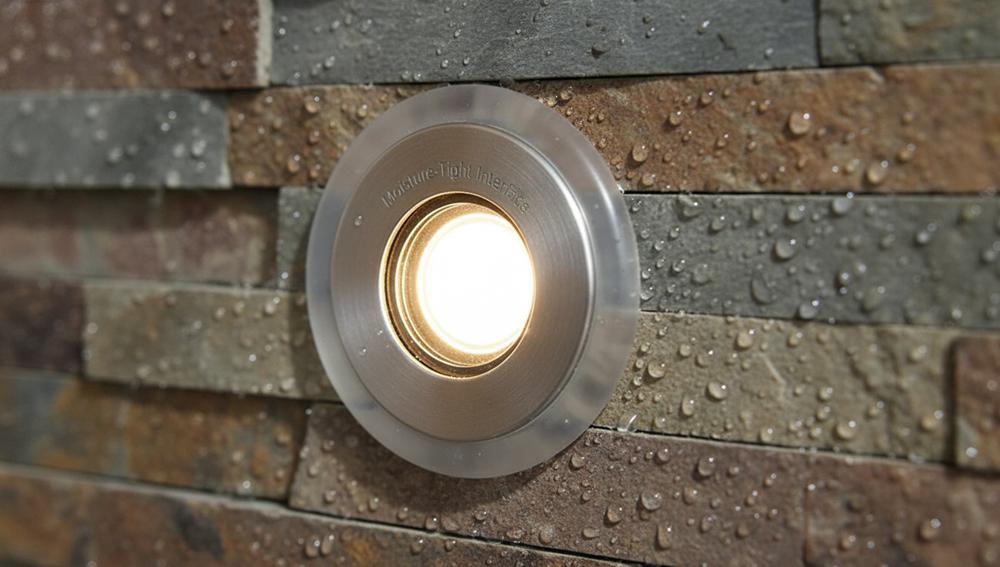
Effective 17. Lighting Integration dictates whether a stone facade maintains its architectural value or disappears under flat, ambient light. For lighting designers, failing to account for shadow mechanics leads to visual flattening and post-installation disputes that jeopardize project margins and professional credibility.
Our Rough Series panels provide the 3.5cm depth required for high-contrast raking light effects. We combine this with same-batch quarry consistency to eliminate the patchy results common in lower-grade materials, ensuring your lighting scheme highlights uniform mineral textures across every square meter.
Why Lighting Positions Dictate the Perceived Depth of Stone
Lighting creates depth by generating luminance contrast between natural stone clefts and recessed voids, using shadows as visual cues to emphasize 100% natural textures.
Luminance Contrast and Shadow Distribution
Light and shadow serve as pictorial depth cues. These visual signals allow the brain to process the three-dimensional profile of a wall. When a light source hits the natural cleft of a stone, it creates high luminance contrast. This difference in brightness between the stone face and the shadowed background makes the surface appear closer and more textured to the observer.
Adjusting the light position directly shifts the length and intensity of these shadows. For example, grazing light (raking light) placed at an oblique angle exaggerates natural clefts. Conversely, flat, frontal lighting minimizes surface variation and can make high-relief stone appear two-dimensional.
- High Contrast: Makes surfaces appear closer and increases perceived ruggedness.
- Low Contrast: Softens the wall profile and increases the perceived distance of the surface.
- Shadow Length: Directly correlates to the angle of the light source relative to the split-face profile.
Depth Characteristics of Rough Series Split-Face Panels
The architectural impact of a feature wall depends on the physical specs of the material. Our Rough Series utilizes a natural cleft finish with thicknesses reaching up to 3.5cm. This extra depth creates significant shadow voids that standard 1.5cm panels cannot replicate. These irregular surfaces on Quartzite and Slate panels catch light differently from every angle, ensuring the wall looks dynamic as ambient light changes.
For large-scale commercial projects, consistency in these depth cues is vital. We source from the same quarry vein per order to maintain 95% hue uniformity. This ensures that the shadows projected across a 50-meter wall remain uniform in intensity, preventing a patchy or disjointed appearance under professional lighting.
- Panel Thickness: 1cm – 2.5cm (Standard) | Up to 3.5cm (Rough/Premium).
- Materials: 100% Natural Slate and Quartzite.
- Consistency: Same-batch quarry sourcing for uniform shadow projection.
- Vekt: Approx. 55kg/m² for Rough Series panels to support high-relief textures.

Raking Light: Highlighting Texture Through Graze Illumination
Raking light positions sources at oblique angles—30 degrees or less—parallel to the surface. This creates high-contrast shadows, making the 3D textures of natural stablet stein appear more pronounced.
| Lighting Parameter | Technical Standard | Visual Outcome |
|---|---|---|
| Incidence Angle | 5° to 30° (Oblique) | Maximizes shadow length and depth |
| Light Quality | Hard, Undiffused | Sharp contrast between raised edges and voids |
| Fixture Placement | Top or Base of Wall | Accentuates natural cleft and split-face characteristics |
Oblique Angle Positioning: The Mechanics of Surface Contrast
The physical relationship between light angles and stone visibility determines the perceived depth of a feature wall. Positioning light sources at a narrow 5° to 30° angle creates long, pictorial shadows that reveal surface irregularities otherwise invisible under flat, ambient lighting.
- Shadow Mechanics: Narrow angles elongate shadows, which helps the brain estimate three-dimensional spatial relationships on the wall surface.
- Hard Light Selection: Undiffused light sources work best. Diffusion cancels the raking effect, while condensed light maintains sharp contrast between raised stone edges and recessed voids.
- Vertical Alignment: Placing fixtures at the extreme top or bottom of a substrate effectively documents the authentic split-face characteristics of the mineral.
- Distance Calibration: Contrast levels vary based on how far the fixture sits from the wall; closer proximity intensifies the “graze” effect.
Enhancing the Rough Series: Maximizing 1.75-Inch Depth Profiles
Standard stone panels often appear flat or washed out in high-traffic commercial environments. Toppkildestein engineered the Rough Series specifically to counteract this, using increased thickness to interact with architectural lighting.
- Depth Specifications: Thickness variations up to 1.75 inches (3.5cm) provide the aggressive profile required for deep shadow casting.
- Micro-Shadow Effects: Natural cleft finishes on Quartzite and Slate panels react to raking light by creating micro-shadows across individual stone strips, adding tactile richness.
- Hue Uniformity: Strategic illumination highlights our same-batch quarry consistency. Even under intense focal light, the stone maintains 95% hue uniformity across the installation.
- Commercial Durability: Graze lighting ensures that heavily textured panels remain the focal point of a space, preventing visual “flattening” from overhead office or retail lights.
Premium Stacked Stone for Architectural Excellence
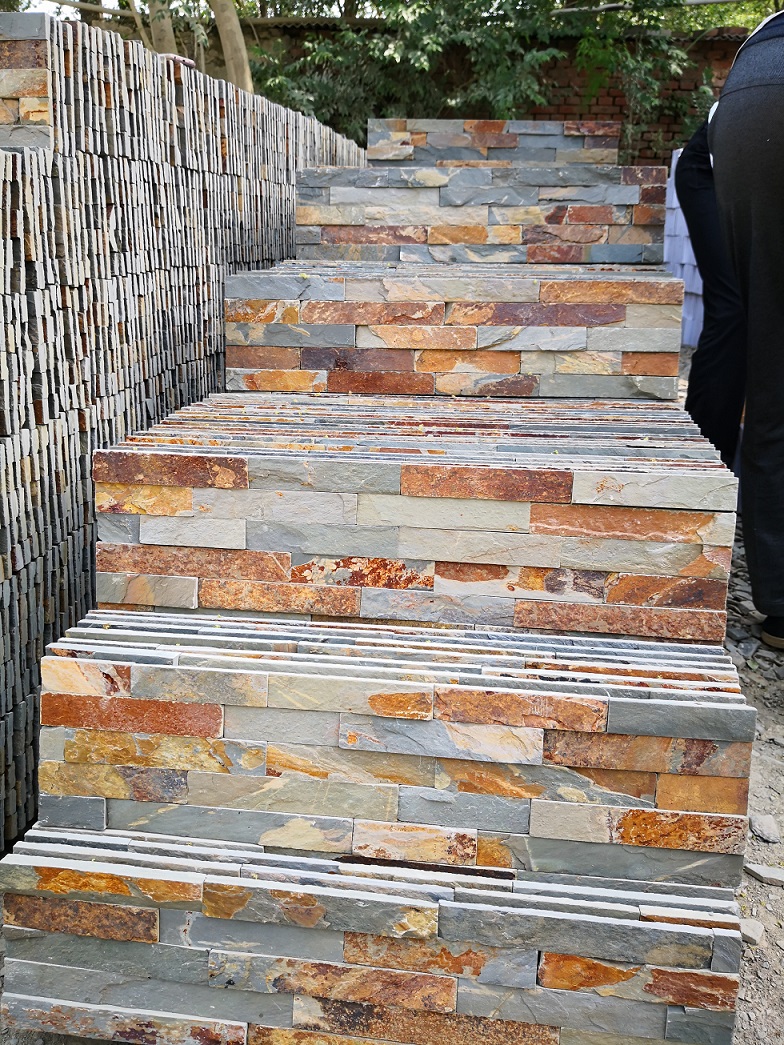
Technical Specs: Choosing Color Temperatures (K) for Minerals
Professional mineral lighting requires 4500K–5000K. This neutral range ensures color accuracy for quartzite and slate without the yellow tint of warm bulbs or artificial blue casts of high-Kelvin fixtures.
The Neutral Sweet Spot: Why 4500K–5000K Mimics Natural Sunlight
Lighting minerals at 5000K replicates mid-day sun, offering the sharpest visual acuity for spotting crystal inclusions and natural vein structures. While warm lighting works for living spaces, ranges between 2700K and 3000K often muddy cool grays and flatten the red tones inherent in natural stone.
Going too far into the cool spectrum causes different issues. Fixtures above 5500K introduce an artificial blue tint that over-emphasizes blue minerals and washes out warmer specimens. Standardizing at the 4500K-5000K neutral range ensures color uniformity across large-scale commercial projects where stone color must remain consistent from the lobby to the corridors.
Specifying High-CRI Fixtures for Same-Batch Quarry Consistency
We recommend LED fixtures with a Color Rendering Index (CRI) of 90 or higher to reveal the authentic hues of our “Big 10” inventory. This level of color accuracy is necessary to showcase our Same-Batch Quarry Consistency, as it reveals the subtle vein transitions found in Alaska Gray and Glacier White quartzite.
- Texture Depth: Natural Cleft and Split-Face textures thrive under neutral white light, which creates crisp shadows without distorting the mineral’s natural reflectivity.
- Joinery Clarity: High-quality 4500K lighting showcases the precision of CNC diamond-blade edges.
- Seamless Finish: Correct illumination makes the interlocking Z-shape joints nearly invisible, creating a continuous architectural surface.
- Batch Uniformity: Neutral spectrums prevent the “patchy” look that occurs when warm light highlights yellow variations in natural slate.

How to Conceal Wiring and Fixtures Within Stone Voids Safely?
Route low-voltage cables through moisture-rated PVC conduits within substrate channels. Using interlocking Z-shape panels hides these connections, providing a seamless finish that protects electrical components from physical and moisture damage.
Conduit Routing and Moisture Protection Standards
Electrical integrity in masonry depends on a strategy that anticipates moisture and structural movement. Wiring cannot sit loosely behind stone; it requires a dedicated path within the wall assembly to prevent insulation degradation and short circuits.
- Conduit Selection: Use flexible PVC conduits to navigate the irregular voids common in natural stone installations. This prevents corrosion and facilitates easier cable pulls.
- Bend Compliance: Follow 2026 NEC standards by limiting total conduit bends to 360 degrees between pull points. This ensures the system remains serviceable.
- Waterproofing: Secure all connections with gel-filled, waterproof junction boxes. These are essential for high-humidity environments where stone may retain moisture.
- Digital Mapping: Document the exact location of hidden lines with digital photos or site maps. This prevents accidental drilling during future maintenance or sign installation.
Substrate Channeling with Interlocking Z-Shape Panels
The specific geometry of the stone panel determines how effectively hardware is hidden. Interlocking systems provide natural overlap points that simplify the integration of lighting components while maintaining a solid structural bond with the wall.
- Substrate Preparation: Carve wire channels directly into the cement board or masonry substrate. Cover these runs using the male-female connection system of the Z-shape panels to hide the path.
- Driver Housing: Use the 3.5cm thickness of Top Source Stone Rough Series panels to create recessed pockets. This depth is sufficient for housing low-voltage LED drivers or puck light fixtures.
- Precision Fit: CNC diamond-blade edges ensure panels fit tightly over recessed wiring. This high-tolerance engineering eliminates light leakage from the substrate, keeping the focus on the stone texture.
- Transition Management: Deploy matching L-corners at wall transitions. These pre-fabricated pieces allow cables to move around 90-degree structural turns without exposed wires or broken texture patterns.

Waterproofing Protocols for Recessed Outdoor Stone Lighting
Reliable 2026 protocols require IP67-rated fixtures and potting compounds for all below-grade wiring. Installers must seal stone-to-fixture interfaces with flexible silicone to survive extreme freeze-thaw cycles.
IP Protection Ratings and Moisture Barriers
Outdoor lighting in stone facades faces constant pressure from groundwater and high-pressure cleaning. Standard weatherproofing often fails at the wire entry points, where temperature shifts pull moisture into the fixture through a vacuum effect. Using the correct ingress protection and chemical barriers is the only way to prevent mid-season electrical failures.
- IP67 Minimum Rating: Select fixtures rated for temporary submersion to handle the water-logging common in recessed stone pockets.
- Potting Compounds: Seal all below-ground wire connections with specialized potting gel to stop moisture from traveling through the conduit.
- Silicone Sealants: Apply a bead of 100% silicone where the fixture meets the stone; avoid acrylic caulks which crack during thermal expansion.
- Surface Preparation: Clean the natural stone surface with a wire brush to remove dust before sealing, ensuring a permanent moisture-tight bond.
Leveraging Freeze-Thaw Resistant Stone for System Longevity
The longevity of a lighting system depends on the stability of the substrate. If the stone cracks or shifts, the waterproof gaskets lose their seal. Top Source Stone utilizes high-density minerals that maintain structural integrity across diverse climates, protecting the internal hardware from mechanical stress.
- ASTM Standards: Use freeze-thaw resistant natural stone to prevent substrate delamination from compromising the fixture’s waterproof perimeter.
- UV Stability: Natural quartzite and slate maintain their dimensions under intense sun exposure, preventing gaps from forming around the gaskets.
- CNC Precision Cuts: Utilize diamond-blade precision cut panels to create tight modular openings that minimize the space requiring sealant.
- Angled Mounting: Install fixtures on stone surfaces with a slight outward pitch to promote natural runoff and stop water from pooling at the electrical interface.
ofte stilte spørsmål
Where is the best placement for LED strips on a stone feature wall?
Placement depends on the stone’s opacity. For translucent materials like our Glacier White quartzite, installers place LED light sheets directly behind the stone for a uniform glow. For opaque, textured materials like Midnight Slate or Copper Canyon, use uplighting at the base to create dramatic shadows. You can also use recessed ceiling fixtures to graze the surface, which highlights the natural depth and cleft of the stone.
What LED color temperature works best for white quartzite ledger panels?
We recommend a range between 3000K and 4000K for white quartzite like Alaska Gray or Arctic Golden. 3000K provides a warm, inviting atmosphere suitable for residential lobbies, while 3500K to 4000K offers a crisp, gallery-style look that emphasizes natural veining. Always select fixtures with a Color Rendering Index (CRI) of 90 or higher to prevent the minerals from appearing dull or gray.
How do you conceal wiring within a stone backsplash or wall?
The best approach is routing wires through the substrate before the stone installation. For existing walls, drill through the stone panel and the OSB or cement board backing using diamond-tipped bits. If a specific stone piece blocks the path, installers carefully chisel the back of the stone to create a wire chase, then secure it with high-strength epoxy to maintain a seamless finish.
Can LED heat damage stone sealers or adhesives?
No. Modern LEDs operate at temperatures well below the degradation threshold for stone sealers or the high-strength epoxy used in Top Source Stone panels. Since LEDs emit minimal infrared radiation compared to halogen bulbs, they are safe for use with acrylic, polyurethane, or epoxy-based protective coatings commonly applied to natural stone.
Are dimmers compatible with low-voltage stone accent lighting?
Yes, but you must match the dimmer to the specific LED driver. Magnetic transformers require magnetic low-voltage (MLV) dimmers, while electronic drivers require electronic low-voltage (ELV) dimmers. For outdoor stone installations in high-humidity areas, ensure the dimmer controls and housing carry an IP65 rating to protect against moisture infiltration.
