

Designing vertical stone installations requires more than just an aesthetic eye; it demands precise engineering to prevent structural failure and meet strict building codes. Architects and contractors must balance the visual appeal of heavy stone with the technical realities of dead load limits and substrate rigidity to avoid costly structural retrofits.
This guide explores the technical requirements for weight and load analysis, focusing on the 15 lbs per square foot safety threshold for adhered veneers. We analyze substrate load calculations based on ASCE 7-16 standards and provide reinforcement strategies, including L/720 deflection limits and the mechanical anchorage needed to maintain the 50 psi bond strength required for long-term safety.
Understanding Stacked Stone Weight and Dead Load
Stacked stone weight typically ranges from 7.5 to 15 lbs per square foot for manufactured veneers, while natural stone panels vary between 12 and 25 lbs. Staying under the 15 lbs per square foot threshold is critical for adhered installations to meet IAPMO-ES AC51 and IBC safety standards without additional structural footings.
Weight Categories for Natural vs. Manufactured Stone Panels
Natural stacked stone panels typically weigh between 15 and 25 lbs per square foot. This mass requires a professional engineering review for walls exceeding 15 feet in height to prevent structural failure. Manufactured stone veneer offers a lighter alternative, averaging 7.5 to 15 lbs per square foot, which allows for direct adhesion to standard wood or metal studs. Full-bed naturstein presents the highest demand on a building’s foundation, exceeding 25 to 40+ lbs per square foot and necessitating dedicated structural footings or brick ledges. Specialized products like Diamond Peak and Telluride Stone utilize thin profiles between 0.75 and 1.5 inches to maintain a manageable footprint of approximately 12.6 to 14 lbs per square foot.
Engineering Standards and Saturated Dead Load Limits
ASTM C1670 standards dictate that produsert stein must maintain a saturated weight under 15 lbs per square foot while achieving a minimum compressive strength of 1,800 psi. Some high-performance veneers reach up to 3,400 psi to ensure long-term durability. IBC Section 1404.11.42 and IAPMO-ES AC51 guidelines require that structural deflection remains under 1/600 of the span to prevent cracking or detachment. Accurate dead load calculations must include the weight of the stone, the mortar scratch coat, and any high-strength epoxy adhesives. Selecting panels verified between 8 and 13 lbs per square foot streamlines compliance with IRC seismic provisions (R301.2.2) and reduces the need for expensive structural reinforcement.
Substrate Load Calculation: Ensuring Structural Safety
Structural safety depends on calculating the sum of dead loads, superimposed dead loads, and live loads using ASCE 7-16 standards. Engineers apply factors of 1.2 for dead loads and 1.6 for live loads to ensure the substrate supports the 8-13 lbs/sqft weight of steinpaneler without failure.
| Load Component | Technical Specification | Design Value |
|---|---|---|
| Concrete Dead Load (DL) | 25 kN/m³ density (0.20m thick) | 5.0 kN/m² |
| Superimposed Dead Load | Residential Finishes/MEP | 6.0 kN/m² |
| Residential Live Load | ASCE 7-16 Table 4.3-1 | 2.0 kN/m² |
| Natural Stone Panels | Stablet stein (0.75″ – 1.75″) | 8.0 – 13.0 lbs/sqft |
Load Components for Natural Stone Wall Assemblies
Structural demand begins with the dead load of the substrate itself. For concrete slabs, engineers use a standard density of 25 kN/m³. A 0.20 m thick slab generates a dead load of 5 kN/m², while thinner 0.15 m slabs reduce this value to 3.75 kN/m². Natural stone panels add a manageable weight ranging from 8 to 13 lbs/sqft, which equals approximately 0.38 to 0.62 kN/m². This relatively low weight often removes the need for specialized footings in residential retrofits.
Superimposed dead loads account for non-structural elements like MEP systems, partitions, and floor finishes. In residential engineering benchmarks, this value typically reaches 6 kN/m². The specific stone type influences these numbers. Slate and quartzite panels maintain a lower profile between 0.75 and 1.25 inches, whereas the Rough Series features a thicker profile of 1 to 1.75 inches, increasing the total demand on the wall assembly.
Engineering Standards and Safety Factors
Calculations follow ASCE 7-16 Table 4.3-1 to determine minimum live load requirements. Residential applications require a capacity for 2 kN/m² of live load. To protect against material variations or unexpected stress, engineers apply Ultimate Limit State (ULS) load factors. They multiply dead loads by 1.2 and live loads by 1.6 to establish the total design capacity for the substrate. This ensures the structure stays within safe limits during peak usage.
Load distribution analysis uses beam tributary areas to track how weight moves through the building. For example, a 14 m² tributary area can generate a 171.5 kN dead load on a supporting beam. Modern workflows utilize analysis software like ETABS, STAAD-Pro, and SAP2000 to model these paths accurately. These tools verify that reinforced concrete elements comply with ACI 318 and that plywood subfloors meet PS 1 standards for structural integrity.

Structural Reinforcement Guide for Heavy Stone Installations
Heavy steininstallasjoner require strict adherence to 2026 load-bearing standards, including L/720 deflection limits for framed subfloors and mechanical anchorage spaced at 18-inch vertical intervals. Using 2.5 lb/ft² metal lath and achieving 50 psi bond strength ensures the assembly manages dead loads and seismic forces effectively.
| Structural Component | Technical Specification | Standard Compliance |
|---|---|---|
| Substrate Deflection (Frame) | L/720 (Stone + Bed Weight) | TMS 402 / ACI 530 |
| Anchor Spacing | 32″ Horiz. / 18″ Vert. Max | MSJC Requirements |
| Bond Strength | 50 psi Minimum | ICC-ES AC275 |
| Metal Lath Weight | 2.5 lb/ft² or 3.4 lb/ft² | ASTM C847 |
Substrate Rigidity and Load Distribution Standards
Engineers limit substrate deflection to L/360 for cast-in-place concrete and L/720 for wood or metal frame construction. These strict limits accommodate the combined weight of the steinpaneler and the mortar bed without risk of cracking. Structural load paths must support stacked stone panels weighing between 8 and 13 lbs/sq ft. Proper verification ensures the assembly remains stable without the need for additional footings in standard residential or commercial builds.
Wall assemblies require the implementation of strongbacks or cross-bridging. These structural elements prevent lateral movement and provide the rigid surface necessary for a high-performance veneer bond. Mortar beds applied to walls should range from 3/8-inch to 1.5-inch thick. Using a cement-to-sand ratio of 1:5:0.5 provides the optimal balance for load distribution and long-term durability of the vertical surface.

Mechanical Anchorage and ANSI Material Specifications
Veneer anchors must be installed at a maximum spacing of 32 inches horizontally and 18 inches vertically. This configuration ensures that each tie supports no more than 2.67 sq ft of stone. Installers use 2.5 lb/ft² or 3.4 lb/ft² self-furring, corrosion-resistant lath to create a reliable mechanical key. This lath supports the 0.5-inch nominal scratch coat and provides a foundation for the finished stone application.
The system must achieve a minimum adhered bond strength of 50 psi to meet ICC-ES AC275 standards. Modified dry-set cement mortars, specifically those meeting ANSI A118.15, provide the required adhesion for heavy naturstein. For projects in Seismic Design Categories D through F, single wire joint reinforcement is placed at 18-inch vertical centers. This reinforcement anchors the stone against seismic forces and prevents detachment during ground movement.
Elevate Your Projects with Premium Factory-Direct Stacked Stone
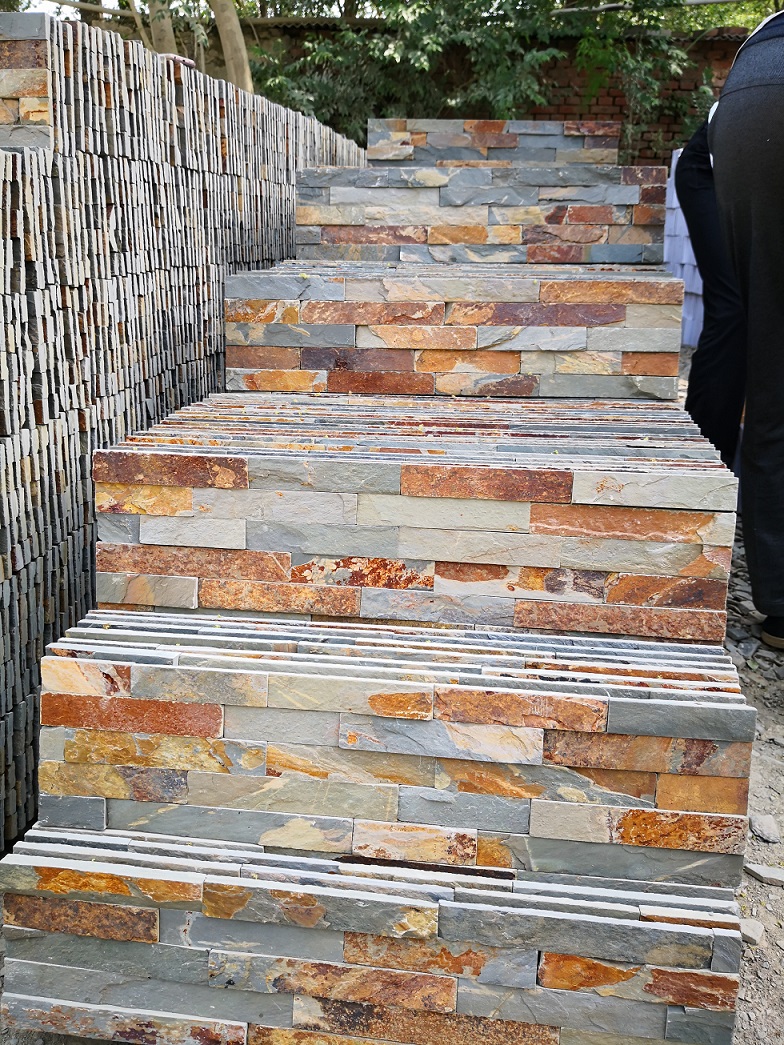
Engineering Standards and Safety Compliance
Engineering compliance relies on rigorous load analysis using ASCE 7-16 and ANSI MH16.1-2021 standards. We maintain safety factors between 2 and 5 depending on material ductility and verify structural integrity through load tests at 100% to 125% of rated capacity to prevent failure in diverse seismic environments.
Structural Load Design and Material Stability Factors
Structural engineers classify loads into dead and live categories according to ASCE 7-16 guidelines. We apply Load Resistance Factor Design (LRFD) combinations, such as 1.2D + 1.6L, to calculate the ultimate factored loads for stone panel supports and industrial frames. For example, a system supporting a 120 lb/ft dead load and a 180 lb/ft live load results in a maximum factored load of 288 lb/ft to ensure the structure survives peak stress events.
ANSI MH16.1-2021 mandates the evaluation of nine specific design factors for industrial systems. These requirements include assessing frame aspect ratios, beam-to-column stiffness, and ensuring the average-to-maximum load ratio remains at or above 67%. To account for material variability, we apply a safety factor of at least 2 for ductile components and 5 for brittle elements like stone or non-ductile masonry subjected to dynamic environmental stress.
Site-specific seismicity plays a critical role in structural anchorage. We use the equivalent lateral force formula (V = CsW) to determine how seismic weight impacts the stability of the installation. This analysis dictates the depth and type of base-plate anchorage required to prevent displacement during ground motion, particularly for systems with high center-of-gravity profiles.
Testing Protocols and Regulatory Verification Procedures
Regulatory verification involves mandatory load tests for all supporting structures. OSHA 1910.179 and the ASME B30 series require these systems to undergo testing at 100% to 125% of their rated capacity. These tests validate the integrity of the primary structure and all functional components, ensuring the assembly handles its maximum intended weight without deformation or failure.
Precision in mass measurement during these calibration phases depends on ASTM E617-23 laboratory weights. These weights provide metrological traceability and comply with NIST standards for density, magnetism, and surface roughness. Using these certified masses ensures that load capacity ratings are accurate and reproducible across different testing environments.
Securing steinpaneler to industrial frameworks requires specialized epoxy resin bonds. We verify the bond integrity under various environmental conditions to ensure permanent adhesion. For installations involving personnel on elevated platforms, we maintain a minimum rated load of 300 lbs as per ANSI A92.3-2014, while regular audits of anchorage details confirm the system remains compliant with the original engineering design.
Professional Support for Large-Scale Projects
Large-scale projects require a multi-layered support team, including structural engineers for load-bearing calculations and project managers for code compliance. These professionals use Building Information Modeling (BIM) and third-party audits to maintain structural integrity and safety across complex installations through 2026 standards.
Specialized Engineering Roles and Structural Oversight
Structural engineers perform load-bearing capacity calculations for forces, stress, and pressures to ensure wall and foundation integrity. These professionals analyze how the architectural design manages the weight of heavy stone cladding alongside external environmental pressures. Senior Project Managers oversee schedules and budgets while supervising structural assessments and quality testing to confirm adherence to technical specifications. Their leadership ensures that every phase of the construction project meets safety requirements without compromising the timeline.
General foremen manage on-site personnel and interpret blueprints to enforce building codes during the stone installation process. They bridge the gap between engineering plans and physical execution, ensuring that installers follow load-bearing protocols accurately. Assistant Project Managers with 2 to 5 years of experience conduct quality control checks on subcontractors. This layer of supervision maintains safety regulation compliance and identifies potential installation errors before they become structural risks.

Technical Integration and Quality Assurance Protocols
Building Information Modeling (BIM) provides a digital representation for real-time collaboration on structural and MEP integration. This technology allows engineers and project managers to visualize how stone loads interact with mechanical, electrical, and plumbing systems. Third-party auditors conduct independent reviews at critical milestones to verify compliance with international construction codes. These external inspections provide an unbiased validation of structural integrity, offering an extra layer of security for high-stakes developments.
Risk assessments identify technical challenges like equipment failures or design flaws to establish necessary contingency plans. By anticipating these issues, project teams can deploy quick-response strategies that prevent delays or structural failures. Quality assurance mandates the documentation of all load tests and structural modifications to maintain long-term safety. This rigorous record-keeping ensures that every modification is validated by engineering logic and stays consistent with safety standards through 2026 and beyond.
Final Thoughts
Successful stone installations rely on a precise balance between material weight and substrate capacity. Choosing panels that fall within the 8 to 13 lbs per square foot range often simplifies the engineering process and avoids the high costs of structural footings. Adhering to standards like ASTM C1670 and IBC guidelines ensures the wall assembly manages saturated dead loads without compromising the building’s foundation.
Professional oversight and rigorous testing protocols turn these technical requirements into a safe, lasting reality. Teams use mechanical anchorage and specialized mortars to meet 50 psi bond strength targets, particularly in areas prone to seismic activity. Integrating structural engineers and BIM technology early in the design phase protects the project from deflection issues and ensures every component meets 2026 safety standards.
