

Z-Panel Groutless? sourcing is the primary factor in avoiding the 38% labor cost overrun associated with manual masonry pointing. Selecting panels without precision-cut joints often forces installers back into wet-trade construction, which destroys the financial advantage and speed of modular stone systems.
We analyze how the Interlocking Modular Blueprint and CNC-Diamond Precision Edging create a physical moisture barrier. By prioritizing 100% natural stone units with thermal expansion resistance and 95% hue uniformity, you achieve a seamless architectural finish without the need for traditional mortar.
The “Dry Stack” Look: Why Z-Panels Don’t Require Grout Lines?
Z-Panels eliminate grout lines through an interlocking modular blueprint where stone pieces are pre-embedded into cement-backed units, allowing for tight, seamless, and high-speed dry-stack installation.
The Mechanics of Pre-Fabricated Modular Design
Traditional masonry involves laying individual stones one at a time and filling the gaps with mortar. This process is slow and depends heavily on the skill of the mason to maintain aesthetic consistency. We have engineered a pre-fabricated system that moves the labor-intensive part of construction into a controlled factory environment.
- Pre-Embedded Construction: We hand-select individual split-face stone pieces and embed them into reinforced cement-backed panels during manufacturing.
- Unified Structural Units: Instead of loose stones, installers handle a complete structural unit that creates a continuous stone facade upon contact with the substrate.
- Shadow Engineering: Our panels maintain a 2-3.5cm thickness, which generates deep textural shadows that naturally conceal panel-to-panel seams.
- Heritage Aesthetics: This modular approach replicates the high-variation riven texture of traditional masonry without the manual pointing process.
CNC-Diamond Precision Edging and Male-Female Interlocking
The “bezszwowy” look isn’t an accident—it is the result of tight manufacturing tolerances. By using precision cutting tools, we ensure that the modular pieces fit together like a puzzle, leaving no room for visible joints or the substrate to show through.
- CNC-Diamond Precision Edging: We use diamond-blade technology to ensure every panel edge is perfectly straight, allowing for a flush fit that eliminates gaps.
- Interlocking Connection: A specialized “male-female” system camouflages vertical joints and prevents the “stepped” appearance found in lower-quality stone products.
- Z-Shape Geometry: The Z-shape and S-shape designs allow natural stone pieces to overlap at the seams, maintaining the “interlocking modular blueprint.
- Gap Elimination: These technical specifications ensure panels effectively hide the installation surface, removing the need for grout or additional filler.

How Interlocking Teeth Prevent Moisture Penetration Without Grout?
Interlocking Z-panels use geometric male-female connections to create a physical labyrinth, breaking wind-driven rain and blocking direct water paths to the interior substrate.
Traditional masonry relies on mortar to seal gaps, but Z-panels use mechanical design. The geometry of the interlocking teeth eliminates the straight vertical lines where water usually finds its way in. This creates a facade that handles moisture through physics rather than chemical sealants.
The Mechanical Labyrinth of Interlocking Joint Geometry
The “teeth” on our Z-clad systems aren’t just for aesthetics. They serve as a structural barrier that forces water into a complex path. Because there are no continuous vertical seams, water cannot simply run down a crack and hit the wall behind the stone.
- Staggered Z-shape: Te “teeth” eliminate straight vertical channels, forcing moisture to travel a multi-directional path that loses momentum.
- Male-Female Connection: The overlapping edges create a physical shield that absorbs the kinetic energy of wind-driven rain.
- Gravity-Led Drainage: Natural stone surfaces naturally direct water to flow along the exterior face rather than seeping through the joints.
- Modular Fit: The design mimics traditional dry-stack masonry but provides more reliable structural coverage over the substrate.
CNC-Diamond Precision Edging and Secondary Drainage Barriers
Manufacturing precision determines how well these panels manage moisture. We use specific cutting techniques to ensure the fit remains tight enough to mimic a hand-stacked look without leaving wide channels for debris or water to collect.
- CNC-Diamond Blades: We cut individual panels with hair-line tolerances to minimize gaps that could trap moisture.
- Cement-Backed Durability: Top Source Stone panels are naturally salt and humidity resistant, which makes them stable in coastal or high-moisture climates.
- System Integration: Successful waterproofing requires a high-quality weather-resistive barrier (WRB) behind the panels to manage any incidental moisture.
- Thermal Expansion Control: Precision-engineered edges ensure the substrate stays hidden even during minor temperature-related expansion cycles.
While the interlocking design stops the majority of water penetration, the system works best when installers treat the wall as a managed drainage plane. The Z-shape keeps the bulk of the water on the surface, while the WRB handles the rest, ensuring the building envelope stays dry without needing a single bead of grout.
Premium Natural Stone Panels for Maximum ROI

Comparing Labor: Groutless Z-Panels vs. Traditional Pointed Masonry
Z-panel systems reach 10-15 square feet per hour, cutting project timelines by 38% through modular engineering that removes manual pointing and on-site stone cutting.
| Labor Metric | Groutless Z-Panel System | Traditional Pointed Masonry |
|---|---|---|
| Installation Speed | 10–15 sq. ft. per hour | 3–5 sq. ft. per hour |
| Process | Interlocking Dry-Stack | Manual Mortar & Grouting |
| Timeline Efficiency | 38% faster completion | Standard baseline |
| Crew Requirements | Small, general construction teams | Specialized master masons |
Installation Velocity and Workforce Efficiency
Speed determines project profitability in modern construction. Modular systems outperform traditional masonry by removing the time-consuming process of laying stones one by one and waiting for mortar joints to set before pointing. This efficiency allows project managers to bypass the weather-dependent delays often associated with wet-trade masonry.
- Installation Rate: 10-15 square feet per hour compared to the labor-intensive pace of manual brick-by-brick placement.
- Timeline Reduction: 38% decrease in total project duration by eliminating mortar drying and technical pointing phases.
- Crew Size: Smaller on-site teams cover larger surface areas, reducing overhead and management complexity.
- Scheduling: Predictable modular workflows minimize the labor overruns frequently encountered in traditional hand-laid stone projects.
CNC Diamond Precision and Modular Engineering
Tight tolerances and factory-engineered joints remove the need for skilled on-site modifications. While traditional masonry requires a master mason to trim and shape stones manually, the Z-shape interlocking system uses precision-cut edges to ensure a perfect fit every time. This engineering approach shifts the technical burden from the site worker to the factory floor.
- Edge Finish: CNC-Diamond Precision Edging creates a tight modular fit, which removes the requirement for manual stone trimming.
- Corner Systems: Pre-fabricated 90-degree L-Corners stop the need for complex on-site miter cutting or manual texture matching.
- Connection Design: Interlocking male-female systems automatically hide vertical joints without the need for grout or mortar infill.
- Structural Weight: Cement-backed panels weighing 68-80 kg/sq.m often remove the requirement for specialized brick ledges or heavy structural footings.

When Should You Use Grout with Modular Stone Systems?
Grout is for wide-joint profiles like fieldstone; our interlocking Z-panels eliminate it through precision-engineered male-female connections for a seamless, dry-stack finish.
Functional Grouting for Traditional Masonry Profiles
Grout serves a functional and aesthetic role in specific stone applications where a “tight-fit” isn’t the goal. While modular panels often bypass this, traditional profiles like fieldstone, brick, or certain granite veneers require standard half-inch raked joints to maintain an authentic appearance and structural stability.
High-moisture zones demand protection regardless of the stone type. In commercial kitchens or near residential range hoods, grout blocks grease, dust, and debris from settling behind the stone and reaching the substrate. This barrier simplifies cleaning and prevents long-term moisture damage.
- Sanded Grout: Required for joints 1/8 inch or larger to provide necessary bulk and prevent shrinking.
- Epoxy Solutions: Best for high-traffic commercial environments where superior stain resistance is a priority.
- Aesthetic Joints: Fieldstone and brick profiles typically utilize visible gaps to replicate heritage masonry styles.
Seamless Interlocking Technology and Groutless Standards
The Górny kamień źródłowy interlocking modular blueprint changes the installation math. Unlike loose stones that need manual spacing and pointing, Z-Shape and S-Shape panels use a male-female connection system to hide vertical joints. The engineering hides the installation substrate completely without a single drop of grout.
We use CNC-diamond precision edging to ensure every panel fits tight. This eliminates the “stepped” gaps common in lower-quality modular products. These panels are thermal expansion resistant, meaning they maintain their tight tolerances even in climates ranging from -30°C to +50°C, preventing the gaps that typically invite moisture or debris.
- Interlocking Connection: Z-Shape and S-Shape blueprints camouflage vertical joints for a continuous architectural finish.
- Precision Edging: CNC-cut stone ensures modular pieces fit together without visible gaps or irregularities.
- Cement-Backed Panels: These create a unified stone face that replicates dry-stack masonry while slashing on-site labor needs.
Switching to this groutless system allows skilled teams to cover up to 30 m² per day. Compare that to the 3 m² per day average for traditional pointed masonry. For B2B project managers, this means faster completion and significantly lower labor costs without sacrificing the authentic texture of natural stone.
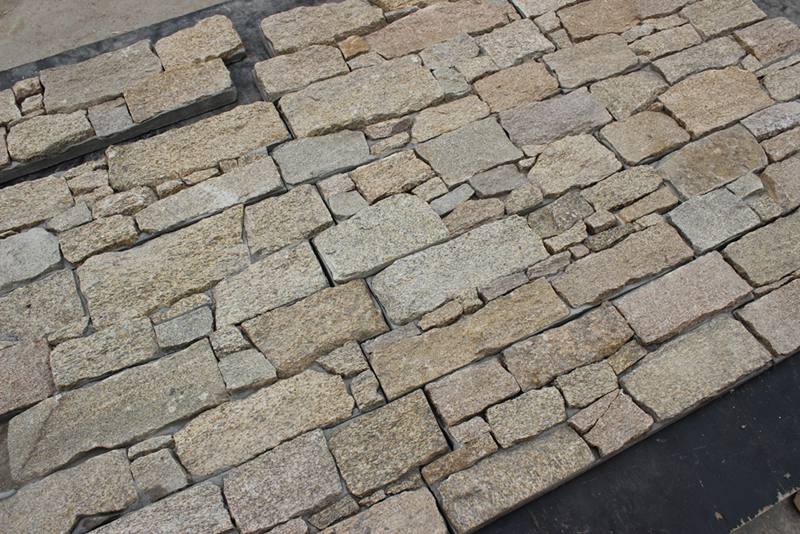
Achieving the Authentic “Hand-Laid” Look via Groutless Install
Achieving a hand-laid look requires rectified Z-shape panels. This design eliminates visible joints and grout lines, creating a continuous natural surface that replicates traditional dry-stack masonry craftsmanship.
Precision Alignment and Tight-Joint Masonry
Traditional dry-stacking relies on stones sitting flush to create a sense of structural weight. To replicate this with panelized systems, installers must keep visible gaps between 1/16 and 1/8 inch. This spacing mimics the natural compression of hand-laid walls while allowing the panels to sit tightly enough to hide the underlying substrate.
Surface prep is non-negotiable for groutless finishes. The substrate must be exceptionally level and clean. Any wall protrusion or debris will force panels out of alignment, creating uneven depths that break the visual flow. We recommend the following installation protocols:
- Alignment Strategy: Apply thin-set mortar with a notched trowel and work from the center point outward to maintain symmetry.
- Tolerance Control: Use rectified edges to ensure every panel maintains tight tolerances across the entire architectural surface.
- Joint Minimization: Tight-joint masonry eliminates the need for pointed grout, focusing instead on the natural fit of the stone profile.
CNC-Diamond Precision Edging and Modular Interlocking
The “Interlocking Modular Blueprint” is what separates professional stone panels from DIY-grade veneers. We utilize CNC-diamond precision edging to ensure that the Z-shape male-female connections fit without “stepped” gaps or visible vertical seams. This engineering allows the panels to disappear into a singular, cohesive stone face.
Because groutless installs offer no place to hide color inconsistencies, material sourcing is critical. We utilize a batch-specific selection process to protect the project’s visual integrity. Technical advantages of this system include:
- 95% Hue Uniformity: All panels in a single order come from the same quarry vein to prevent a “patchy” appearance on large-scale facades.
- Z-Shape Camouflage: The interlocking edges follow the natural contours of the split-face stone, effectively hiding the vertical transition between units.
- Transition Synchronization: Matching pre-fabricated L-corners maintain texture and color continuity at 90-degree wall transitions.
- Labor Efficiency: This modular approach allows skilled crews to cover up to 30 m² per day, compared to just 3 m² with traditional individual stones.
Często zadawane pytania
Do Top Source Stone Z-panels require grouting for exterior walls?
Grouting is not mandatory. We engineer our Z-panel systems for dry-stack installation to achieve a modern, seamless aesthetic. The interlocking Z-shape effectively conceals vertical joints without mortar. While grouting remains an option for those seeking a traditional masonry look or added stability in high-moisture zones, the primary advantage of our system is the 200% increase in installation speed over traditional methods.
How do interlocking Z-shapes manage moisture without traditional mortar joints?
Our precision-cut male-female connections create a tight fit that significantly reduces water entry points. However, natural stone is inherently porous. For exterior projects, you must install a high-quality waterproofing membrane on the substrate and apply a professional stone sealant to the panel surface. This combination manages moisture penetration effectively without the need for grout lines.
What causes visible gaps between panels during a groutless installation?
Visible gaps usually stem from an unlevel wall substrate or minor natural variations in the stone edges. We use CNC diamond-blade edging to ensure a consistent fit, but the installation surface must be perfectly plumb. We recommend verifying the wall level before starting and lightly sanding any naturally uneven stone edges during the dry-fit phase to maintain a tight modular lock.
Can I add grout to ledger panels for a more traditional masonry appearance?
Yes. While we optimize our ledger panels for a groutless, contemporary look, you can apply grout to define individual stone lines for rustic or heritage designs. If you choose this route, use a sanded grout for any joints wider than 1/8 inch. This prevents cracking and ensures the bond remains secure over time, especially in heavy-use commercial environments.
What is the recommended maintenance routine for dry-stack stone facades?
Maintenance is straightforward. Regularly dust or wipe the surface with a damp cloth and warm water. For deeper cleaning, use a pH-neutral stone cleaner and a soft-bristled brush. Avoid harsh chemicals, bleach, or high-pressure washers, as these can etch the natural stone surface and potentially damage the internal epoxy bonding agents used in the panel construction.
