
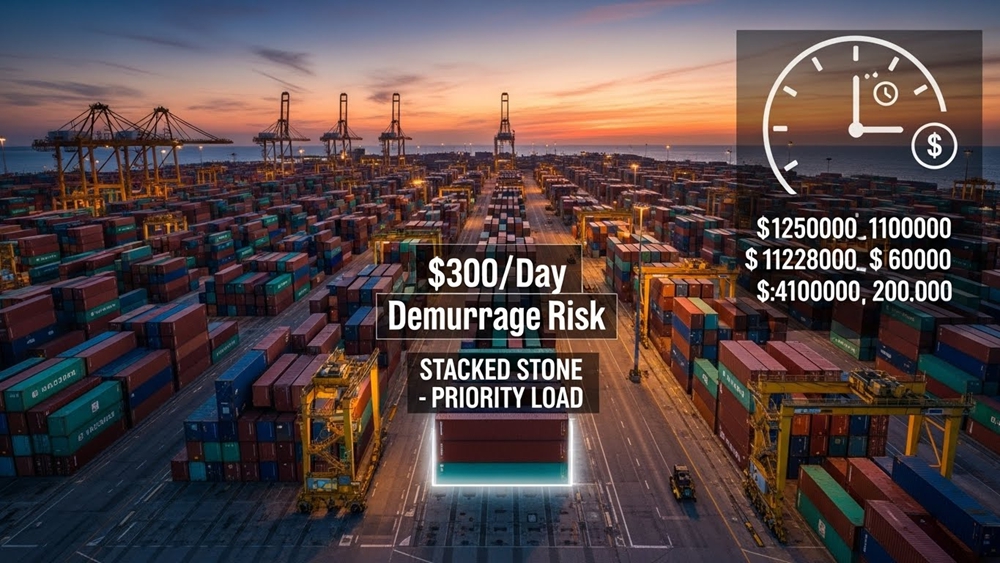
Managing Demurrage & Detention determines whether a stone shipment remains profitable or becomes a financial liability. Port storage fees frequently scale to $300 daily per unit, while equipment detention costs compound after the first 14 days, directly eating into dealer project margins and cash flow.
We bypass these penalties by strictly adhering to the 17.5-ton USA port weight limit and using 5-ply reinforced export grade cartons to prevent inspection-triggering damage. Our logistics framework optimizes 20GP loading with 25 to 30 pallets to ensure rapid terminal throughput and zero extra fees.
Demurrage vs. Detention: What is the Real Difference in Cost?
Demurrage penalizes port storage while detention covers off-site equipment usage; both compound daily, often exceeding thousands of dollars if cargo release is delayed by payment or inspections.
Cost Structures of Terminal Storage and Equipment Usage
Demurrage and detention fees target different stages of the logistics chain, but both function as aggressive revenue drivers for shipping lines. Demurrage specifically penalizes importers for using terminal real estate as a warehouse, while detention covers the opportunity cost of equipment moving through inland routes.
- Demurrage Benchmarks: Port storage costs typically scale between $75 and $300 daily per unit. 2026 projections indicate these rates will scale even more rapidly once the initial free period expires.
- Detention Escalation: Charges for equipment held outside the port often start at $50–$100 daily but can jump to an average of $537 after 14 days of delay.
- Compounding Liability: Short delays across multiple containers create massive unforeseen expenses because the daily rates apply per unit, not per shipment.
- Release Requirements: Shipping lines usually demand full payment of demurrage before they release cargo. This creates a secondary delay trap where payment processing time generates even more fees.
Impact of Weight Strategy on Port Clearance Speed
Logistics costs for natural stone are tied directly to weight management and packaging integrity. Exceeding port weight limits or using substandard crates frequently triggers secondary inspections, which are the primary catalysts for terminal demurrage.
- USA Port Standards: Adhering to the 17.5-ton limit prevents the secondary weight inspections that stall containers at the terminal.
- Loading Optimization: Top Source Stone loads 20GP containers with 25 to 30 pallets. This maximizes internal space and reduces the total container count subject to per-unit detention fees.
- Reinforced Packaging: We use 5-ply reinforced export grade cartons. This structural integrity prevents cargo shifts during transit, ensuring the container passes handling inspections without being flagged for manual restacking.
- Inventory Distribution: Strategically loading 750 to 860 square meters of standard panels per container spreads the financial risk of equipment fees across a larger inventory volume, lowering the per-square-meter impact of delays.

How Can You Negotiate 14-21 Days Free Time with Shipping Lines?
Secure 14-21 days of free time by negotiating during initial quotes. Use high-volume 20GP data to gain operational flexibility for heavy stone shipments.
| Negotiation Factor | Standard Industry Terms | Strategic Leverage for Importers |
|---|---|---|
| Timing | Post-rate finalization | Initiate during initial quote phase |
| Volume Focus | Generic spot shipments | Projected annual 20GP container count |
| Free Time Window | 7 days (Average) | 14-21 days (Negotiated) |
| Data Justification | Assumed speed | Port congestion and devanning speeds |
Strategic Timing and Volume Leverage in Carrier Negotiations
Shipping lines rarely volunteer extended free time. You must bake these requests into the initial contract discussion. Carriers have the most flexibility before they issue the final rate. Once the booking is confirmed, your leverage disappears.
Focus on these specific points to move the needle:
- Quote Stage Negotiation: Request extra free time when the carrier is still competing for your business.
- 20GP Volume Data: Present your annual volume projections. Carriers value the consistency of heavy mineral shipments in 20GP containers.
- Operational Justification: Use historical port traffic and devanning (unloading) speeds to prove why a 21-day window is a logistical necessity, not a luxury.
- Partnership Building: Frame the negotiation as a long-term collaboration to move past rigid, one-size-fits-all carrier terms.
Managing Heavy-Weight Logistics within Extended Free Time Windows
Natural stone logistics involve significant weight challenges. When dealing with 24-26.5 ton heavy-weight shipments, the standard 7-day window is dangerously short. One missed appointment or a 48-hour customs hold can trigger $300 daily demurrage penalties.
The 14-21 day buffer allows you to manage the specific demands of ledgestone imports safely:
- Delivery Appointments: Use the buffer to secure truck timeslots for containers holding 25-30 heavy stone pallets.
- Pre-Shipment Verification: Incorporate milestones from our Pre-Shipment Visual Verification into your timeline to ensure documents match physical goods before arrival.
- Heavy-Weight Compliance: Secure destination port approval for 26.5-ton loads while utilizing the free time to navigate specialized handling requirements.
- Cost Mitigation: Use the extended window to avoid detention charges if your warehouse team needs extra time for the physical labor of unloading 1,000kg crates.
Premium Ledger Panels for Architectural Success

Does Early Document Review Prevent Costly Customs Delays?
Proactive document checks eliminate data errors before submission, preventing customs holds and the high cost of port storage fees in 2026.
Most customs holds start with preventable data quality issues. A single mismatched digit or a vague description can trigger manual inspections that keep a container sitting at the terminal long after its free time expires. Reviewing paperwork before the vessel leaves the origin port is the most effective way to protect your profit margins from compounding demurrage charges.
Identifying Paperwork Discrepancies Before Shipment
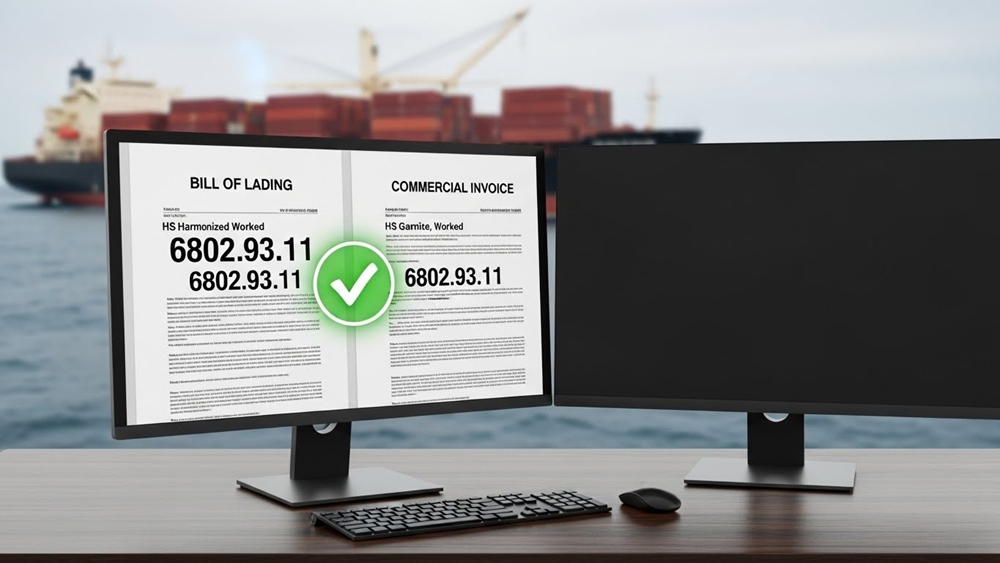
Administrative holds often stem from inconsistencies across the documentation set. If the value on the commercial invoice does not match the bill of lading, customs systems flag the shipment for a secondary review. Catching these errors early ensures the clearance process stays automated and fast.
- Data Synchronization: Align values and quantities across the commercial invoice, packing list, and bill of lading to avoid red flags.
- Specific Descriptions: Use precise terminology for stone products to simplify the classification process for customs officials.
- Digital Standards: Verify all signatures and formatting to comply with the strict 2026 digitized clearance requirements.
- Secondary Verification: Implement a two-person check to catch minor data entry slips that frequently trigger manual port inspections.
Verifying HS Codes and Material Specifications
Accuracy at the code level is vital for tax compliance and avoiding valuation disputes. Customs authorities prioritize shipments with clear, verifiable data regarding the physical nature of the cargo. For B2B importers, this precision prevents the delays associated with mineral testing or price audits.
- HS Code Accuracy: Validate specific codes for natural stone, such as Slate (6803.00.90) or Quartzite (6802.93.11), to ensure correct tariff application.
- Valuation Alignment: Ensure all declared values reflect fair market prices across every document to stop valuation-based holds.
- Visual Verification: Use pre-shipment high-definition photos and videos to prove the physical material matches the technical description on the invoice.
- Regulatory Compliance: Clearly document 100% natural mineral status and 95% hue uniformity to satisfy regional environmental and quality standards.
Standardized checks turn logistics from a gamble into a predictable process. By the time the container reaches the destination, the electronic pre-clearance should already be complete, allowing for immediate pickup and avoiding the $75 to $300 daily fees common at major terminals.
How Do You Manage Delivery Appointments During Peak Port Congestion?
Managing 2026 congestion requires using digital reservations and off-peak scheduling. Shippers minimize delays by building buffer time and strictly adhering to the 17.5-ton USA port weight limit.
Digital Reservation Systems and Off-Peak Drayage Scheduling
Coordinating terminal gate access during high-volume periods requires moving away from manual scheduling and toward integrated electronic platforms. These systems distribute the flow of traffic to prevent localized bottlenecks at port entries.
- Truck Appointment Systems (TAS): Electronic reservations distribute gate arrivals across 24/7 operational windows to prevent simultaneous truck clusters.
- Off-Peak Windows: Drayage operators utilize night shifts and off-peak loading times to secure faster turnaround times and bypass peak road congestion.
- Real-Time Coordination: Scheduling software links dispatchers with terminal yard staff to book slots based on actual dock availability rather than estimates.
Strategic Lead Time Buffers and Port Weight Compliance
Successful delivery appointments depend on the container being ready and compliant before the truck arrives. Delays often stem from documentation errors or weight violations that trigger secondary inspections.
- Dispatch Lead Time: Top Source Stone utilizes a 10-15 day dispatch lead time to ensure stone panels are staged at the port well before the scheduled sailing.
- USA Port Standard: Strict adherence to the 17.5-ton weight limit ensures containers pass verification without triggering secondary inspections or appointment rejections.
- Visual Verification: High-definition pre-shipment photos allow for faster document review, preventing customs holds that disrupt the inland logistics chain.
Can Improving Unloading Efficiency Stop Detention Charges?
Faster unloading prevents detention by clearing trucks before free-time expires. To eliminate charges, pair speed with precise dock scheduling and export-grade standardized packaging.
Impact of Dock Turnaround on Driver Hours of Service
Carriers start the detention clock the moment a driver enters the facility yard. Every minute spent idling at the gate or waiting for a forklift is a minute lost on the road, directly impacting the driver’s legal Hours of Service (HOS). High-efficiency warehouses treat dock turnaround as a critical metric because carriers prioritize facilities that respect their equipment turnover.
- Road Time Gains: Reducing wait times by 30 minutes at the receiver allows drivers to gain an extra hour of road time daily.
- Operational Continuity: Adequate staffing levels and proactive equipment maintenance prevent the bottlenecks that trigger detention penalties.
- Flow Optimization: Real-time communication between warehouse managers and carriers ensures a steady truck flow during 2026 peak shipping periods.
Accelerating Offloading with Reinforced Packaging and Standardized Crates
Slow unloading often stems from poor packaging. When crates shift or break during transit, forklift operators must slow down to avoid safety hazards or material damage. We engineer our stone packaging to handle the stress of rapid mechanical offloading, ensuring containers clear the dock well within the carrier’s free-time window.
- 5-Ply Reinforced Cartons: Górny kamień źródłowy uses export-grade 5-ply cartons to prevent material breakage during high-speed mechanical unloading.
- Standardized 110cm Crates: Plywood crates (110cm x 110cm) allow operators to safely move 1,000kg loads without the delays caused by structural crate failure.
- Strategic Container Loading: Packing 25 to 30 pallets in a 20GP container allows for systematic clearing, minimizing idle truck time at the warehouse dock.

Why Should You Hard-Code Free Time into Your Carrier Contract?
Hard-coding free time prevents unpredictable port fees and carrier rules. This visibility allows logistics teams to prioritize container movement, avoid detention penalties, and protect margins on high-volume stone orders.
Establishing Predictable Logistics Windows
Carrier policies vary significantly across different ports and shipping lines. Without a hard-coded agreement, you remain exposed to unpredictable detention and demurrage charges that can range from $75 to $300 per day. Documenting these terms provides the visibility your team needs to stay ahead of the clock.
- Rule Clarity: Eliminate ambiguity regarding the “last free day” for specific routes and discharge ports.
- Movement Priority: Enable logistics teams to prioritize container movements based on enforceable contractual deadlines.
- Dispute Resolution: Provide a solid baseline for negotiations when port congestion or labor issues cause unavoidable delays.
- Renewal Leverage: Reduce financial risk by locking in favorable free-time terms during annual contract renewals.
Protecting Dealer Margins Through B2B Profit Protection Terms
We focus on profit protection for our B2B partners. Hidden fees shouldn’t eat into your project margins. By securing longer detention windows, we support heavy-weight logistics while maintaining direct quarry source efficiency for large-scale architectural projects.
- Margin Safety: Apply Top Source Stone Profit Protection standards to stop hidden detention fees from eroding dealer profits.
- Weight Strategy: Align free time allowances with heavy-weight cargo requirements, such as the strict 17.5-ton USA port standard.
- Visual Verification: Use pre-shipment visual verification to ensure documentation accuracy and speed up terminal throughput.
- Project Support: Secure extended detention windows specifically for high-volume jobs to allow for flexible on-site staging.
Często zadawane pytania
Secure extended free time during booking and verify HS codes 6803.00.90 or 6802.93.11 to prevent costly demurrage and detention delays at the port.
How many free days are typically allowed for container clearance?
Ocean carriers generally offer 7 to 14 days for FCL shipments, but port terminals usually restrict this to a 3 to 5-day window for container movement. The clock starts when the vessel arrives or finishes unloading. Check the Last Free Day on your Bill of Lading to avoid early penalties.
Who pays demurrage fees if a container is flagged for customs inspection?
The importer or consignee pays these costs. Even if the delay stems from an official examination, authorities hold the importer responsible for the equipment. Under standard EXW or FOB terms, the buyer assumes all risks and costs once the stone leaves the origin factory.
Can I request extended free time after the shipment has already departed?
Yes. While booking is the best time to negotiate, most carriers allow you to buy freetime packages up to 15 days before the vessel arrives. You must submit these requests at least 7 days before the estimated arrival to ensure the carrier processes the extension.
Are demurrage and detention charges refundable if the delay was caused by port congestion?
These fees are rarely refundable. However, you can request a waiver or mitigation within 30 days of the invoice date. You need evidence that the container was physically inaccessible or that the invoice missed required details like specific free time allowances.
What specific documents are required to initiate customs pre-clearance for stacked stone?
You need the commercial invoice, packing list, and Bill of Lading. To ensure correct tariff application, include the Certificate of Origin and accurate HS codes. At Top Source Stone, we specify 6803.00.90 for slate and 6802.93.11 for quartzite to accelerate the clearance process.
