
Specifying stone for pool water features requires material that resists salt crystallization and chemical erosion. Using porous, low-density imports leads to surface delamination within 24 months, forcing expensive teardowns and eroding project margins for builders.
We use high-density quartzite and slate that meet ASTM freeze-thaw standards to ensure structural stability in high-salinity zones. Sourcing from the same quarry vein provides the hue uniformity necessary for commercial-scale installations while maintaining B2B cost-efficiency.
Enhancing the Poolside: Using Stone for Luxury Waterfalls and Grottos.
Multi-level waterfalls and grottos built with quartzite or slate offer resistance to salt and chlorine, while interlocking panels hide structural substrates for a professional poolside finish.
Designing Authentic Rock Formations and Grotto Caves
Luxury poolside design relies on the balance between rugged realism and structural engineering. High-end resorts use authentic boulders and flagstone to move away from the flat look of standard tiling, creating depth through varied textures. Grotto waterfalls add a functional dimension by providing secluded, cave-like spaces behind a curtain of water, often requiring materials that can handle constant moisture without surface degradation.
- Natural Integration: Using authentic boulders and flagstone creates a rustic, resort-style aesthetic that mimics natural mountain streams.
- Grotto Engineering: Construction of secluded cave-like atmospheres behind cascading water for a private, luxury retreat feel.
- Multi-Level Cascades: Tiered rock formations designed to produce specific tranquil soundscapes and visual water patterns.
- Modern Accents: Use of polished granite or glass tiles to create reflective, contemporary focal points within traditional stone structures.
High Salinity and UV Resistant Stone for Wet Environments
Poolside environments are chemically aggressive. Salt-water systems and constant UV exposure cause inferior materials to fade or delaminate. We utilize 100% natural minerals like Quartzite and Slate because they are inherently resistant to high salinity and humidity. For vertical waterfall walls, precision-cut interlocking panels allow for a seamless finish that protects the underlying substrate from water infiltration.
- Material Composition: 100% natural quartzite and slate provide high salinity and humidity resistance, essential for salt-water pool durability.
- UV Stability: Natural mineral structures ensure zero fading or delamination even under intense, direct sun exposure.
- CNC Precision: Z-shape and S-shape panels utilize a “male-female” interlocking system to eliminate visible stepped gaps and vertical joints.
- Climate Resilience: ASTM-standard freeze-thaw resistance prevents stone cracking in outdoor environments subject to fluctuating temperatures.
By sourcing stone from the same quarry vein, we ensure hue uniformity across large-scale projects. This consistency is critical for commercial developers who need a professional, cohesive look for multi-level water features and expansive grotto installations.

Chemical Resistance: How Do Salt and Chlorine Affect Natural Stone?
Salt crystallization causes internal pressure and exfoliation. High-density quartzite and six-sided sealing are required to prevent structural decay and color fading in modern saltwater pool environments.
| Damage Factor | Saltwater (Saline) | Chlorine (Chemical) |
|---|---|---|
| Mechanism | Sub-surface crystal expansion | Surface oxidation and erosion |
| Visual Sign | Efflorescence and flaking | Bleaching and surface pitting |
| Severity | High (Structural risk) | Moderate (Aesthetic risk) |
| Best Material | High-density Quartzite / Granite | Low-porosity Kamień naturalny |
Understanding Salt Crystallization and Chemical Erosion
Saltwater creates a unique mechanical stress known as salt crystallization. When saline water splashes onto a stone and evaporates, it leaves behind salt minerals within the pores. These crystals grow and expand, exerting massive internal pressure that eventually forced the stone to crack or peel. This process, often called exfoliation, is the leading cause of stone failure in coastal or saltwater pool projects.
Chlorine acts differently by focusing on the surface. High chemical concentrations can gradually erode softer minerals or cause the natural pigments in certain stones to fade. While chlorine does not cause the same internal “explosions” as salt, it can turn a smooth split-face surface into a rough, pitted texture over several seasons of exposure.
- Efflorescence: This white, powdery residue appears when salts migrate to the stone surface, signaling that moisture is moving through the material.
- Pore Structure: Porous stones like sandstone and limestone absorb water easily, making them highly vulnerable to salt damage compared to dense metamorphic rocks.
- Mechanical Stress: Repeated wet-dry cycles accelerate the expansion of salt crystals, leading to visible surface delamination within 12 to 24 months if left unsealed.
High Salinity Resistance in Professional Stone Selection
For B2B procurement, material density is the best defense against chemical degradation. Górny kamień źródłowy prioritizes high-density Quartzite and Slate selections, such as Alaska Gray and Carbon Black, which possess the low absorption rates required for high-moisture environments. These materials are specifically engineered to withstand the humid, saline conditions common in the Gulf regions and coastal North America.
Natural minerals offer a distinct advantage over concrete-based imitations. While faux stone relies on surface dyes that react poorly to chlorine, 100% natural stone maintains color through the entire body of the material. We ensure project longevity by utilizing same-batch quarry consistency, which prevents the uneven erosion patterns often seen when mixing stones of varying densities.
- ASTM Standards: Our inventory meets strict freeze-thaw resistance levels, protecting against the physical stress of temperature fluctuations alongside chemical exposure.
- Material Stability: Quartzite and Slate provide superior UV stability, ensuring that pool chemicals and direct sunlight do not cause the “patchy” fading seen in lower-grade imports.
- Sealing Strategy: Professionals must apply a high-quality penetrating sealer to all six sides of the stone, especially on pool coping, to create a permanent barrier against salt intrusion.
- Supply Control: Sourcing from a direct quarry factory ensures that every panel in a 300+ square meter order shares the same mineral composition and resistance profile.
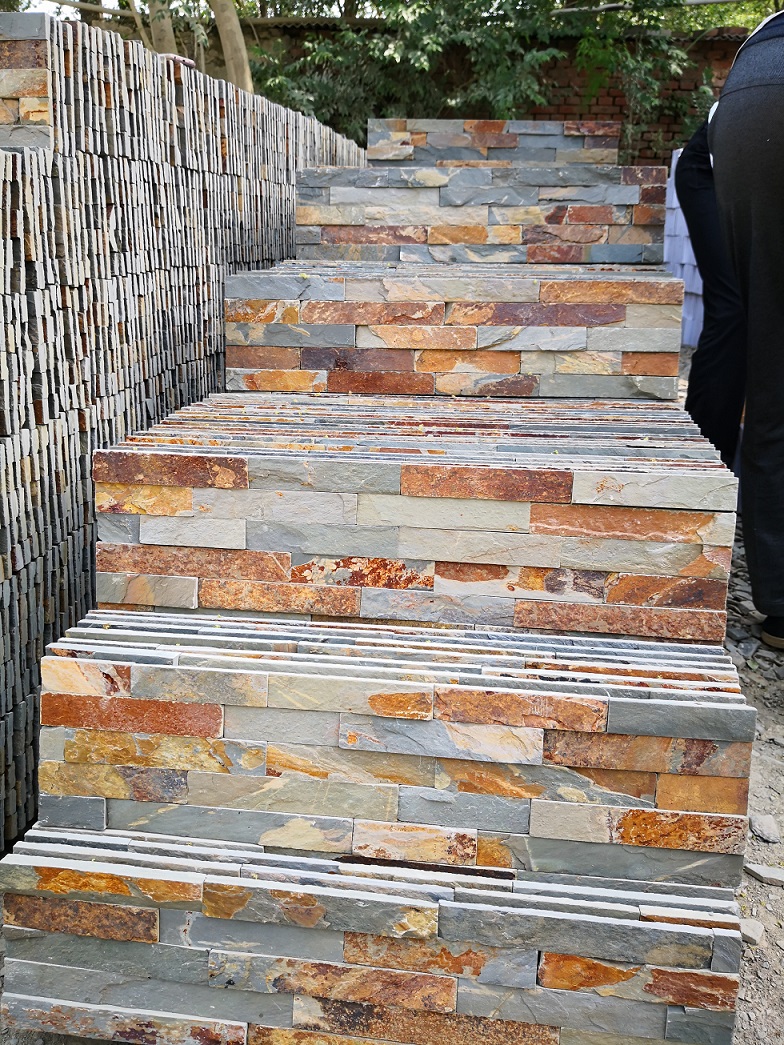
Premium Factory-Direct Natural Stacked Stone Panels
How to Prevent Efflorescence and Mineral Buildup in Outdoor Water Features?
Stop efflorescence by installing substrate moisture barriers and applying penetrative sealers to block the water pathways that transport minerals to the stone’s surface.
Managing Moisture Migration and Substrate Waterproofing
Efflorescence is a mechanical failure where moisture dissolves soluble salts—like calcium oxide—within the masonry and transports them to the surface during evaporation. In water features, where stone faces constant saturation, controlling this migration at the source is the only way to prevent white, powdery deposits from ruining the architectural finish.
- Moisture Barriers: Install barriers on both the substrate and bottom surfaces to block groundwater capillary action.
- Anti-Efflorescence Additives: Use tile adhesives with specialized additives to minimize soluble calcium oxide levels in the setting bed.
- Site Grading: Ensure proper grading and drainage to prevent water from pooling behind the stone facade.
- Polymeric Jointing: Apply polymeric jointing sand in surrounding hardscapes to reduce water infiltration into the stone base.
Selecting High-Density Quartzite and Specialized Stone Sealants
Material selection dictates the long-term maintenance requirements of a water feature. Porous stones invite saltwater and minerals deep into their structure, while high-density materials naturally resist absorption. For B2B projects in high-salinity or high-humidity regions, the mineral composition of the stone is the first line of defense.
- Material Density: Choose high-density materials like Top Source Stone Quartzite or Slate (such as Alaska Gray or Midnight Slate) for their low porosity.
- Breathable Sealers: Apply a high-quality, penetrative sealer immediately after the stone cures to lock out surface moisture while allowing internal vapor to escape.
- pH-Neutral Maintenance: Use pH-neutral stone cleaners for regular maintenance to avoid acidic reactions with stone minerals.
- UV Stability: Leverage the inherent UV stability of 100% natural stone to ensure sealants bond effectively without degrading under intense sun exposure.

Structural Adhesion: Ensuring Your Stone Stays Put in Constant Moisture
Securing stacked stone in poolside environments requires moisture-tolerant structural epoxies and precision-cut interlocking panels to prevent delamination and water infiltration behind the substrate.
Moisture-Resistant Adhesives for Submerged and Splash Zones
Vertical water features put immense physical stress on bond strength. Standard thin-sets often fail when saturated, leading to sagging stones or total panel failure in high-humidity zones.
- Epoxy Adhesives: These provide superior waterproofing and chemical resistance for stones in direct pool water contact.
- Polyurethane Adhesives: These offer the flexibility needed to absorb thermal expansion and vibration during seasonal temperature shifts.
- Tensile Strength: Adhesives must achieve high shear values to prevent heavy natural stone from sliding on vertical waterfall surfaces.
- ASTM Freeze-Thaw Resistance: High-density adhesive structures prevent water from expanding within the bond layer and dislodging stones.
High-Strength Factory Epoxy and Precision Interlocking Systems
We manage structural risks at the manufacturing level. By utilizing machine-applied adhesives and CNC diamond-blade cutting, we remove the variables that typically cause on-site installation failures.
- Factory Epoxy Resin: Top Source Stone uses high-strength resin to create a permanent, industrial bond between the natural stone and the panel substrate.
- Interlocking Designs: Our Z-Shape and S-Shape models use a male-female connection system to camouflage joints and block moisture from reaching the underlying wall.
- CNC Diamond-Blade Edges: Precision cutting ensures a modular fit that eliminates visible gaps where water typically penetrates.
- Pre-fabricated L-Corners: These 90-degree components maintain bond consistency at transitions, reducing the risk of edge delamination in high-splash areas.
This engineering approach allows installers to maintain high production speeds while ensuring the finished waterfall remains structurally sound under constant water exposure.
Lighting Water Features: Highlighting Texture and Flowing Water at Night.
Submersible LEDs and grazing angles highlight Rough Series split-face textures. This strategy creates dramatic shadows and emphasizes water movement, significantly increasing the architectural value of high-end landscape projects.
Optical Techniques for Water Movement and Stone Depth
Lighting transforms a static stone installation into a dynamic focal point. In B2B landscape procurement, the goal is often to create a “resort-style” atmosphere that justifies premium project costs. Success depends on how light interacts with the moving water and the stone substrate behind it.
- Submersible LED Placement: Installing fixtures at varying depths within ponds and fountain basins creates an internal glow, adding visual mystery without exposing the light source.
- Backlighting Silhouettes: Positioning floodlights behind waterfalls emphasizes the unique flow patterns of the water and creates striking silhouettes of the stone formation.
- Narrow Beam Spotlighting: Using focused beams draws the eye to specific ornamental structures or the point where cascading water hits the surface.

Maximizing Shadow Play with Split-Face Rough Series Panels
Texture is where natural stone outperforms manufactured alternatives. Top Source Stone engineers the Rough Series specifically for projects where shadow and depth are the primary design drivers. These panels respond differently to light than standard flat-surface stones.
- 1.75-Inch Depth: Our Rough Series panels feature a thickness up to 3.5cm (1.75 inches), allowing grazing light to generate high-dimension shadows that emphasize the stone’s rugged profile.
- Natural Cleft Diffusion: We utilize slate and quartzite with natural cleft finishes to diffuse light, which effectively reduces harsh glare even in high-output 2026 landscape designs.
- High Salinity Resistance: These natural materials remain stable near integrated underwater lighting and splash zones, resisting the corrosion often seen in lower-grade stone or faux products.
Designers achieve the best results by placing grazing lights at the base of the wall, pointing upward. This angle catches the underside of the split-face edges, maximizing the three-dimensional effect of the stack. Because we source our stone from the same quarry vein per order, the color consistency remains at 95%, ensuring the lighting reveals a uniform texture rather than patchy color shifts.
Często zadawane pytania
Can natural stacked stone be used for pool waterfalls and grottos?
Yes, natural stone ledger panels work well for water features. For current high-end projects, builders prefer our Z-shape or S-shape interlocking panels. These use CNC diamond-blade precision to create a “male-female” connection that camouflages vertical joints and hides the installation substrate for a seamless architectural finish.
How does saltwater affect natural stone in pool environments?
Saltwater causes pitting and flaking through capillary action, especially in porous materials like sandstone. We recommend using denser materials like granite or quartzite for these environments. To ensure long-term integrity, installers should apply a penetrating sealer to all six sides of the stone to block salt crystallization damage.
What is the best way to remove mineral deposits from stone waterfalls?
A mix of 50% white vinegar and 50% warm water dissolves calcium and mineral buildup effectively. Apply the solution to the stone and let it sit for ten minutes. Scrub the surface gently with a soft-bristled brush and rinse with clean water to restore the natural stone texture.
Which stone types are most durable for outdoor water features?
Granite provides the highest durability due to its density and freeze-thaw resistance. Slate also performs well for modern cascading designs. These 100% natural materials resist the cracking and crumbling often seen in porous cast stone alternatives during extreme temperature cycles.
Will pool chemicals or UV exposure cause the stone colors to fade?
Natural stone panels possess inherent UV stability and do not fade like man-made products. While pool chemicals generally do not strip natural pigments, maintaining a pool pH between 7.4 and 7.8 prevents surface etching and mineral discoloration over time.
Final Thoughts
High-density quartzite and slate act as a financial hedge against the high costs of site failures and warranty callbacks. While porous imitations succumb to salt crystallization and chemical erosion within seasons, 100% natural minerals maintain structural integrity in aggressive poolside environments. Sourcing from a single quarry vein ensures 95% hue uniformity, protecting the professional reputation of your dealership or construction firm.
Verify the precision of our CNC diamond-blade interlocking panels by requesting a physical sample kit. We support B2B growth through 300-square-meter trial orders and offer private label packaging to help you scale your brand. Contact our team today to secure a quote and view pre-shipment video inspections of our current “Big 10” inventory.
