
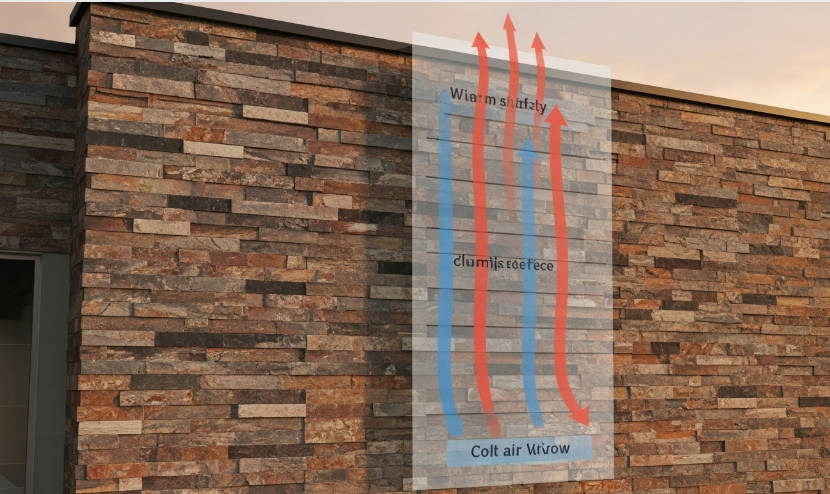
Stone moisture trapping represents a critical failure point in building envelope design that can lead to catastrophic structural rot and expensive mold remediation. For commercial developers and residential contractors, an improperly managed wall system creates a liability that extends far beyond aesthetic concerns, often resulting in legal disputes and total facade replacement. Ignoring how moisture moves through exterior cladding puts the entire structural integrity of the project at risk.
This technical analysis covers the fundamental differences in vapor permeability between manufactured products and natural stone. We detail the mechanics of rainscreen systems, the drainage advantages of natural stone cladding, and the specific installation standards required to prevent moisture accumulation. Following these best practices establishes a reliable framework for building durable, moisture-resistant exterior walls.
Understanding Vapor Permeability in Exterior Wall Systems
Building science in 2026 treats the wall envelope as a dynamic filter rather than a sealed box, focusing on a 10 to 20 perm “sweet spot” to ensure assemblies dry faster than they accumulate moisture.
Vapor permeability defines how easily water vapor passes through a material, a metric critical for maintaining the structural integrity of modern buildings. Industry standards now move away from impermeable barriers that trap humidity inside wall cavities. Instead, we design assemblies that promote “drying potential.” By selecting materials with specific permeance ratings, engineers ensure that moisture originating from seasonal shifts or indoor activities escapes before it triggers fungal growth or wood rot.
Vapor Permeance Standards for 2026 Wall Assemblies
Current high-performance designs target a permeance range between 10 and 20 perms for housewrap and weather-resistive barriers (WRBs). This range provides the ideal balance between blocking bulk liquid water and allowing internal moisture vapor to diffuse outward. If a barrier is too tight, it creates a “plastic bag” effect; if it is too open, it may allow excessive exterior humidity to drive inward.
- Housewrap materials in 2026 designs target a permeance range between 10 and 20 perms to manage diffusion.
- These specific ratings allow seasonal moisture to migrate through the assembly without compromising the weather barrier.
- High-performance assemblies prioritize drying potential to prevent internal condensation and structural degradation.
Smart Vapor Retarders and Humidity Response
Adaptive materials have replaced static vapor barriers in advanced construction. Materials like specialized OSB and plywood act as “smart retarders,” shifting their permeability based on the ambient relative humidity. When humidity levels rise within the wall cavity, the pores of these materials open to facilitate rapid drying. During drier periods, they restrict vapor entry to maintain a stable internal environment.
- OSB and specialized plywood increase permeability when humidity rises to evacuate trapped moisture.
- Adaptive behavior allows moisture to escape during humid months while restricting entry during dry periods.
- Engineers utilize these variable-permeability layers to prevent rot in wood-framed exterior walls.
Integrating Permeable Sheathing with Exterior Insulation
Combining exterior insulation with vapor-open sheathing creates a thermally efficient and durable envelope. This approach moves the dew point outside of the structural framing, reducing the risk of interstitial condensation. In cold climates, where temperature differentials between interior and exterior spaces are extreme, the assembly must maintain high drying capacity. We avoid “double-barrier” designs—where vapor is trapped between two impermeable layers—because they almost inevitably lead to moisture entrapment.
- Vapor-open designs allow moisture to move through the wall rather than trapping it between impermeable layers.
- Cold-climate applications require high drying capacity to manage the temperature differential between spaces.
- Building professionals avoid double-barrier approaches that lead to moisture entrapment and mold growth.
Vapor Management in Natural Stone Cladding Systems
Natural stone is inherently a reservoir cladding; it absorbs moisture and requires a path to release it. Unlike concrete imitations that can trap moisture against the substrate, natural slate and quartzite panels from Top Source Stone work in tandem with breathable wall components. For these systems to succeed, the secondary drainage plane must remain unobstructed, allowing the wall to “breathe” while gravity handles bulk water.
- Natural stone remains vapor-permeable, while the secondary drainage plane manages bulk water penetration.
- Installers use permeable mortar or specialized adhesives to maintain the wall’s ability to breathe.
- Properly designed stone systems prevent water vapor from becoming trapped against the structural sheathing.
Why Solid Concrete Veneer Can Lead to Mold Growth
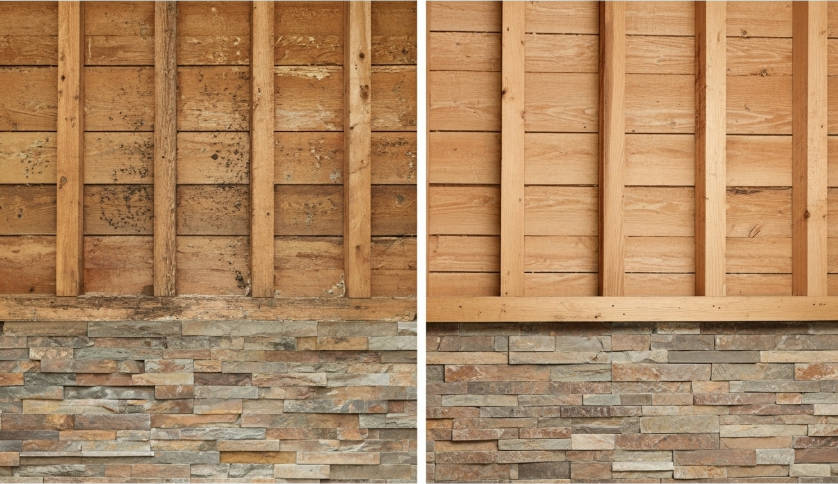
Concrete-based veneers function as moisture reservoirs that saturate the building envelope because their high absorption rates and lack of integrated capillary breaks trap water against the substrate.
High Porosity and Water Retention in Manufactured Stone
Manufactured stone veneer acts like a sponge, soaking up rain and humidity that eventually saturates the wall assembly. Research indicates that concrete-based materials allow for water absorption rates as high as 22%, which is significantly higher than the density found in natural minerals. This porous structure creates a damp reservoir where moisture stays trapped for extended periods, providing the constant wetness mold requires to colonize.
Standard manufactured stone lacks the internal density of authentic quartzite or slate. While natural stone resists deep penetration, water permeates deep into the cellular structure of concrete. This internal moisture migration makes it nearly impossible for the wall to dry out during humid seasons, leading to persistent dampness behind the cladding.
Accumulation of Organic Nutrients in Surface Pores
The rough, artificial texture of concrete veneer traps the organic materials mold needs to feed on. These porous surfaces collect dust, pollen, and environmental debris that serve as a primary food source for fungal growth. Some composite stone binders even contain organic elements that inadvertently support proliferation when the material remains wet.
| Performance Metric | Manufactured Concrete Stone | Naturalny kamień ułożony (TSS) |
|---|---|---|
| Water Absorption | High (Up to 22%) | Low (Natural Mineral Density) |
| Organic Content | Possible binders/porous traps | 100% Inorganic Mineral |
| Drying Capacity | Poor; creates moisture reservoir | Superior; permits vapor transmission |
Natural stone surfaces remain easier to clean and lack the internal organic traps found in man-made alternatives. By utilizing Top Source Stone’s 100% natural quartzite or slate, installers eliminate the chemical binders that often degrade and provide nutrients to mold colonies over the life of the building.
Lack of Integrated Drainage and Ventilation
Traditional mortar-set concrete systems create a solid barrier that prevents water from draining vertically. Without a dedicated air gap or rainscreen, moisture sits stagnant against the weather-resistive barrier. This configuration forces water to stay pressed against the wood structure with no opportunity to evaporate through the “chimney effect” found in modern ventilated systems.
- Solid mortar layers block vertical drainage paths.
- Lack of airflow prevents the drying of incidental water intrusion.
- Stagnant water eventually breaches the house wrap or weather barrier.
Long-Term Impact on Structural Integrity and Air Quality
Hidden mold growth behind concrete veneer eventually damages the building’s skeleton. Constant moisture migration from the porous veneer into the sheathing causes wood rot and structural instability. Because this process happens behind the stone, it often remains undetected until the damage requires tens of thousands of dollars in remediation.
Beyond structural concerns, mold colonies behind the stone can penetrate the interior wall cavity. These colonies release spores that degrade indoor air quality and pose health risks to occupants. Replacing failed concrete veneer with natural stone cladding systems has become a standard 2026 strategy to mitigate these structural risks and ensure long-term building durability.
Premium Factory-Direct Stacked Stone Ledger Panels

How Natural Stone Cladding Systems Promote Drainage
Modern okładzina kamienna relies on the rainscreen principle to decouple the aesthetic facade from the structural wall, ensuring moisture moves through the assembly rather than being trapped against it.
The Rainscreen Principle and Ventilated Air Cavities
Architects now specify a ventilated air cavity behind stone panels using drainage mats or vertical furring strips. This gap serves as a critical break in capillary suction, which prevents moisture from wicking through the stone and migrating into the structural wall sheathing. By 2026 standards, this physical separation acts as the primary defense against the structural decay often seen in older, direct-applied veneer systems.
Gravity-Driven Moisture Removal Through Weep Holes
An effective system acknowledges that water penetration is inevitable and focuses on providing a clear exit path. Liquid that passes through joints or the natural stone itself flows downward along the drainage plane due to gravity. We ensure that installers place weep holes at the base of the wall and above window headers to provide essential exit points. This method avoids the risks associated with traditional mortar joints, which trap moisture and cause destructive freeze-thaw cycles.
Air Circulation and the Chimney Effect
While gravity handles liquid water, constant airflow manages residual dampness. The air cavity promotes a “chimney effect” where warm air rises, pulling fresh, dry air from the bottom of the wall. This continuous ventilation evaporates moisture on the backside of the stone panels and the surface of the water-resistive barrier. This active drying process reduces the risk of mold growth and preserves the long-term bond of the high-strength epoxy adhesives used in panel assembly.
Integration of Water-Resistive Barriers and Flashings
Effective drainage requires a seamless transition between the exterior stone and the building’s internal waterproofing. Installers must apply a high-performance water-resistive barrier (WRB) over the sheathing before mounting the stone support system. Metal flashings and weep screeds redirect water away from high-risk interfaces like doors, windows, and floor lines. Furthermore, our Z-shape interlocking panels accommodate thermal movement while maintaining the necessary drainage paths behind the cladding.
The Importance of a Rainscreen System for Stone Veneer
Effective moisture management in 2026 relies on a drainage-first methodology that utilizes a ventilated air gap to prevent hydrostatic pressure and capillary wicking behind natural stone claddings.
Drainage Paths for Trapped Water
A rainscreen creates a dedicated space between the natural stone veneer and the water-resistive barrier (WRB). This gap ensures that any moisture bypassing the stone—whether through porous mortar joints or hairline cracks—exits the wall system effectively. Rather than allowing water to pool behind stacked stone panels, the system provides a clear downward path to weep holes located at the base of the assembly.
This design addresses the inherent reservoir quality of stone and cementitious materials. During heavy 2026 storm seasons, unmanaged moisture often stays trapped against the substrate, leading to saturation. By installing a drainage matrix or vertical furring strips, we create a capillary break that stops liquid water from ever reaching the inner wall assembly.
Airflow and Evaporative Drying
Ventilated cavities promote constant air movement, often referred to as the “chimney effect.” This airflow dries out residual dampness that remains after the initial drainage. Fresh air enters through the base and exits at the top of the wall, evaporating moisture before mold or mildew can take root in the substrate.
| Performance Factor | Traditional Direct-Apply | Modern Rainscreen System |
|---|---|---|
| Moisture Removal | Slow evaporation through stone | Immediate gravity drainage |
| Drying Mechanism | Ambient heat only | Active convective airflow |
| Substrate Risk | High (Rot, Mold, Efflorescence) | Low (Isolated Building Envelope) |
Maintaining consistent humidity levels within the wall cavity prevents condensation buildup during rapid temperature fluctuations. This is particularly vital for natural quartzite and slate products, such as the Górny kamień źródłowy Big 10 inventory. Preventing constant saturation supports the stone’s freeze-thaw resistance, ensuring the veneer does not delaminate or crack during winter cycles.
Pressure Equalization in the Wall System
Rainscreens help neutralize the pressure differences that force rainwater through small gaps in the stone veneer. When wind hits a building, it creates high pressure on the exterior. Without a rainscreen, this pressure drives water deep into any available crevice. By allowing the cavity pressure to match the external wind pressure, the system minimizes the physical force driving water inward.
- Lowers hydrostatic pressure, protecting the building envelope from wind-driven rain.
- Reduces the workload on sealants and flashing at critical interfaces like windows and doors.
- Improves the performance of the weather-resistive barrier by preventing direct water impact.
Shielding the Building Envelope
The system acts as a secondary defense layer that keeps structural components dry and functional. By separating heavy stone panels from the structural sheathing, we prevent damp materials from coming into direct contact with wood or steel studs. This separation extends the life of the building frame and ensures compliance with modern 2026 building codes that prioritize high-performance moisture management.
For B2B projects involving large-scale residential or commercial developments, utilizing a rainscreen with high-quality natural stone—such as Glacier White Quartzite or Midnight Slate—ensures the facade remains aesthetically pristine. Proper ventilation prevents efflorescence and salt crystallization, preserving the “Premium Nature” of the stone while safeguarding the structural integrity of the project for decades.
Preventing Structural Rot: Real Stone Installation Best Practices
Preventing structural rot in stone veneer applications requires a transition from absolute waterproofing to a climate-responsive drainage plane that facilitates both gravity-driven water exit and vapor diffusion.
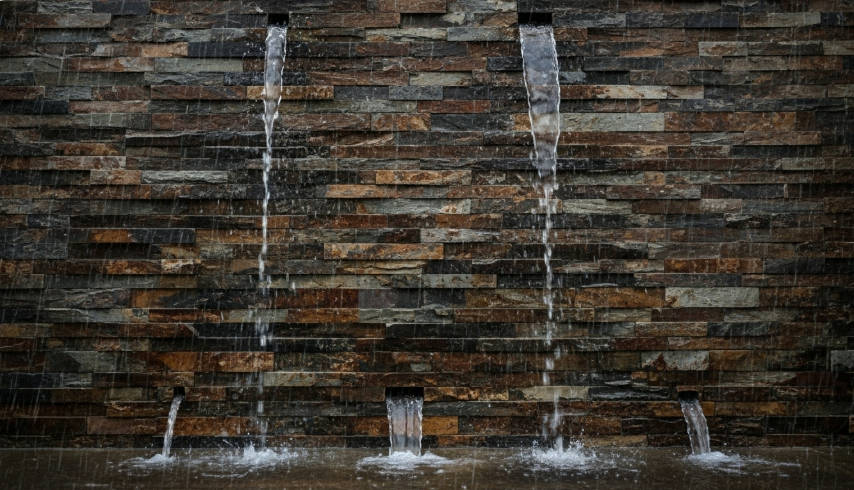
In 2026, building science consensus emphasizes that water will inevitably penetrate exterior stone cladding. Structural failure occurs not from the moisture itself, but from the inability of the wall assembly to dry. We now prioritize the “drainage-first” methodology, which recognizes natural stone as a reservoir cladding. This material stores moisture and releases it inward via solar drive or outward via evaporation. Without a clear path for this moisture to exit, hydrostatic pressure forces liquid water into the structural sheathing, leading to hidden mold and rot.
Installing High-Permeability Weather Resistant Barriers
Modern standards require Weather Resistant Barriers (WRBs) that function as smart vapor retarders. We select membranes with a permeability rating between 10 and 20 perms. This specific range provides the “sweet spot” for moisture management; it prevents bulk water from entering the substrate while allowing internal wall cavity moisture to escape as vapor. Integrating these membranes with window and door flashings ensures a continuous drainage plane that protects the OSB or plywood sheathing from saturation.
| System Component | Legacy Method (High Risk) | 2026 Best Practice (Low Risk) |
|---|---|---|
| Vapor Permeability | Low-perm plastic wraps (< 5 perms) | High-perm membranes (10-20 perms) |
| Moisture Gap | Direct mortar-to-barrier contact | 3D Drainage matrix or dimpled mat |
| Water Exit Path | Sealed base with caulk/mortar | Perforated weep screeds |
Avoid low-perm plastic wraps that trap moisture. These materials create a “poly sandwich” effect where moisture remains sandwiched between the exterior stone and the interior vapor barrier, leading to rapid fungal proliferation. High-perm membranes allow the building envelope to “breathe,” ensuring the structure dries seasonally.
Implementing Drainage Mats and Capillary Breaks
A physical air gap is the most effective defense against capillary action. We install a drainage matrix or dimpled mat behind the Kamień księgi to facilitate gravity-driven moisture removal. This capillary break prevents the stone from wicking water directly into the framed wall.
- Use mortar-blocking fabrics to prevent scratch coats from clogging the drainage path during installation.
- Establish a clear exit point at the base of the wall using weep screeds to direct collected water away from the foundation.
- Ensure the drainage mat extends behind the entire stone surface, including matching L-corners for wrap-around transitions.
Utilizing Ventilated Rainscreen Systems
Active airflow behind the okładzina kamienna promotes rapid evaporation. We design ventilated rainscreen systems with air inlets at the bottom and outlets at the top to encourage the “chimney effect.” This convective drying is essential in regions with high humidity or frequent wind-driven rain, such as the Gulf regions or coastal North America. Maintaining a minimum 1/4-inch to 1/2-inch air space ensures that incidental moisture does not lead to long-term saturated conditions.
Applying High-Strength Epoxy Adhesives and Proper Sealing
Material-specific bonding agents protect the stone and the substrate from degradation. We use high-strength epoxy resin adhesives formulated specifically for natural stone to ensure a permanent, non-degradable bond that resists freeze-thaw cycles. Post-installation, we apply pH-neutral, breathable sealants. These treatments reduce stone porosity and protect against salt crystallization without trapping internal vapor. Sealing all interlocking joints and L-shaped corner pieces minimizes initial water penetration while allowing the system’s internal drainage components to manage any moisture that bypasses the outer layer.
Conclusion
Integrating natural ułożony kamień with a functional rainscreen system eliminates the moisture traps often found in manufactured concrete veneer installations. These drainage-first practices prevent structural rot and mold growth by allowing the wall assembly to breathe and shed water effectively. Utilizing 100% natural materials ensures superior vapor permeability and maintains the long-term health of the building envelope.
Review our Big 10 inventory to find moisture-resistant natural stone solutions optimized for professional architectural standards. Contact Top Source Stone to request a technical catalog or batch-consistent samples directly from our quarry sources.
Często zadawane pytania
Can stone veneer cause mold?
Stone veneer does not inherently cause mold, but improper installation that traps moisture against the building sheathing will. Without a functional drainage plane or a vapor-permeable assembly, moisture can accumulate behind the veneer, creating the damp conditions necessary for mold growth. Modern building standards mitigate this by using vapor-open designs that prevent trapped condensation.
Does water get behind stone veneer?
Yes, water inevitably gets behind stone veneer. As a “reservoir cladding,” stone and its mortar joints absorb wind-driven rain. It is a standard industry expectation that water will penetrate the outer layer, which is why a dedicated drainage cavity and a high-quality weather-resistive barrier are required to direct that water safely down to the weep holes.
Why is my wall damp behind the stone?
Dampness behind stone is often the result of “solar-driven moisture,” where sun exposure heats a wet stone wall and pushes water vapor inward. If the wall lacks a vapor-permeable housewrap (ideally in the 10-20 perm range) or a proper air gap, that vapor cannot escape and condenses against the cooler interior layers, resulting in persistent dampness and potential structural damage.
Does natural stone breathe?
Yes, natural stone is a vapor-permeable material that allows for moisture diffusion. To maintain this “breathability” and the longevity of the structure, it must be paired with climate-responsive wall systems. Using vapor-open assemblies and smart vapor retarders ensures that the stone can dry out seasonally, preventing moisture from becoming trapped within the wall cavity.
How to prevent rot in stone walls?
To prevent rot, you must ensure the wall assembly has a high drying capacity. This is achieved by installing a rainscreen system to create an air gap for drainage and ventilation, and by using vapor-permeable sheathings. Modern strategies emphasize avoiding impermeable double-barriers and instead utilizing exterior insulation and materials that allow for seasonal moisture diffusion to keep the underlying structure dry.
