
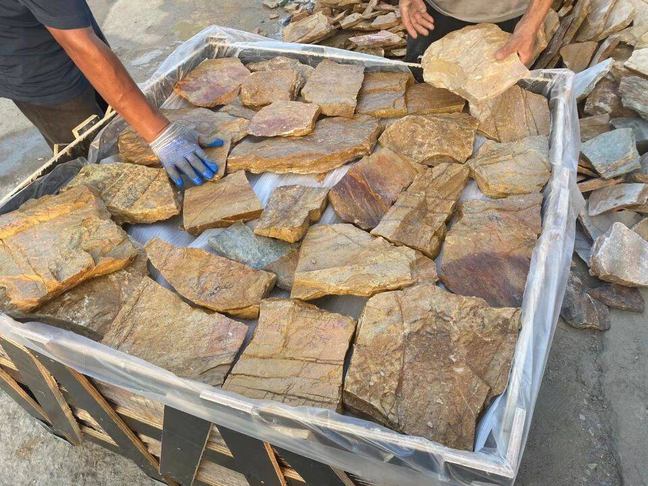
Applying sawn-back science prevents the catastrophic bond failure that leads to stone veneer shearing off a facade and creating massive liability risks for masonry contractors. Inconsistent backing on natural stone results in uneven weight distribution and poor surface contact, which often triggers expensive rework or total project failure. Using a precision-cut flat surface removes the guesswork from the installation process and ensures every piece maintains a permanent grip on the substrate.
This technical analysis explores the differences between sawn and natural backs, focusing on how a flat profile eliminates air pockets in the mortar bed to create a superior mechanical bond. We detail the methods for reducing mortar consumption by 30 percent and explain why this specific cut allows for larger face dimensions on thin veneer projects. This data serves as a standard operating procedure for firms looking to increase installation speed while maintaining strict structural safety standards.
Sawn-Back vs. Natural-Back: The Adhesion Speed Battle
Precision-sawn backs eliminate the bond failures common with natural-back stones by providing a high-friction, abraded surface that creates immediate mechanical suction.
Surface Roughness and Mechanical Interlocking
Adhesion strength depends on the physical profile of the stone back. Precision-sawn surfaces from Górny kamień źródłowy utilize diamond-tipped cutting equipment to create an abraded texture that maximizes the available contact area. This mechanical interlock forms as high-strength mortars and epoxy resins penetrate the open pores of the sawn stone. Natural-back surfaces frequently remain too smooth or contain “quarry film,” which prevents adhesives from anchoring deeply into the substrate. By providing a 100% sawn-back finish, we ensure that every individual stone piece achieves a permanent, structural bond with the wall.
Adhesive Penetration and Initial Tack Speeds
The texture of the stone back determines how quickly a mason can move up a wall without stones sliding or sagging. Sawn surfaces facilitate faster initial tack, which is essential for meeting the rigorous schedules of 2026 commercial developments. Uniform abraded textures ensure the adhesive wets the surface consistently across the entire back of the stone. Natural-back panels often require longer bracing or individual support during the curing process because the mortar lacks a high-friction surface to grip immediately upon contact.
| Performance Metric | Natural-Back Stone | Precision Sawn-Back |
|---|---|---|
| Installation Speed | Slower (Requires manual selection) | 30% faster labor efficiency |
| Mechanical Bond | Variable and inconsistent | High-friction abraded profile |
| Adhesive Usage | High (Fills voids in back) | Optimized (Thin-layer contact) |
Bond Consistency and Long-Term Reliability
Standardized back surfaces eliminate the variables that lead to stone fallout or panel failure in harsh climates. Our sawn-back manufacturing process removes loose minerals and cutting debris that typically interfere with the chemical bond between the stone and the mortar bed. A flat, abraded profile ensures an even distribution of adhesive, preventing weak spots behind the stone. Top Source Stone maintains rigid quality control to guarantee that every piece of loose stone cladding remains permanently bonded to the substrate, even when exposed to extreme freeze-thaw cycles.
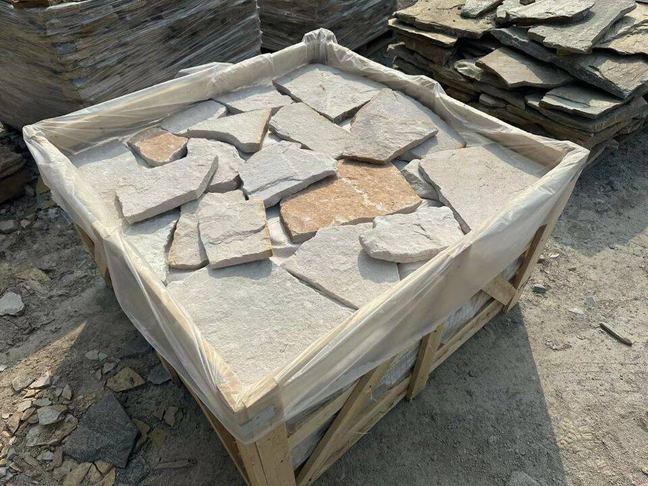
How a Flat Back Eliminates “Air Pockets” in Mortar Beds
Precision-sawn back surfaces ensure total mortar consolidation, removing the hollow voids that lead to freeze-thaw failure and stone delamination in high-exposure environments.
Natural stone installation often fails because of the “high spots” inherent in irregular, natural-back pieces. When an installer presses a stone with an uneven back into a mortar bed, the stone only makes contact at its thickest points. This leaves significant gaps where the mortar ridges do not fully collapse. Our 100% sawn-back stones eliminate these irregular gaps, allowing the installer to apply equal pressure across the entire surface area.
Achieving Uniform Mortar Compression
Installers achieve near-perfect bond strength when the mortar ridges collapse consistently. With a flat, precision-cut back, every square inch of the stone applies the same force to the substrate. This ensures that the notched mortar spreads into a continuous, solid layer without the need for excessive back-buttering or fighting against the stone’s natural geometry.
- Removes irregular gaps that prevent even weight distribution.
- Collapses mortar ridges uniformly across the 100–200mm stone faces.
- Reduces the physical effort required to “set” each stone into the bond coat.
| Performance Metric | Natural-Back Veneer | TSS Sawn-Back Veneer |
|---|---|---|
| Mortar Contact Area | 60% – 75% (Inconsistent) | 95% – 100% (Full Coverage) |
| Air Pocket Formation | High Risk (Void Prone) | Negligible / Zero |
| Installation Speed | Slow (Requires Shimming) | 30% Faster (Direct Bond) |
Preventing Internal Voids and Moisture Traps
Air pockets are more than just bonding weaknesses; they act as reservoirs for moisture. In exterior applications, water that penetrates the stone or grout joints collects in these hollow spaces. During freeze-thaw cycles, this trapped water expands, exerting hydraulic pressure that eventually pops the stone off the wall. By using a flat-sawn back, we create a consolidated bond that leaves no room for water to accumulate.
- Protects the wall integrity against 2026 climate-tested durability standards.
- Eliminates “weak spots” where delamination typically begins.
- Enhances the long-term waterproofing performance of the entire building envelope.
Optimizing Contact Surface for Structural Stability
Heavier panels, ranging from 8 to 13 lbs/sqft, require maximum mechanical adhesion to remain secure over decades. A sawn surface creates a microscopic roughness that, when combined with a flat profile, creates an ideal mechanical interlock. This stability is vital for high-traffic commercial areas where vibration or slight structural shifts could compromise a poorly bonded natural-back stone.
- Supports the weight of individual 25–40mm thick stones without sagging.
- Distributes loads evenly across cement board or masonry substrates.
- Ensures a permanent bond that resists the stresses of modern commercial environments.
Scale Your Business with Factory-Direct Stone

The Impact of Back Surface Texture on Mechanical Bond
Effective mechanical bonding in 2026 relies on engineered surface topography that maximizes contact area while providing physical anchors for high-strength adhesives.
Transitioning from Surface Roughness to Developed Surface Area (Sdr)
Standard bonding protocols have moved beyond the basic Ra and Sa roughness metrics. We now focus on Developed Surface Area (Sdr), which quantifies the additional surface area contributed by the texture compared to a perfectly flat plane. Precision-sawed stone backs provide a controlled increase in Sdr, offering more “territory” for the high-strength epoxy or resin-cement to occupy. This increased surface area ensures that the adhesive force is distributed evenly across the entire back of the thin stone veneer, rather than concentrating stress on a few high points.
- Sdr measurements allow us to predict bond stability with high accuracy by calculating the microscopic peaks and valleys that traditional metrics ignore.
- Precision sawing increases the available bonding surface area, facilitating a more resilient connection between the stone and the substrate.
- Advanced surface analysis helps prevent localized bond failures, especially in large-format thin stone where thermal expansion creates significant shear stress.
Mechanical Interlocking through Controlled Grid and Groove Designs
Beyond simple surface area, the geometry of the texture plays a vital role in physical adhesion. Advanced manufacturing equipment creates specific micro-grooves during the back-cutting process. These grooves act as mechanical anchors. When the adhesive cures within these channels, it forms a physical “lock” that prevents the stone from sliding or pulling away from the wall. This is particularly critical for loose stone installations where each piece must maintain its position without the support of a pre-glued panel system.
- Controlled micro-textures function as physical anchors, significantly increasing the shear strength of the mortar-to-stone bond.
- Optimized textures prevent “sag” during the initial set, ensuring that individually hand-laid stones remain perfectly aligned.
- Surface engineering ensures long-term durability in exterior environments where moisture and temperature fluctuations test the limits of the mechanical bond.
The Role of Surface Cleanliness in Texture Performance
Even the most sophisticated back texture fails if it is covered in manufacturing debris. Residual stone dust from the sawing process acts as a potent bond breaker, effectively creating a “dry” layer that prevents the adhesive from wetting the actual stone surface. To maintain the integrity of the 100% sawn-back advantage, the stone must undergo rigorous cleaning. Removing these contaminants ensures the bonding agent reaches the microscopic pores of the quartzite or granite, allowing for a true chemical and mechanical connection.
- High-pressure cleaning protocols are mandatory to remove stone dust and slurry that accumulate during the precision cutting phase.
- A three-stage inspection and cleaning process ensures that the textured surface is fully exposed and ready for immediate adhesive application.
- A contaminant-free surface allows the mechanical bond to withstand the relentless stress of thermocycling and environmental exposure.
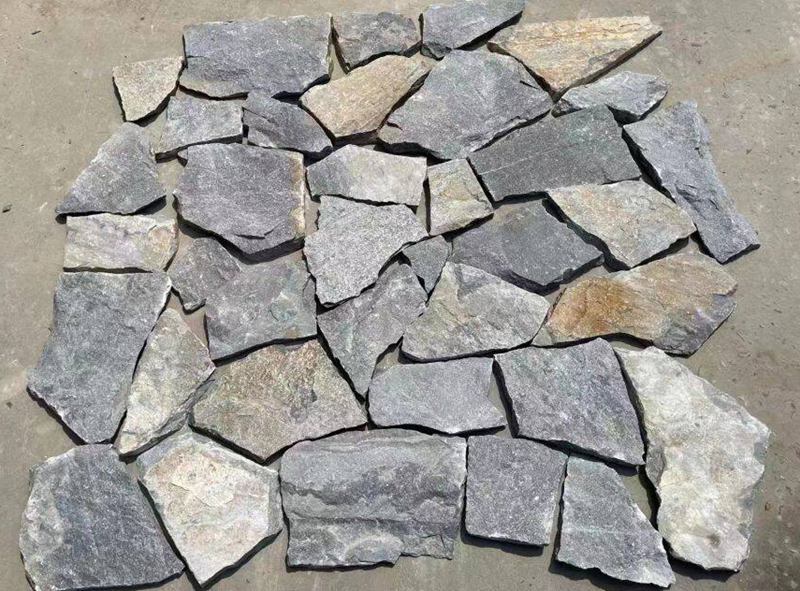
Reducing Mortar Consumption by 30% with Precision Sawing
Precision-sawn back surfaces transform thin stone veneer from an irregular masonry product into a calibrated architectural component, significantly reducing the volume of mortar required for a structural bond.
Traditional natural-back stones vary wildly in thickness, forcing installers to use “heavy-bed” mortar techniques to compensate for surface irregularities. Precision infrared sawing creates a flat, consistent rear surface that allows for thinner adhesive applications. This calibrated 25–40mm thickness profile enables the use of standard notched trowels rather than the thick, manual “glob” method. Reducing the adhesive layer thickness directly lowers the total volume of material required per square foot, providing immediate cost savings on every pallet.
Eliminating High-Volume Void Filling
Standardized cutting removes the deep clefts and protrusions that characterize rugged stone. These irregularities typically create air pockets that must be filled with mortar to ensure stability. Precision sawing ensures the stone sits flush against cement boards or masonry substrates. By eliminating surface recesses, installers avoid “back-buttering” stones with excessive amounts of mortar. This lack of large voids also reduces the weight of the finished wall, preventing unnecessary stress on the substrate and the structural frame.
| Mortar Efficiency Metric | Natural-Back Stone | TSS Individually Sawn-Back |
|---|---|---|
| Average Bed Depth | 1.5” – 2.5” (Leveling Required) | 0.75” – 1.25” (Calibrated) |
| Adhesive Consumption | High (Voids + Back-buttering) | Low (Minimal Bond Line) |
| Installation Method | Manual Placement / Heavy Bed | Standard Notched Trowel |
| Labor Time / m² | Standard Baseline | Approx. 30% Reduction |
Tight Edge Tolerances for Clean Joint Adhesion
Diamond-blade precision cutting creates stones that facilitate a bespoke random-lay pattern with tighter seams. While these are loose stones rather than pre-glued panels, the accuracy of the cut allows for a snug-fitting “dry stack” aesthetic that prevents adhesive from bleeding through the face of the stone. This clean alignment ensures that the primary bond remains concentrated between the stone and the wall rather than wasting material to fill wide gaps between units.
- Precision sawing eliminates the need for thick mortar beds typically used to level out uneven natural stones.
- A consistent thickness allows for a 30% reduction in total mortar consumption compared to irregular stone.
- Calibrated back surfaces prevent mortar from pooling in deep recesses, reducing the overall weight of the wall.
- Improved stone alignment keeps the structural bond focused on the substrate, minimizing waste during hand-laid installation.
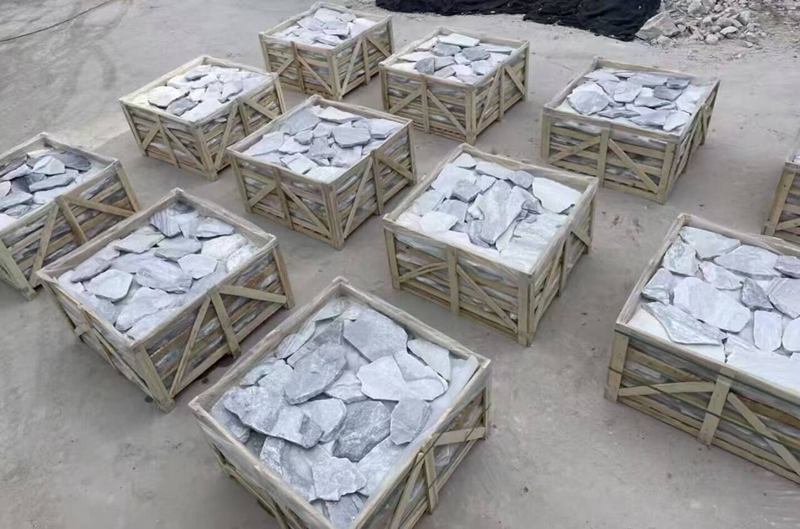
Why Sawn-Backs Enable Larger Face Dimensions for Thin Stone
Precision sawing transforms natural stone from a heavy, irregular raw material into a calibrated architectural component, allowing for 24-inch face spans without structural overload.
Weight Reduction through Precision Calibration
Traditional natural-back stones often feature irregular “bellies” or protrusions that add unnecessary bulk and weight. These irregularities force designers to limit the surface area of individual pieces to prevent the wall system from exceeding safe load-bearing capacities. By employing precision sawing, we reduce the thickness of every piece to a uniform range of 25mm to 40mm. This calibration keeps even large 6” x 24” units within the critical 8–13 lbs/sqft (approx. 65kg/m²) range required for modern wall substrates.
| Performance Metric | Natural-Back Stone | Górny kamień źródłowy (Sawn-Back) |
|---|---|---|
| Surface Consistency | Irregular/Concave | Calibrated 25–40mm |
| Average System Weight | 85–110 kg/m² | Approx. 65 kg/m² |
| Max Face Length | Usually < 300mm | Up to 600mm (24″) |
Enhanced Adhesion Surface for Heavy Formats
A flat, sawn surface maximizes the contact area between the stone and the adhesive, which is vital for supporting oversized formats. Natural-back stones create deep air pockets that weaken the bond and invite moisture infiltration. Our sawn-back technology ensures the high-strength mortar creates a permanent mechanical bond across the full 144 square inches of a standard large panel. This uniform surface creates consistent suction, preventing large-face stones from sliding or slumping during the curing process.
Structural Integrity and Stress Point Removal
The sawing process removes natural cleavage planes and microscopic fractures that often lead to cracking in larger stone faces. While natural cleft backs carry internal tension, a precision-cut back provides a stable, neutral base. This uniform thickness prevents internal stress within the stone, which is essential for 24-inch wide units exposed to thermal expansion in external environments. By creating a reliable foundation, we ensure that the corners and edges of large-format units remain flush and secure over the long term.
Consistency in Modern Large-Format Aesthetics
Achieving the 2026 industry standard for “zero-grout” looks requires stone units to sit perfectly flat against one another. Natural-back stones vary in depth, making it nearly impossible to align large-face pieces without excessive shimming or thick mortar buildup. Sawn-back precision enables the production of linear series where 10 to 12 thin stone strips must maintain a perfectly level plane across a 24-inch width. This technology allows contractors to meet tight tolerances in contemporary designs while maintaining an authentic masonry appearance.
- Precision sawing eliminates the bulk of full-bed stone while retaining the 100% natural mineral face.
- Uniform backing reduces on-site labor costs by up to 30% through faster layout and installation.
- The calibrated profile supports larger spans that would otherwise be too heavy for standard plywood or cement board substrates.
Conclusion
Precision sawn-back veneer ensures maximum adhesion and removes the air pockets that lead to stone failure. This flat surface cuts mortar consumption by 30% and helps crews lay more square footage daily. Technical accuracy here protects the structural integrity of the wall while achieving a high-end, authentic look.
Assess your upcoming project needs to determine how precision-cut backs can lower your labor costs and material waste. Contact Top Source Stone for a wholesale catalog or to request a sample of our quarry-sourced natural stones.
Często zadawane pytania
Is a sawn back better for stone veneer?
Yes, a sawn back is generally superior for stone veneer installation. The sawn surface creates a mechanical interlock by increasing surface roughness, which allows adhesives to penetrate the stone more effectively. This results in a much stronger bond and faster initial tack compared to the smoother profile of natural-back stones.
Do I need to wash the back of the stone?
Yes, washing the back of the stone is a critical step. Dust, slurry from the sawing process, and loose sediment act as a bond breaker, preventing the mortar or adhesive from adhering directly to the stone. Clean the backs with water and a stiff brush to ensure a high-quality, long-lasting installation.
Can I install natural back stone on drywall?
Direct installation on standard drywall is not recommended. The weight of natural stone, combined with the moisture from the mortar, can compromise the integrity of the drywall’s paper facing. For a secure installation, you should use a cement backer board or apply a metal lath and scratch coat over the wall surface.
Does a smooth back need more adhesive?
Smooth backs do not necessarily require a higher volume of adhesive, but they do require more meticulous application. Because smooth surfaces lack mechanical “teeth,” you must ensure 100% coverage through “back-buttering” each piece. Without this, the bond is significantly weaker and more prone to failure than on an abraded or sawn surface.
Why is my stone veneer falling off the wall?
Veneer failure typically occurs due to poor mechanical bonding or surface contamination. If the back of the stone was not cleaned of dust, or if a smooth-back stone was installed without proper back-buttering, the adhesive cannot grip the surface. Additionally, moisture trapped behind the stone without a proper drainage plane can freeze or degrade the bond over time.
How thick is the back-cut on thin veneer?
The industry standard for a back-cut on thin stone veneer is typically between 1 inch and 1.5 inches. This thickness provides the authentic appearance of full-depth stone while remaining light enough to meet building code requirements for adhered veneers without the need for additional structural footings.
SEO
Title: Why the Sawn-Back is the Most Critical Feature of Thin Stone Veneer
Description: Sawn Back Stone Veneer factory. 100% sawn-back 25-40mm stone cuts mortar 30%. B2B wholesale only. Trial orders from 300m2.
URL: sawn-back-stone-veneer-wholesale
Keywords: Sawn Back Stone Veneer
