

New Zealand’s 2026 building reforms are phasing out the legacy 34% NBS metric, mandating a shift toward cladding systems that guarantee facade integrity during significant lateral movement. Natural stacked stone provides a service life exceeding 50 years—20 years longer than synthetic alternatives—while maintaining zero VOC emissions and the 8–13 lbs/sq ft lightweight profile required for seismic safety and structural efficiency.
We evaluate the procurement standards for the region’s leading suppliers, including Paradise Quarry and Tahuna Stone, focusing on their alignment with NZS 1170.5:2004 and Clause B1 of the Building Code. This analysis covers critical B2B benchmarks such as %NBS seismic verification, pallet-level MOQ requirements, and the mechanical fixing protocols essential for high-importance (IL3-IL5) commercial and residential builds.
The Top 10 Stacked Stone Manufacturers in New Zealand
Quick Comparison: Top Picks
| Manufacturer | Location | Core Strength | Verdict |
|---|---|---|---|
| TopSource Stone | China (Global Shipping) | Natural Stacked Stone (Flat, Rough, Pencil, and Marble Series), L-Shaped Corners | The best choice for factory-direct natural stone with high-precision interlocking systems for global B2B projects. |
| Hard as Rocks Ltd | New Zealand | Architectural Stone Veneer, Lightweight Stacked Stone Cladding | Top-tier provider of BRANZ-appraised man-made veneer optimized for New Zealand’s seismic building codes. |
| Wanaka Stone | Wanaka, Central Otago, New Zealand | Schist Cladding, Poolburn Stone, Cluden Stone | The premier source for authentic, luxury Central Otago schist using advanced precision cutting for high yields. |
| The Stone Group Ltd | Christchurch & Auckland, New Zealand | Natural Stone Slabs, SG Quartz, Italian Infinity Porcelain | A major wholesaler offering a massive material variety and professional consultancy for high-end interior designs. |
| Island Stone NZ Ltd | New Zealand | Esite Flamed Tiles, Pebble Mosaic, Grey Marble Mosaic | Specialists in unique, creative mosaic textures and decorative wall cladding with over 20 years of experience. |
| West Stone | New Zealand | Hari Walling Stone, Schist Cladding Stone, Waitaha Natural Bricks | Excellent for traditional “kiwi-style” builds requiring seismic-rated authentic New Zealand natural materials. |
| Terrazzo & Stone | New Zealand | Terrazzo Slabs, Terrazzo Tiles, Lightweight Cladding Alternatives | Best for modern, eco-friendly projects seeking sustainable terrazzo and unique lightweight cladding alternatives. |
| Highland Stone | New Zealand | Schist, Limestone, Andesite Cladding | A reliable supplier of regional stones like andesite and limestone, ideal for durable residential builds. |
| Can Build | New Zealand | Limestone Paver, Granite Paver, Stone Cladding | A versatile building material supplier focused on sustainable construction and a broad selection of pavers. |
| Stone & Water World | New Zealand | Pebble Stone, Wall Cladding, Veneer | The ideal choice for DIY homeowners and landscaping projects requiring aesthetic veneer and pebble stone. |
TopSource Stone
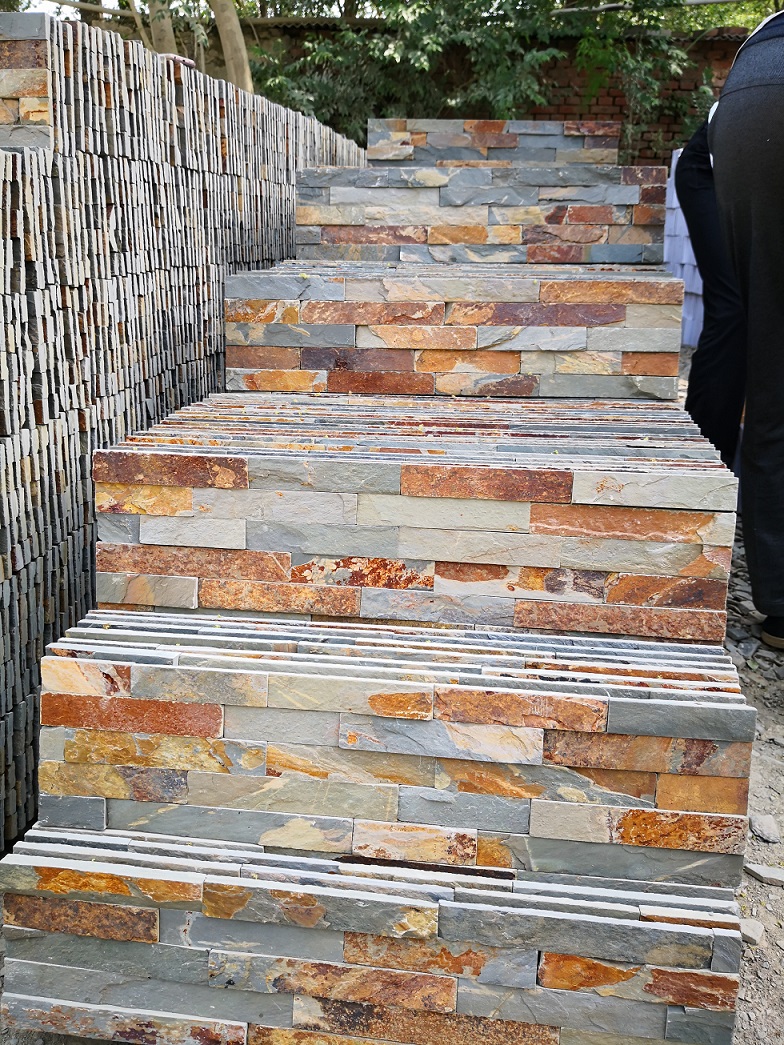
TopSource Stone operates as a factory-direct manufacturer of natural stone ledger panels. The company supplies structural cladding to global distributors and B2B contractors using an interlocking Z-panel system. This mechanical design targets the reduction of onsite labor hours and installation complexity for large-scale architectural surfaces.
Production involves precision infrared cutting to maintain dimensional consistency across flat, rough, pencil, and marble series. A three-stage quality control protocol monitors raw material selection, epoxy bonding, and final packaging. The facility uses specific high-strength resins to ensure stone adhesion remains stable across diverse climatic environments.
📊 At a Glance:
- 📍 Location: China (Global Shipping)
- 🏭 Core Strength: Natural Stacked Stone (Flat, Rough, Pencil, and Marble Series), L-Shaped Corners
- 🌍 Key Markets: Global Distributors, B2B Contractors, Architectural Designers
Why We Picked Them:
| ✅ The Wins | ⚠️ Trade-offs |
|---|---|
|
|
Hard as Rocks Ltd
Hard as Rocks Ltd operates as the largest supplier of architectural stone veneer within New Zealand. They provide man-made stacked stone solutions designed to replicate the appearance of natural stone while reducing structural weight. Their systems cater to residential and commercial sectors that require exterior cladding solutions compatible with local environmental conditions and strict moisture management protocols.
The products carry BRANZ appraisal, which confirms the systems meet New Zealand Building Code requirements for durability and weather tightness. This lightweight composition specifically addresses seismic performance needs, allowing for installation on standard framing without the heavy foundation requirements of traditional masonry. A national network of licensed applicators manages all installations to maintain specific technical quality standards.
📊 At a Glance:
- 📍 Location: New Zealand
- 🏭 Core Strength: Architectural Stone Veneer, Lightweight Stacked Stone Cladding
- 🌍 Key Markets: Residential, Hospitality, Commercial Developments
Why We Picked Them:
| ✅ The Wins | ⚠️ Trade-offs |
|---|---|
|
|
Wanaka Stone
Wanaka Stone operates as a specialized quarry and producer of authentic schist from the Central Otago region. They serve high-end residential and landscape architecture sectors, providing natural stone materials that meet strict aesthetic requirements for regional character and structural longevity.
The facility uses Italian guillotine technology to process stone into consistent cladding formats. This mechanical precision increases installation yield and reduces site waste compared to traditional hand-splitting methods. The resulting products, including Poolburn and Cluden stone variants, provide low-maintenance performance for permanent structural features and global exports.
📊 At a Glance:
- 📍 Location: Wanaka, Central Otago, New Zealand
- 🏭 Core Strength: Schist Cladding, Poolburn Stone, Cluden Stone
- 🌍 Key Markets: Luxury Residential, Landscape Architecture, Global Export
Why We Picked Them:
| ✅ The Wins | ⚠️ Trade-offs |
|---|---|
|
|
The Stone Group Ltd
The Stone Group functions as a material partner bridging architectural concepts and procurement. Dual warehousing in Auckland and Christchurch provides logistical coverage across New Zealand. They act as technical consultants for designers, focusing on material selection for complex high-end projects.
The inventory features natural stone slabs, the SG Quartz brand, and Italian Infinity Porcelain. This distribution model prioritizes material variety and volume for kitchen joiners and architects. They specialize in sourcing and logistics rather than direct slab fabrication.
📊 At a Glance:
- 📍 Location: Christchurch & Auckland, New Zealand
- 🏭 Core Strength: Natural Stone Slabs, SG Quartz, Italian Infinity Porcelain
- 🌍 Key Markets: Interior Designers, Kitchen Joiners, Architects
Why We Picked Them:
| ✅ The Wins | ⚠️ Trade-offs |
|---|---|
|
|
Island Stone NZ Ltd
Island Stone NZ Ltd operates as a niche manufacturer and supplier specializing in creative stone surfaces for the New Zealand market. Since its establishment in 2000, the company has focused on developing mosaics and tiles that function as both decorative elements and architectural veneers. Their production model centers on natural and artificial stone materials adapted for wall cladding and textured surface requirements.
The production inventory includes specialized items such as Esite Flamed Tiles and Grey Marble Mosaics. The company leverages 24 years of operational history to serve boutique interiors and the specialized wall cladding sector. They maintain a catalog specifically designed for applications where standard stacked stone lacks the required visual depth or specific textural properties.
📊 At a Glance:
- 📍 Location: New Zealand
- 🏭 Core Strength: Esite Flamed Tiles, Pebble Mosaic, Grey Marble Mosaic
- 🌍 Key Markets: Boutique Interiors, Specialized Wall Cladding
Why We Picked Them:
| ✅ The Wins | ⚠️ Trade-offs |
|---|---|
|
|
West Stone
West Stone operates as a niche producer of natural stone cladding within the New Zealand market. Their inventory consists of authentic regional materials, including Hari walling stone and Waitaha natural bricks, processed to fit specific residential architectural styles. They focus on the kiwi-style aesthetic by providing textures that integrate with the local landscape and traditional masonry requirements.
Technical specifications center on seismic-rated applications to meet New Zealand building standards and safety requirements. The product range covers Schist cladding and masonry units designed for high-end residential construction and landscaping. Current operations prioritize material quality and local compliance over digital accessibility, necessitating direct communication for procurement and catalog review.
📊 At a Glance:
- 📍 Location: New Zealand
- 🏭 Core Strength: Hari Walling Stone, Schist Cladding Stone, Waitaha Natural Bricks
- 🌍 Key Markets: Residential Construction, Landscaping
Why We Picked Them:
| ✅ The Wins | ⚠️ Trade-offs |
|---|---|
|
|
Terrazzo & Stone
Terrazzo & Stone operates from New Zealand, positioning itself as a boutique manufacturer for the high-end architectural market. They deviate from standard masonry by integrating natural stone aesthetics with modern terrazzo production techniques. Their operations specifically target the sustainable construction sector, providing materials that reduce structural load through lightweight cladding alternatives.
Established in 2020, the company focuses on controlled manufacturing of slabs and tiles. Their production model emphasizes environmental impact reduction and aesthetic precision. While their portfolio centers on terrazzo-based solutions, they provide technical support for both interior fit-outs and external facades, filling a niche for designers seeking local New Zealand sourcing for modern finishes.
📊 At a Glance:
- 📍 Location: New Zealand
- 🏭 Core Strength: Terrazzo Slabs, Terrazzo Tiles, Lightweight Cladding Alternatives
- 🌍 Key Markets: Sustainable Architecture, Modern Interiors
Why We Picked Them:
| ✅ The Wins | ⚠️ Trade-offs |
|---|---|
|
|
Highland Stone
Highland Stone started operations in 2000 to supply the New Zealand building sector with regional natural stone. They focus on extraction and processing of schist, limestone, and andesite specifically for architectural cladding. Their operations cater to the local residential market and architectural firms requiring materials that meet regional building codes.
The company selects stone types known for high density and weather resistance in local climates. Their inventory includes andesite and limestone processed to withstand seismic activity common in New Zealand zones. They integrate eco-friendly practices in their sourcing methods to reduce the environmental footprint of heavy stone transport and extraction.
📊 At a Glance:
- 📍 Location: New Zealand
- 🏭 Core Strength: Schist, Limestone, Andesite Cladding
- 🌍 Key Markets: Homeowners, Local Architects
Why We Picked Them:
| ✅ The Wins | ⚠️ Trade-offs |
|---|---|
|
|
Can Build
Based in New Zealand since 2018, Can Build functions as a regional distributor specializing in natural stone cladding and paving systems. Their inventory centers on limestone and granite products designed for general construction and architectural projects requiring specific aesthetic finishes.
The company prioritizes sourcing materials that align with sustainable construction requirements. While they provide a broad catalog of paving and wall cladding, they operate as a generalist supplier rather than a direct manufacturer of stone components.
📊 At a Glance:
- 📍 Location: New Zealand
- 🏭 Core Strength: Limestone Paver, Granite Paver, Stone Cladding
- 🌍 Key Markets: General Building Projects, Sustainable Construction
Why We Picked Them:
| ✅ The Wins | ⚠️ Trade-offs |
|---|---|
|
|
Stone & Water World
Stone & Water World operates as a specialized supplier for the New Zealand landscaping sector, focusing on natural aesthetic features. Established in 1993, the business provides natural stone solutions designed to achieve stacked effects for residential walling and garden projects.
The company manages an inventory focused on pebble stone, wall cladding, and stone veneers. Their service model caters to DIY homeowners and landscaping contractors, prioritizing regional availability and specialized residential products over industrial-scale supply chains.
📊 At a Glance:
- 📍 Location: New Zealand
- 🏭 Core Strength: Pebble Stone, Wall Cladding, Veneer
- 🌍 Key Markets: DIY Homeowners, Landscaping Contractors
Why We Picked Them:
| ✅ The Wins | ⚠️ Trade-offs |
|---|---|
|
|
The Sustainability and Eco-Friendly Benefits of Natural Stacked Stone
Natural stone provides 50-year longevity and zero VOCs. Minimal processing and local sourcing make it the most resource-efficient cladding for New Zealand’s 2026 green building standards.
Low Environmental Footprint and Non-Toxic Composition
Natural stone contains no chemical additives, industrial binders, or VOCs. This ensures zero off-gassing and maintains indoor air quality. The manufacturing involves minimal mechanical processing, requiring significantly less energy than synthetic or manufactured alternatives.
- Certifications: Aligns with LEED and 2026 New Zealand green building standards.
- Pollutants: Zero hazardous emissions or industrial pollutants during extraction.
- Processing: Low-impact mechanical cutting replaces chemical-heavy fabrication.
Long-Term Resource Efficiency and Thermal Performance
A service life exceeding 50 years reduces landfill waste and the need for frequent replacements common with manufactured cladding. High thermal mass helps regulate indoor temperatures, lowering energy consumption for heating and cooling throughout the year.
- Service Life: 50+ years (20+ years longer than manufactured stone).
- Circular Economy: 100% recyclable and reusable for secondary projects.
- Maintenance: Highly water-resistant; requires sealing only every 3–5 years.
Carbon Reduction through Local New Zealand Sourcing
Domestic sourcing from quarries like Paradise or Tahuna Stone cuts transportation emissions significantly. Lightweight stone veneer systems provide a sustainable solution for seismic-rated designs, removing the requirement for heavy structural reinforcement in Kiwi-style builds.
| Supplier/Quarry | Location | Key Eco-Benefits |
|---|---|---|
| Paradise Quarry | North Island, NZ | Sustainable quarrying, low-mileage delivery, zero chemicals. |
| Tahuna Stone | Central Otago, NZ | Local sourcing (<50 km), recycling/reuse, high thermal mass. |
Local procurement supports regional businesses while ensuring the stone is naturally conditioned for New Zealand’s harsh UV exposure and coastal salt air. This makes natural stone a practical choice for architects prioritizing seismic compliance and long-term property value.
Seismic Resilience: Essential Safety Standards for NZ Cladding
NZ’s 2026 building reforms replace the 34% NBS metric with regional risk frameworks. Lightweight stone (8-13 lbs/sq ft) and mechanical fixing are now essential for seismic compliance and safety.
NZ Building Code Compliance and the 2026 Seismic Reform Landscape
The 2026 building system reforms fundamentally shift how NZ assesses seismic risk. The 34% NBS (New Building Standard) metric is being phased out, forcing a move toward more nuanced risk frameworks. This update specifically targets how buildings respond to lateral movement, placing the spotlight on facade integrity.
Regional exemptions now apply to low-risk areas like Auckland and Northland under the updated earthquake-prone building (EPB) framework. However, in high-activity zones, cladding must align with Clause B1 of the Building Code. This ensures the building envelope remains attached to the structure during significant ground acceleration.
Lightweight Material Specifications for Reducing Facade Load
Heavy masonry acts as a pendulum during a tremor, increasing the dead load and structural stress on a building. Switching to thin-set natural stone panels significantly lowers these risks by reducing the total weight that structural engineers must account for.
- Panel Weight: 8-13 lbs per square foot.
- Engineering Requirements: Eliminates the need for structural footings or brick ledges.
- Seismic Performance: Lightweight interlocking systems outperform traditional full-thickness masonry in high-seismic zones.
Using these lightweight specifications simplifies both new builds and retrofits. By removing the need for heavy footings, architects can meet sustainability goals while ensuring the structure remains within the safe limits of its seismic rating.
Adhesive Integrity and Mechanical Fixing in Seismic Zones
Mechanical fixing and chemical bonding work together to prevent stone fallout. In a seismic event, the bond between the stone and the substrate must withstand intense shearing forces. Relying on standard mortar is no longer sufficient for high-importance level (IL3-IL5) buildings.
- Fixing System: Z-shaped interlocking panels to prevent stone fallout during lateral movement.
- Adhesive Standard: High-strength, stone-specific epoxy resins for permanent bonding.
- Substrate Requirements: Proper preparation of concrete or cement board to maintain facade stability.
These standards ensure that the facade moves with the building rather than against it. Using BRANZ-appraised systems provides the necessary assurance that these mechanical and adhesive components will perform under the stress of NZ’s unique tectonic environment.
Elevate Your Projects with Factory-Direct Stacked Stone
How to Evaluate Suppliers: Seismic Ratings, MOQ, and Logistics
Supplier selection hinges on %NBS seismic verification, pallet-level MOQ flexibility, and localized logistics to mitigate transport risks across New Zealand’s active fault zones.
Seismic Compliance and %NBS Ratings
Verify supplier documentation for New Building Standard (%NBS) ratings to ensure compliance with Clause B1 of the New Zealand Building Code. Buildings or systems classified as earthquake-prone—those below 34% NBS—require remediation by 2026.
The weakest component determines the overall seismic rating. Assess individual scores for parapets and heavy exterior cladding specifically, as these elements often fail before the primary structure.
- Regulatory Threshold: Minimum 34% NBS to avoid earthquake-prone classification.
- Safety Standards: Higher Importance Levels (IL3-IL5) for high-activity regions.
- Code Compliance: NZS 1170.5:2004 for structural design actions.
Minimum Order Quantities and Project Scalability
Standard stone cladding projects typically operate on pallet-based increments. Most New Zealand suppliers set their minimums between 20m² and 50m² per order.
Tiered pricing structures benefit B2B buyers who exceed standard minimums. Analyze the cost-benefit of small-batch orders for residential work versus high-volume supply chains for commercial builds to optimize the procurement budget.
Logistics and Regional Supply Chain Resilience
Prioritize national distributors to lower freight costs and reduce transport risks within active seismic zones. Local sourcing minimizes the chance of transit damage and simplifies the claims process if breakage occurs.
- Bracing Standards: Adherence to NZS 3604:2011 for securing heavy materials during transit.
- Packaging Specs: Reinforced cartons and fumigated crates for international or inter-island shipping.
- Freight Compliance: Seismic transport standards for heavy cladding loads.
Screen every supplier for robust packaging methods. Reinforced crates are non-negotiable for natural stone to prevent fracture during the “last mile” of delivery on New Zealand’s often difficult terrain.
Maintenance Tips for Natural Stone in the New Zealand Climate
Regular low-impact cleaning and moisture management prevent organic growth and salt damage, ensuring natural stone maintains its integrity for over 50 years in New Zealand’s high-humidity environment.
Routine Cleaning Schedules and Manual Methods
Moss and lichen cause deep, permanent staining if left unchecked. Maintenance frequency depends on stone porosity and environmental exposure, with shaded or damp sites requiring more frequent intervention.
- Granite Surfaces: Clean every 6 to 12 months.
- Marble Installations: Clean every 6 months to prevent organic penetration.
- Approved Tools: Soft brushes and clean water only.
Abrasive tools like wire brushes or scouring pads destroy the stone’s finish. High-pressure water blasting and bleach also degrade the surface over time, leading to accelerated weathering.
Mitigating High Humidity and Coastal Salt Corrosion
Coastal salt air corrodes metal attachments and alters stone aesthetics. Using biodegradable, non-acidic stone cleaners safely removes organic debris without disrupting the stone’s pH balance or the surrounding environment.
Bio-enzymatic treatments offer a more effective solution for algae management than standard washing. Applying these treatments every 12 to 24 months inhibits regrowth and protects the stone from the biological stresses common in high-humidity regions.
Preventive Site Management and Professional Care
Managing the area around the stone reduces maintenance labor. Trimming overhanging trees minimizes moisture retention and organic debris accumulation, while improved drainage systems at the base prevent salt-related staining and moisture penetration.
- Sealing: Reapply high-quality stone sealants every 3 to 5 years to defend against UV exposure.
- Inspections: Schedule professional structural checks every few years to identify stability issues early.
- Deep Cleaning: Use professional services for heavy mineral or biological buildup that manual scrubbing cannot remove.
Establishing a long-term maintenance plan, such as a 2026 sealing schedule, ensures the stone remains resistant to New Zealand’s harsh freeze-thaw cycles and intense UV levels.
Final Thoughts
Compliance beats cheap cladding. Investing in lightweight natural stone panels now prevents costly retrofits when the 2026 seismic reforms phase out outdated 34% NBS ratings.
Request %NBS verification and mechanical fixing specs from local quarries like Paradise or Tahuna immediately. Prioritize Z-shaped interlocking systems to ensure long-term safety and building code compliance.
